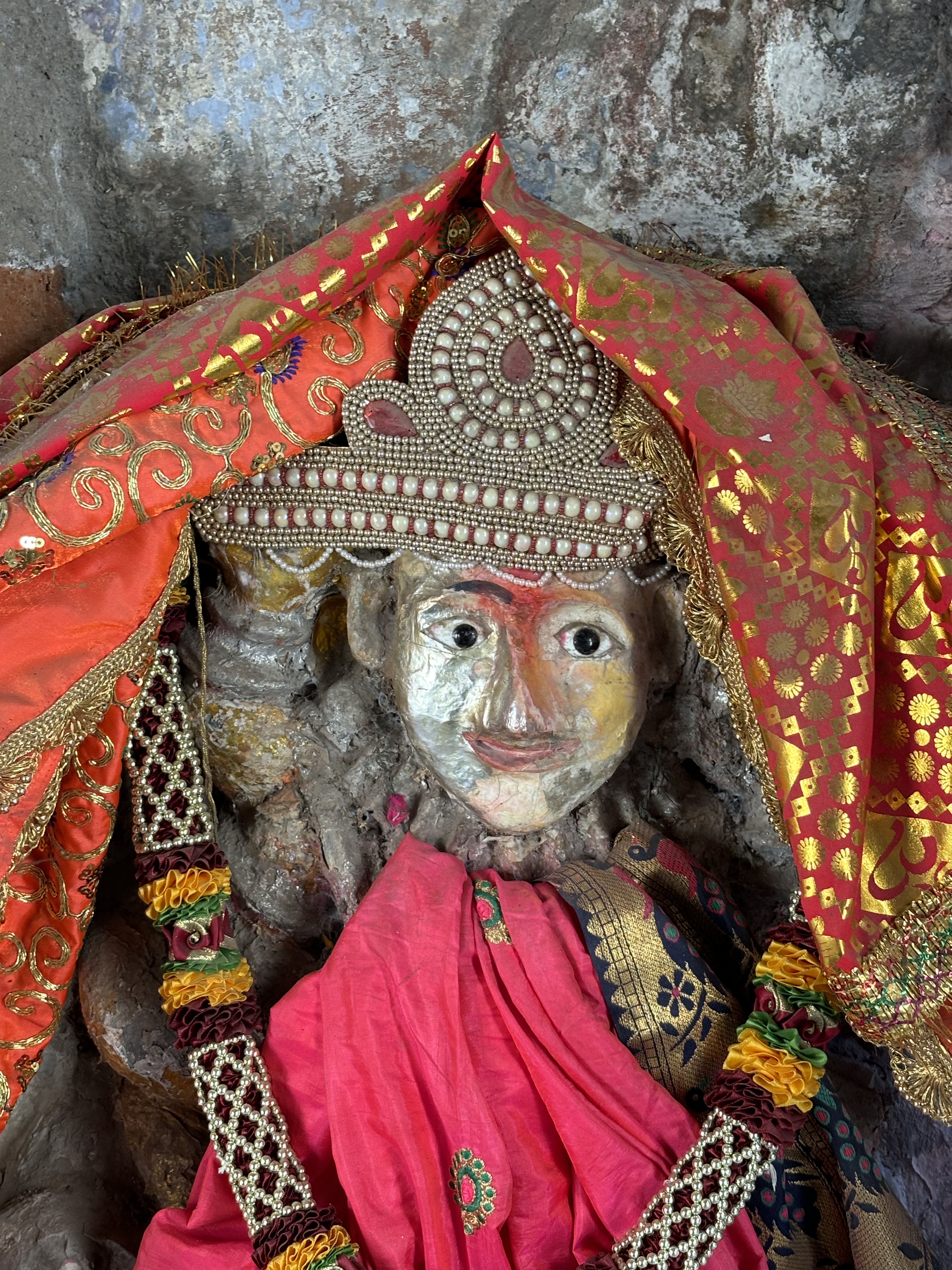
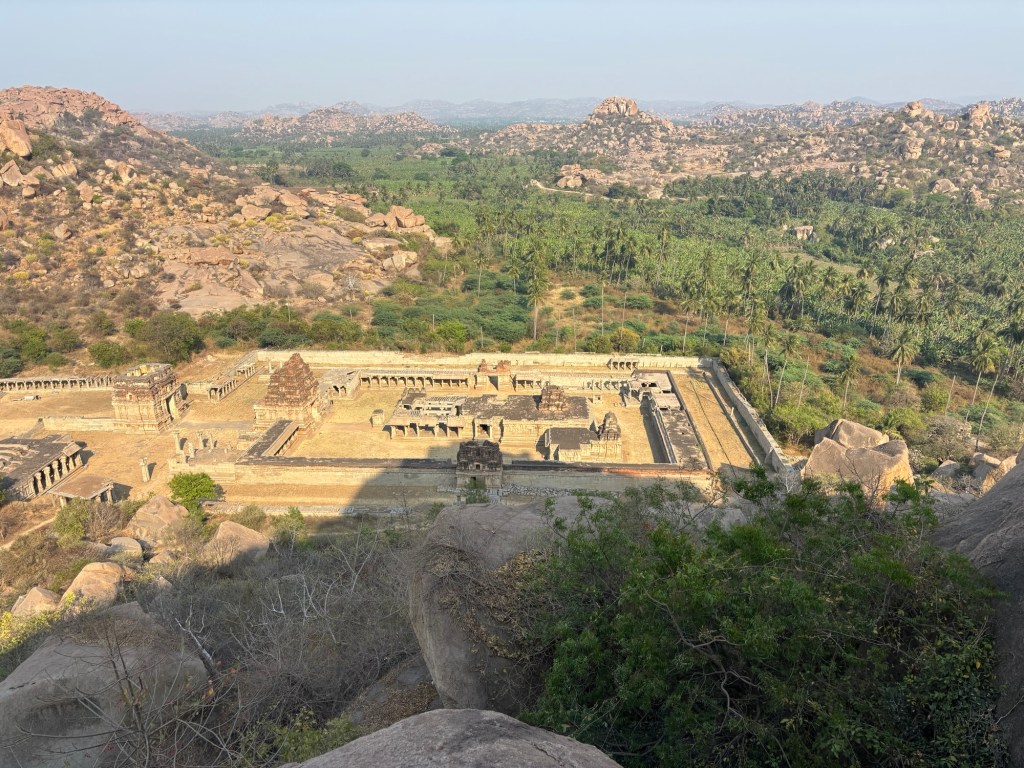
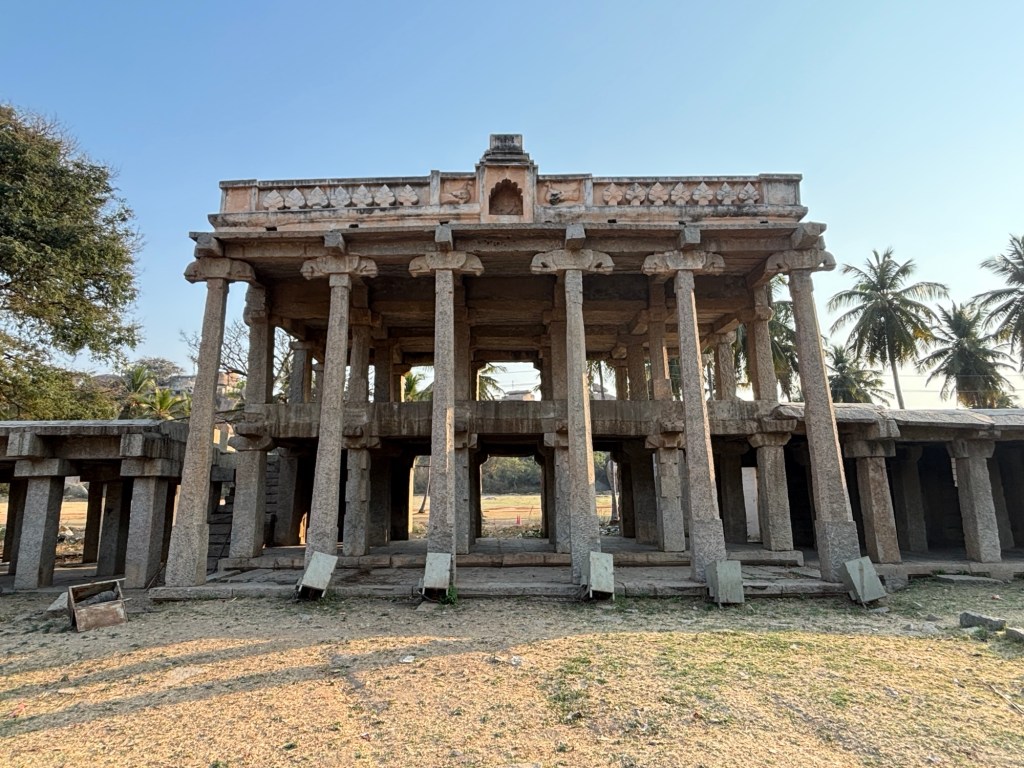
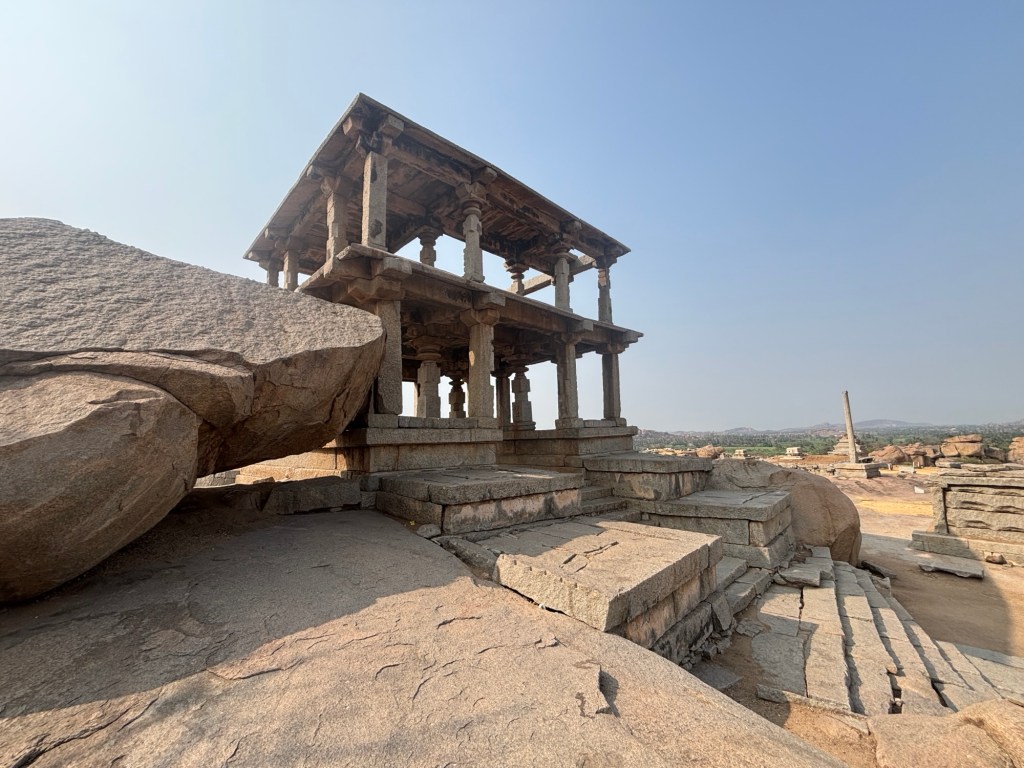
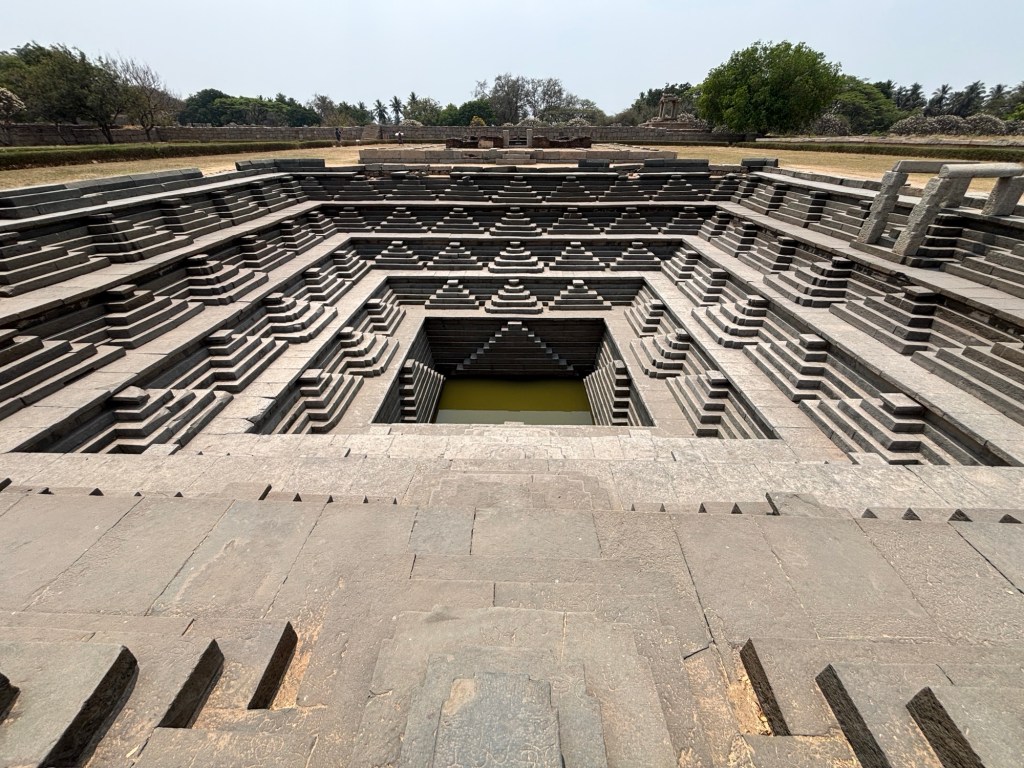
Hampi is the name the British gave to the abandoned ruins they discovered in a vast area in the north of the state of Karnataka. Hampi means “forgotten empire.” The real name was Vijayanagara (City of Victory).
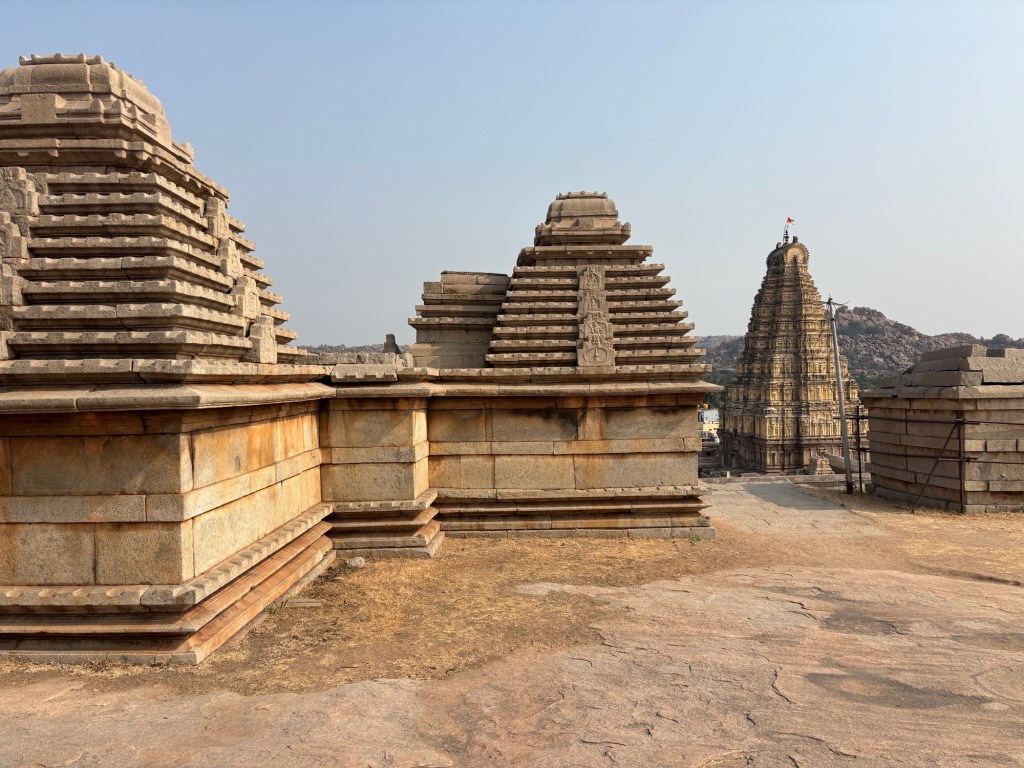
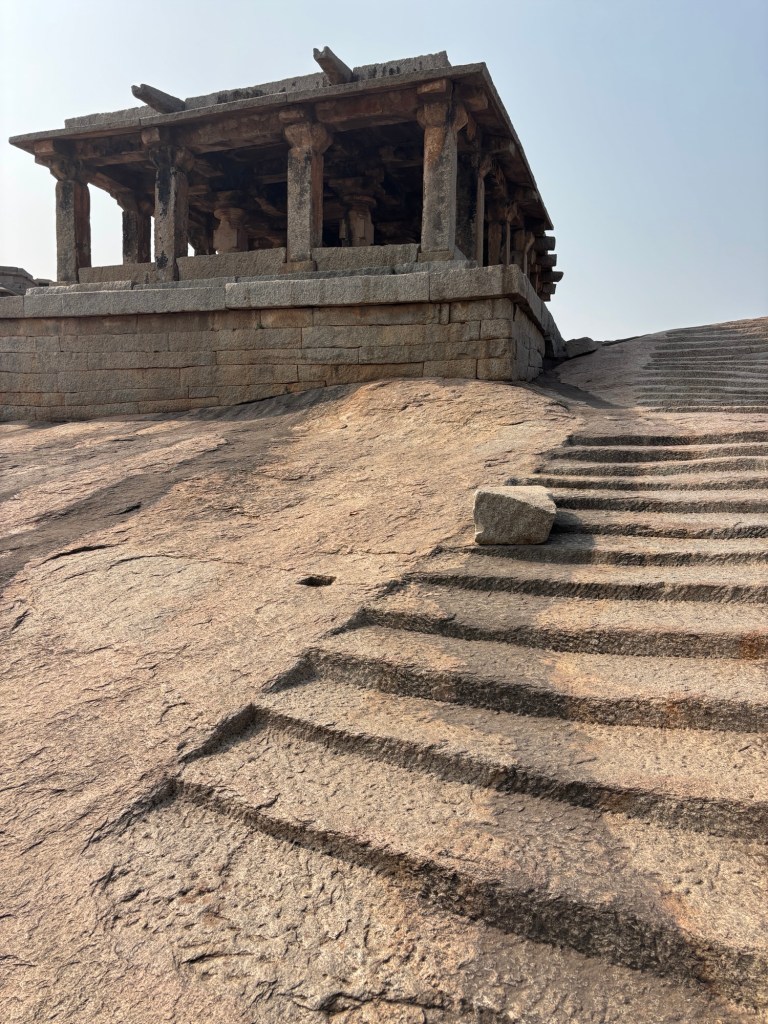
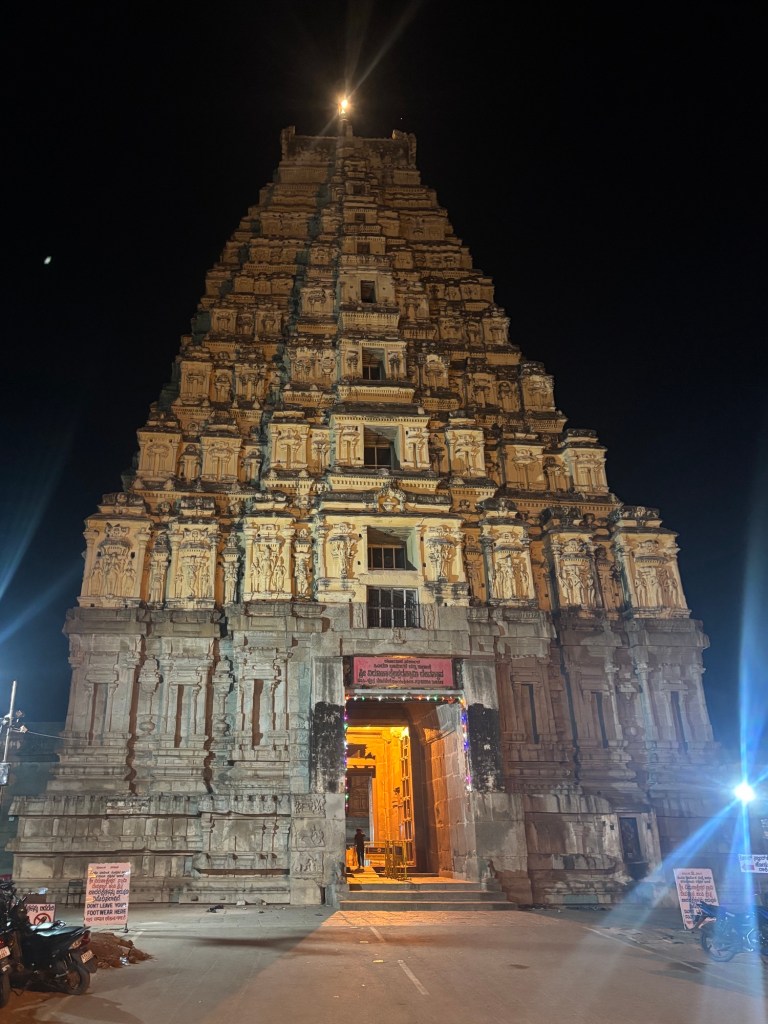
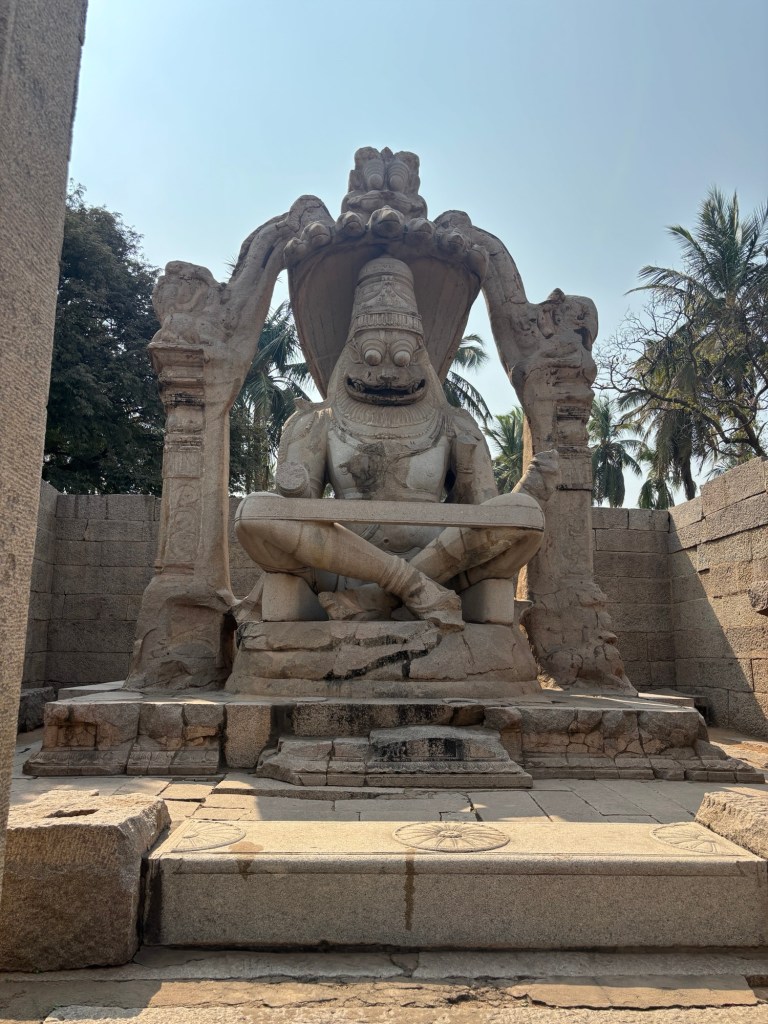
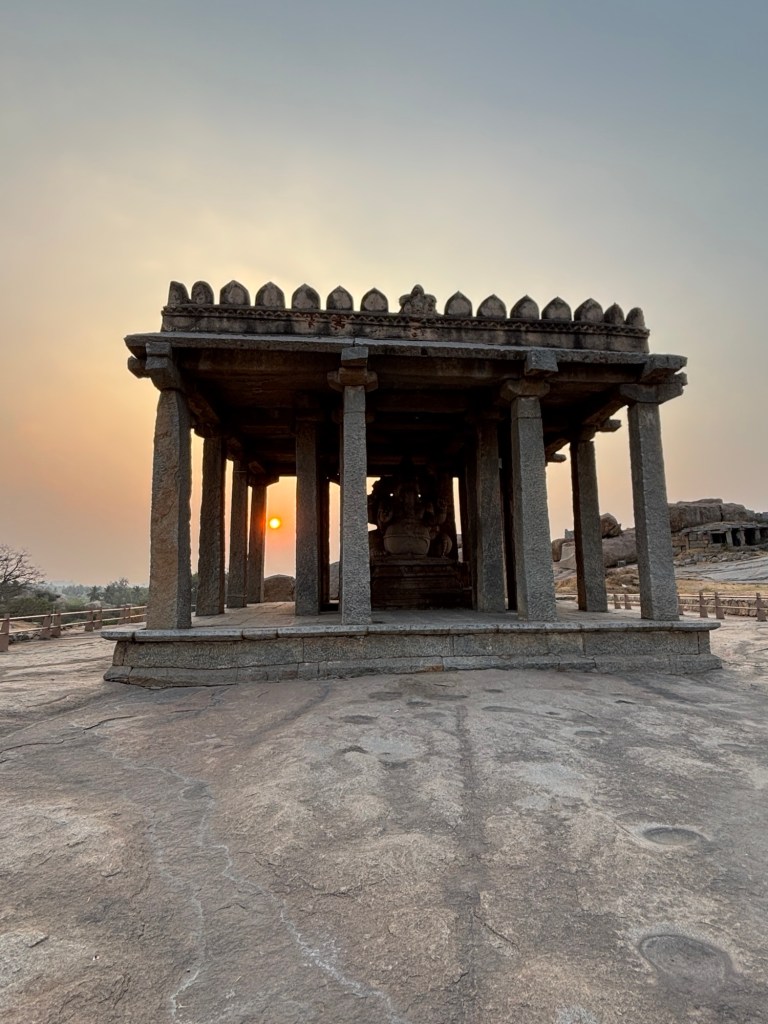
Although savagely crushed in the Battle of Talikota in 1565 CE, the civilization struggled on until 1646 CE, standing for more than 300 years as the last Hindu bastion against the Muslim invaders. The epic Battle of Talikota was not an ordinary battle, rather it ranks in India’s history as one of the most significant and bloody. The savagery and destruction in the six months following the city’s fall to the Muslims was so heinous, the entire area was abandoned until the British rediscovery in 1800 CE. It remains only modestly inhabited today. But of interest to all the world’s citizens is the collection of more than 3000 surviving buildings spread over more than 20 square miles. Many of these are world-class treasures, some of the best stonework and sculpture humanity has ever produced. I would go so far as suggest it should be at the top of everyone’s list (if coming to India).
The kingdom of the Vijayanagaras had a standing army of 1.1 million which they brought into that decisive loss in 1565. For perspective, this period of the Vijayanagaran Empire is co-synchronous with the period when Paris was a village of 75K souls, and when London ranked second in Europe with a population of 50K.
Into that same battle, the Empire also marshaled 6000 war elephants, and 50K Arabian horses they had purchased from Portuguese and Arab traders. As the King fled the battle in hasty retreat, he was “only” able to salvage half of the royal treasury, using 1500 elephants to carry it away. This medieval history makes for compelling reading. I point you to two classics: A Forgotten Empire (Vijayanagar): A Contribution to the History of India, (1900), by Robert Sewell, and Hampi Ruins Described and Illustrated, (1917/1925), by A.H. Longhurst. Sewell’s version includes the first hand reports of the Portuguese.
All of this begs a question I find deeply upsetting. Although we know that history is “written by the victors,” I find myself horrified that my public school American education was so poor, so pathetically biased towards its Western roots, that it completely failed to mention one of the most significant and sophisticated cultures of the world. How is it that I did not really discover this empire’s contribution until the last ten years? Who knows what else my education has overlooked?
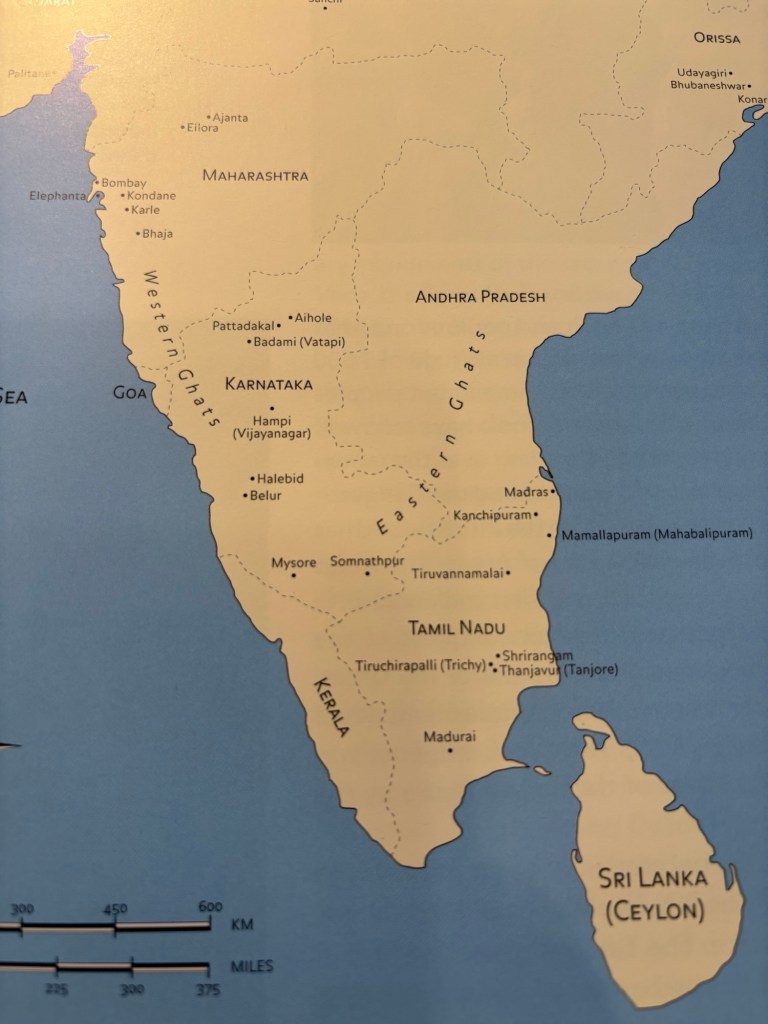
Not to give my US and British educators a pass, but the geography the India may be partly to blame. We call India a “subcontinent” because of its immense size and its near total isolation from its neighbors. Its surface area is almost 2M square miles or 5M square kilometers; more than half the size of the United States. The Deccan peninsula is three quarters of a million m2 or 2 million km2. It’s a really big place. This comprises what’s called “the whole of the Deccan” which lies between the Gulf of Oman and the Bay of Bengal, projecting like a triangle into the Indian Ocean. It sits entirely between the twenty-fifth and tenth parallels and transverses the Tropic of Cancer. The Deccan is flanked by mountain ranges, the Western and Eastern Ghats, which constitute a natural barrier.
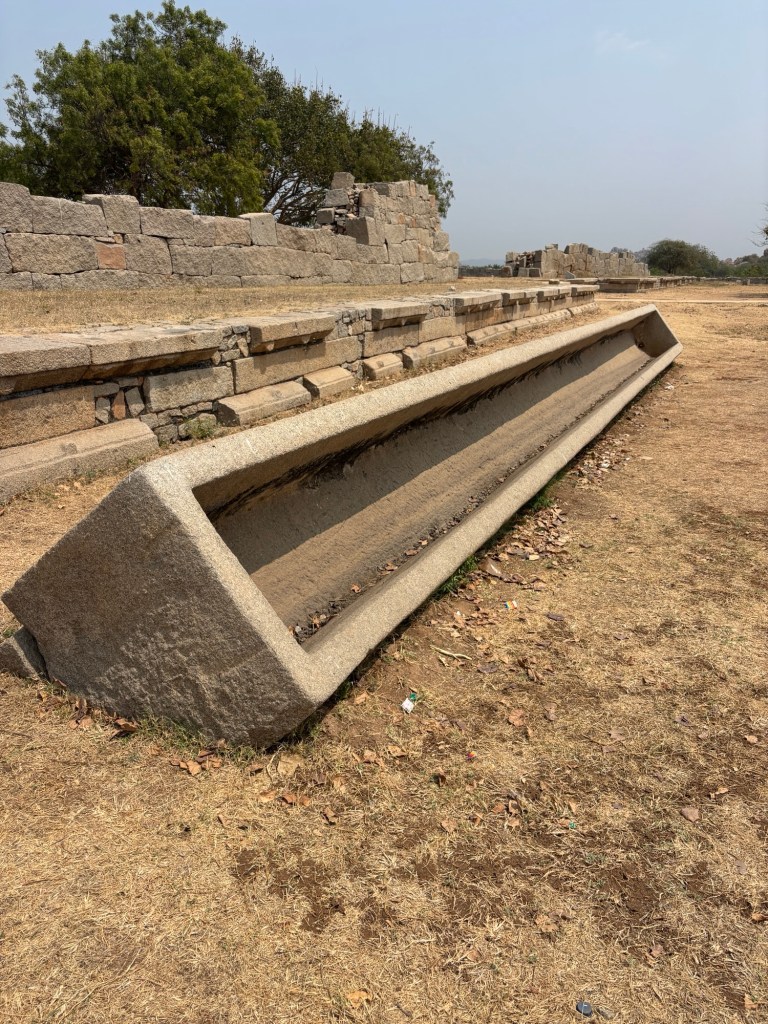
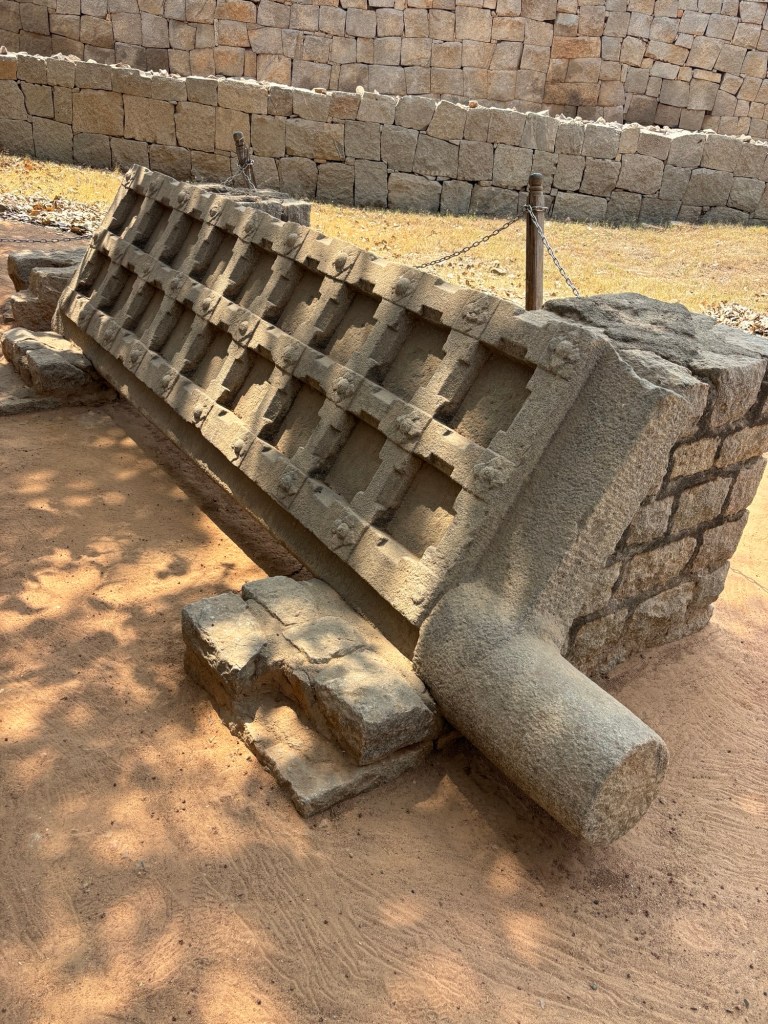
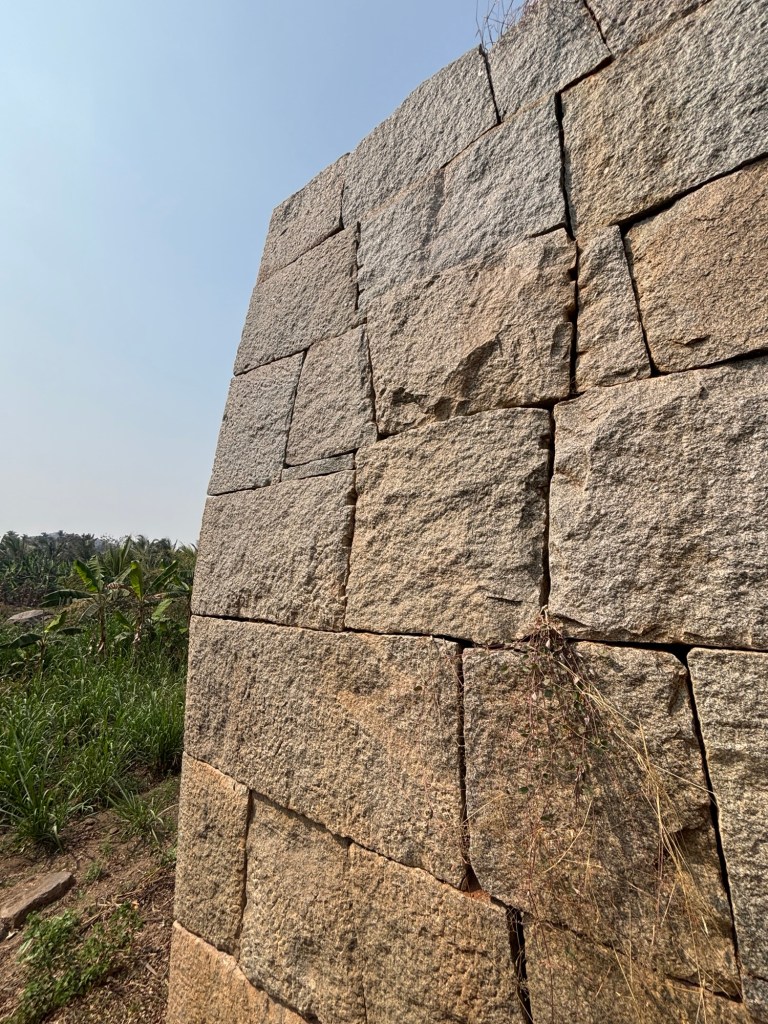
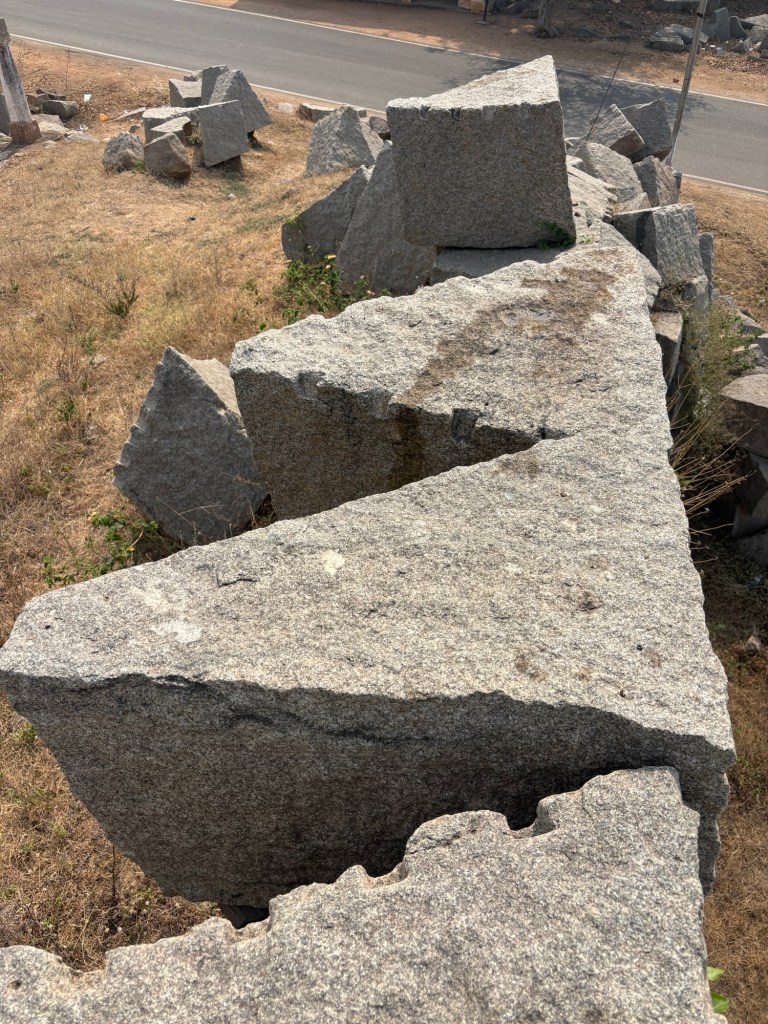
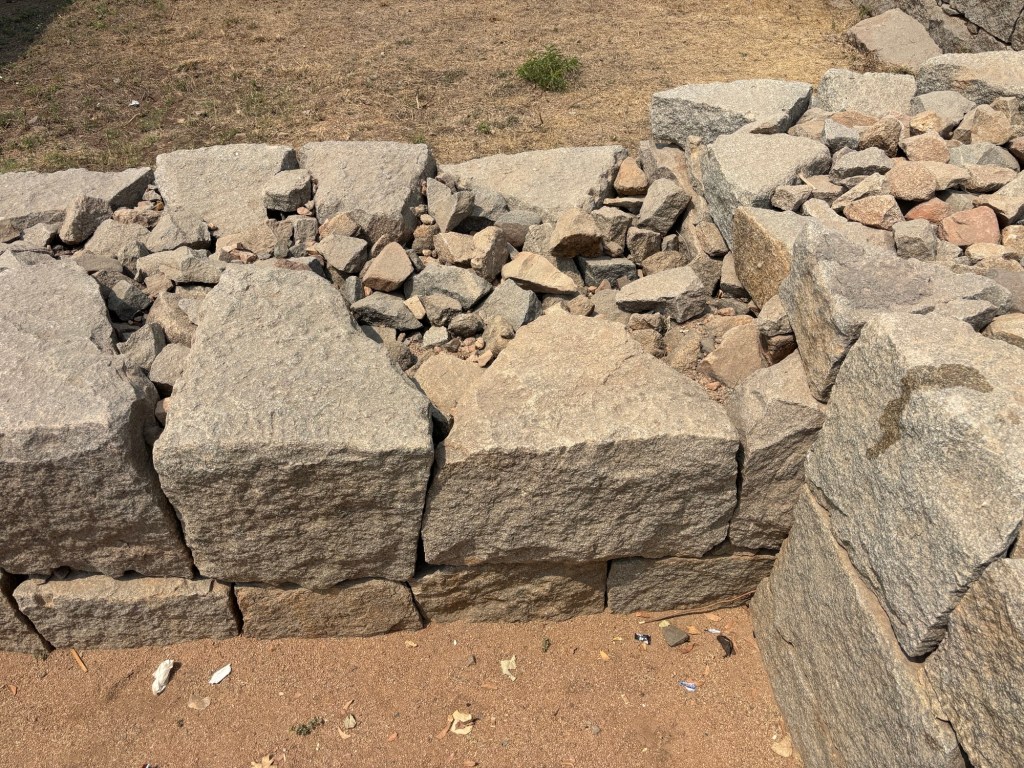
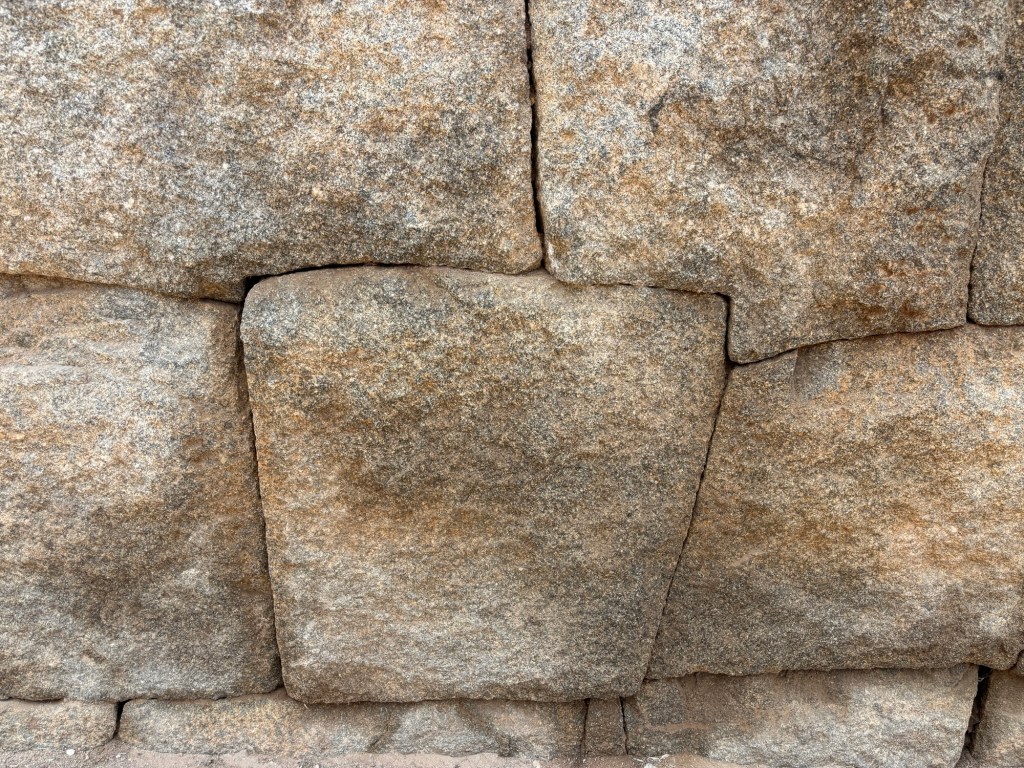
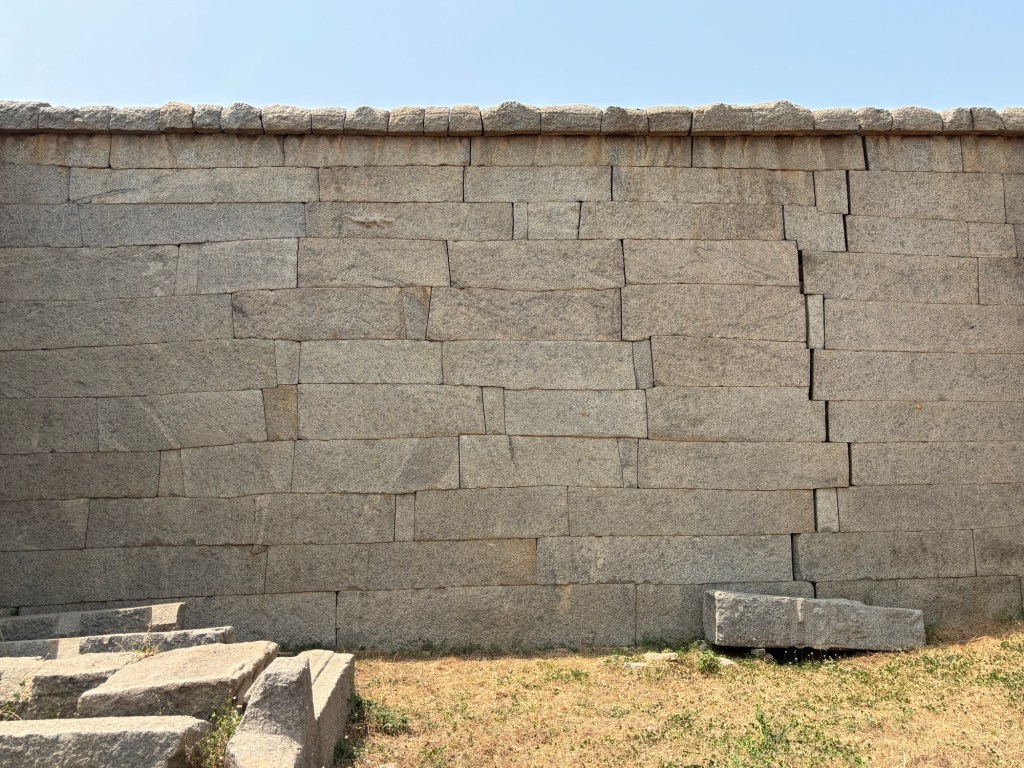
The Deccan plateau is composed of granite which cooled very slowly over many hundreds of millions of years while deep in the earth. It was then pushed slowly upwards to the surface in what’s known as a “mountain building event.” This formation has now been identified as one of the earth’s oldest, estimated to be 3.5 billion years old. Rock that cools that slowly is rare and valued since the normally occurring contraction cracks in the stone are either absent or much reduced. The other famous formation sharing this unique characteristic can be found at Aswan, Egypt. That formation’s slow cooling allowed for the quarrying of the universally admired monumental obelisks that now grace many capitals of our Western world.
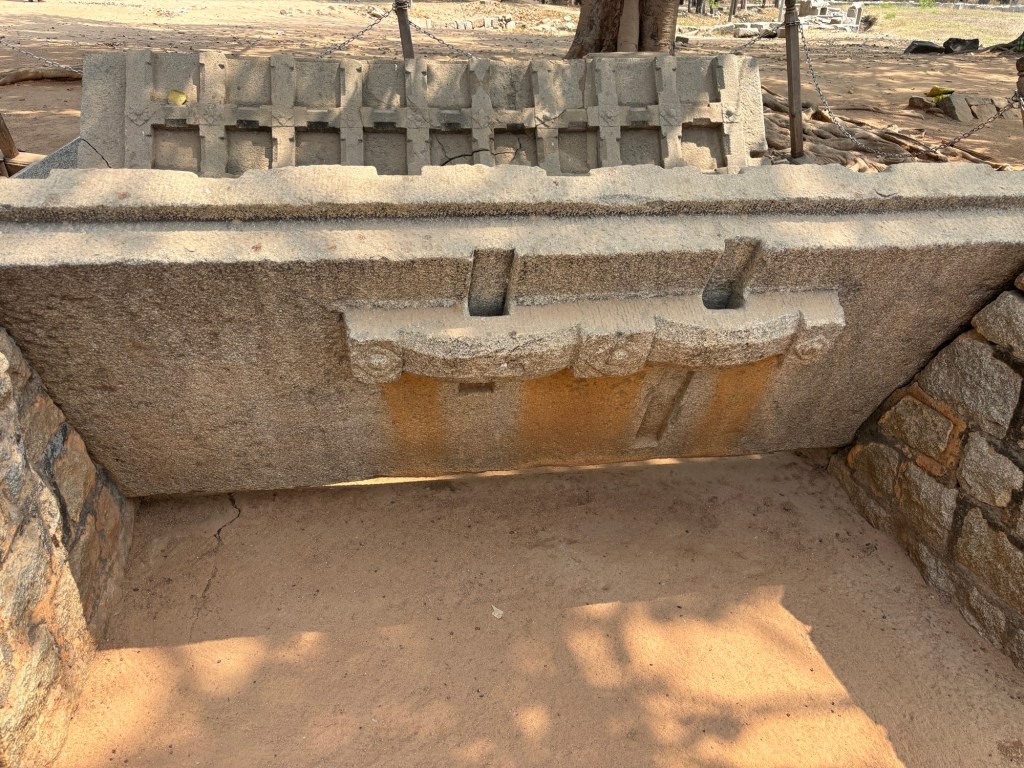
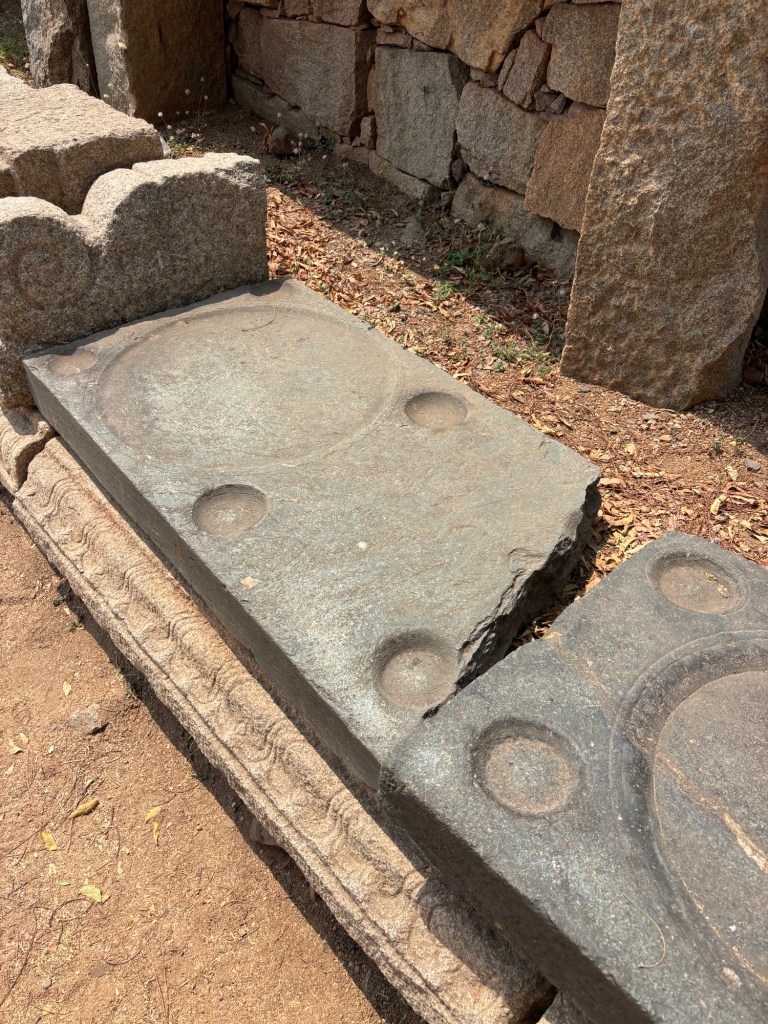
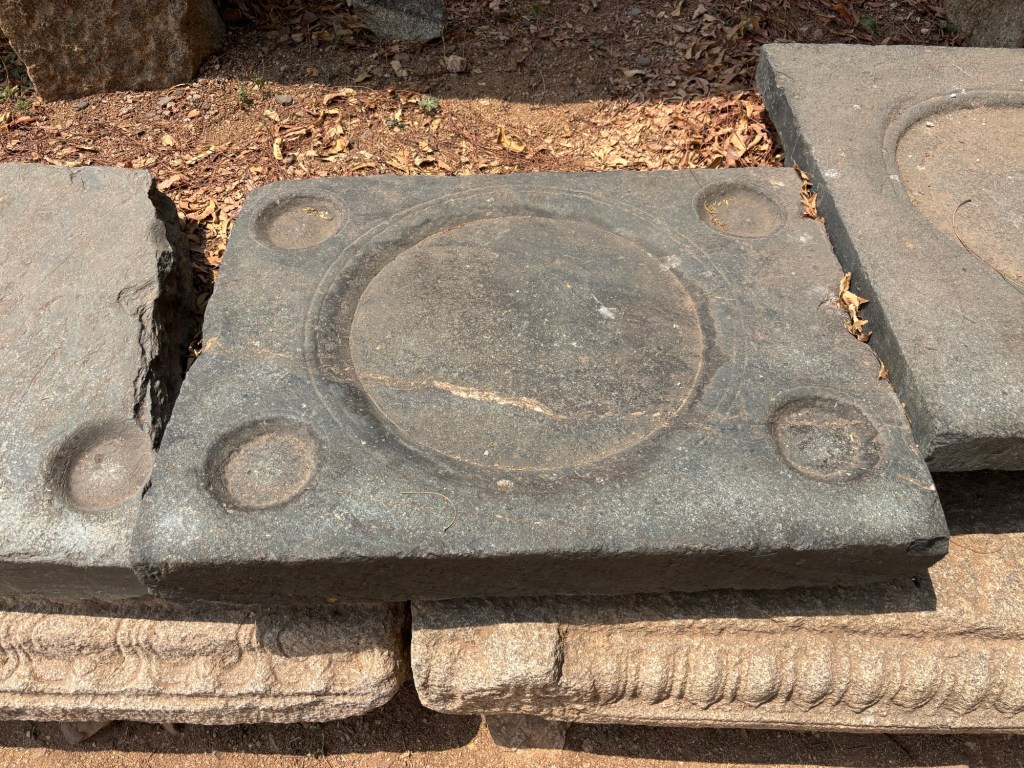
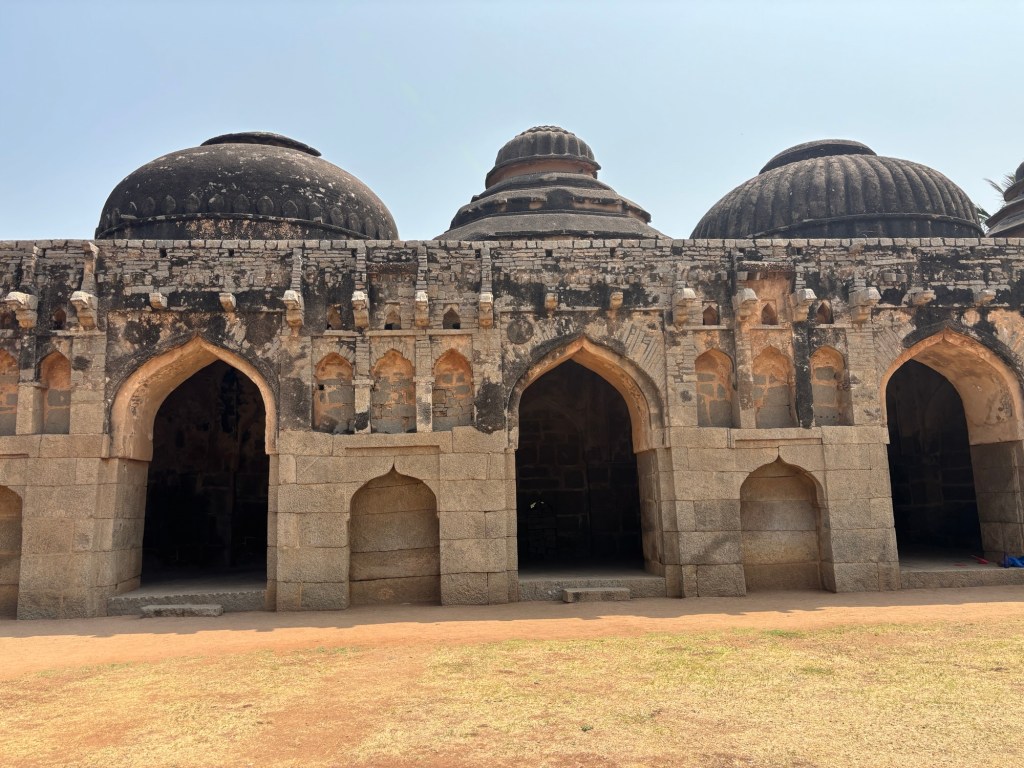
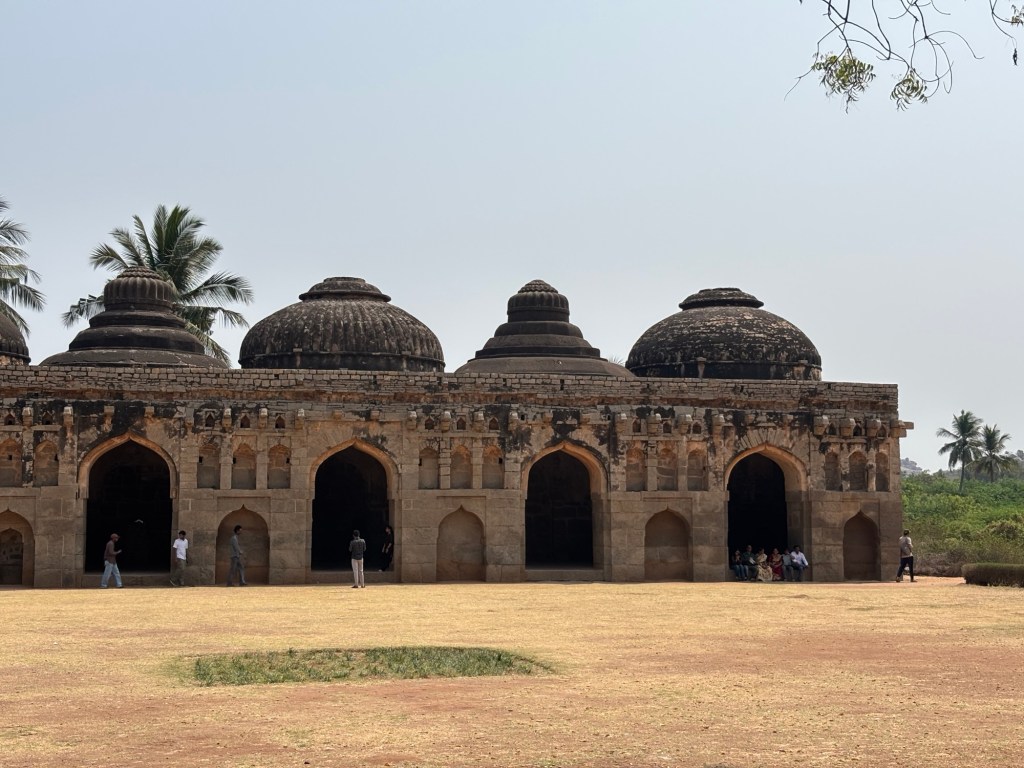
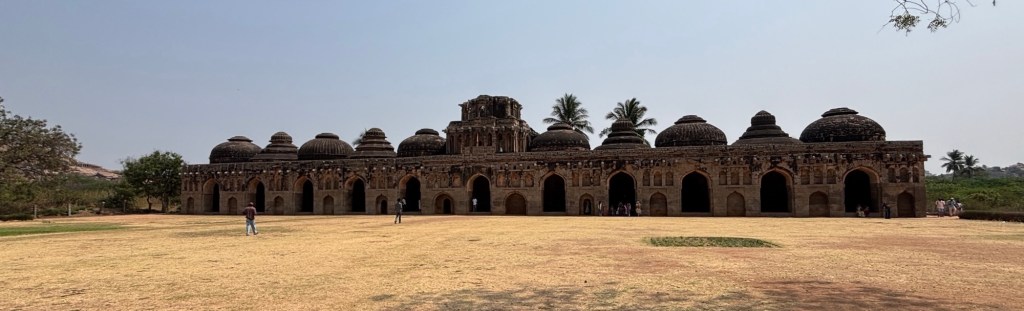
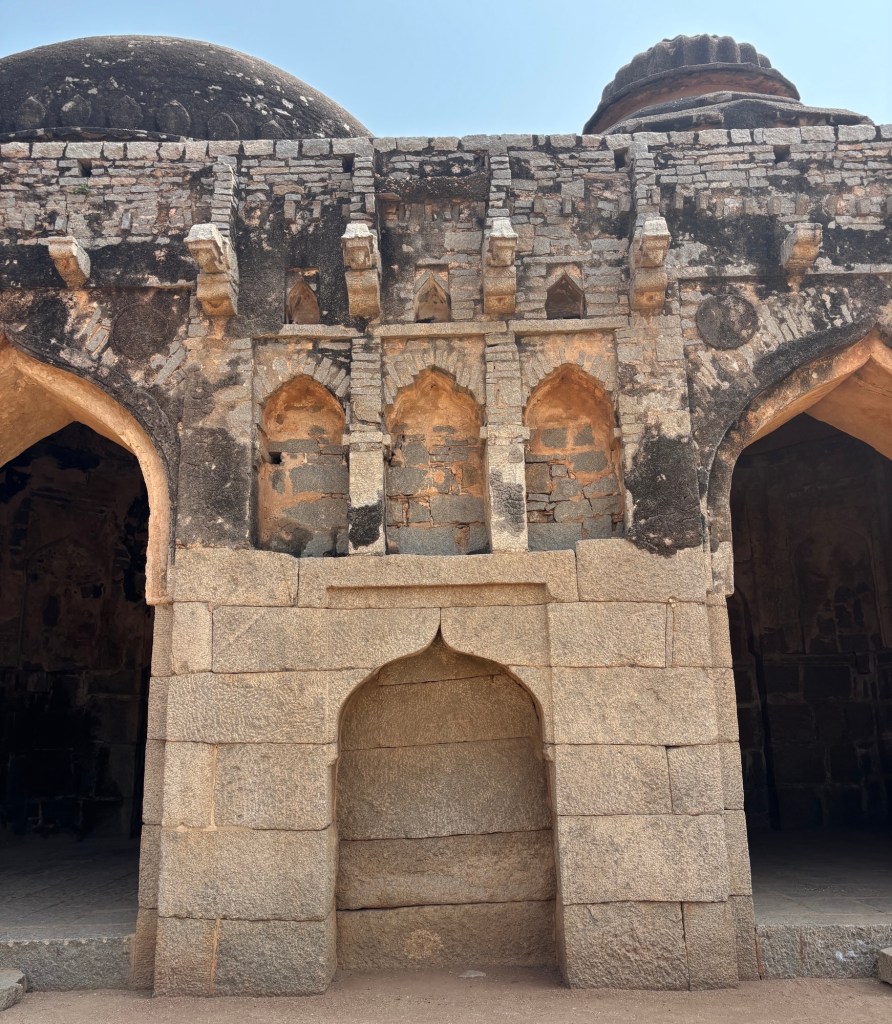
For years, I’ve visited various Indian temples and heard the story that this stone column or that single stone pillar “was musical” because, under the building’s compression, the architectural element seemed to create a tone when struck. Even on this trip, the closely carved columns at the Nellaiappar Temple in Tamil Nadu that I so admired in my entry titled Sailing Along, were reportedly “musical” because they seemed to ring when tapped. Danielle and I tapped them and enjoyed their tone. But making a tone or two is hardly what I consider music. Honestly, I always considered this a party trick invented by the local guides, conjured to impress the temple visitors. Many stones will ring under compression, and certain high-density granites and gabbros will ring like a bell even when not under compression. But it’s a long way from a naturally ringing stone to a stone being a “musical instrument.”
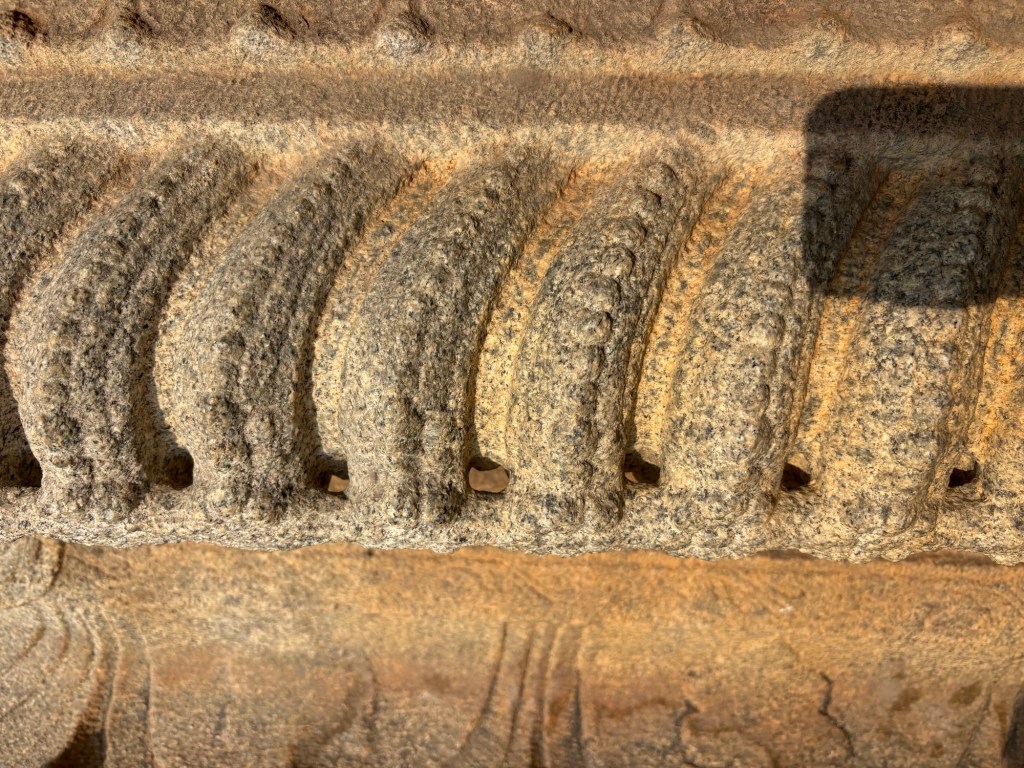
So it is with great humility that I introduce the music hall called the Ranga Mantapa within the Vitaly’s Vittala (Royal Coumpound). This “hall” looks much like the other temples in the compound except at one end there are clusters of stone pillars containing 56 colonettes. Each of these colonettes varies in thickness and length, each shows signs of being meticulously tuned. Some are slightly curved showing areas where additional stone has been delicately removed to adjust the pitch.
This hall, dating from about 1520 CE, employed musicians who would gently strike the colonettes with wooden sticks playing pre-composed music. Imagine a handbell choir where each musician has his or her notes to contribute to the larger composition. Since the entire structure is stone and sitting in a static state of highly vibrational compression, this created music would resonate through the entire structure like a giant speaker. It is reported that this music was clearly audible a kilometer away.
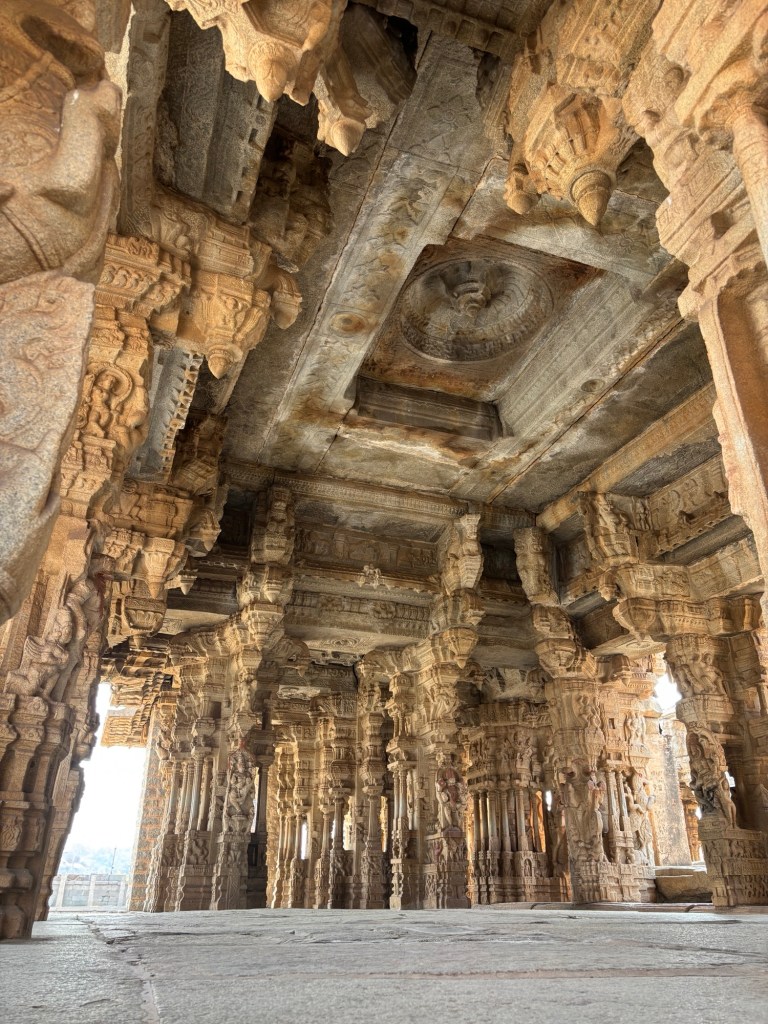
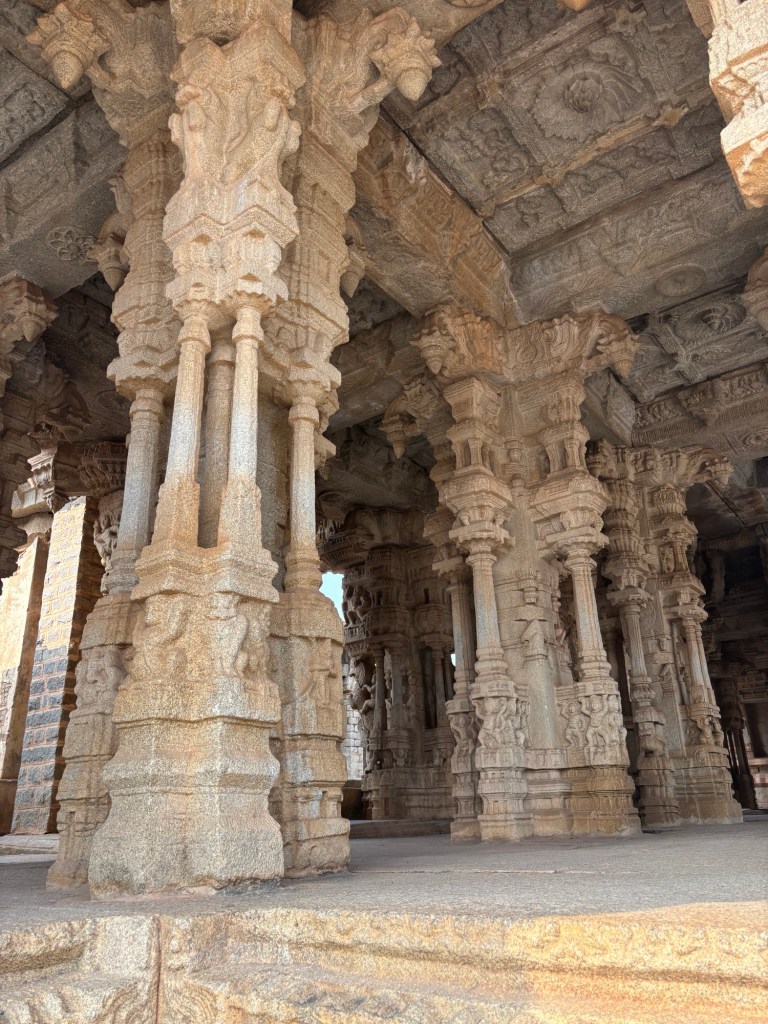
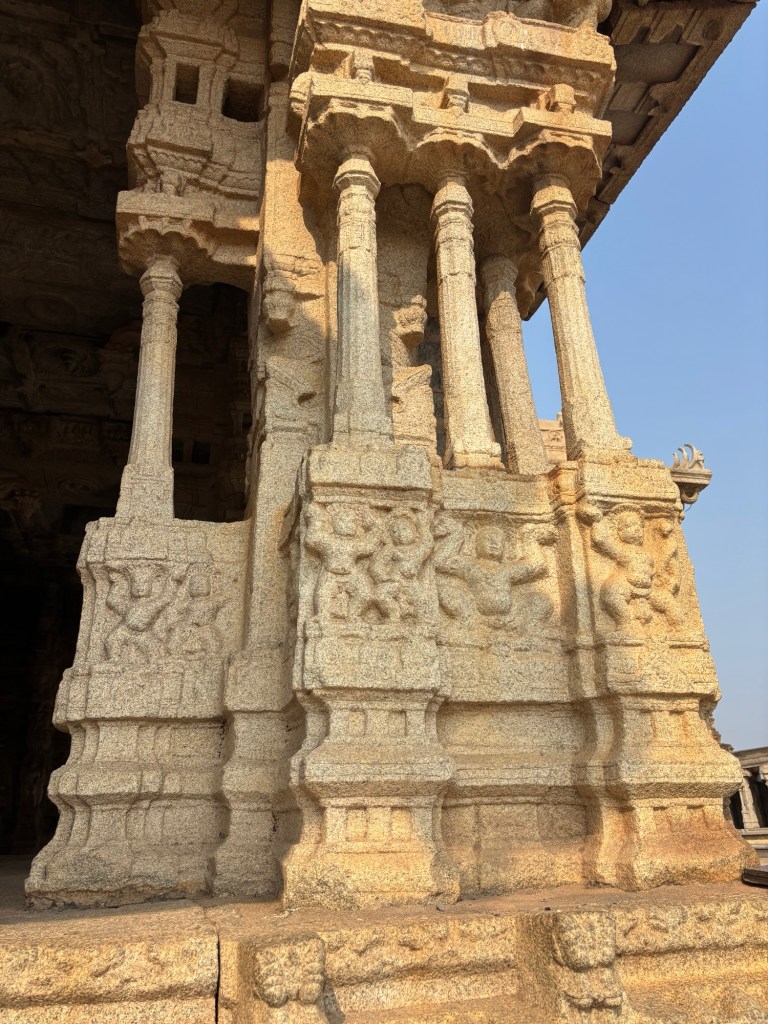
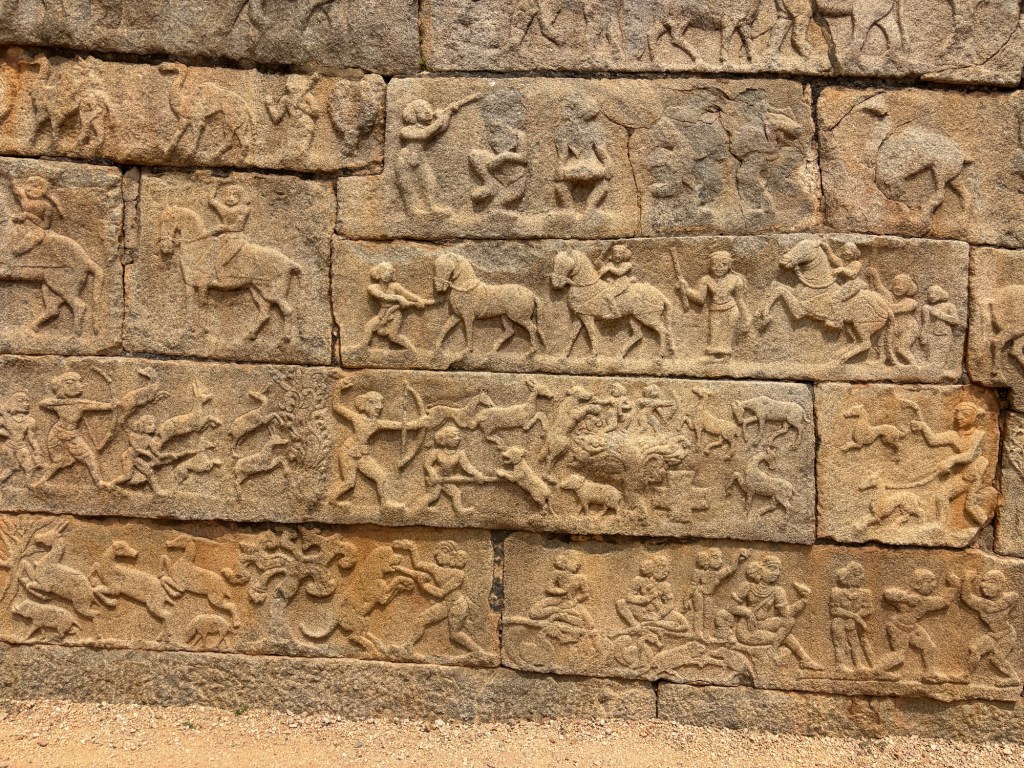
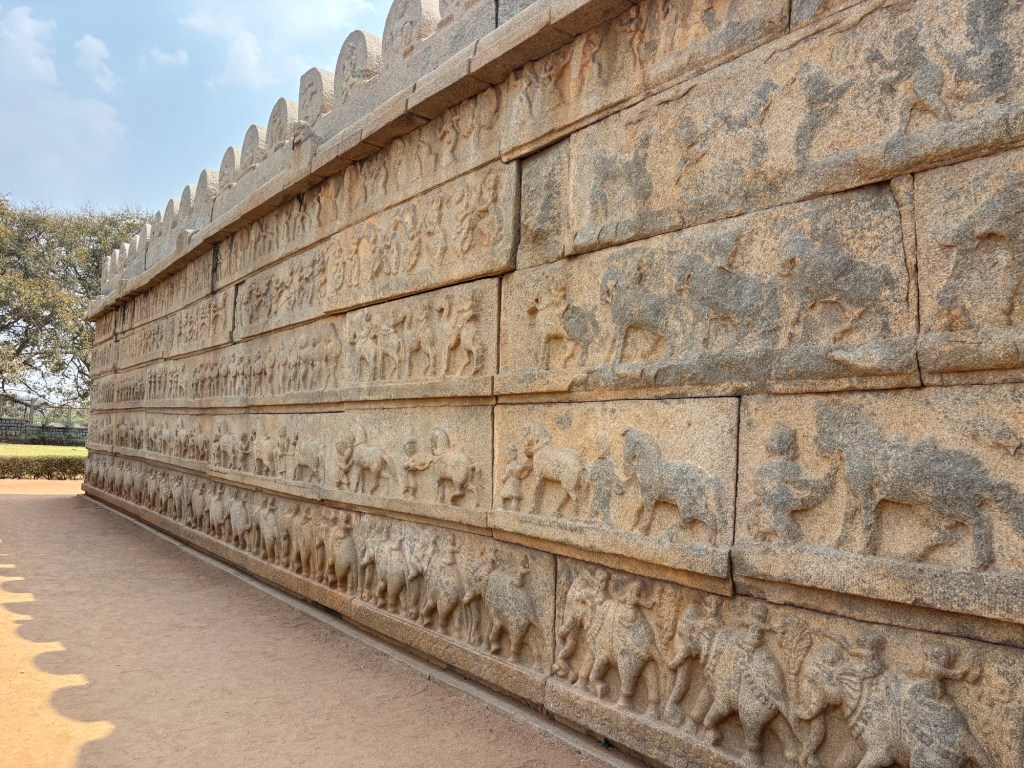
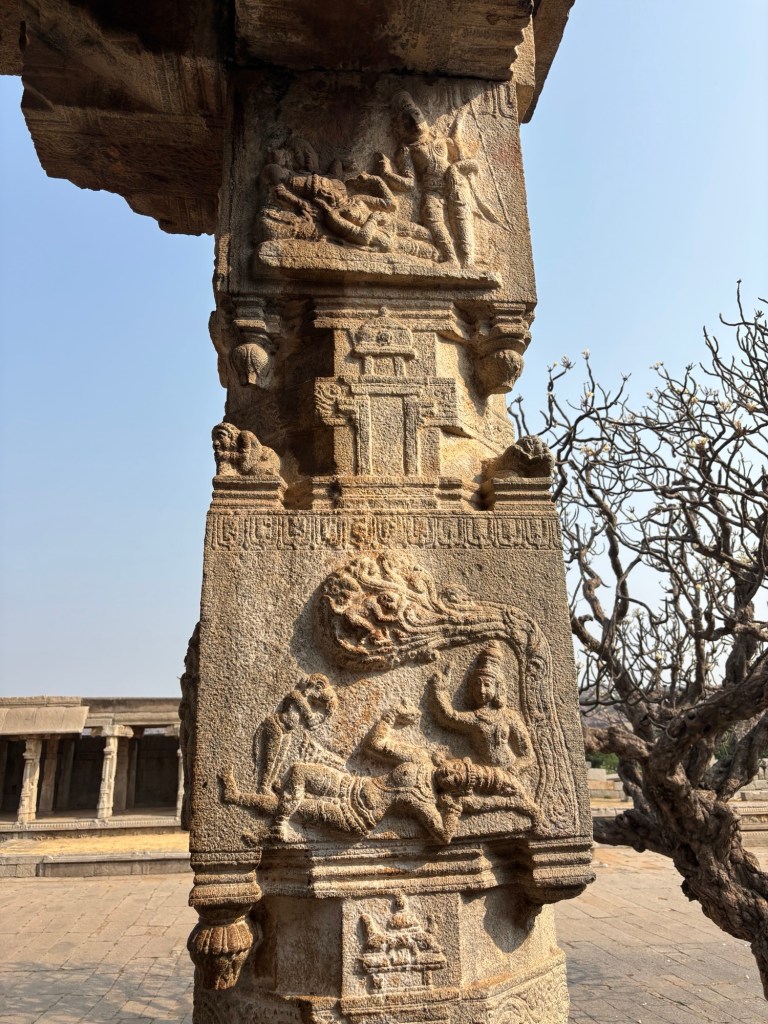
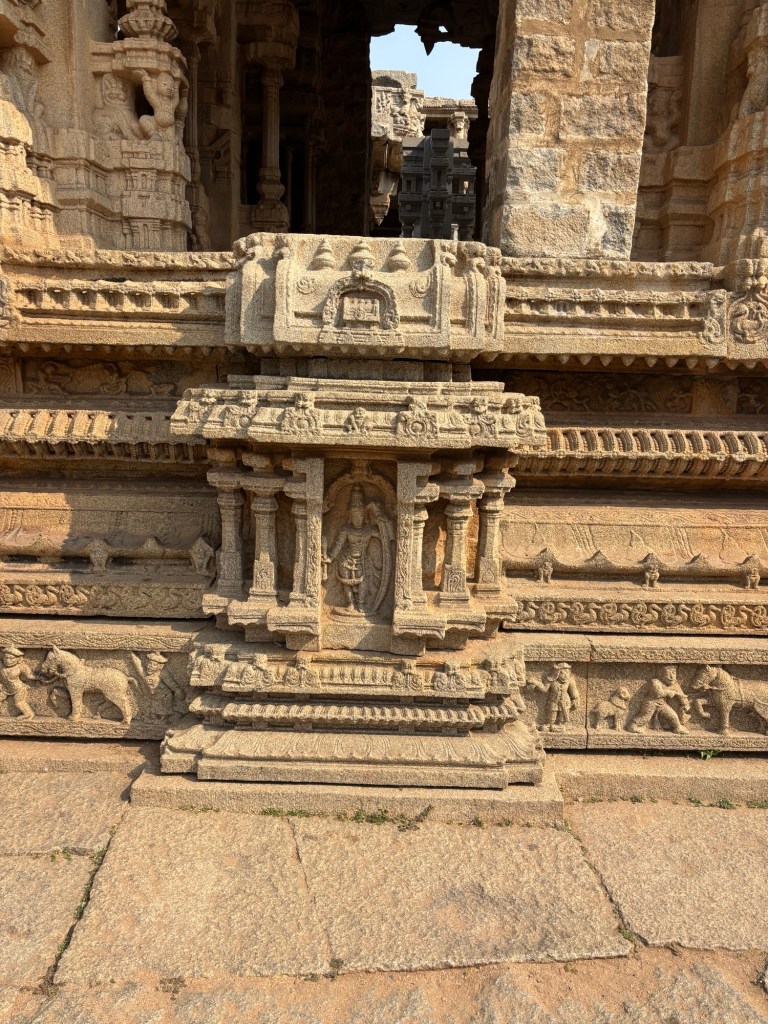
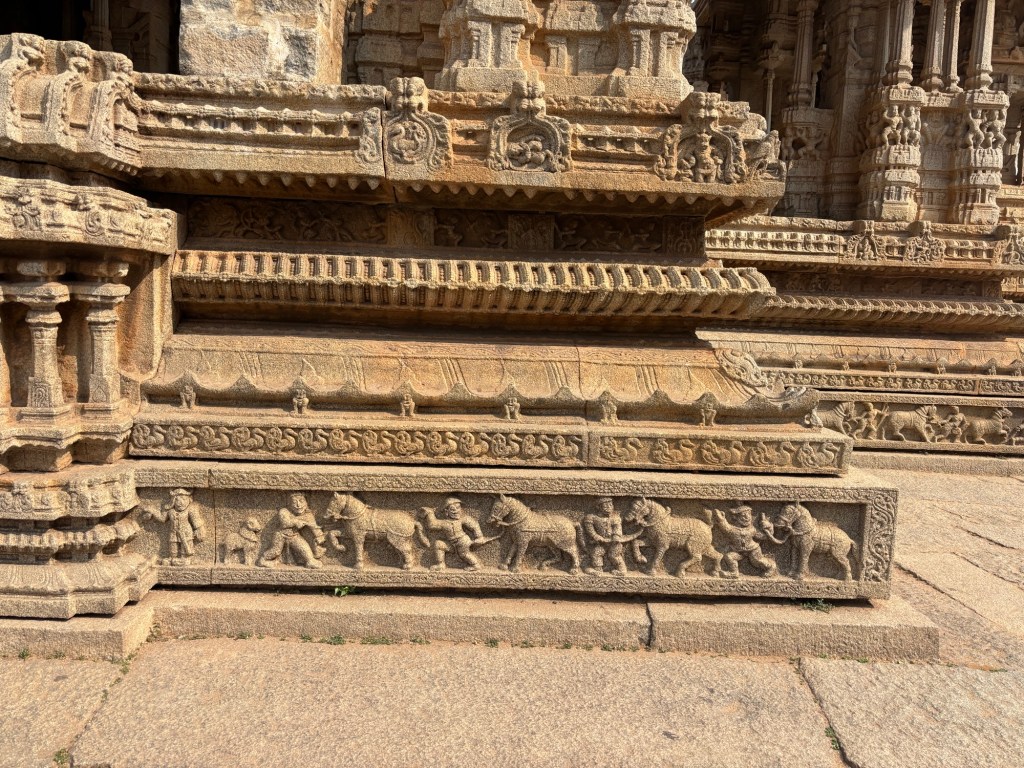
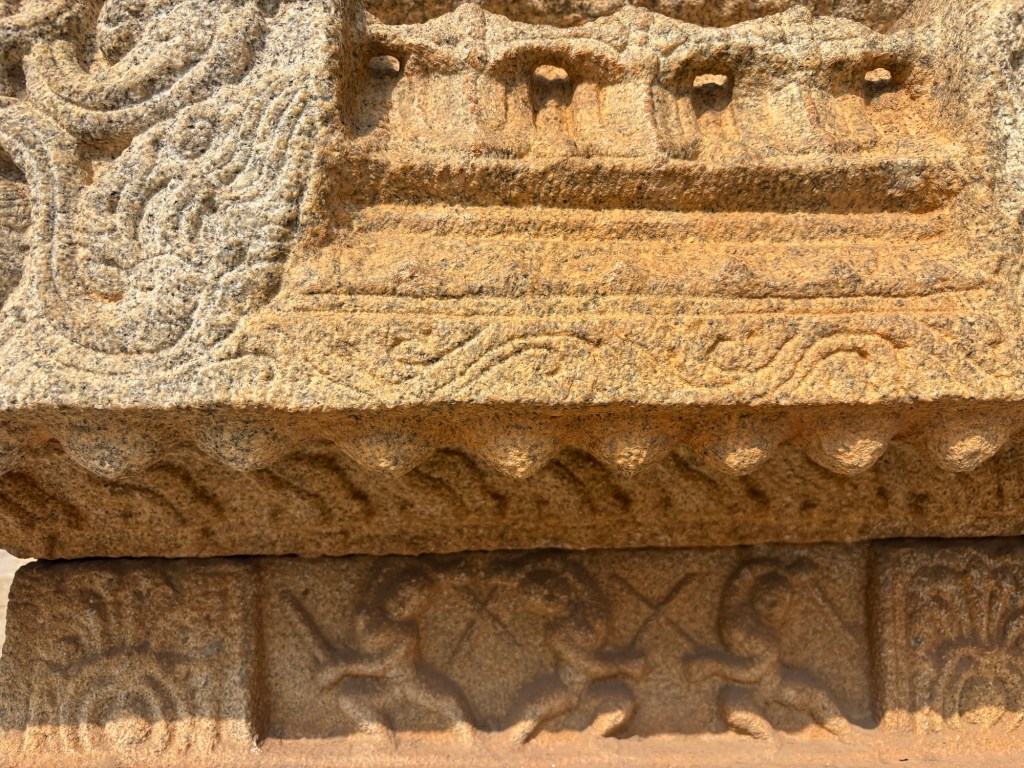
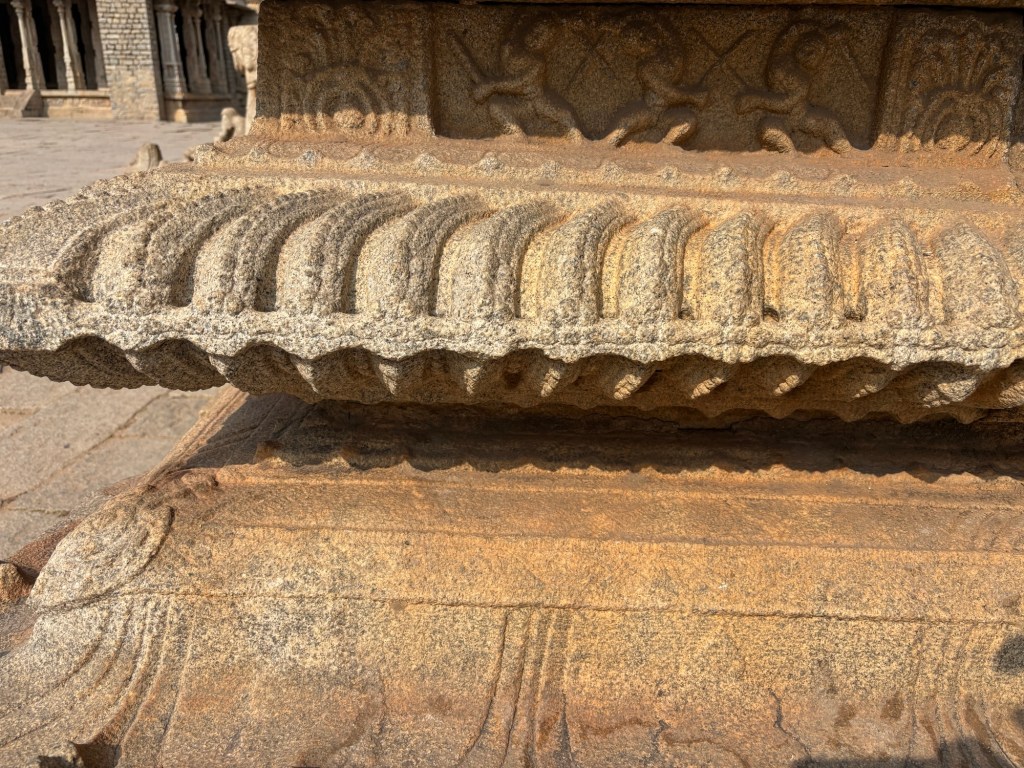
Another marvel to share is the sophisticated storytelling the stonework conveys. Almost all ancient stonework is narrative, actively conveying the values, myths, and religious stories of the culture. As Westerners, we did the same on the cathedrals of Europe. In my book, I describe how these buildings were the “graphic novels of the day, conveying the cultural content to their pre-literate citizens.”
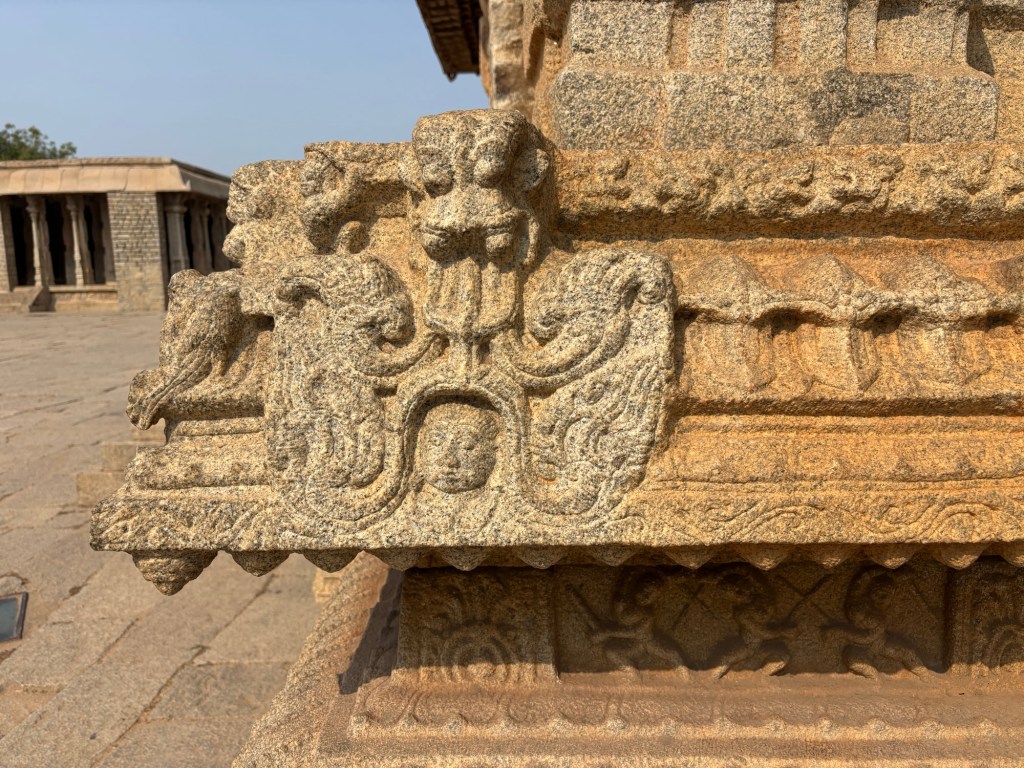
Virtually all the sculptural adornment in India is narrative. Although the stories of the estimated 300k gods of the Hindu pantheon will remain opaque to most of us, narratives of the great literary masterpieces are more approachable. We can recognize the scenes from the Mahabharata or Ramayana in the same way we recognize scenes from the Iliad or Odyssey. We just need to brush up before we visit.
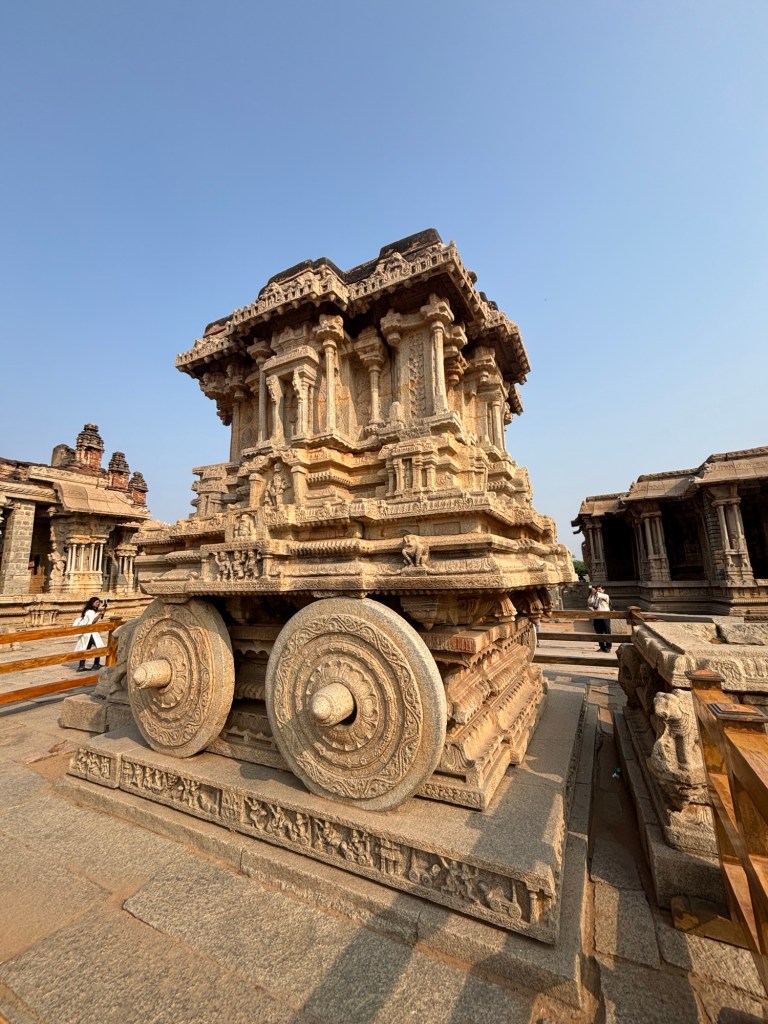
The primary temple in the Royal Compound tells the story of the Ramayana in exquisite detail. The events of the entire story are laid out in three distinct bands which circumnavigate the temple. One starts at the temple’s center on the bottom band and moves clockwise (Hindu circumnavigation is always clockwise, something critical to remember when you visit a temple). Once fully around, you move to the middle band and finally complete the band at the top.
Hampi also premiered the fusion style of architecture known as Indo-islamic. In my imperfect knowledge, the very first building in this style is the Lotus Mahal (Mahal means palace) part of the Haram Compound. Not only does it incorporate the Mughal lobed arches, reminiscent of the peacock feather, but the structure has an early type of air conditioning to keep the wives cool in the darkened upstairs.
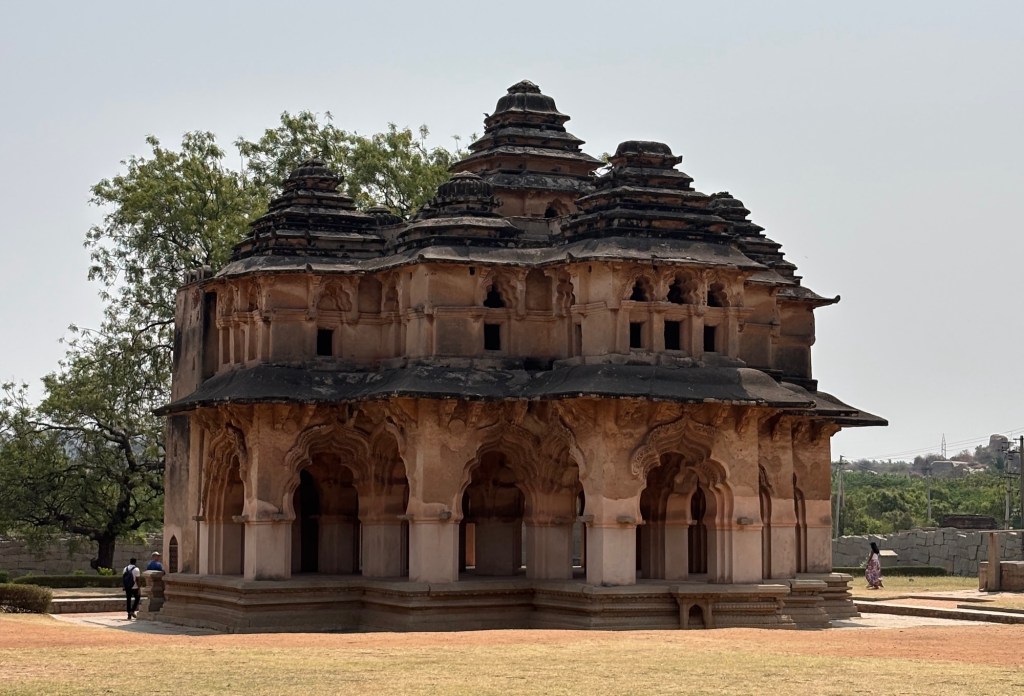
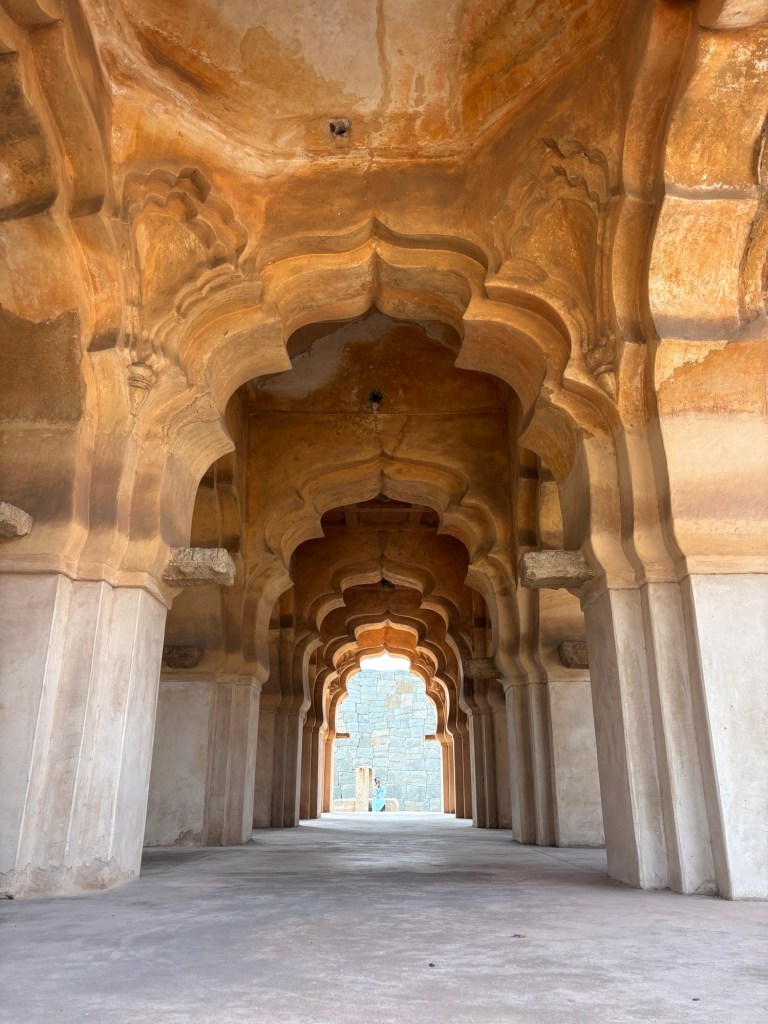
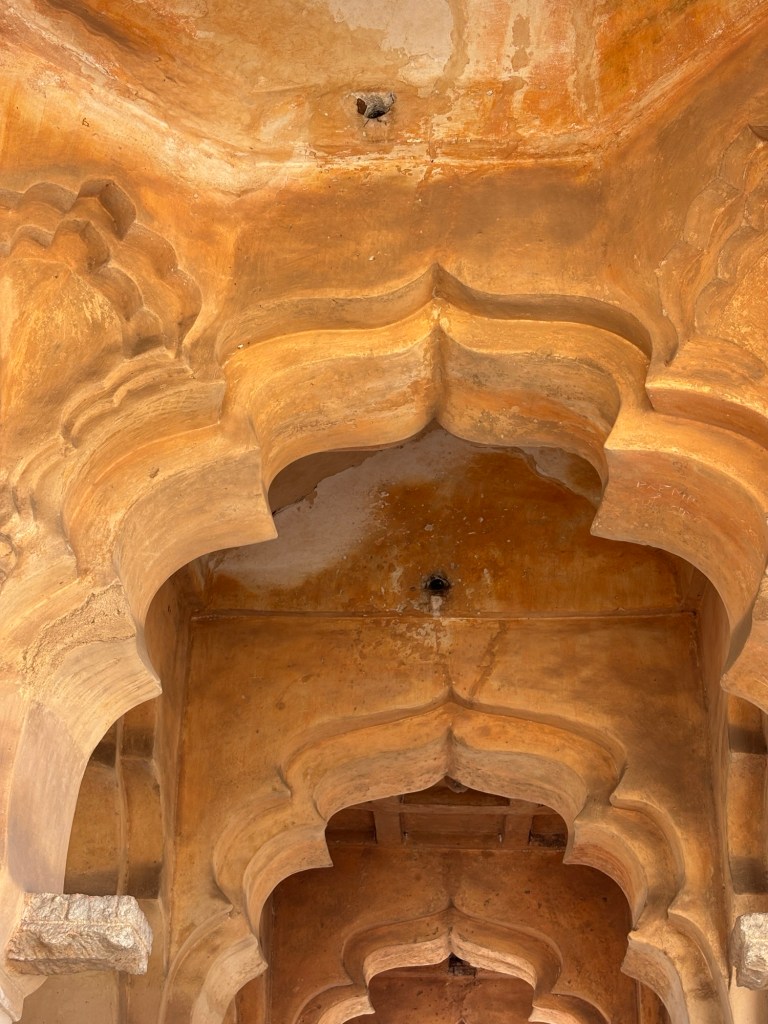
The cooling relied on hollow clay pipes that would be moistened with water by the servants. As the heat rose upward from the vaulted ground floor, the moisture absorbed in the pipes would cool the air as it entered the second floor. How brilliant is that?


 Bike Touring India
Leave a reply to byronreed57 Cancel reply