This post is being given as a lecture tonight, February 26, 2026 at GCIL (The Grand Challenge Impact Lab) for visiting winter quarter students to Bangalore from Seattle’s University of Washington.
To understand the architecture of Southern India, it is useful to understand how the land was settled and how the various religions left their mark. This is particularly true of central Tamil Nadu, since the Islamic invasion never succeeded in subjugating the population for long enough to impose their vastly different architectural style. Notably, Madurai and Thanjavur escaped Islamic domination and it is here that we find the most pure expression of the Hindu Temple.
Essentially, in the far north of India, across the Khyber Pass (reaching an altitude of 7600 m) came the successive waves of the Aryas—Indo-Europeans from the plateau of Iran who arrived in the second and first millennia BCE. The settlement of India took place over a long period, roughly between 1300 and 800 BCE. They brought with them the Vedic, an archaic form of Sanskrit. The Vedic texts amount to the most important literary monuments of the second millennium BCE and include the Rig-Veda, a book of hymns to the various gods. The Upanshads added to this basic corpus, about 500-400 BCE and support clear analogies between the Vedic pantheon and the Greco-Latin and Germanic mythologies. This is formed the basis of the Hindu religion which emerges in the first millennium BCE.
The peoples who retreated before the Aryan advance were Dravidians, people of dark skin and straight hair who originated in the Ural-Altic regions to settle India. It is thought they themselves displaced Australoid aborigines who occupied most of prehistoric India. The distinct bone structure of the aboriginal heritage remains visible in Tamil Nadu today.
Henri Stierlin, in his thoughtful book, Hindu India: From Khajuraho to the Temple City of Madurai (Taschen, Köln), 1998, reminds us that, “Hindu cosmology is destinctive in that the circle represents the earth and irrational nature, and the square the sky and the cosmic order. For this reason, the square is the governing form for the habitation of the gods in its concrete form, the temple.”
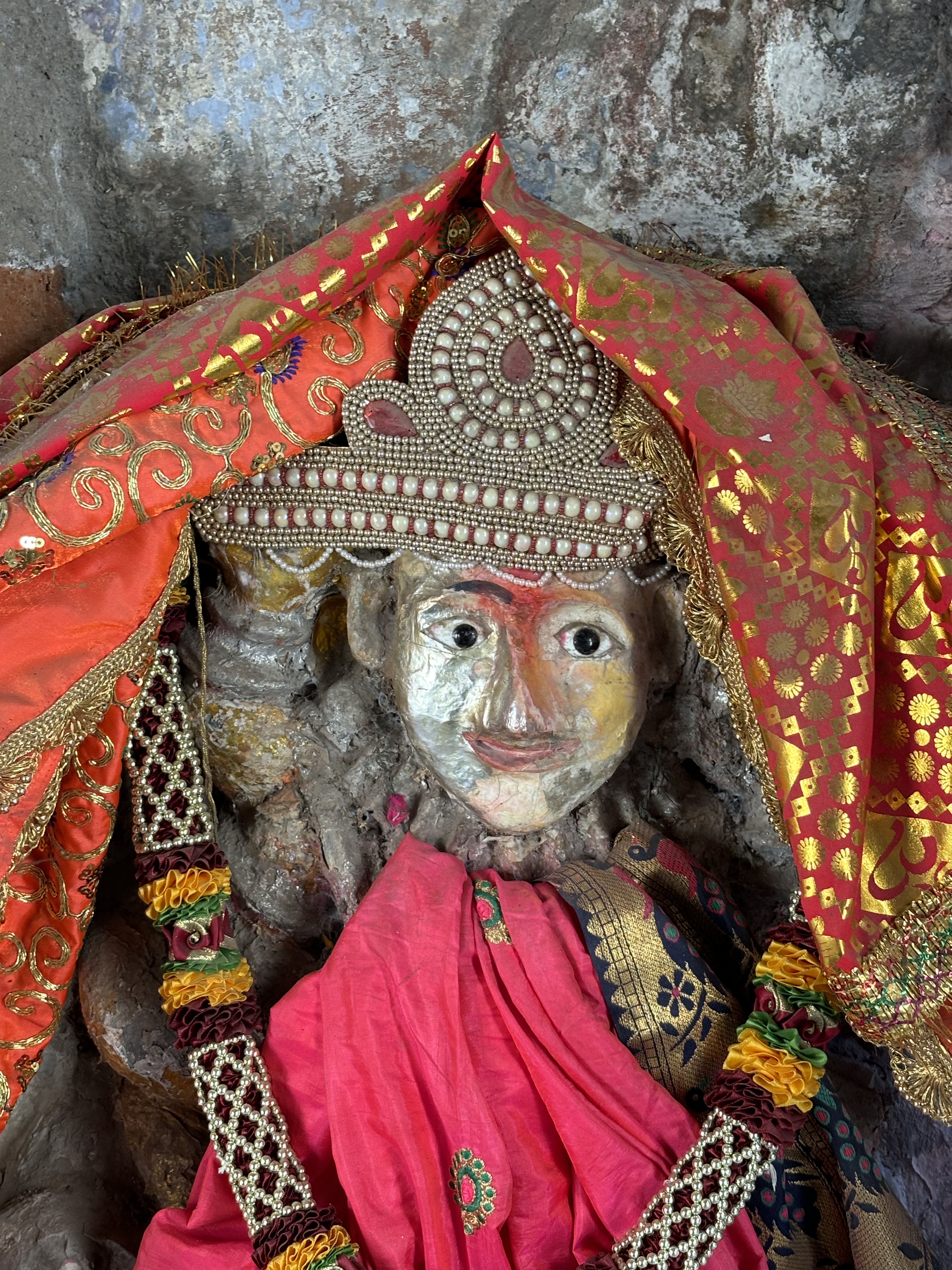
Further, it is useful to remember that for the Hindu faithful, the temple is literally the residence of the god. I have written previously how the veil is somehow thinner in India. And this feeling of the gods being present, their archetype activated and perceptible, is one of the indelible impressions of visiting these ancient sites. One feels the presence, the mystery of the divine, and it can be inexplicably moving.
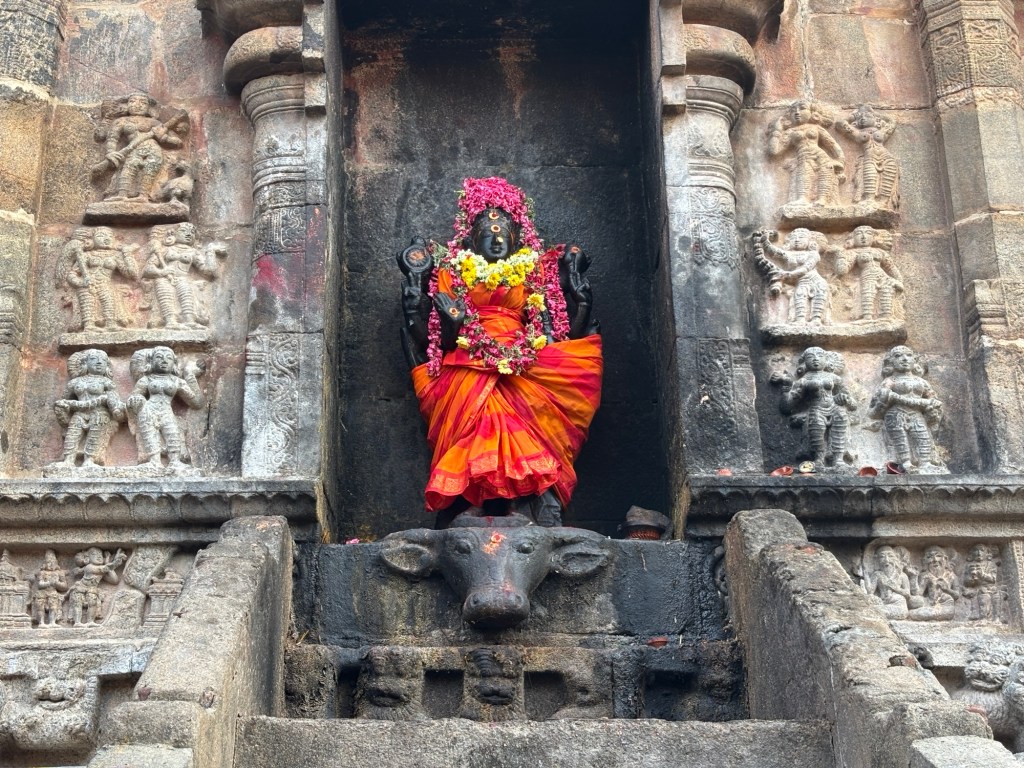
Also unique to this area are the high-relief statues of graceful deities, treated in a vigorous style of carving.
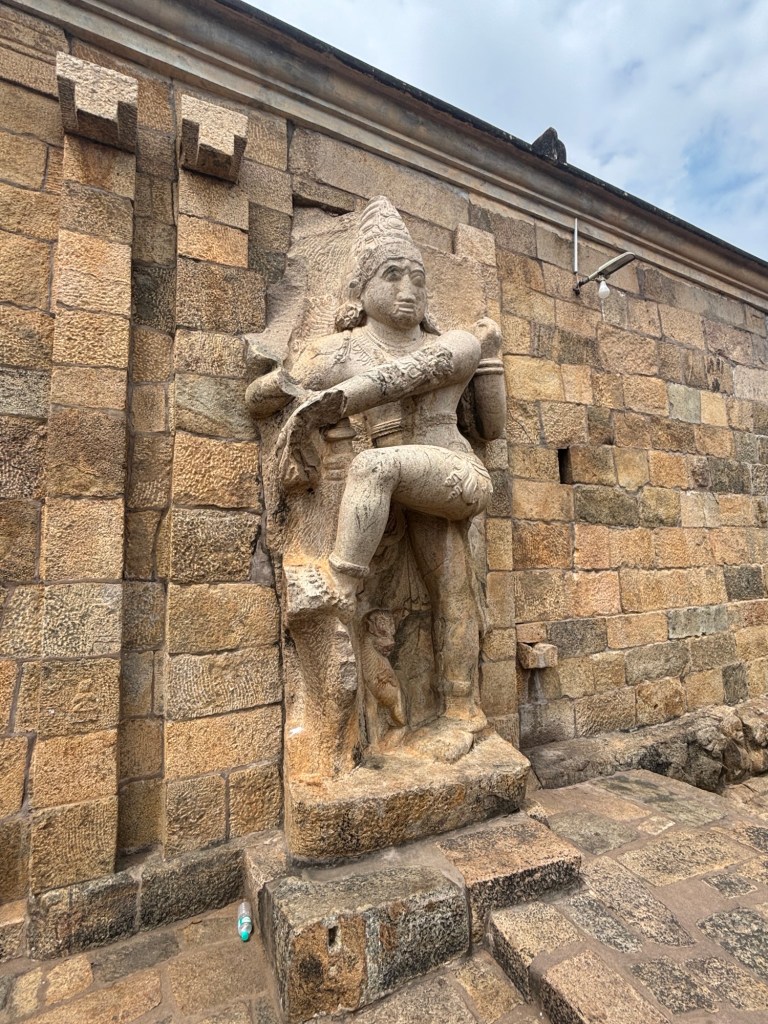
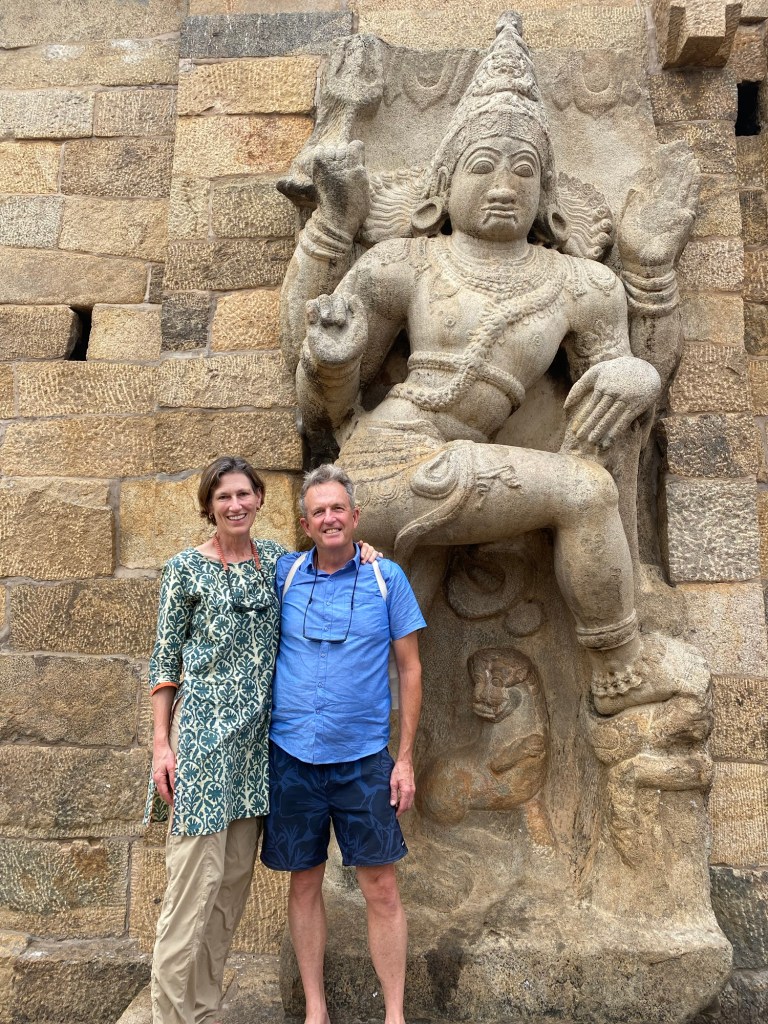
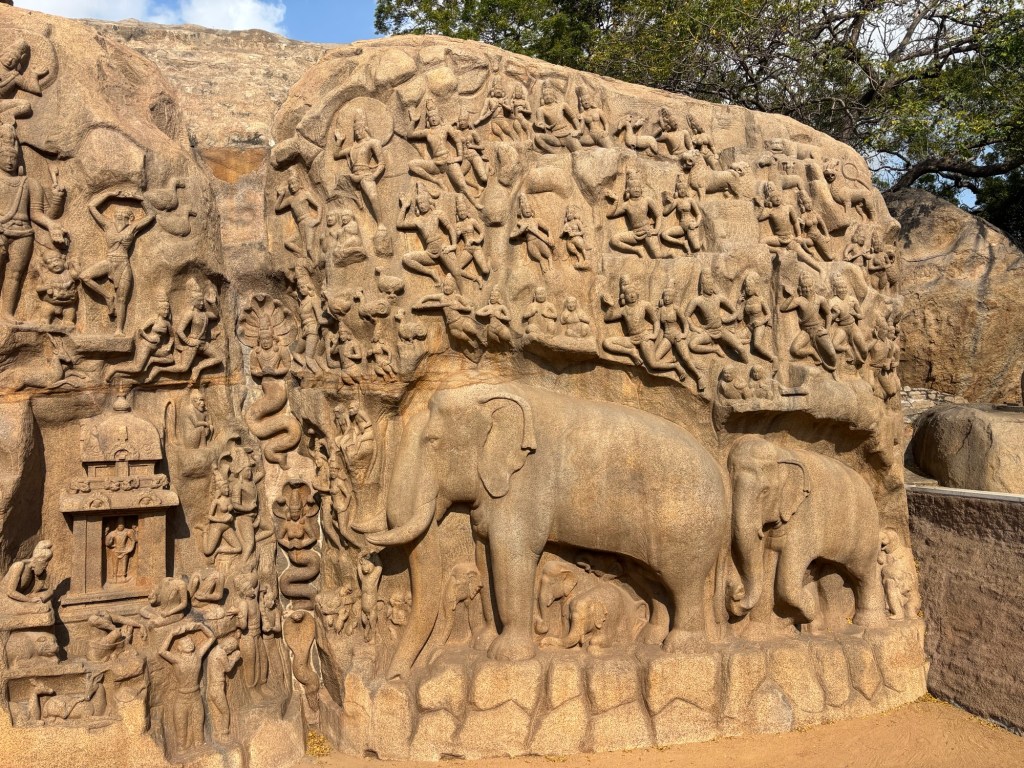
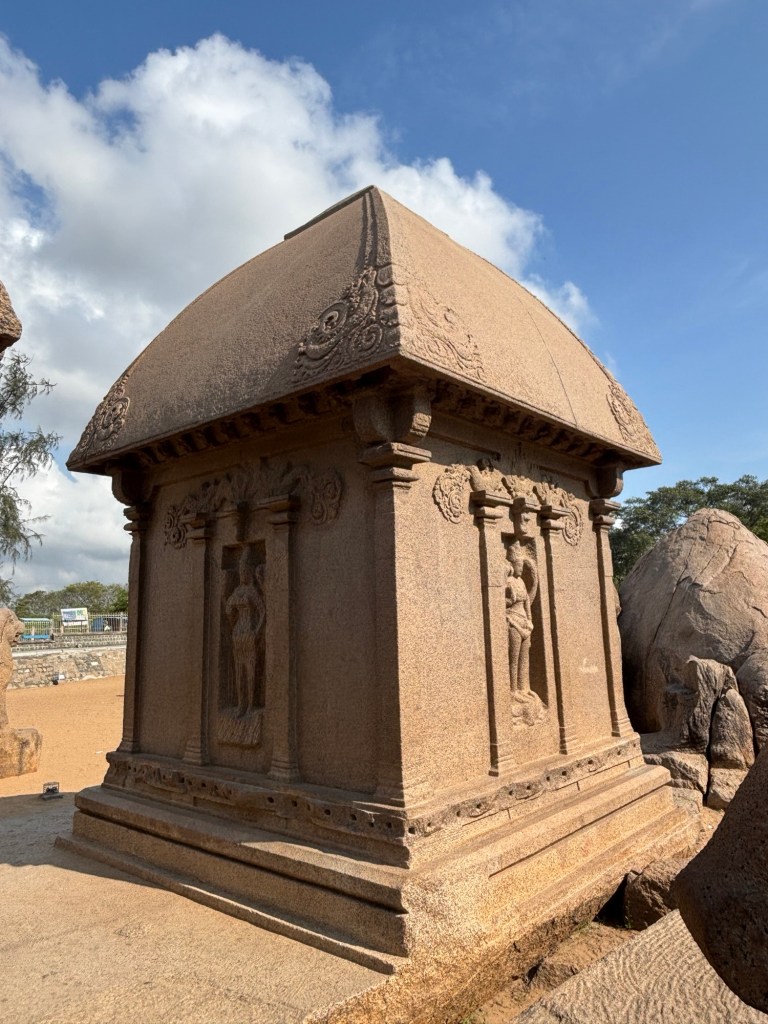
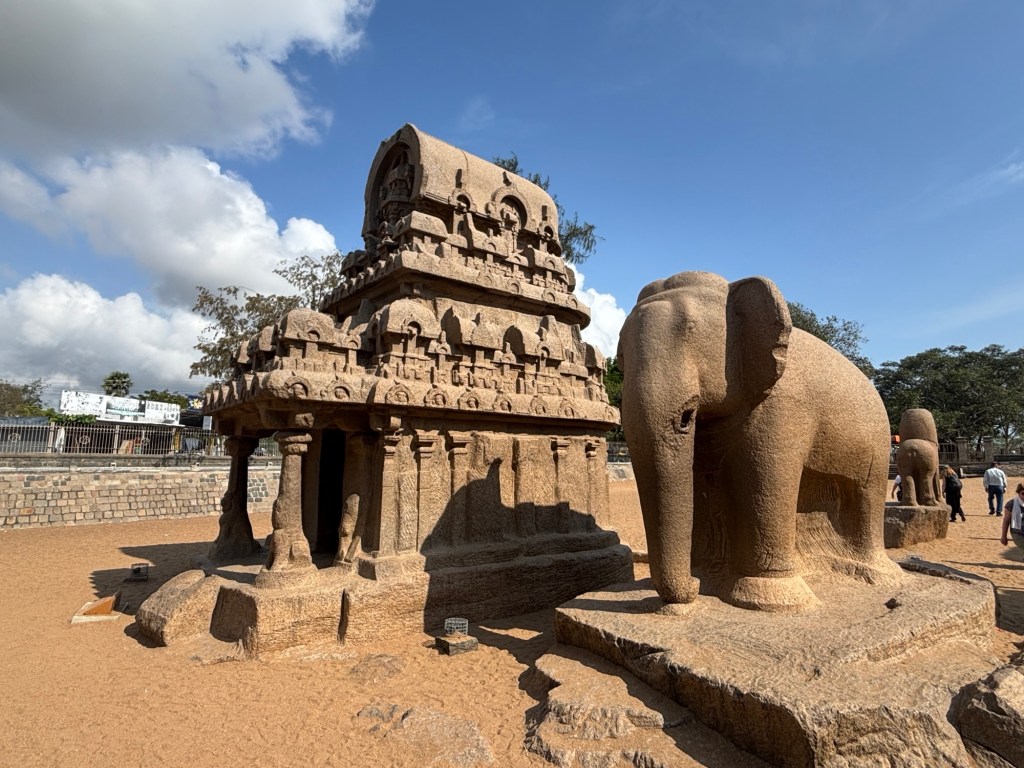
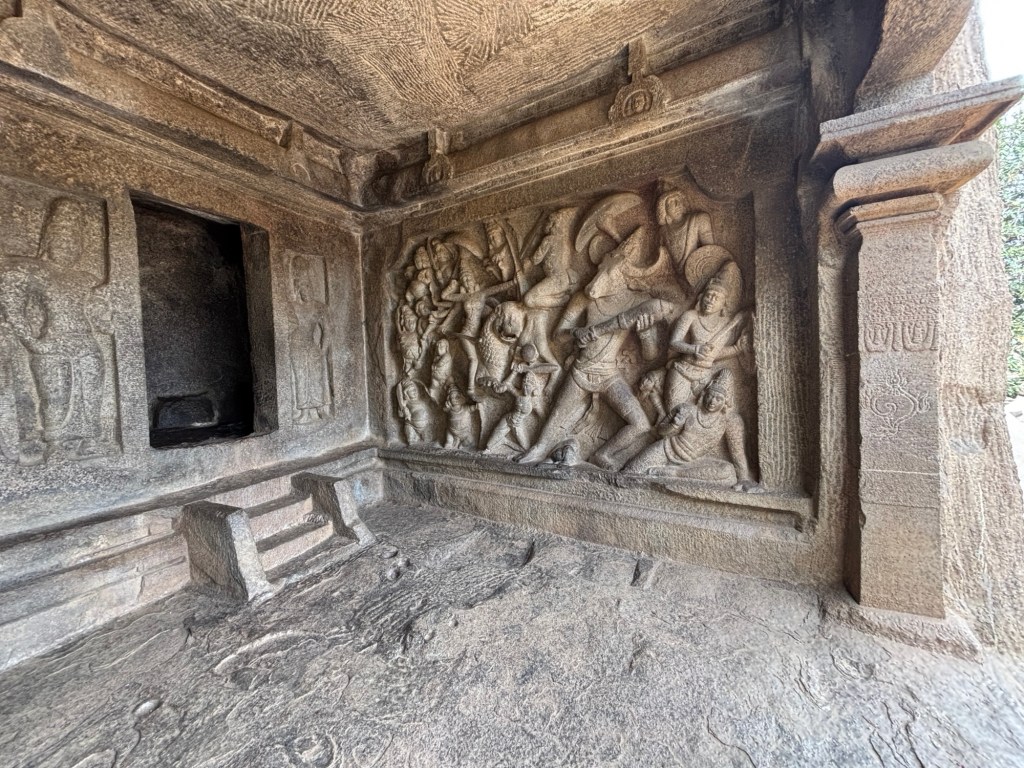
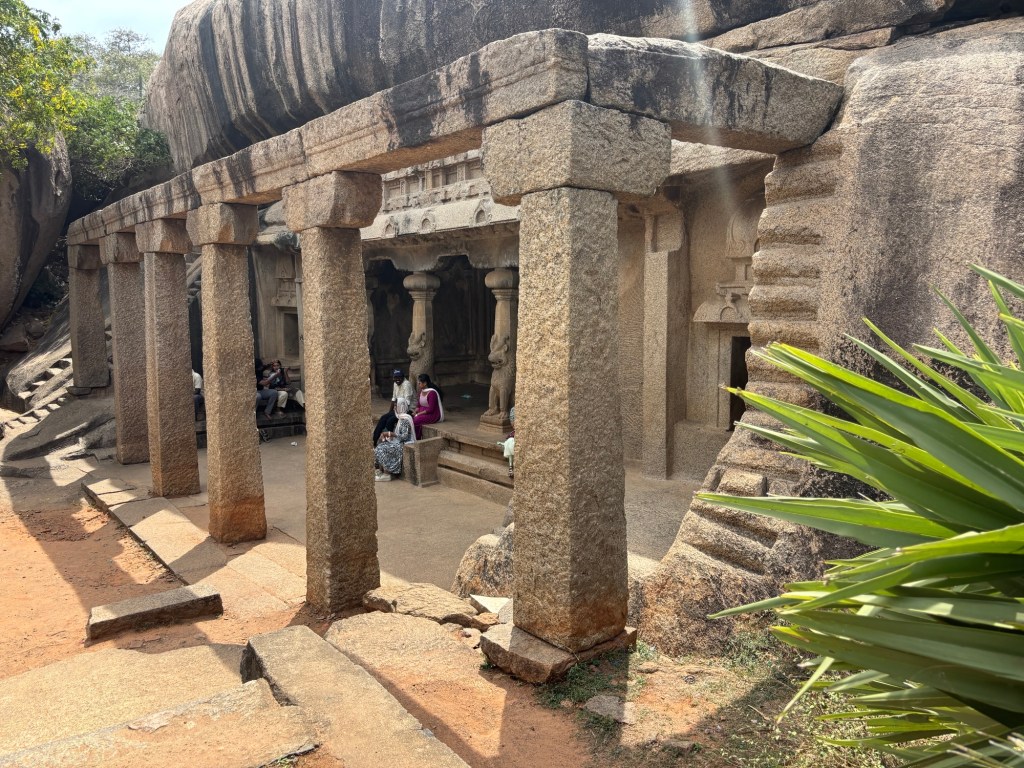
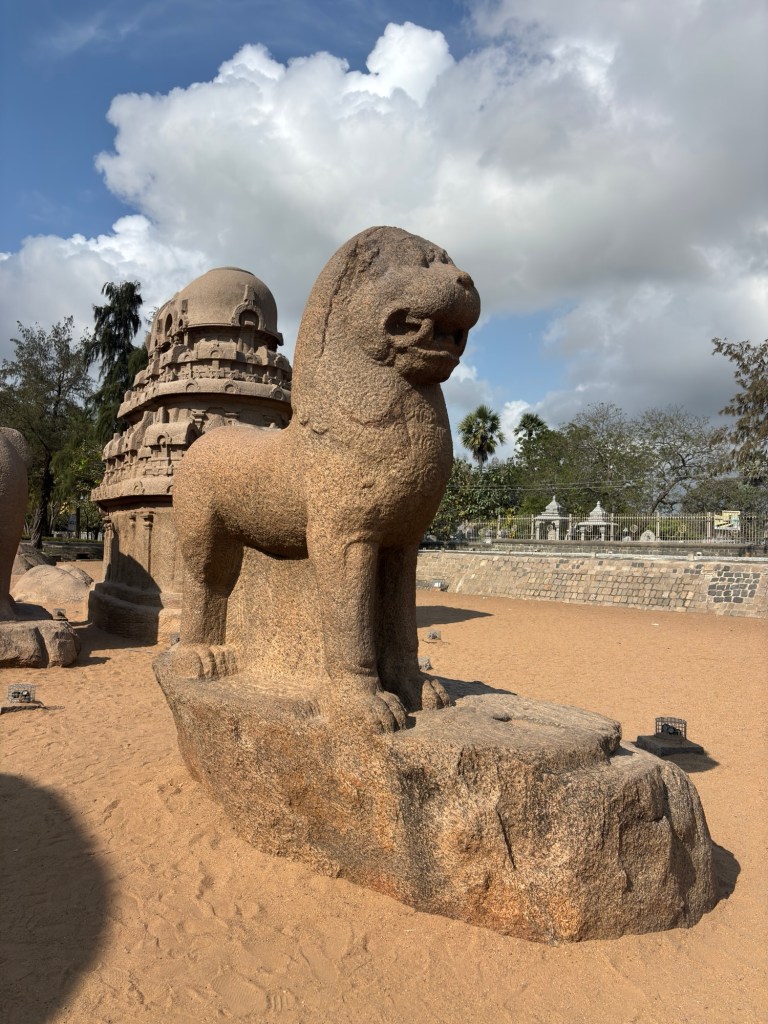
Built almost 1000 years after the first rock cut temples at Ajanta in 2nd century BCE, the Tamil rock-cut temple examples at Mahabalipuram are significantly smaller. Completed in the 7th century CE, they contain rock-cut caves with sculpted panels of deities. Like small jewel boxes, they are equally remarkable.
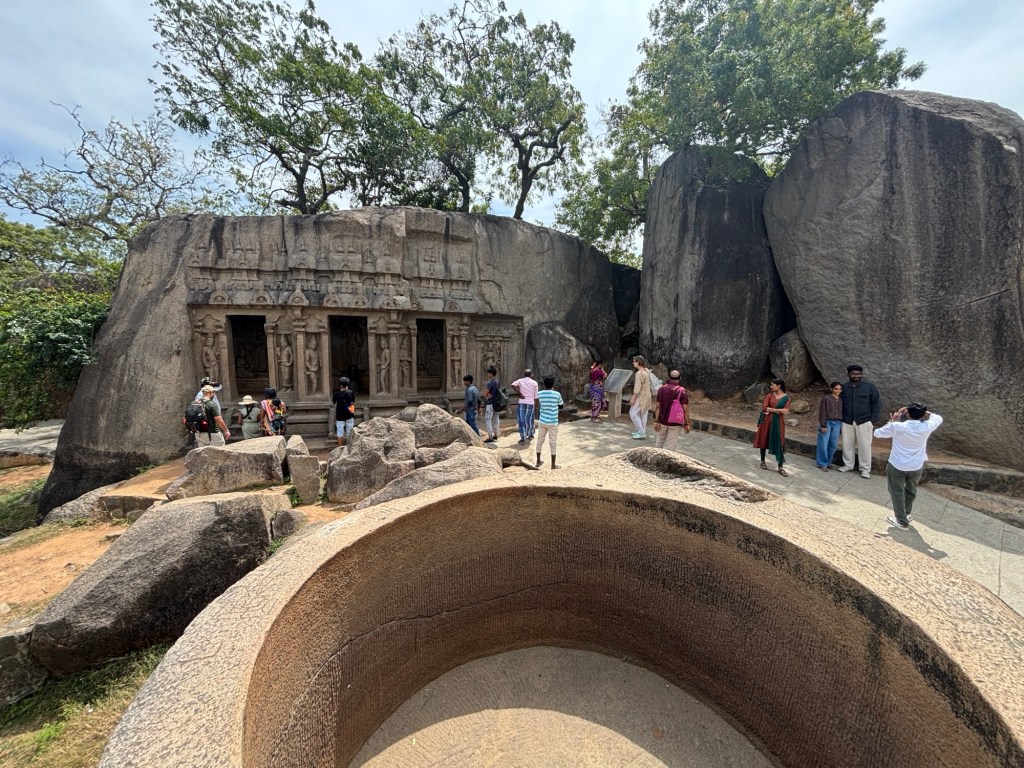
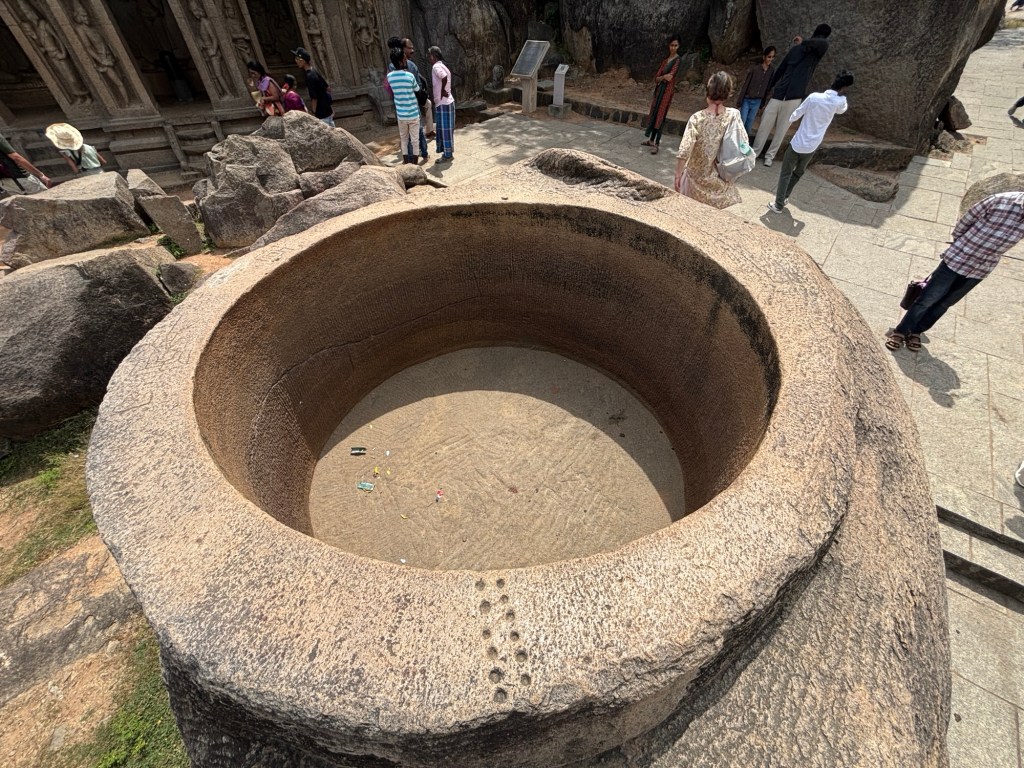
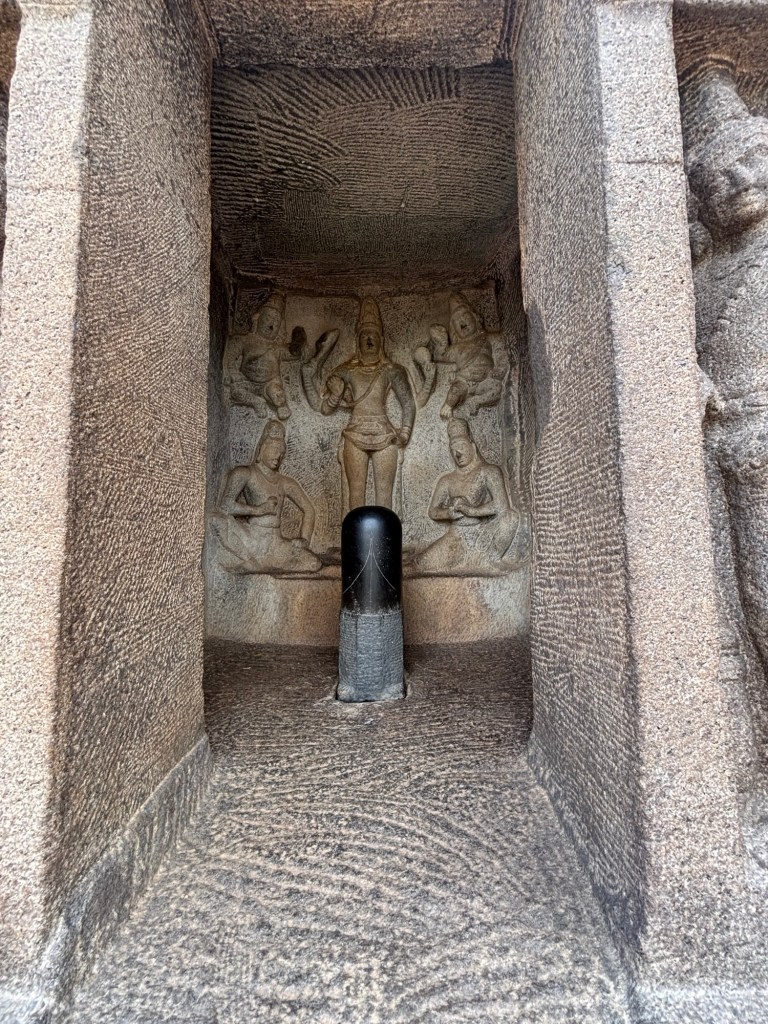
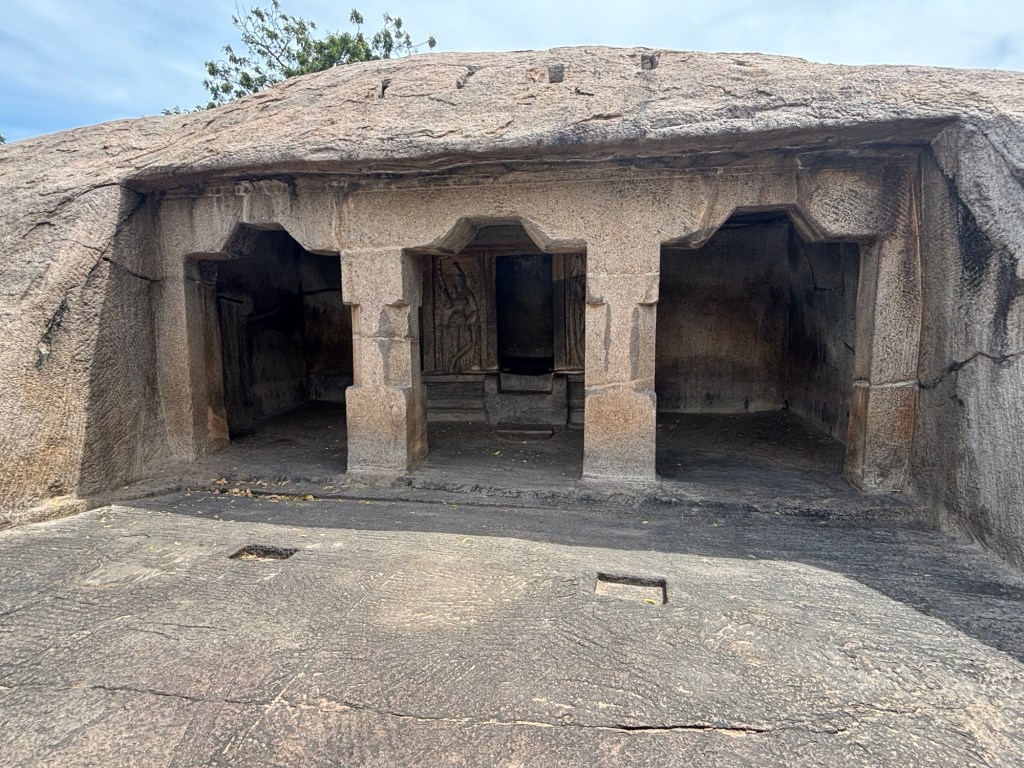
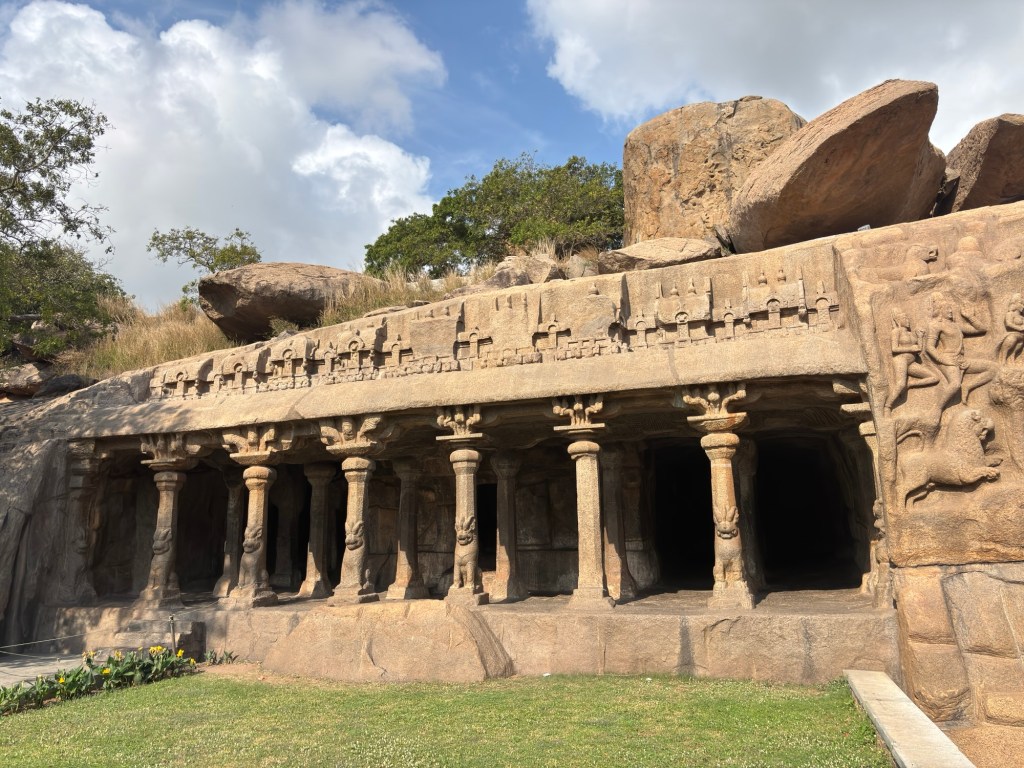
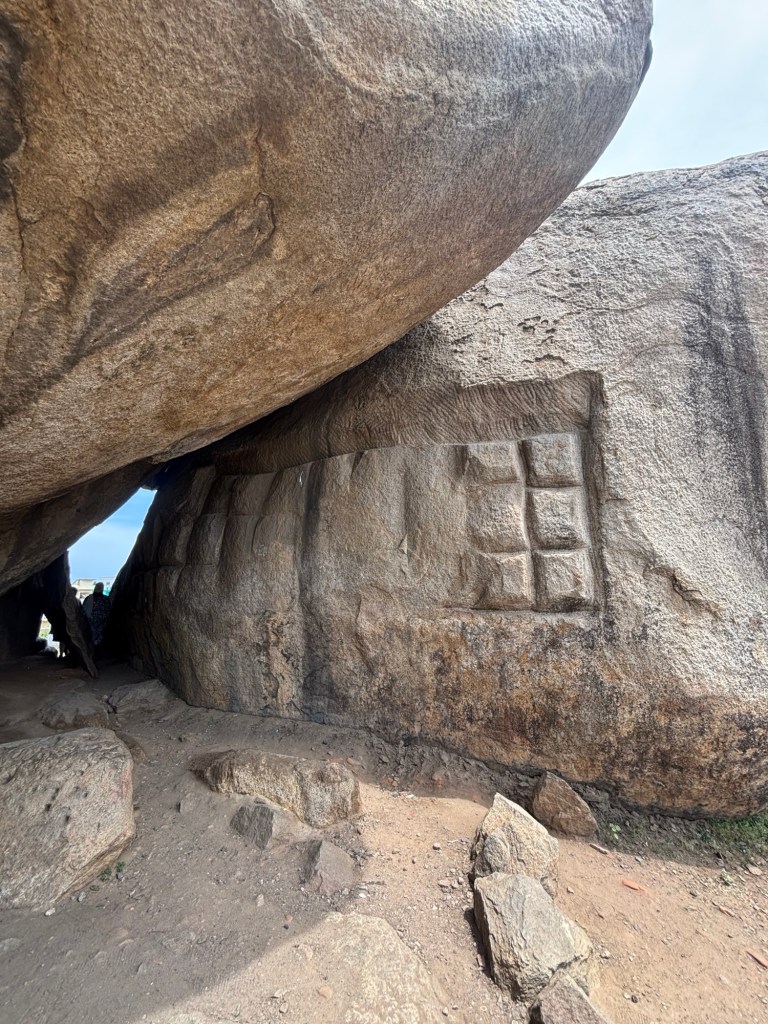
More impressively, there are solid stone boulders carved to mimic the shape of what was likely a temple previously crafted in wood and thatch; called “rathas,” they have more in common with freestanding sculpture than architecture.
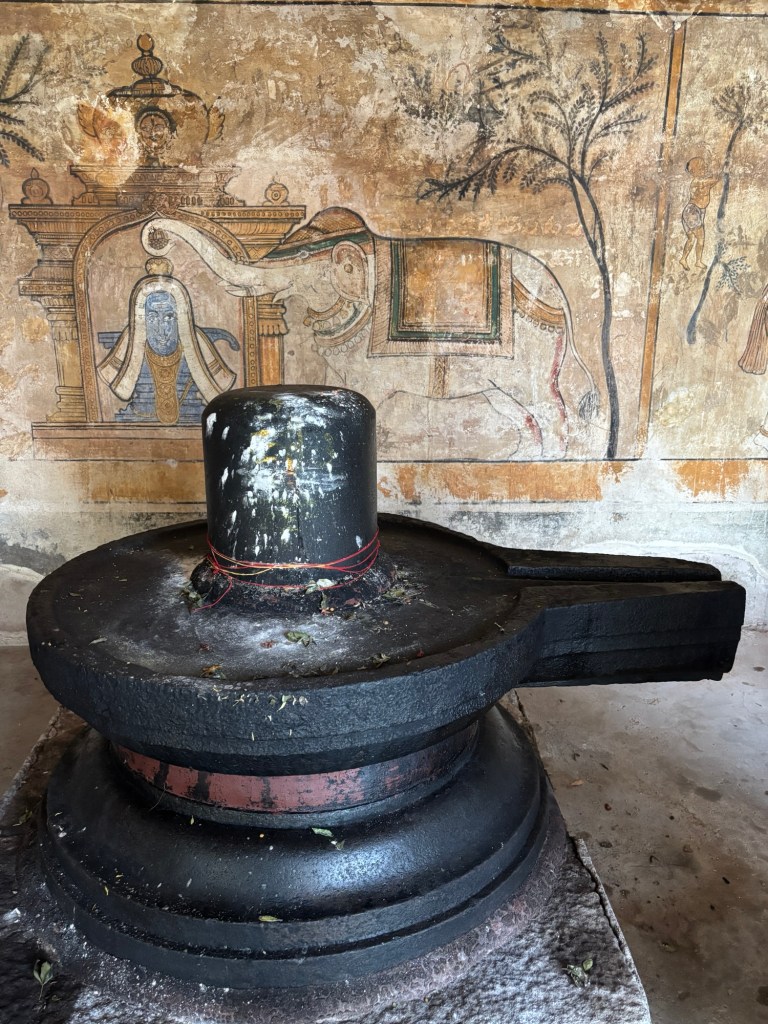
The linga , rises out of the yoni, rather than enters into it. The two together are understood as a symbol of creative power; this is about potentiality and not about sexual activity. Indeed, most devotees would be horrified at the suggestion.
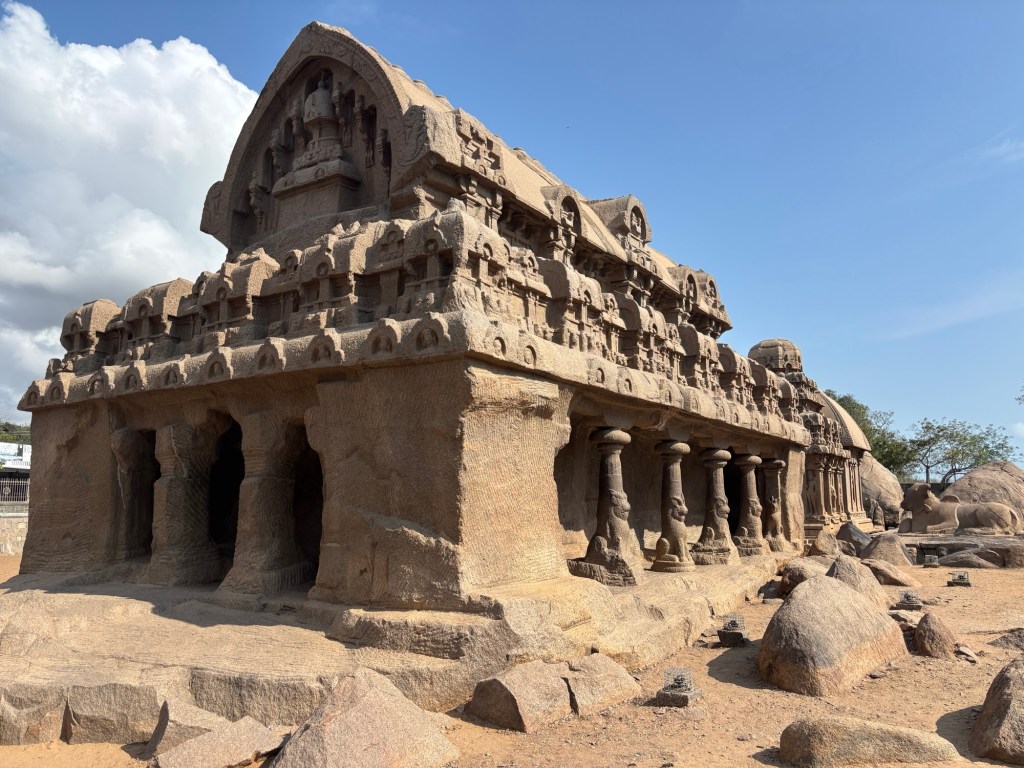
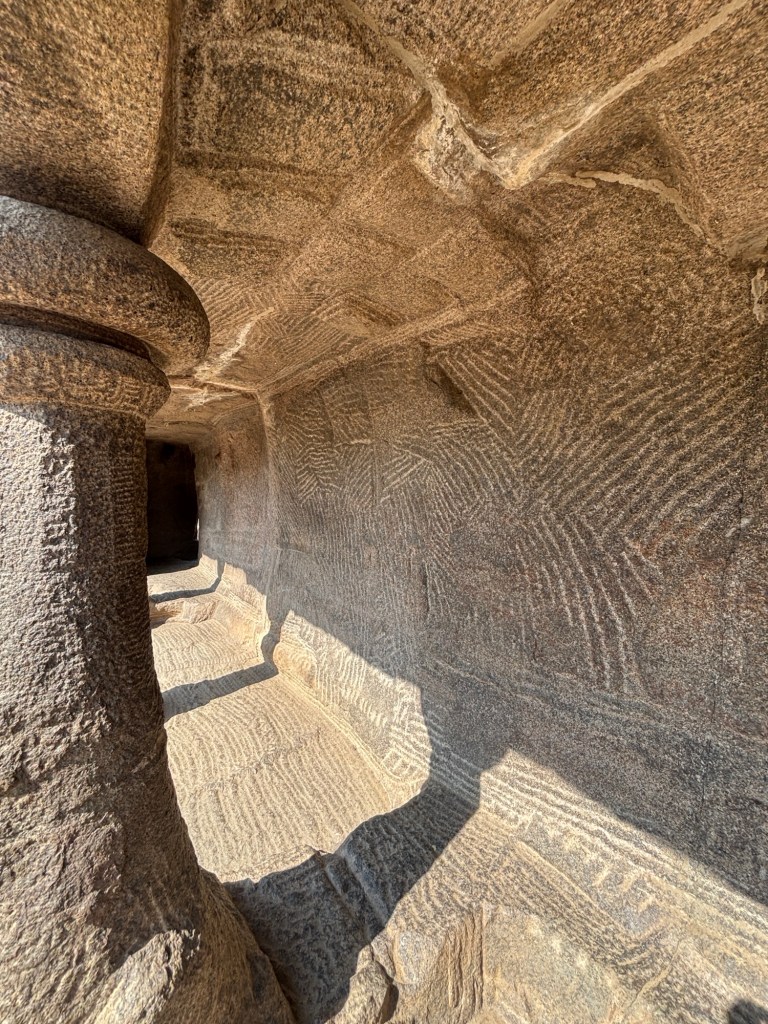
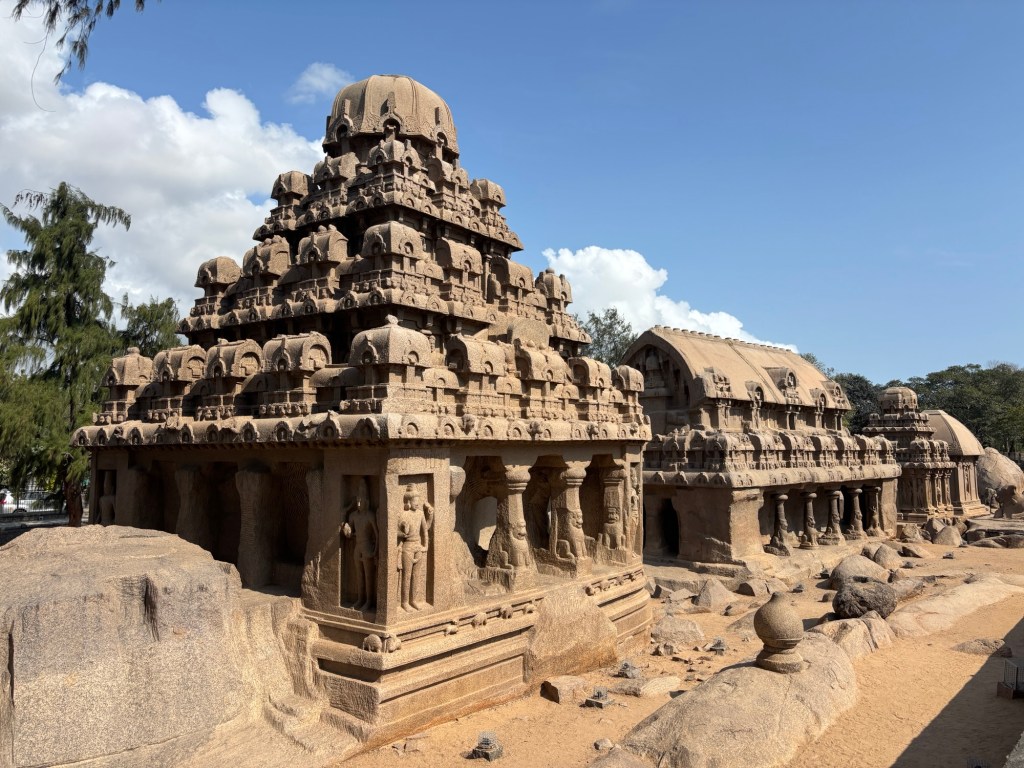
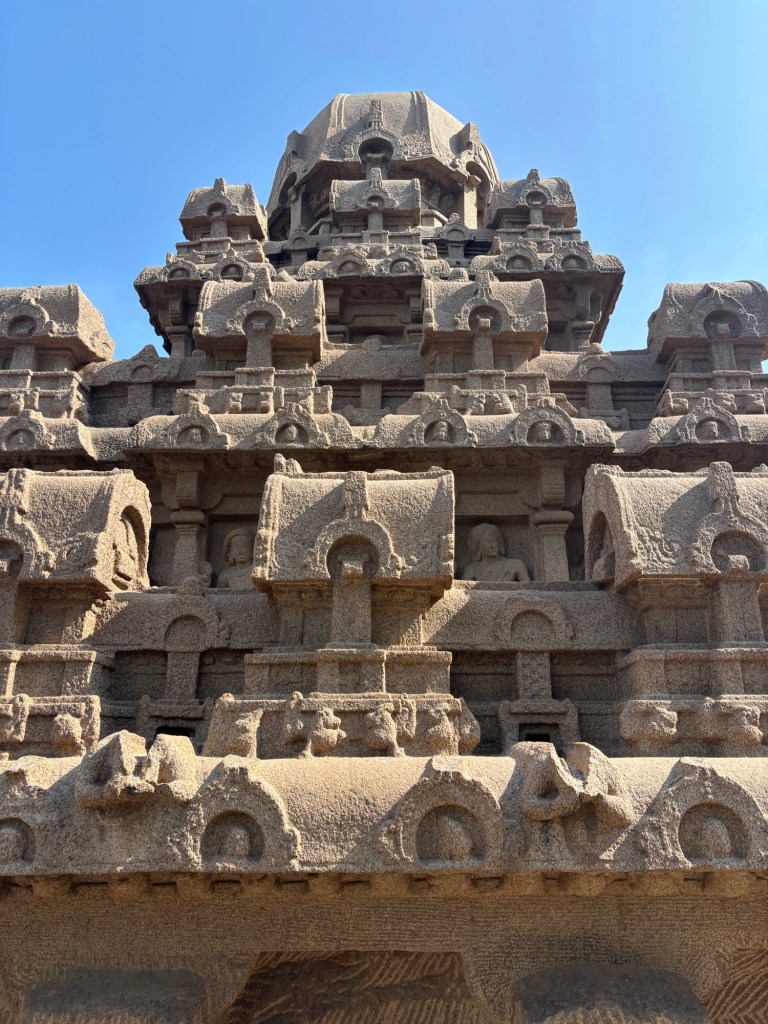
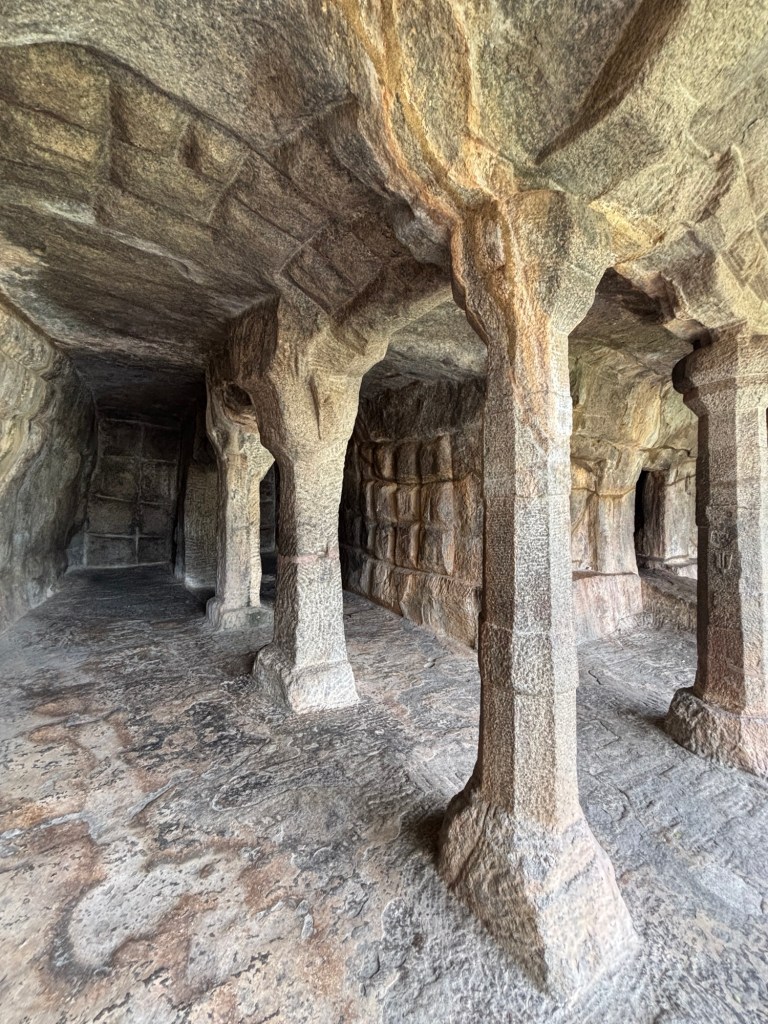
Sacred man-made caves are a feature of both Brahmanic and Buddhist traditions. And there are two distinct types: hollowed out artificial caves or those carved from the top downwards, creating architectural forms of a sculptural character. Mahabalipuram has both.
The carving out of a rock-cut cave takes place in reverse from the normal building process, by a process of removal and elimination. This is the same as carving a sculpture. This is fundamentally different from the additive process that normally defines architecture and building.
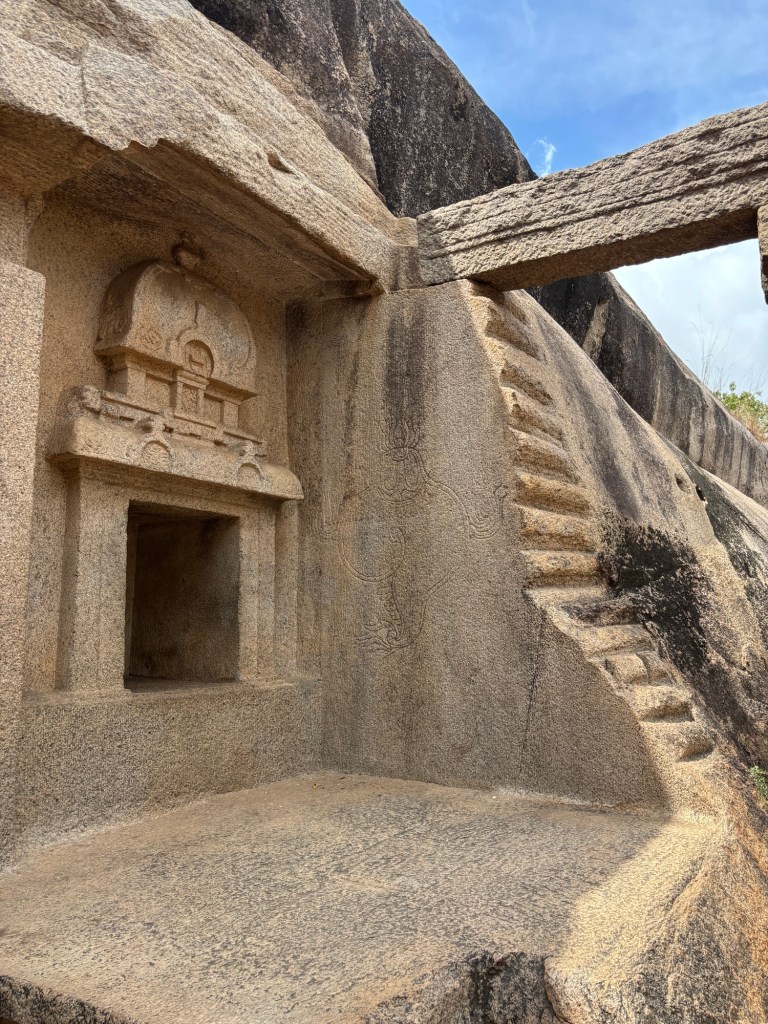
The next evolution of Hindu architecture on display in Tamil Nadu is the Hindu temple itself. These are typically exceptionally large, beautifully walled compounds. The temples themselves are arranged in formal alignments within. Many times these outer walls are multiple, offering layers and layers of strong defense. It doesn’t take a lot of imagination to read the constant threat the walls rebuffed.
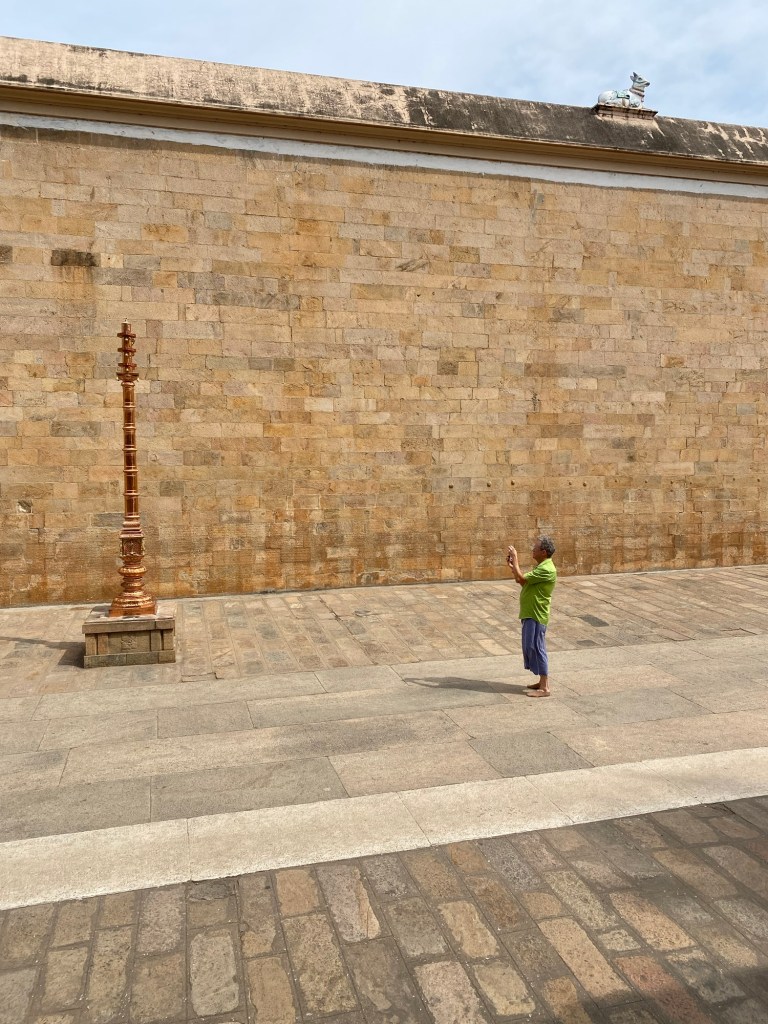
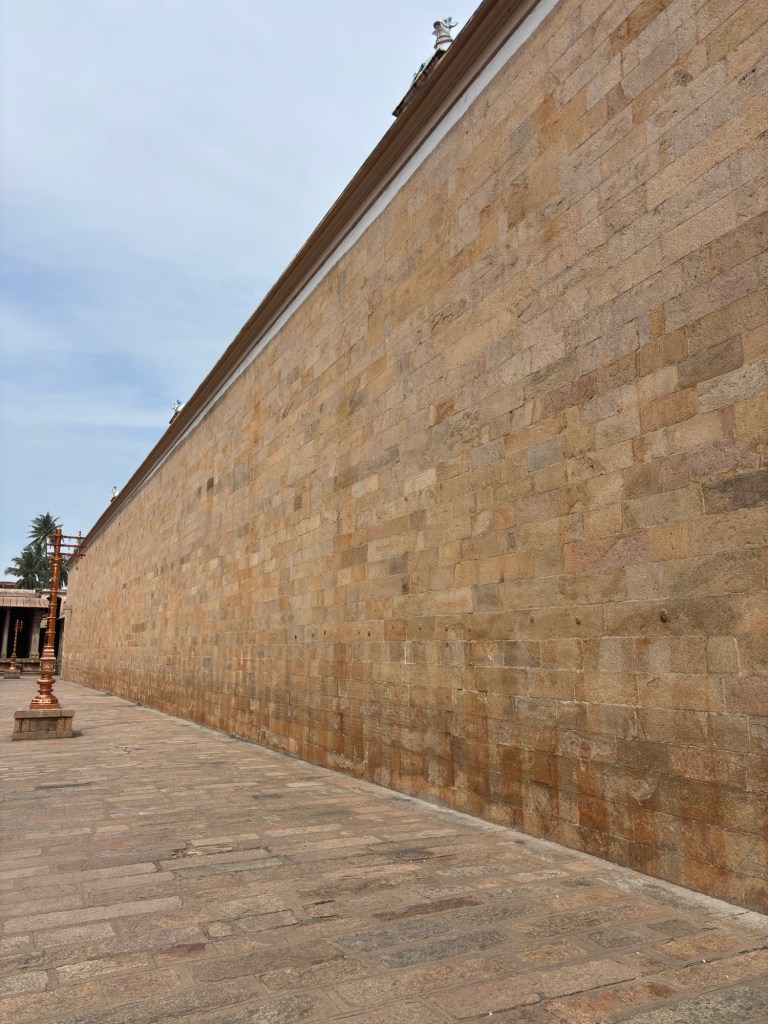
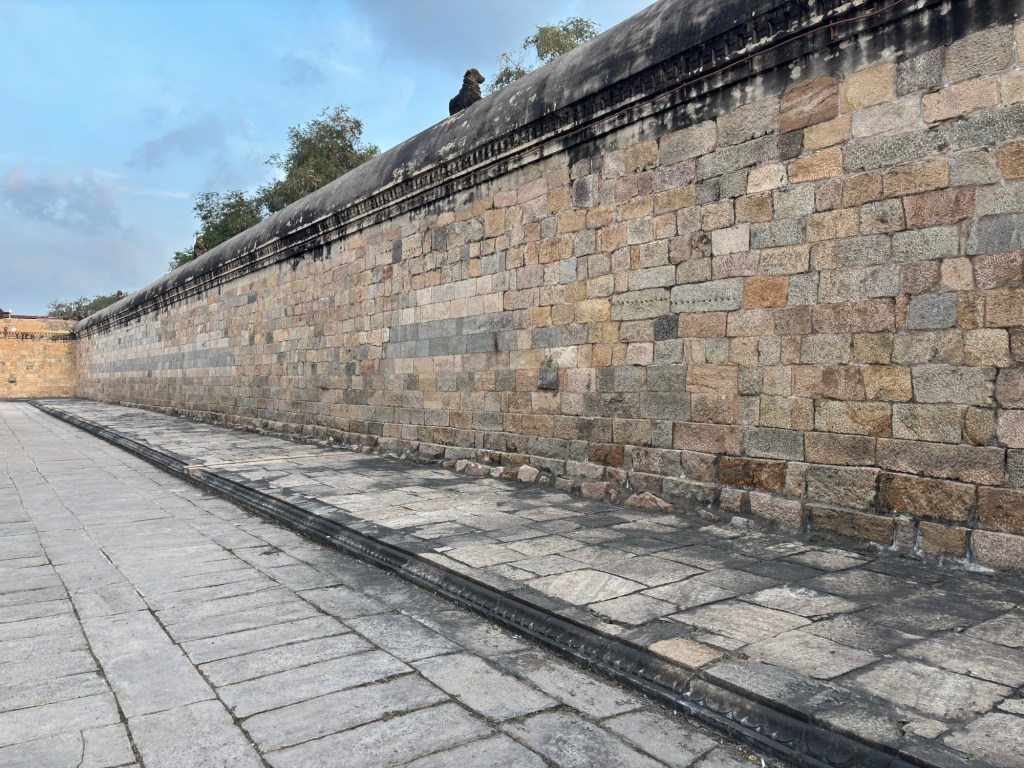
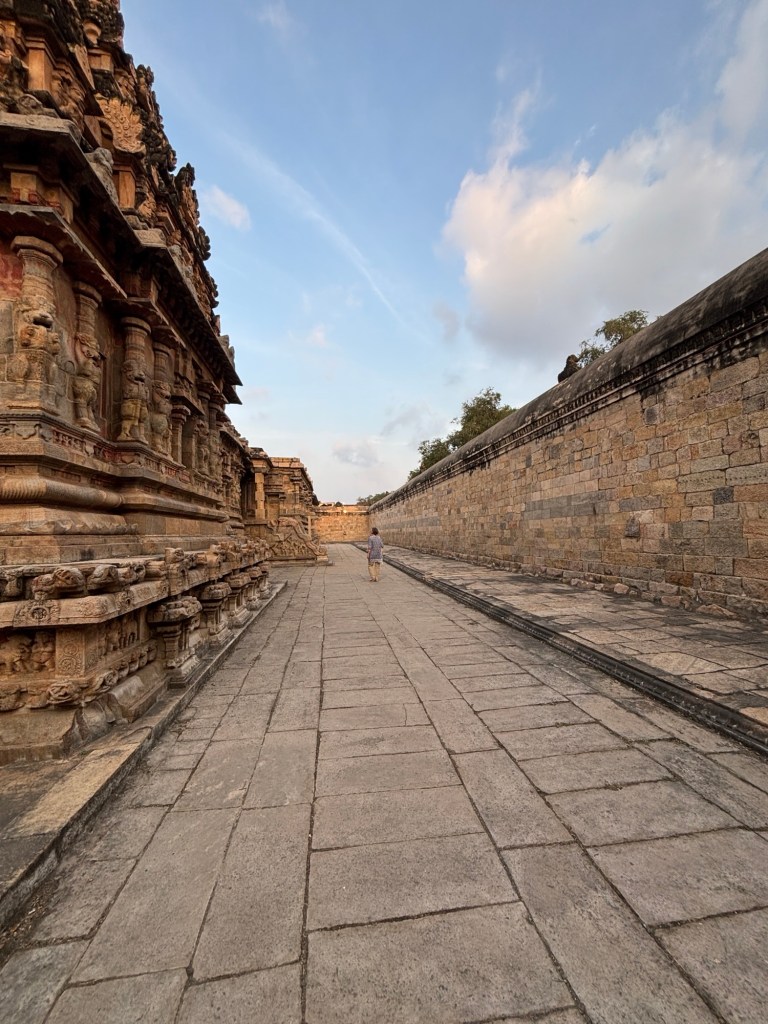
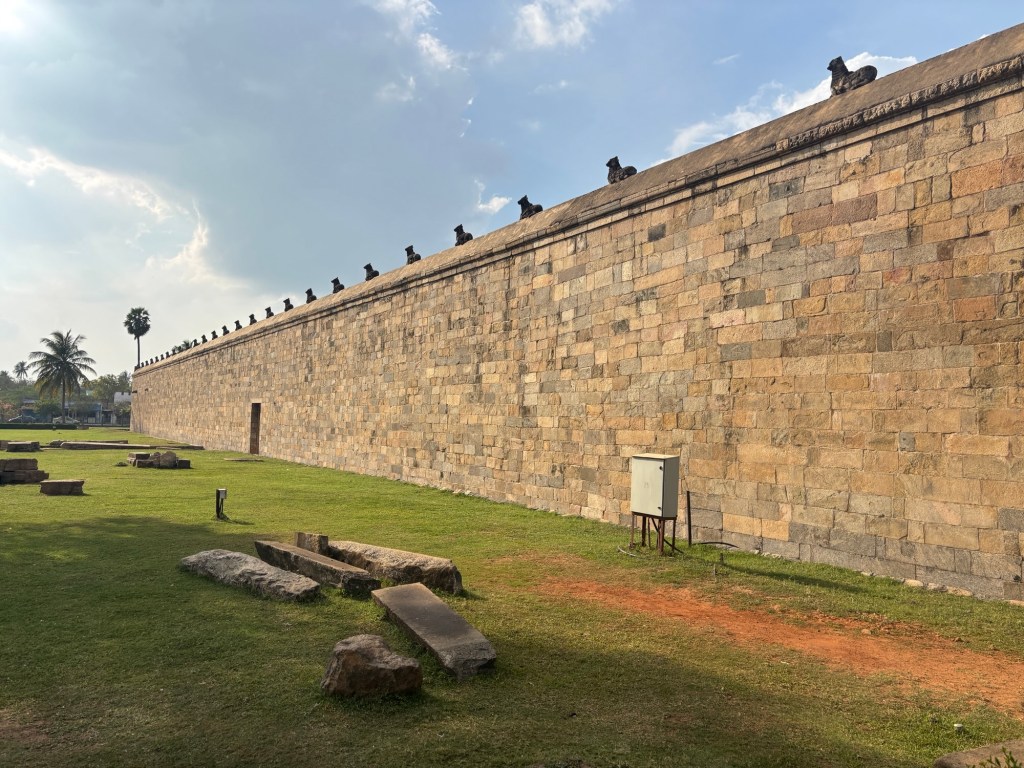
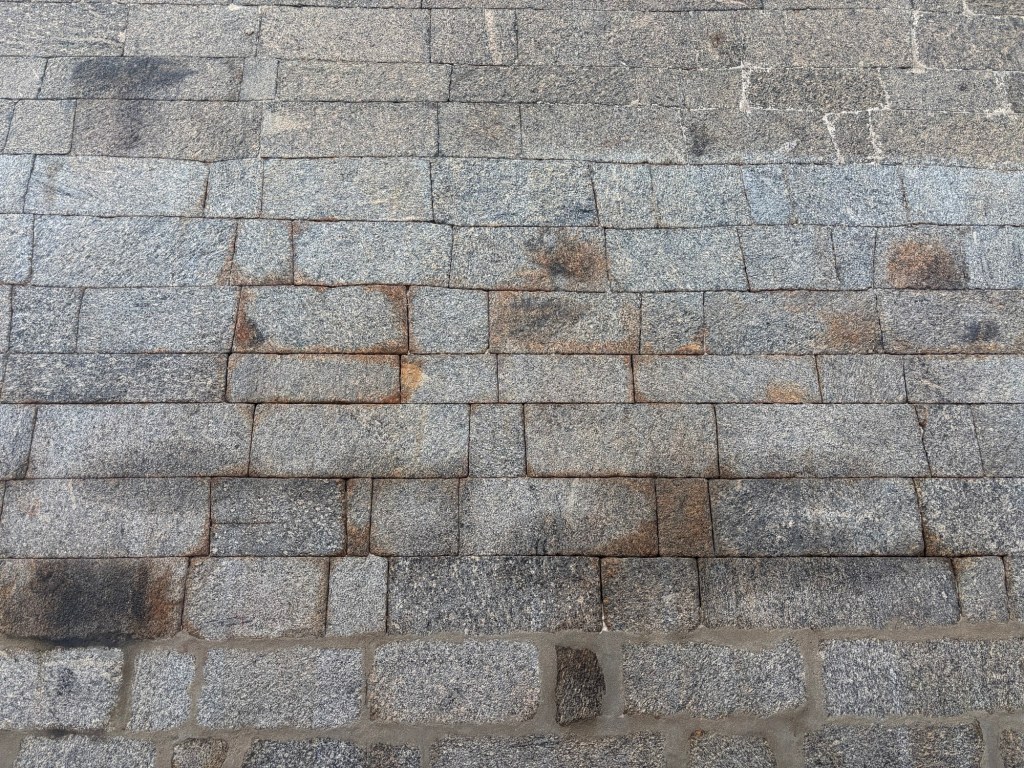
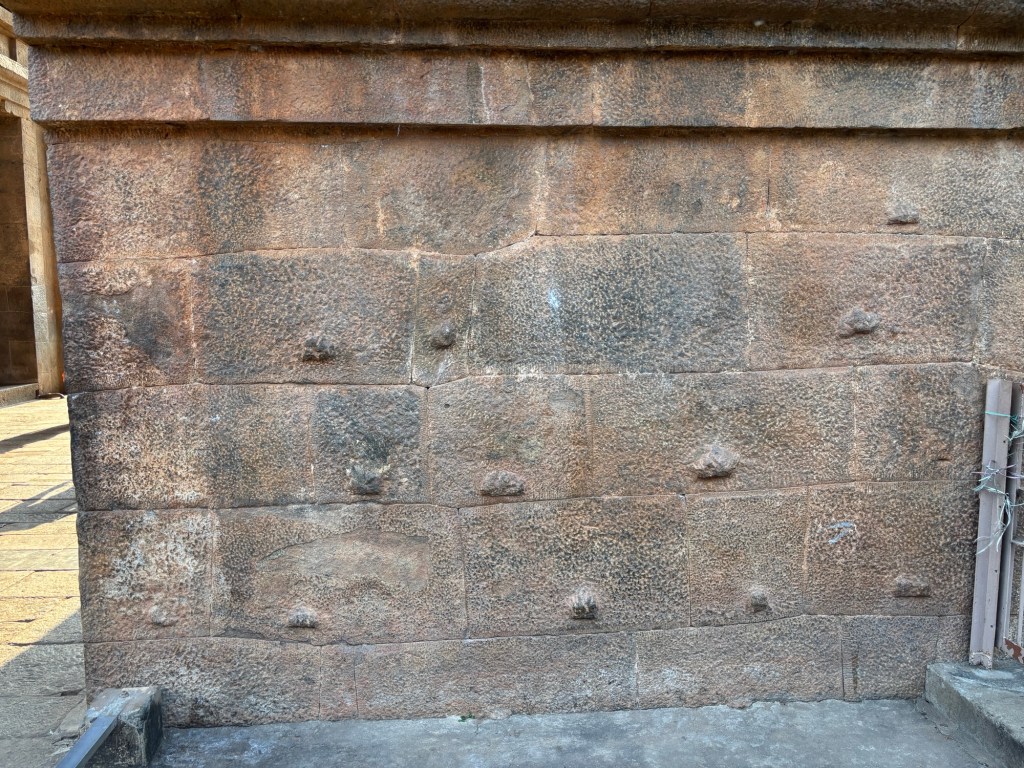
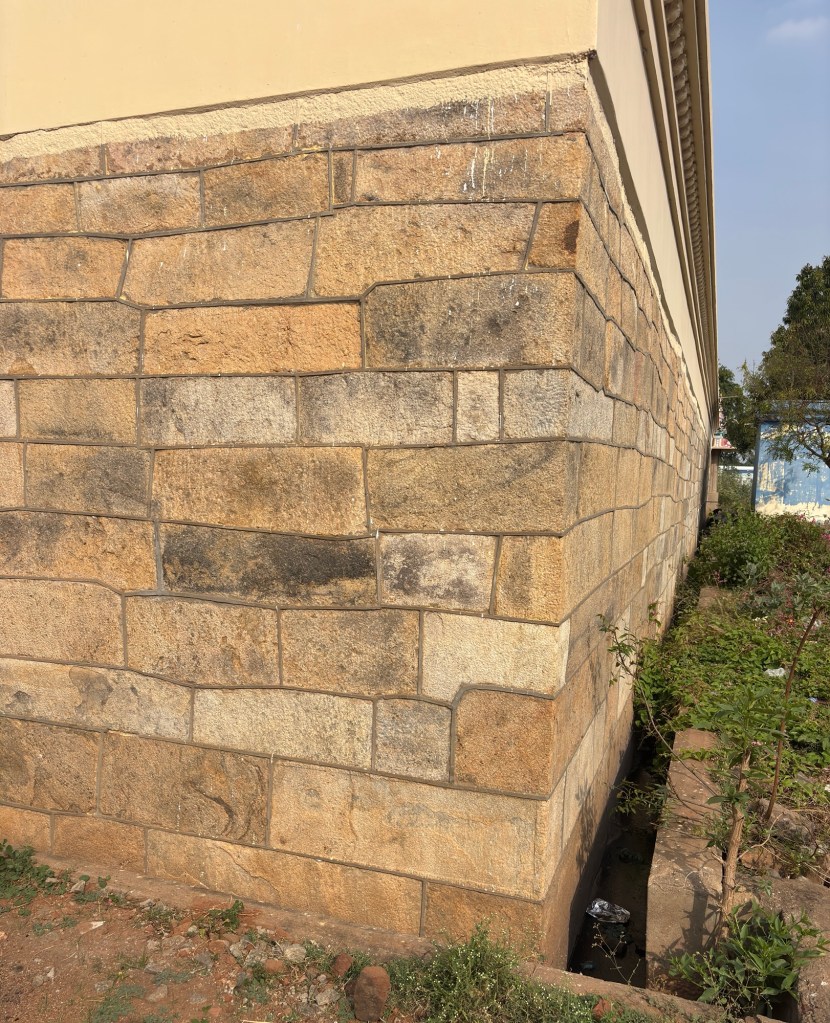
These massive walls were some of the most impressive stonework in the State. The wall assemblies closely follow the Rules of Bondwork, as illuminated in my book (Stone: Ancient Craft to Modern Mastery, Princeton Architectural Press, 2025). The work is uniformly wrought ashlar (with joints less than 1/8” between stones) to maximize frictive contact and wring ultimate strength from the assembly. Unfortunately, the one rule of bondwork they did not seem to possess or intuit was the “one third rule” which insists the vertical joint below must land into the middle third of the block above. The consequence of this omission shows up regularly as “stacked joints.” This oversight introduced weakness into the walls causing many to be more easily breached than they would otherwise. One can discern extensive rebuilding as a result.
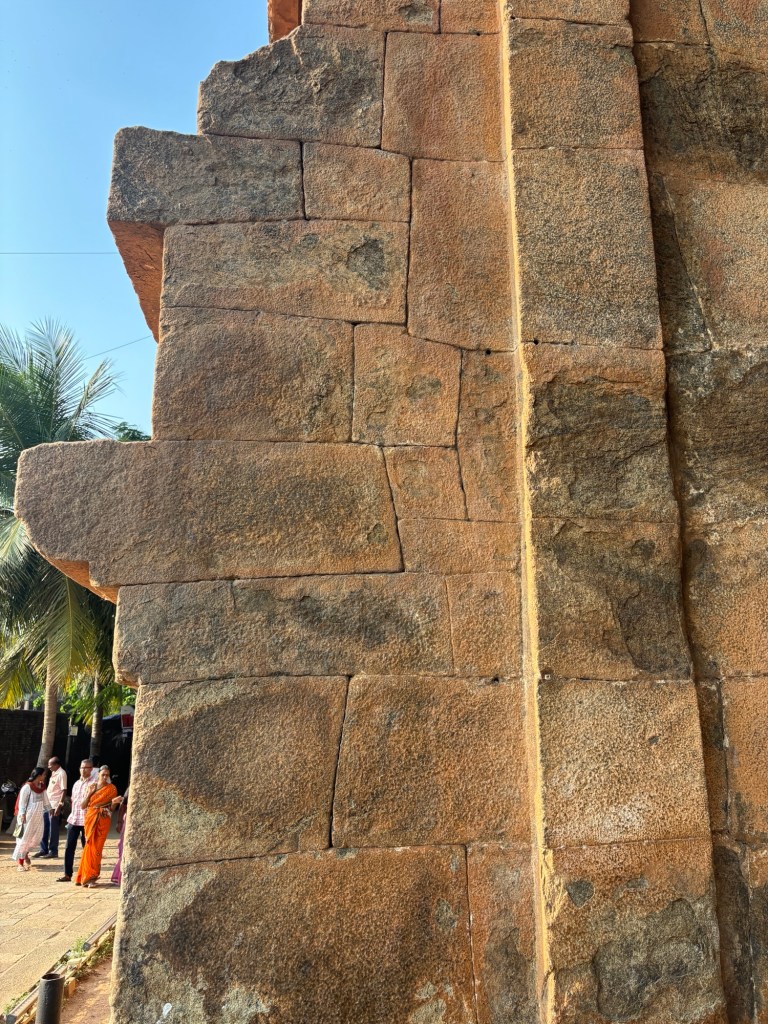
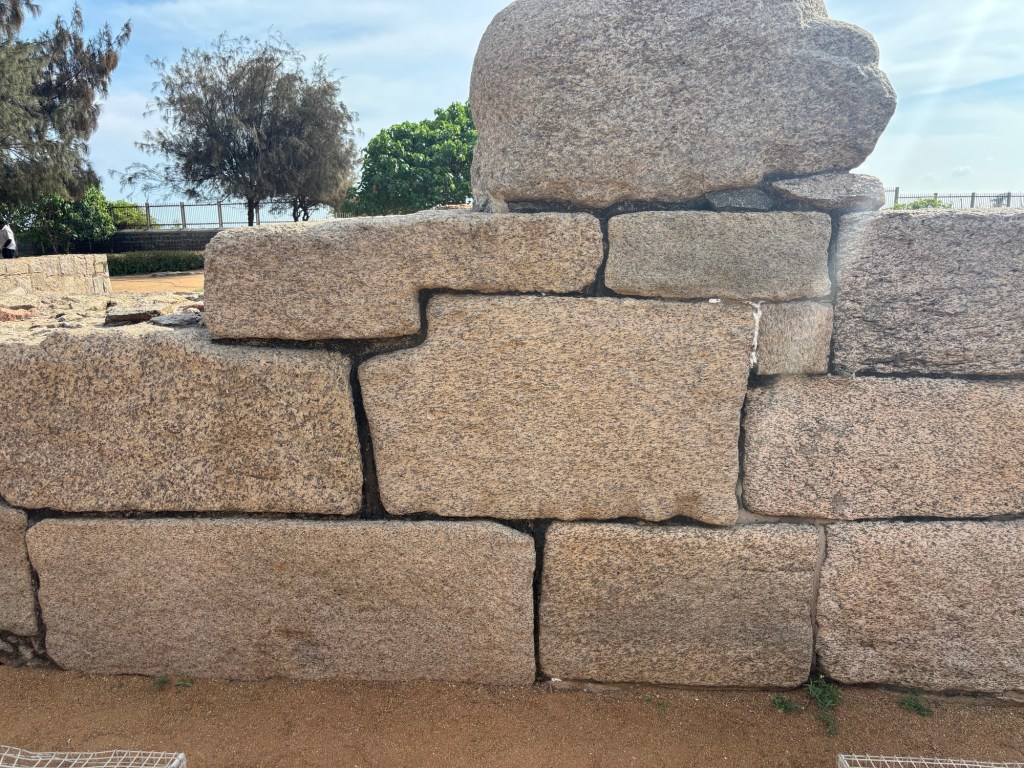
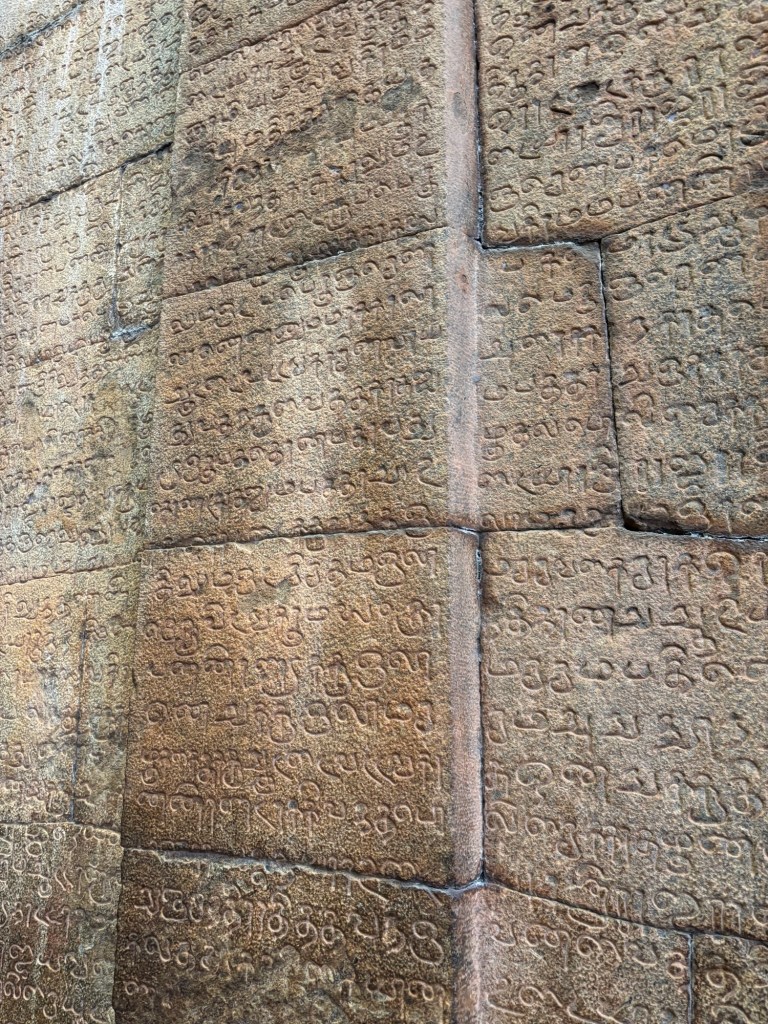
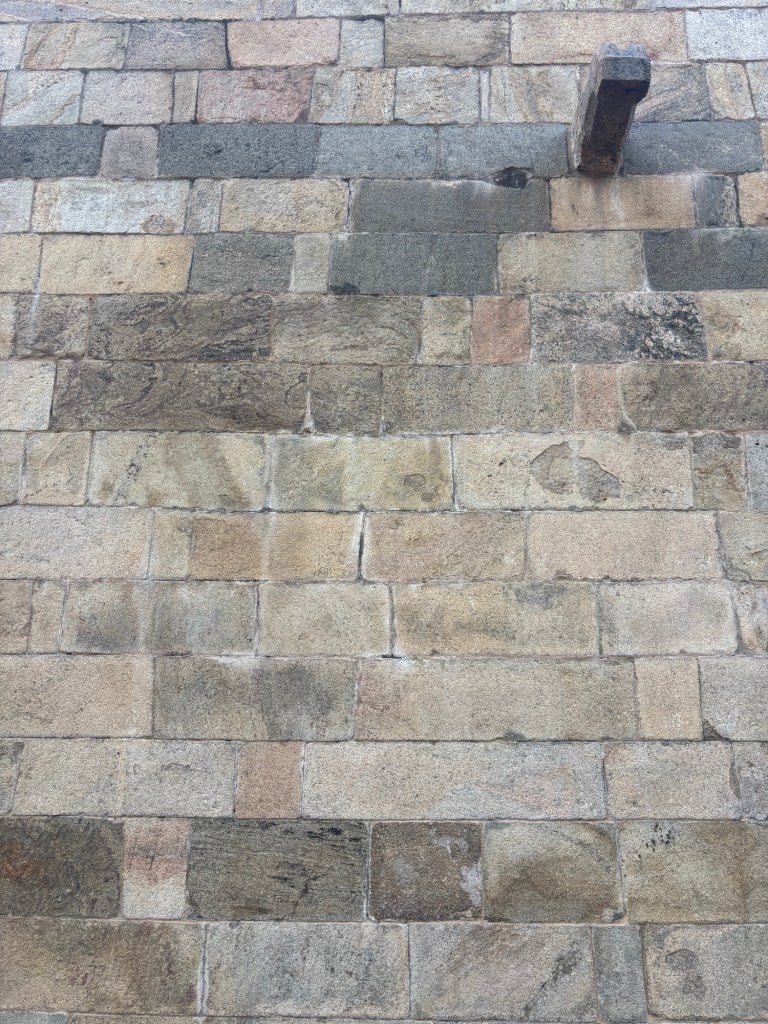
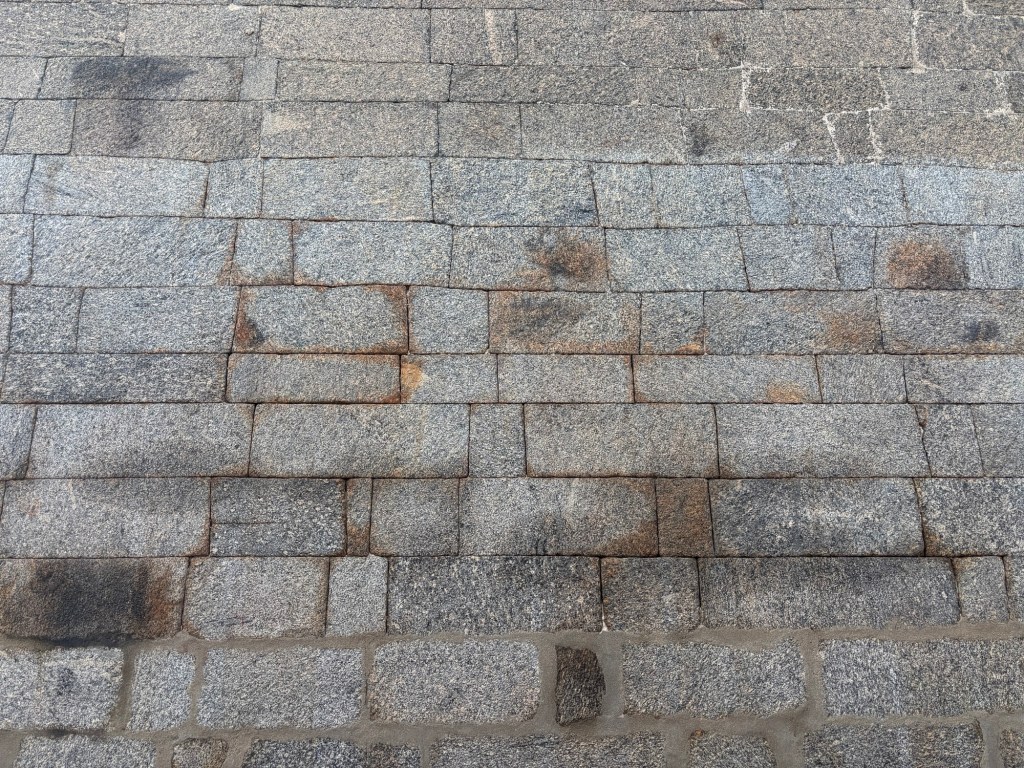
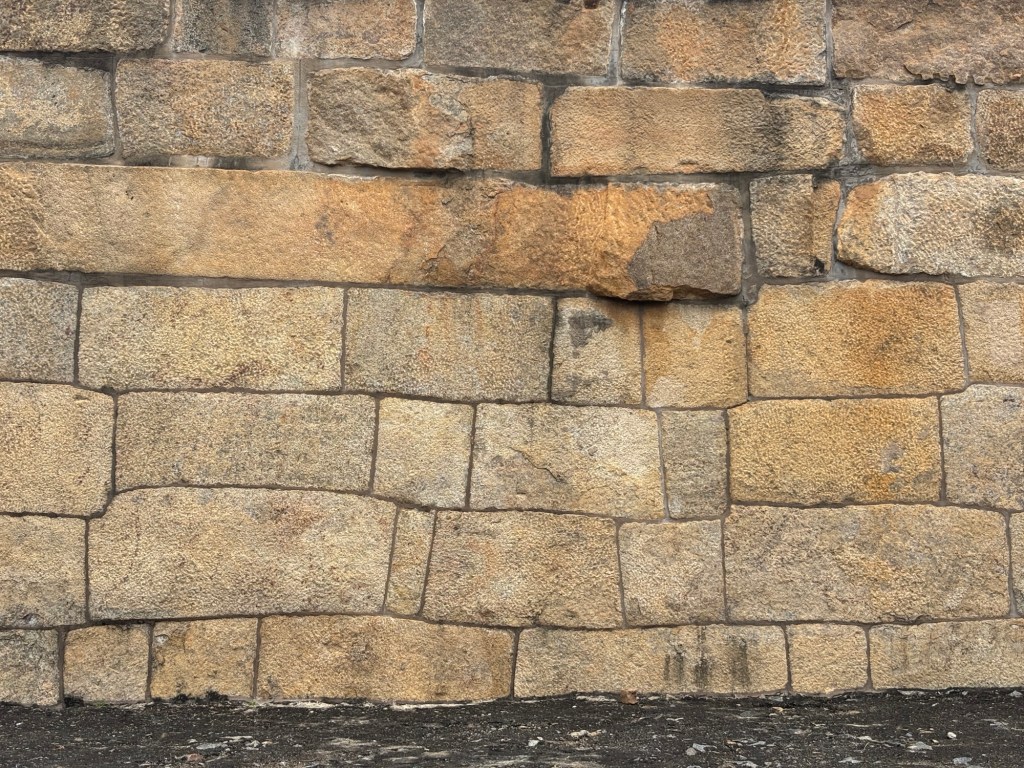
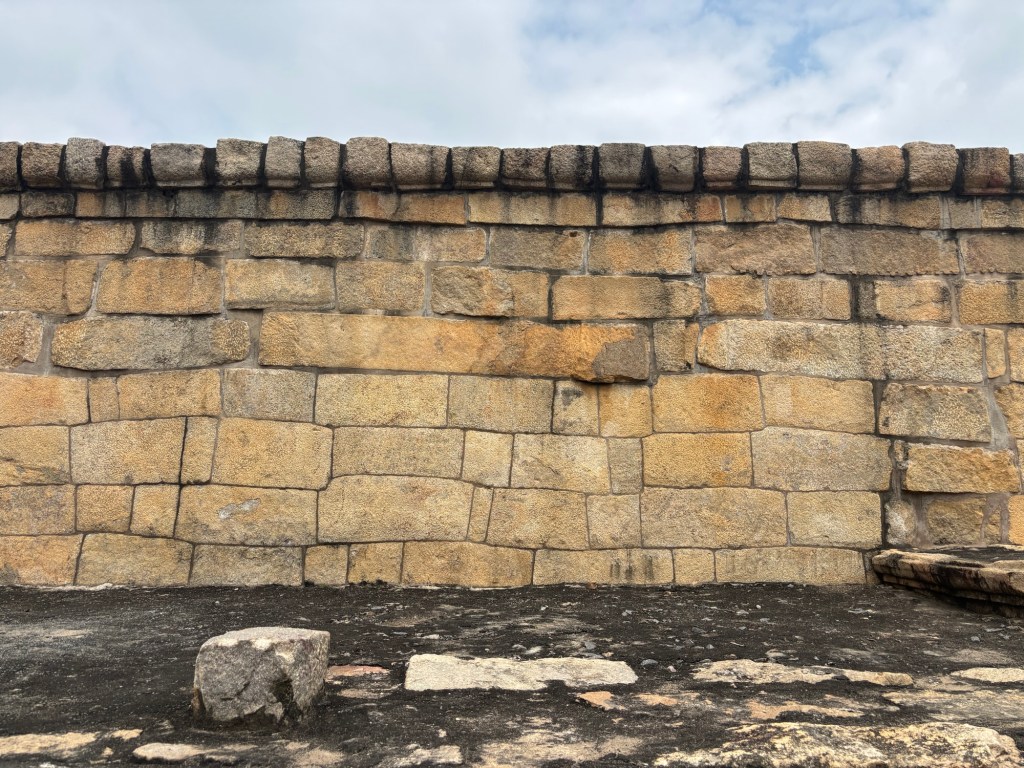
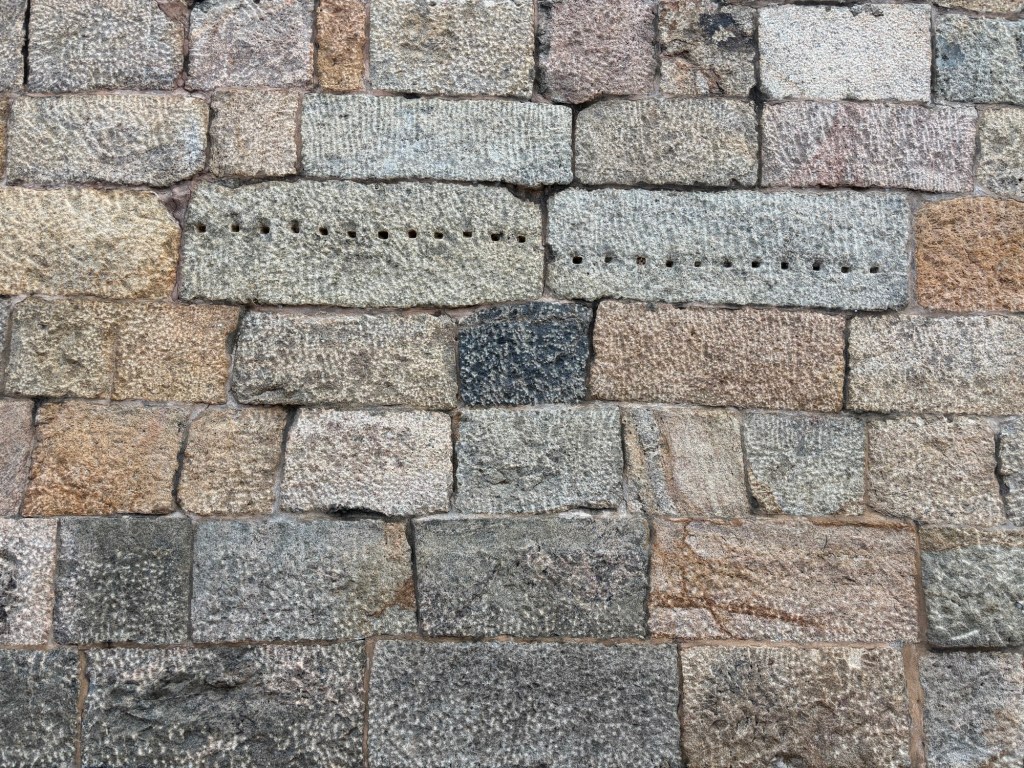
All of these impressive walled compounds are marked by massive gated portals. The wooden doors long gone, the single stone jambs remain. These single monoliths often reached 40’ in height.
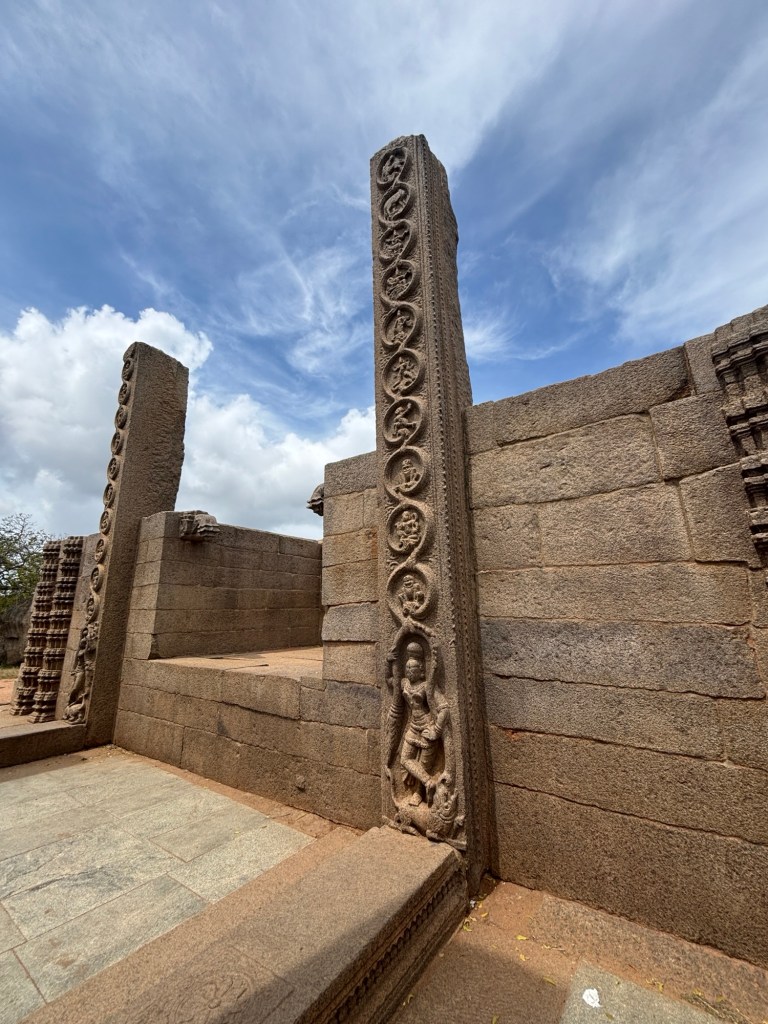
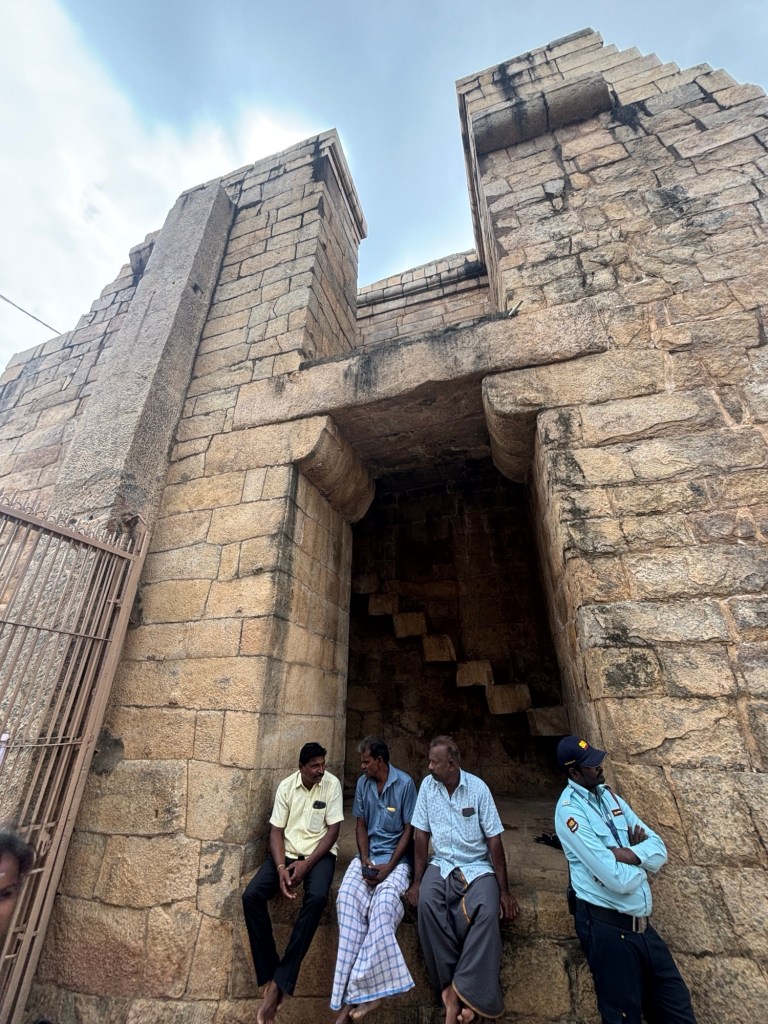
Since the Muslin invader was never allowed to take hold in Tamil Nadu, their architectural innovations—the keystone and voussoir that affected a revolution in architecture—are also never in evidence. In fact, even in other states, long under the Mugal influence, these innovations were slow to be adopted. Stierlin adds, “Hindu temple architecture in India retained the old methods, which were an inheritance from the time of primitive wooded constructions with thatch roofs, and confined itself to the use of trabeation and corbelling and to heavy roof-structures composed of patterns of stacked stone slabs. Even after the Sultans’ architects had built the mosque of Champaner (1485 CE), with its many domes resting on pillars, Hindu and Jain architects continued to ignore the arch, the vault, and the dome.”
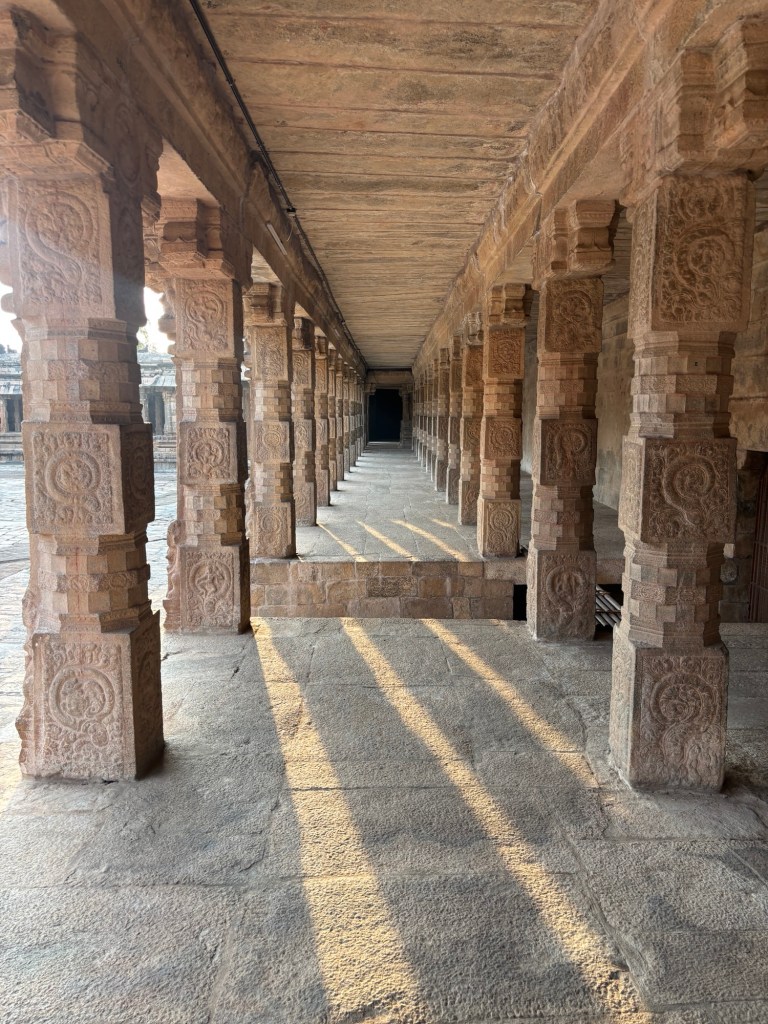
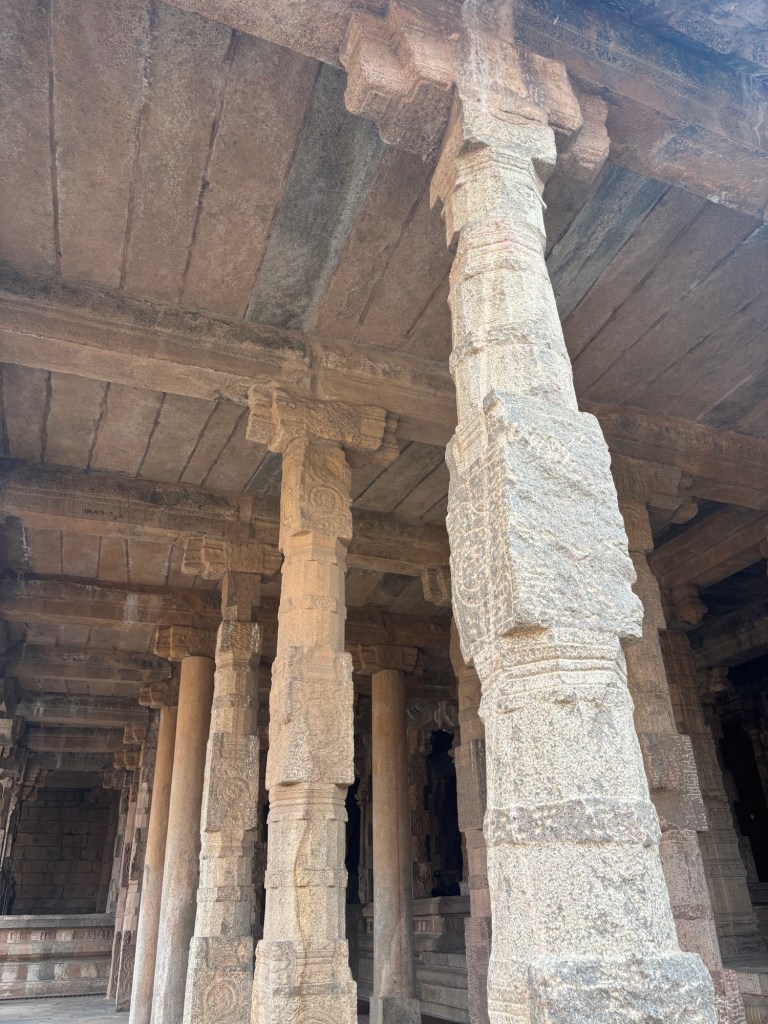
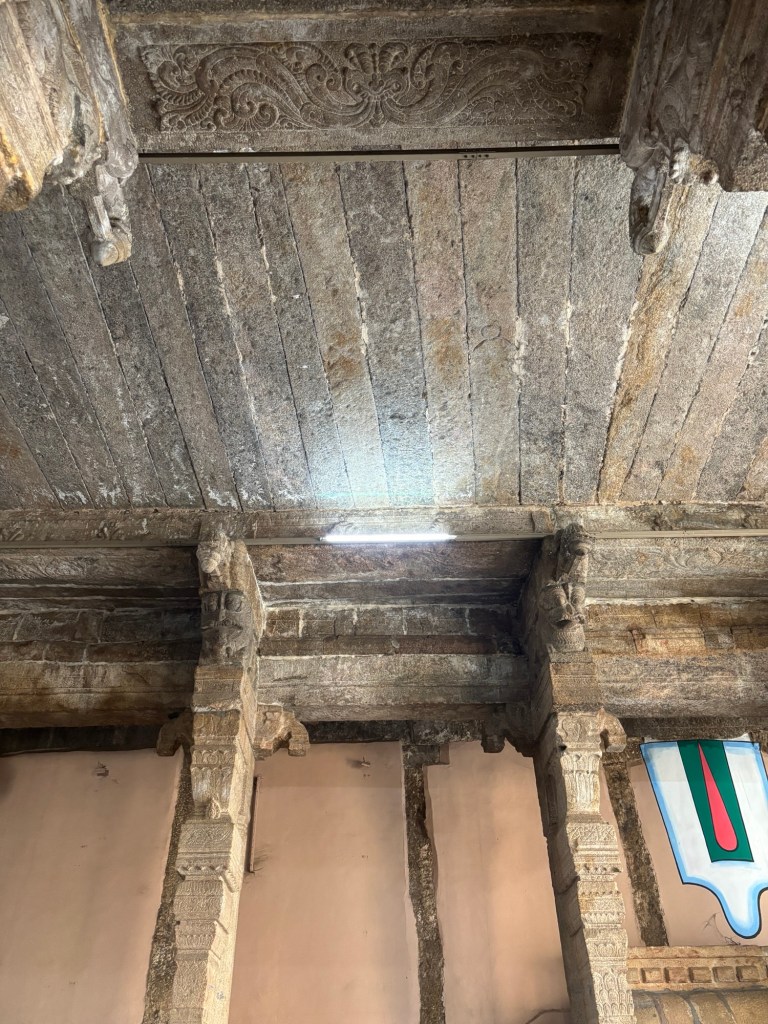
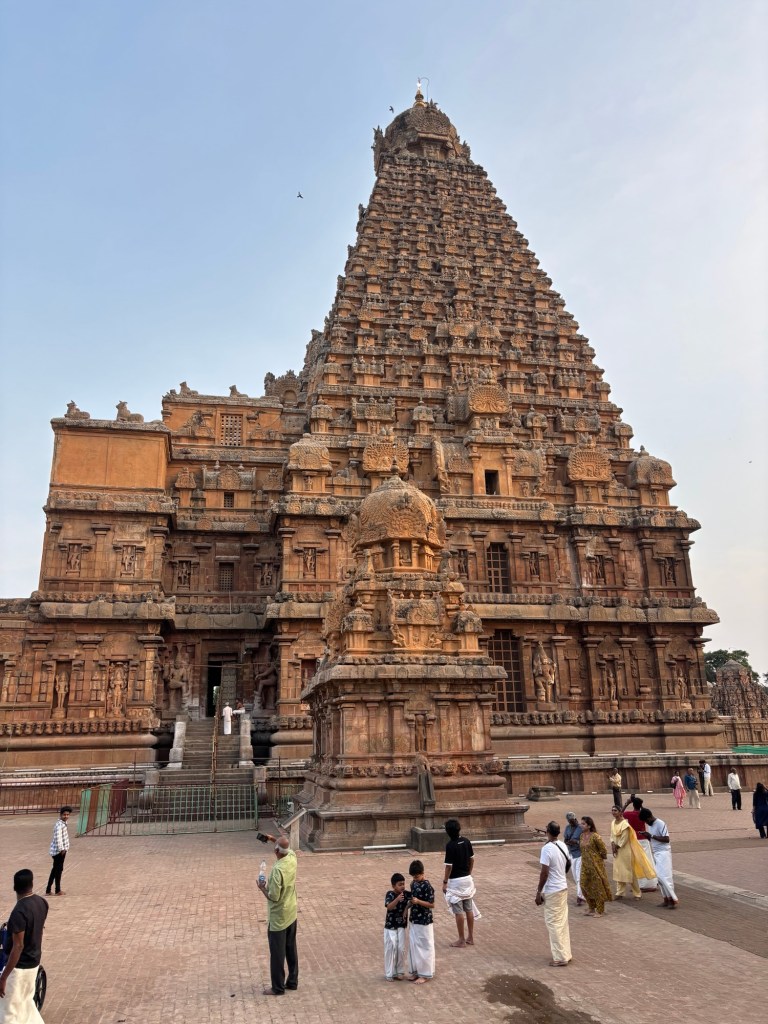
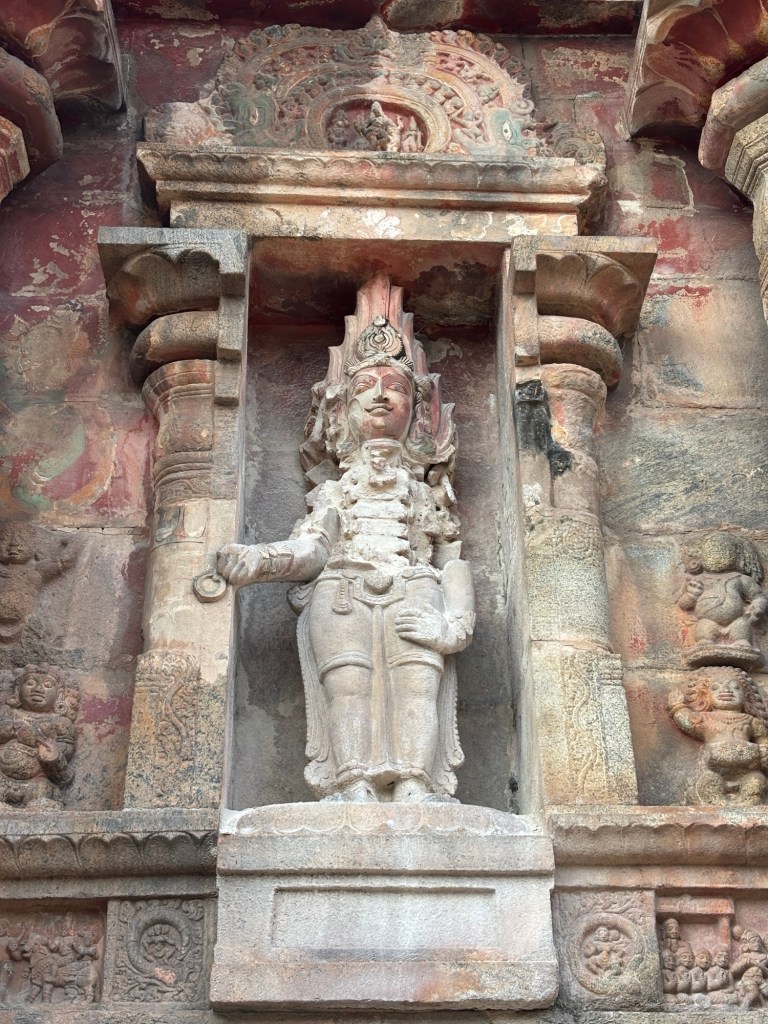
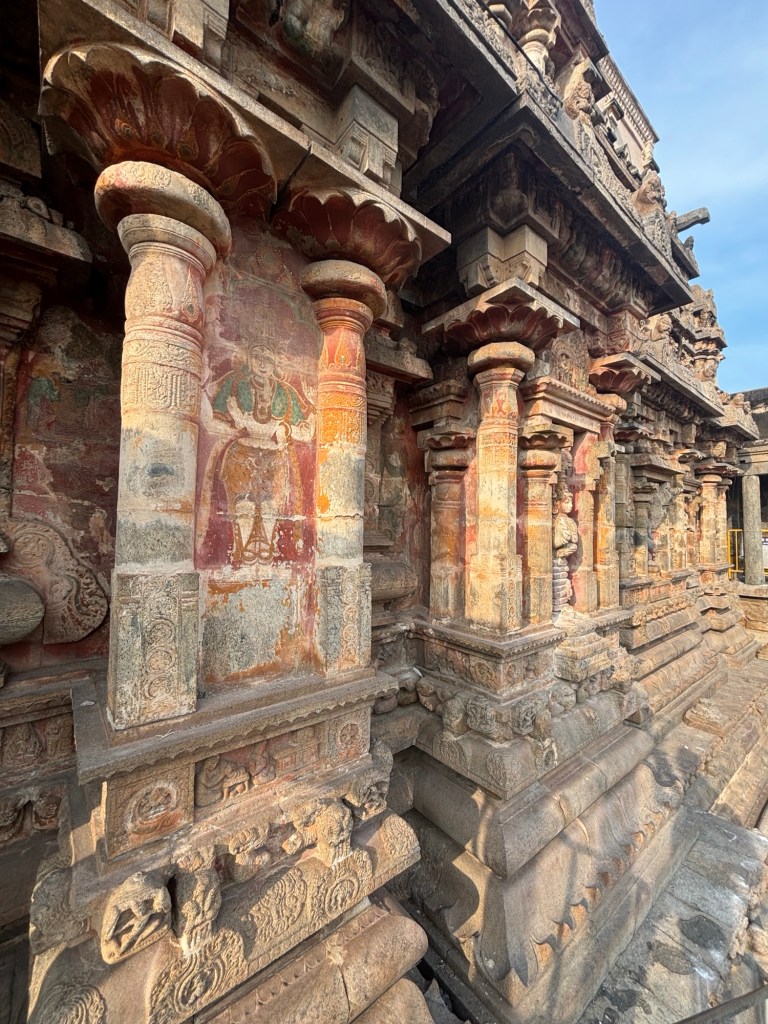
Perhaps the most pure expression of the 12th century Hindu Temple in Southern India can be found at the Airavateswara temple, a UNESCO site at Dharasuram. Here, the gopuram (temple tower) is unpainted, allowing careful study of the many subtle decisions confronting the builders. It may also offer the best preserved sculptures created in plaster, brick, and lime. Masterpieces in their own right, through careful placement under stone protections with well defined drip-kurfs, they have survived more than eight hundred monsoon rain seasons.
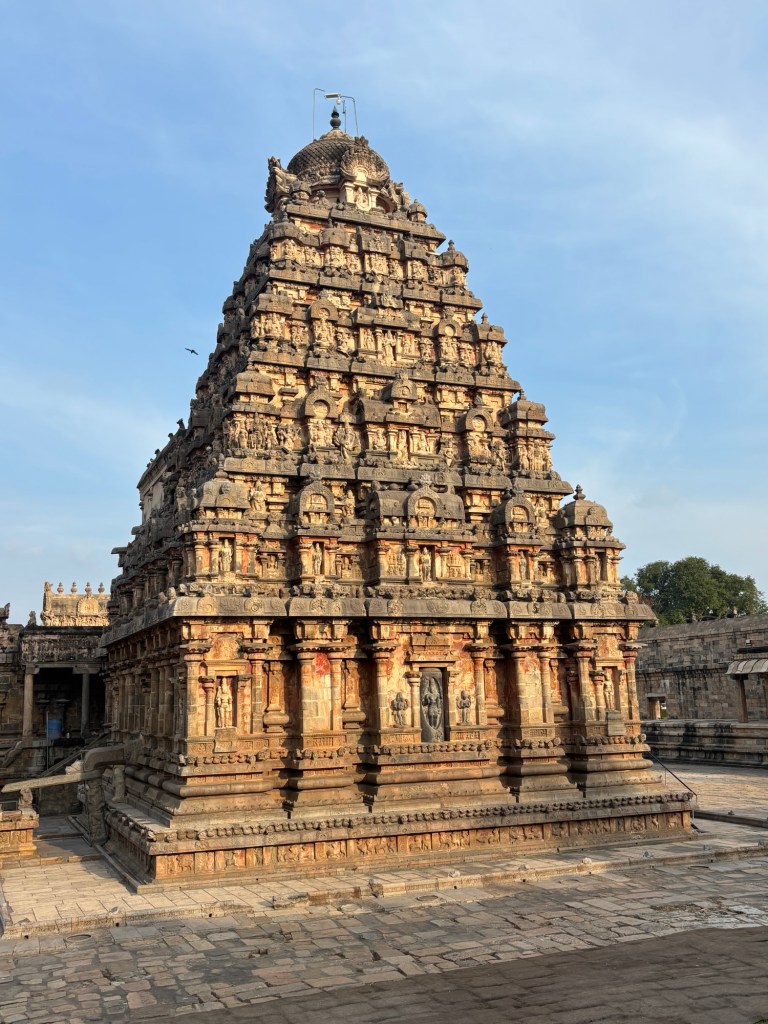
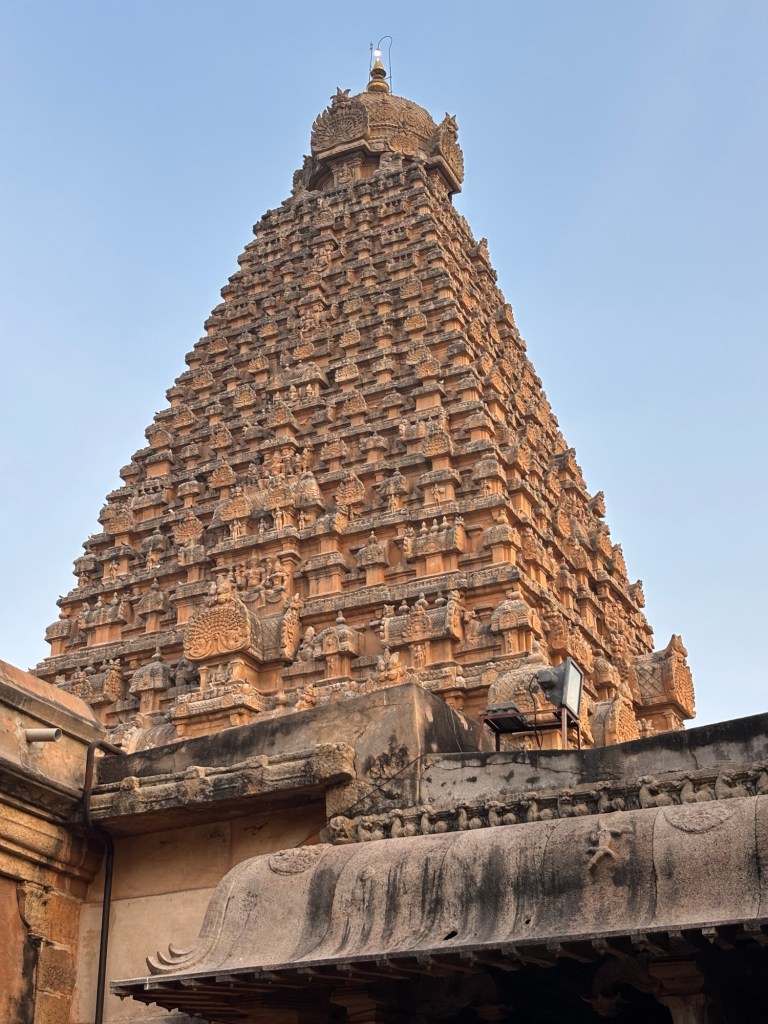
The tower design for the gopuram contains horizontal and vertical registers that serve to emphasize its rise and soaring height. Note the strong band at the second story, a moment of equilibrium, before the profusion of smaller sculptures begin. This early concept was repeated and expanded upon as the style developed further in the following centuries.
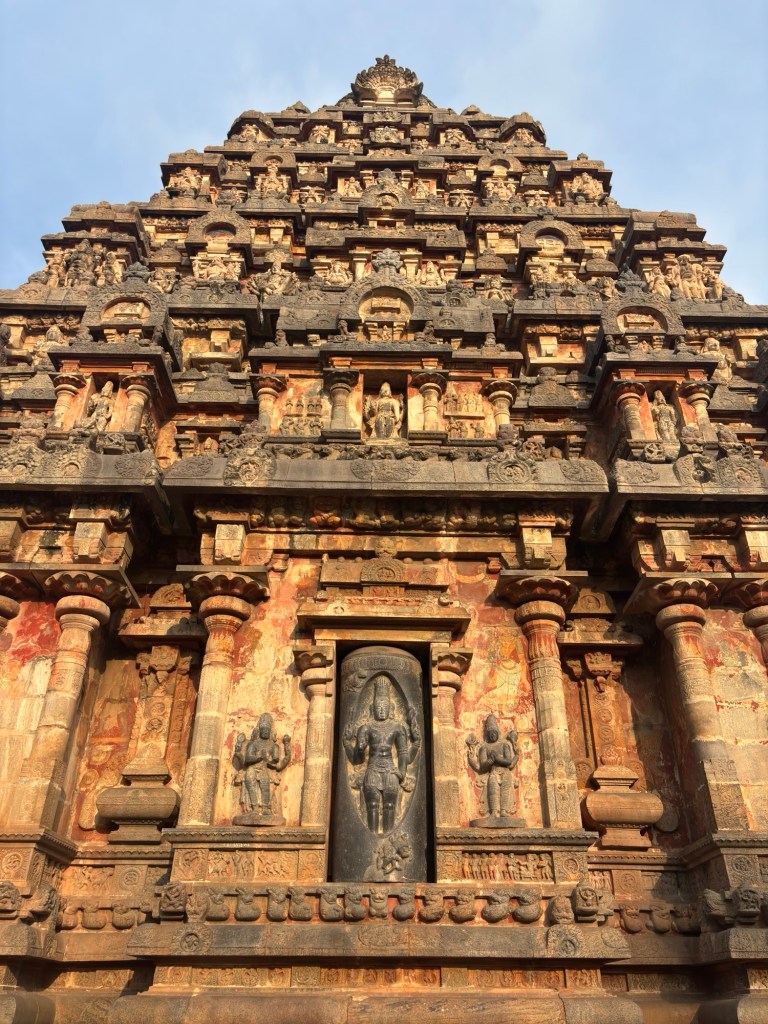
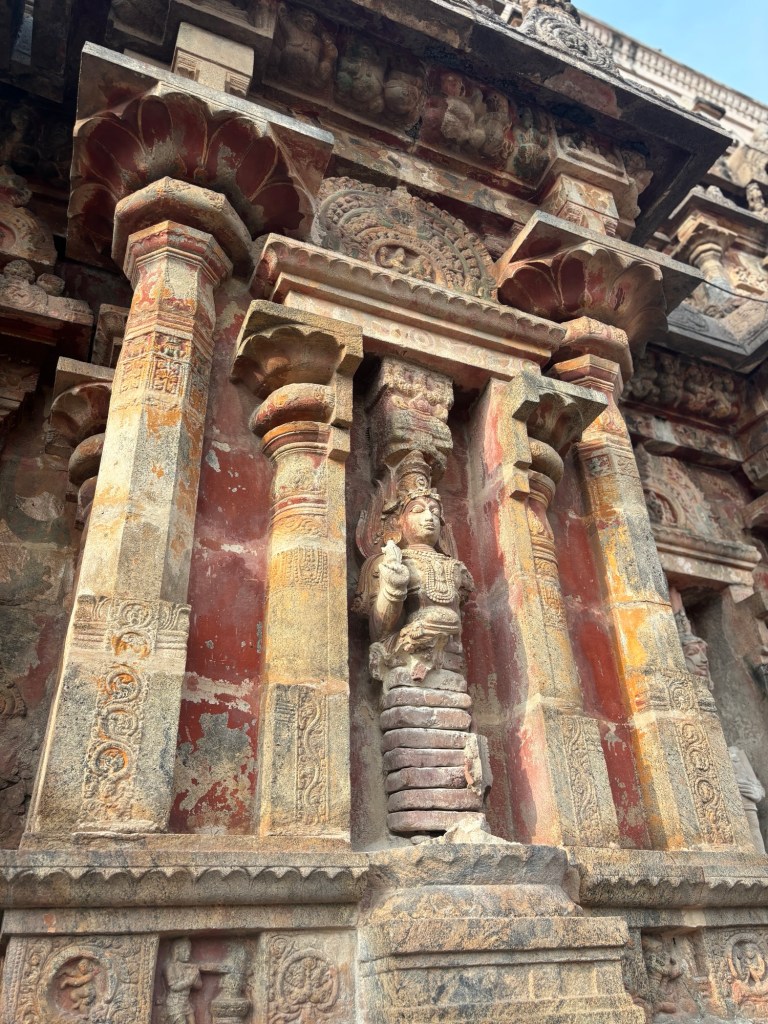
In the fabled city of Thanjavur, the formidable granite tower of the Brihadishvara or Rajarajeshvara Temple is capped with a domed monolithic stupi weighing eighty tons. Its emplacement is thought to have required the construction of an earthen ramp several kilometers long on which a ‘wooden road’ was built. I’m not sure I subscribe to that theory of placement, but it’s certainly better that ascribing the method to “installation by aliens,” a method often casually suggested by otherwise thoughtful world citizens.
In South India, particularly, stylized, roaring lion figures are prevalent in temple architecture as guardians, representing strength and divine protection.
While rooted in East Asian traditions, similar, often more heavily stylized lion or mythical beast sculptures are found guarding Indian temples and are heavily referenced in the ancient Indian science of architecture and spatial geometry called Vastu Shastra.
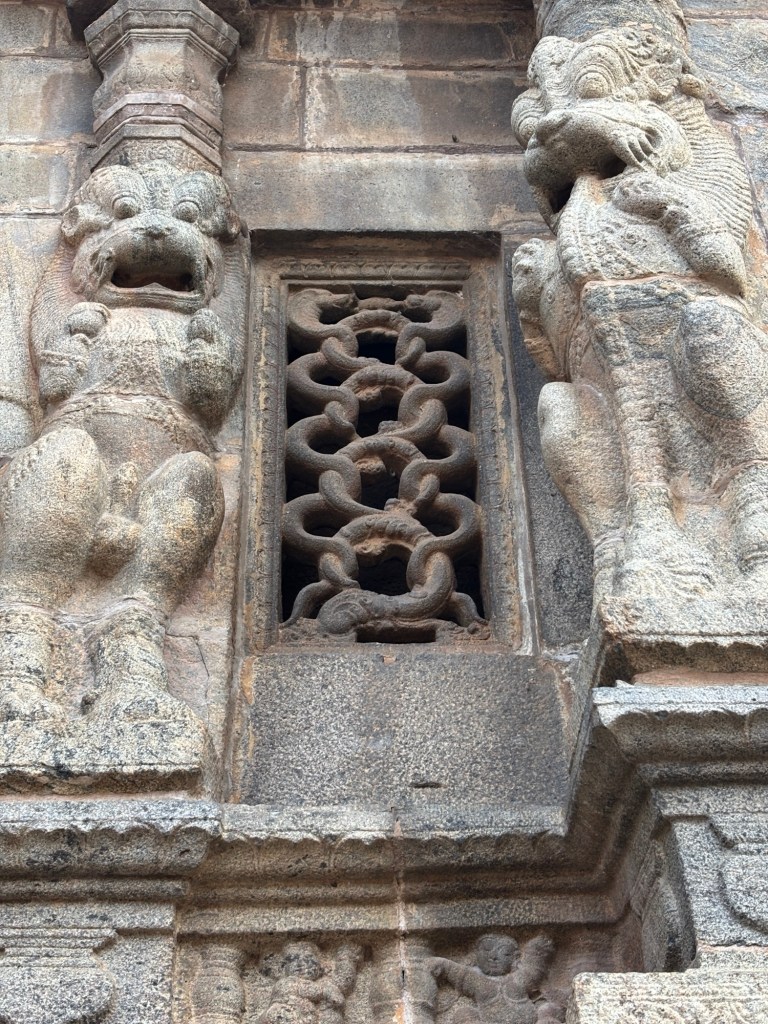
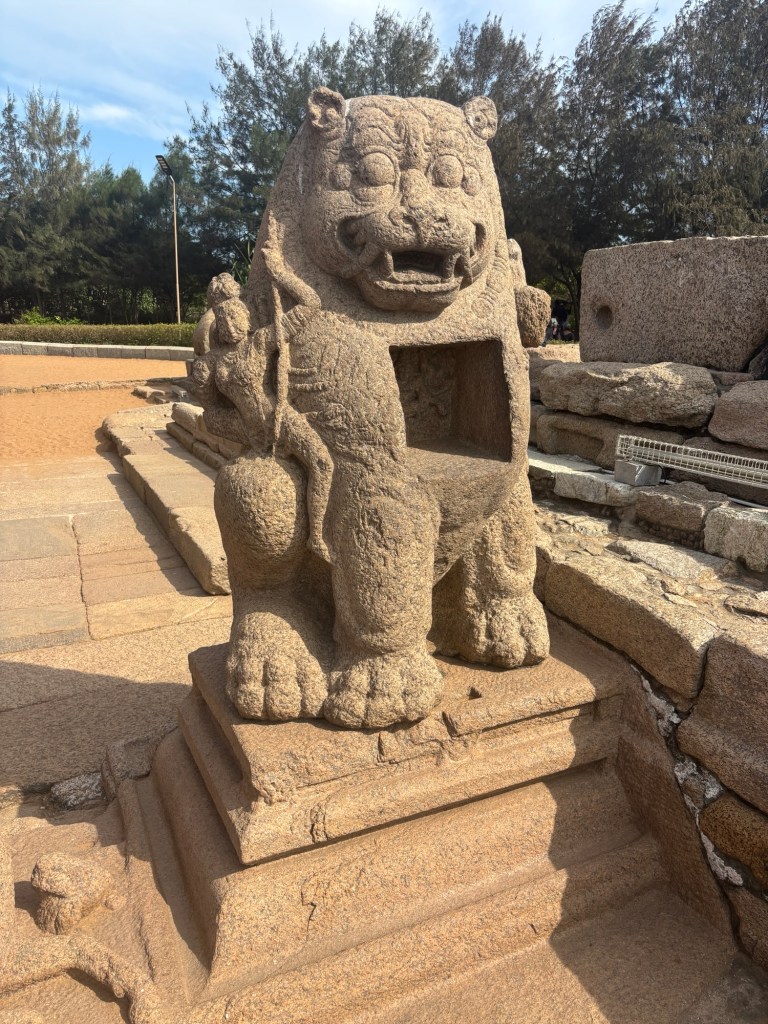
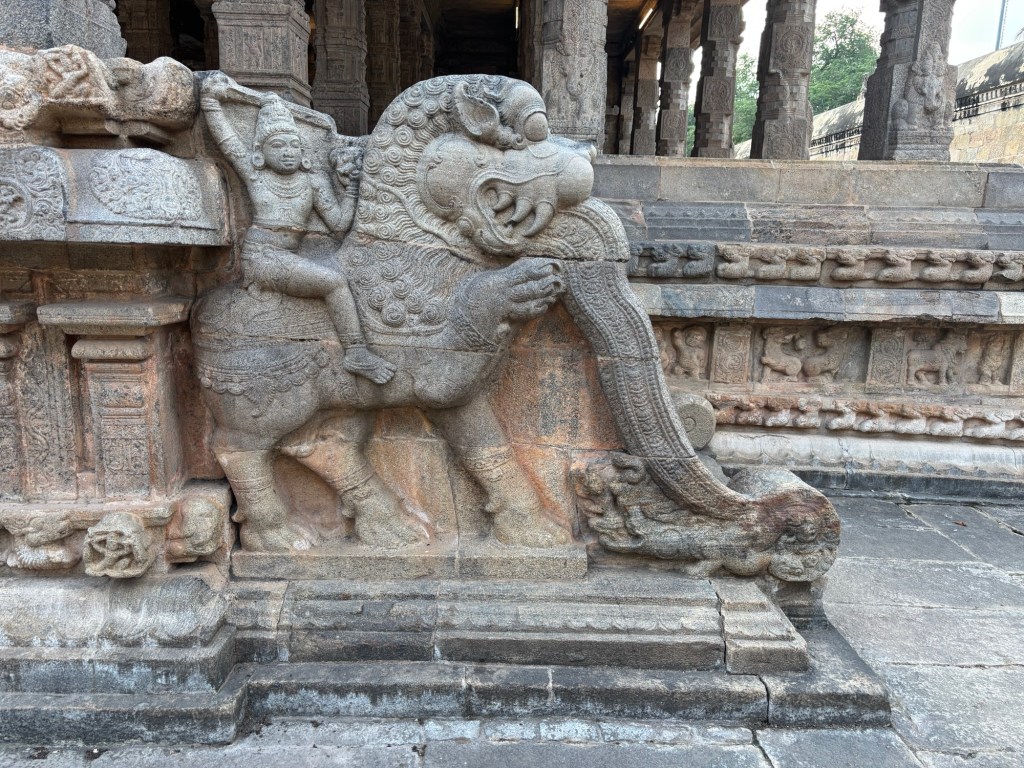
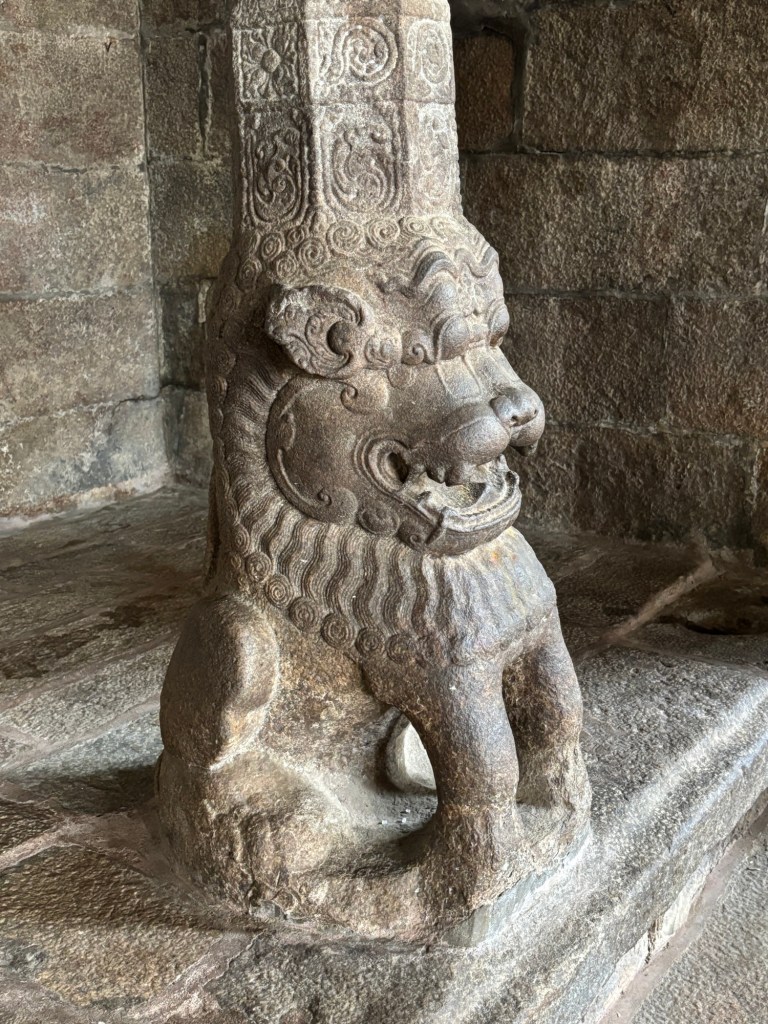
There are other significant carved elements that should be touched upon including the lingam.
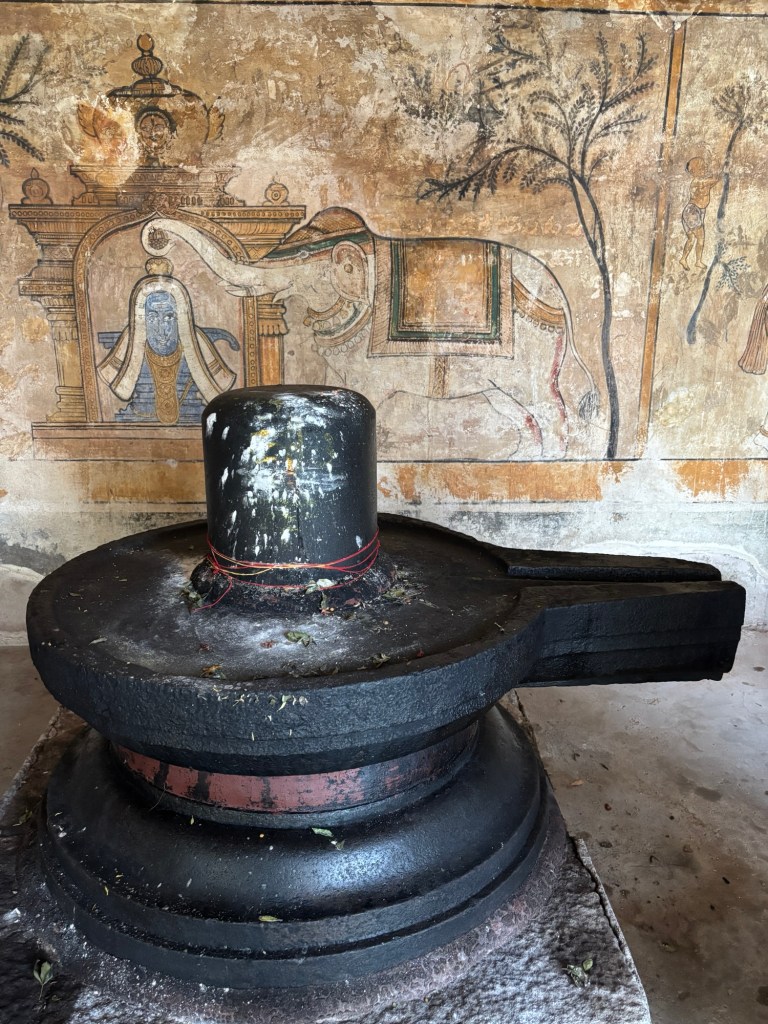
The linga , rises out of the yoni, rather than enters into it. The two together are understood as a symbol of creative power; this is about potentiality and not sexual activity. Indeed, most devotees would be horrified at the suggestion.
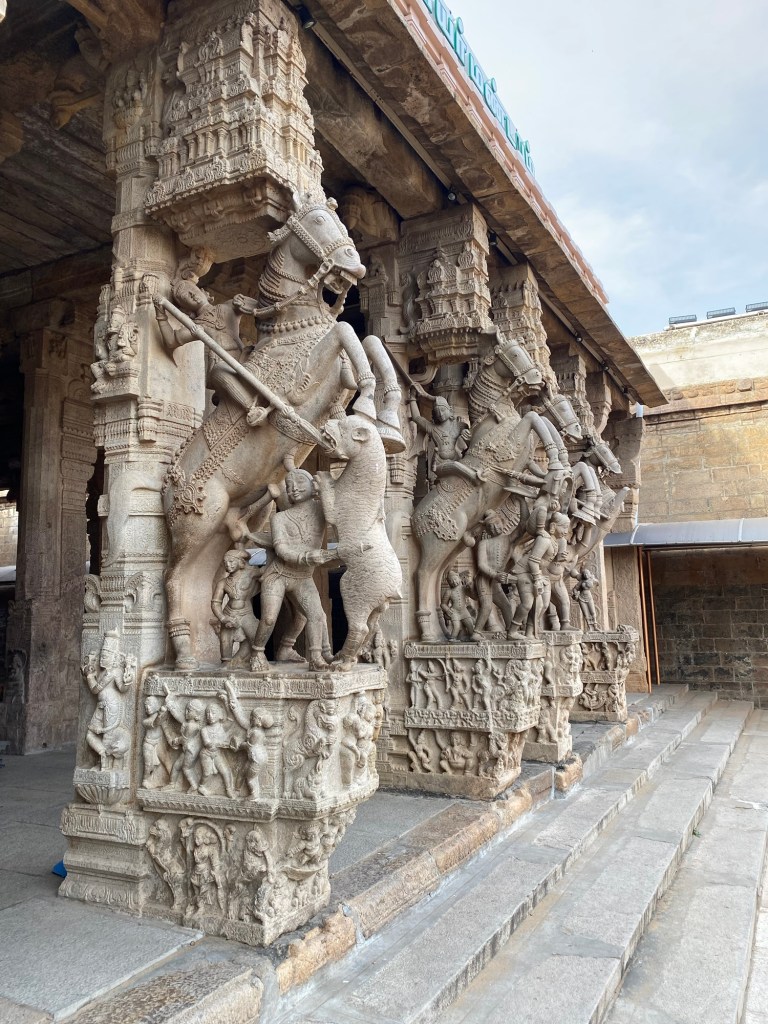
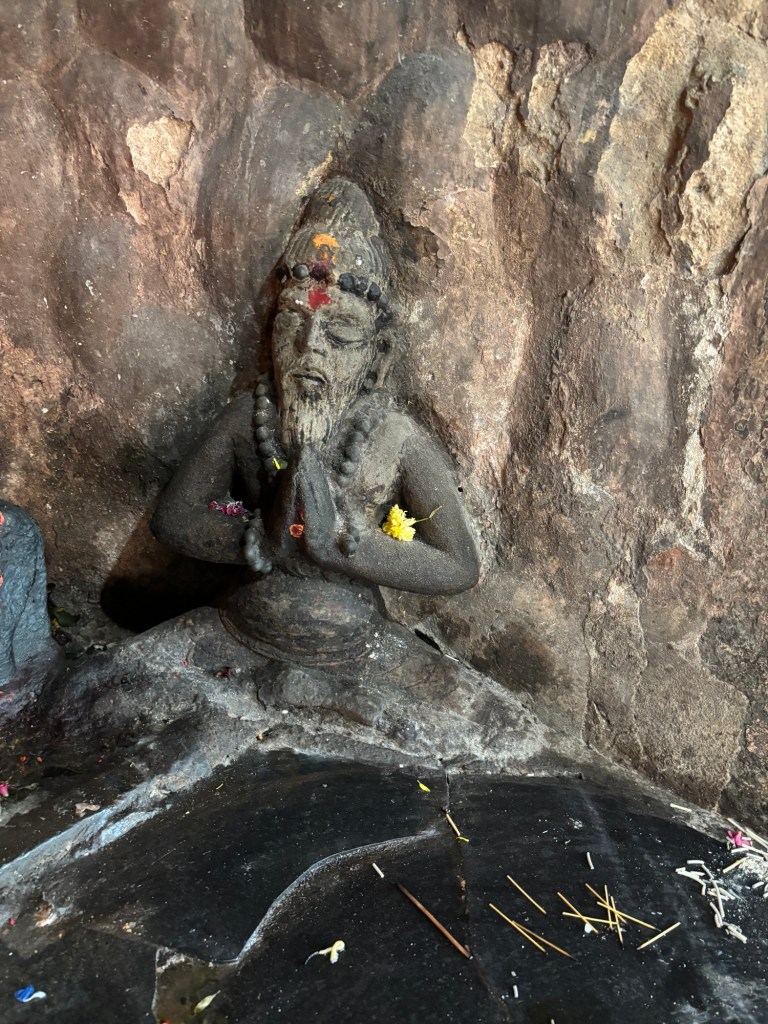
The last phase in the development of southern Indian architecture is marked by a huge expansion the size of the temples. The sites are measured in hectares and can contain 7-11 of the multi-storied gopurums.
The temples of the sixteenth to the eighteenth centuries illustrate the progressive invasion of architecture by color. Quoting Stierlin again, we find the later temples, “Densely covered in statues: scenes of divinities disporting themselves with their acolytes, gesticulating giants, menacing dvarapalas (the monstrous guardians of the sacred domain) and gods with five heads and ten arms. Rows of apsaras and goddesses with their lascivious swaying hips are found next to the hieratic divinities of the Hindu pantheon, Krishna, Vishnu, Shiva, and accompanied by monsters and terrifying demons.”
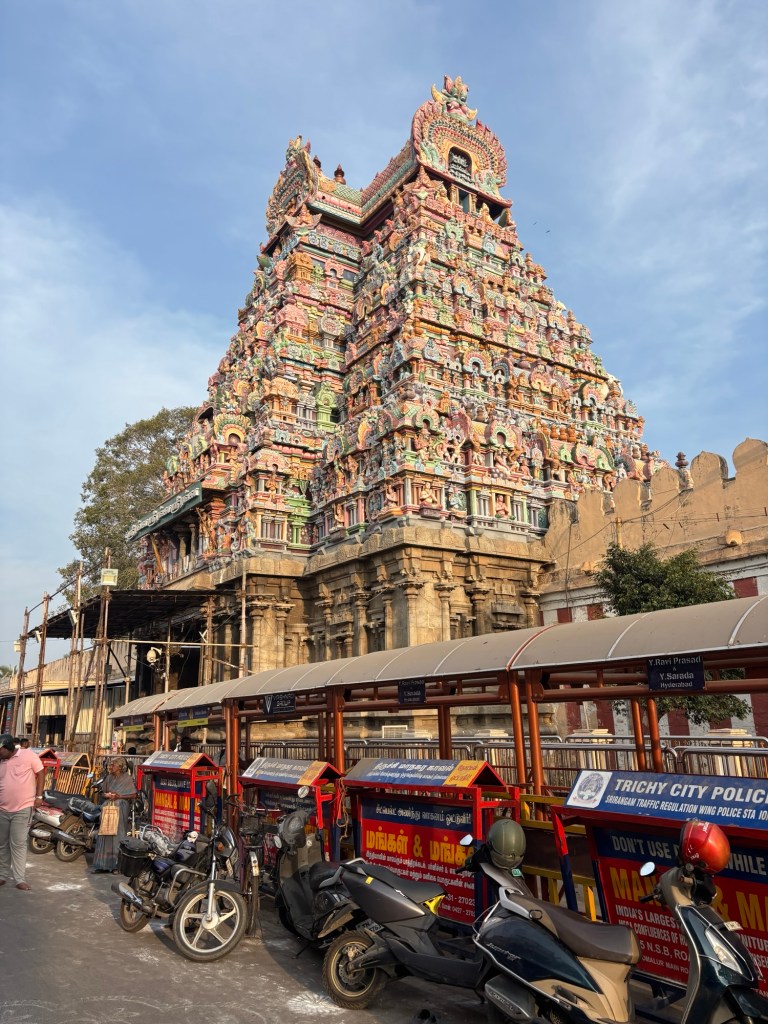
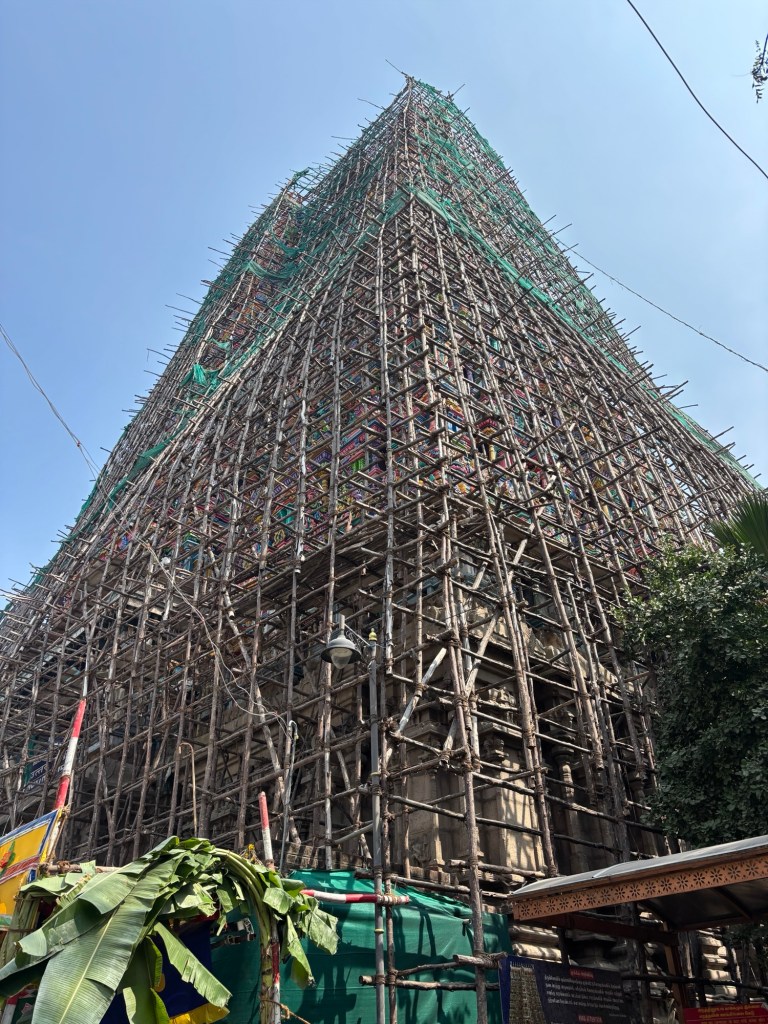
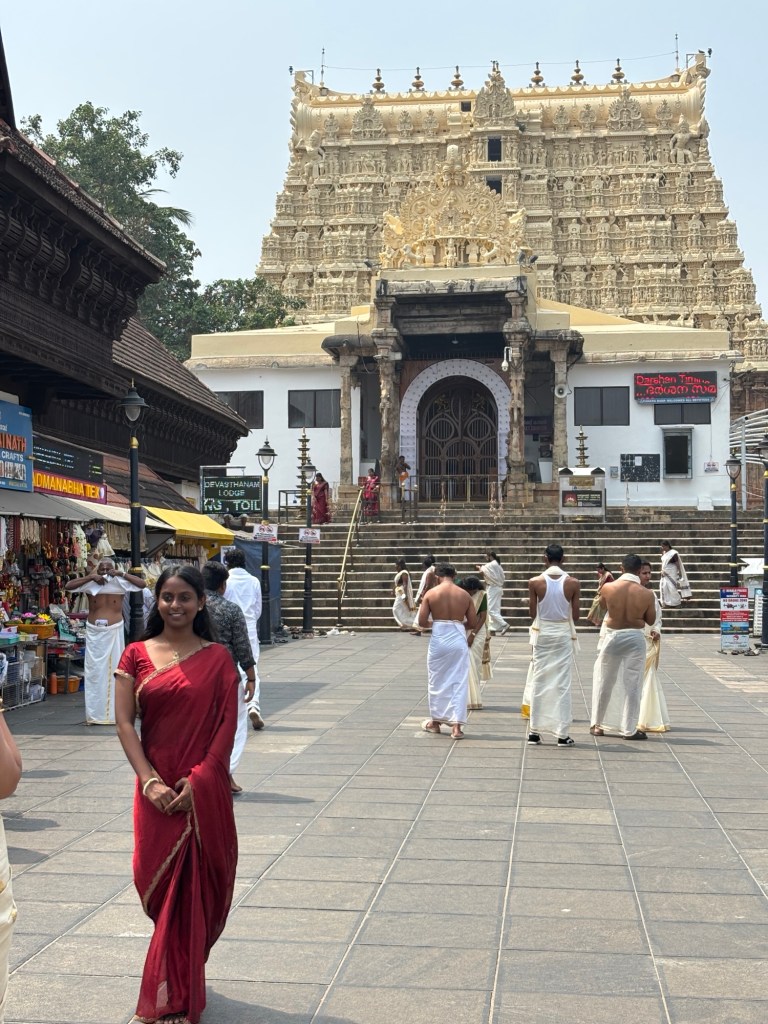
In general, the colors are strident and omnipresent, and to my eye, the intention is not to elicit not aesthetic delectation but religious ecstasy.
*Endnote: written on my phone, this post is not perfectly footnoted.


 Bike Touring India
Leave a reply to Richard Cancel reply