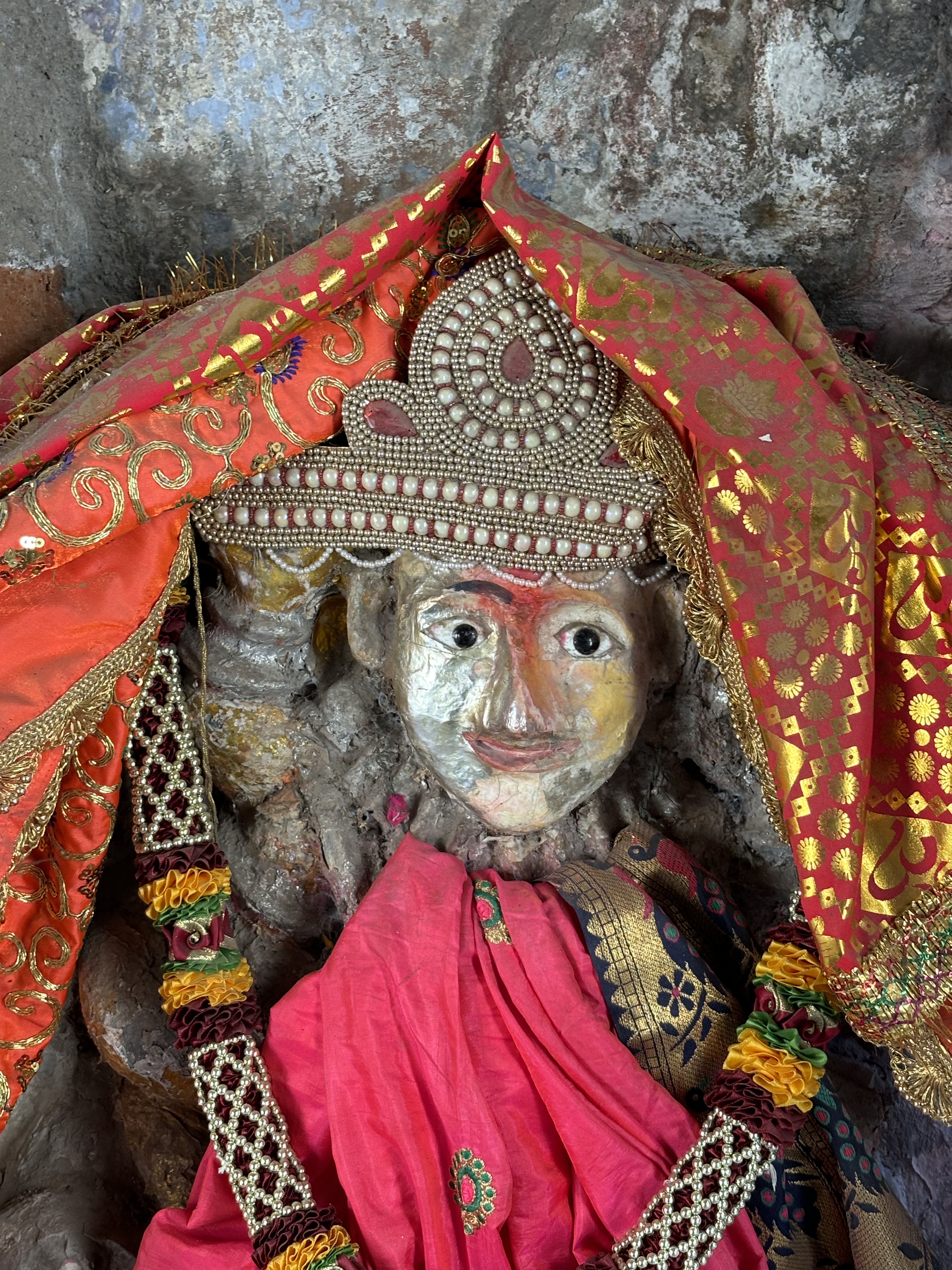
Danielle writes: In Kerala, we were told several times that Tamil Nadu drivers don’t understand the concept of lanes, education and health aren’t as good, and people aren’t as friendly. So Richard and I entered the state with some biases that I am happy to say were rapidly disproved.
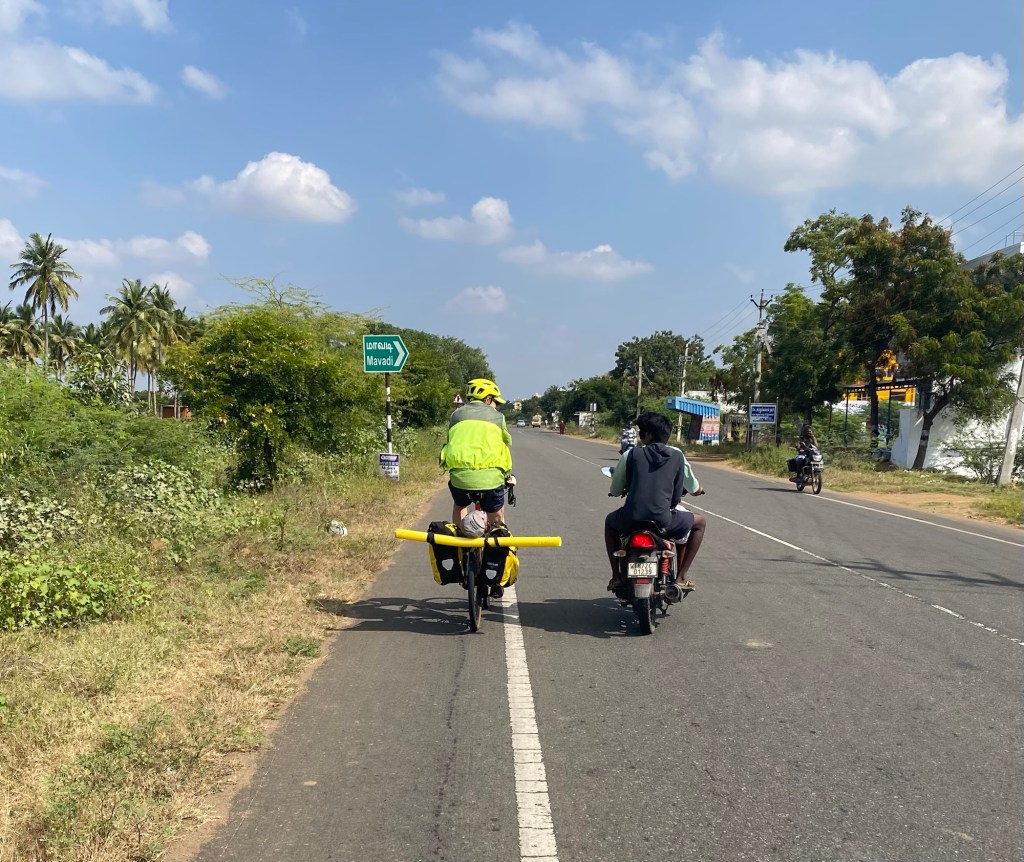
Our interactions with drivers have been just fine, although there was definitely a spike in men wanting us to pull over so that they could take a selfie with us. Unless necessary for passing, everyone seems to understand the concept of lanes just fine.
In Kanyakumari, the small town is being overrun with Indian tourists. It was the first place we saw two adult beggars with physical disabilities and a child beggar carrying a baby insisting on some money. We haven’t seen that since.
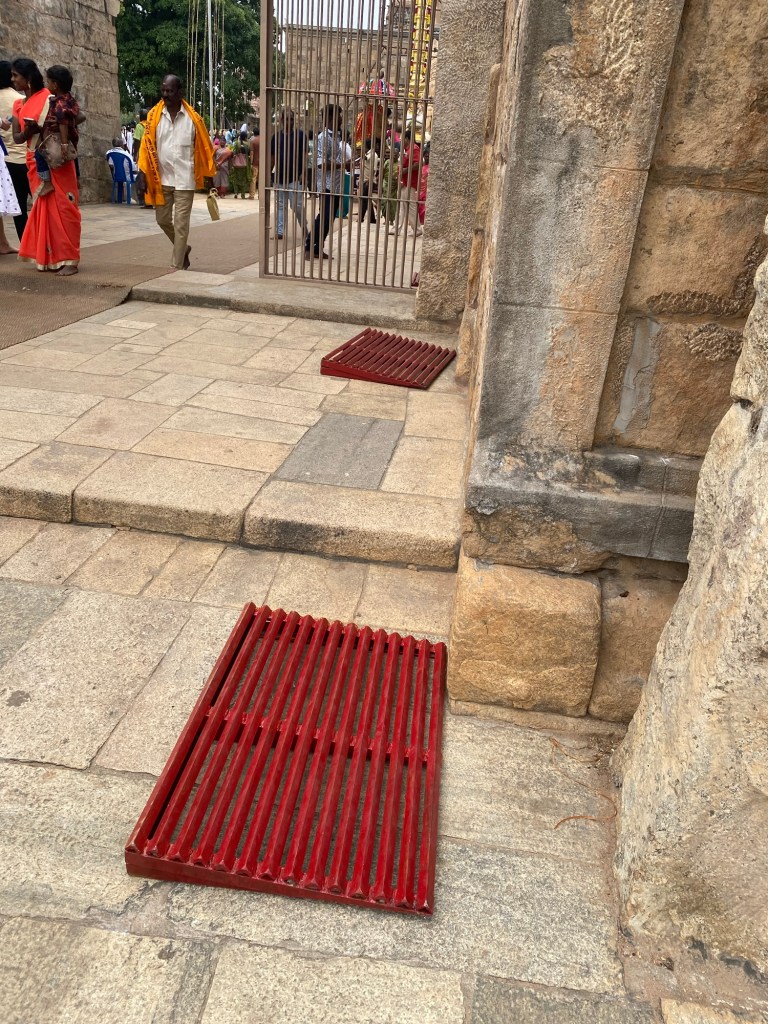
In the cultural capital of Madurai, there is a massive public, free hospital (and a medical school). There were some older women begging and it is easy to understand their need. No one else asked us for anything. We haven’t seen any people with physical disabilities since Kanyakumari, but there are ADA ramps in temples and commercial buildings. The bank’s ATM had a note apologizing for the lack of ramp access. The system seems to be heading in the right direction, better health for all.
The kindness and generosity of Tamils has been wonderful so far. A really good people day on this bike ride was on Valentine’s Day, Feb. 14, on the road to Sivakasi from Tirunelveli (this is many days ago, at this point), before Madurai.
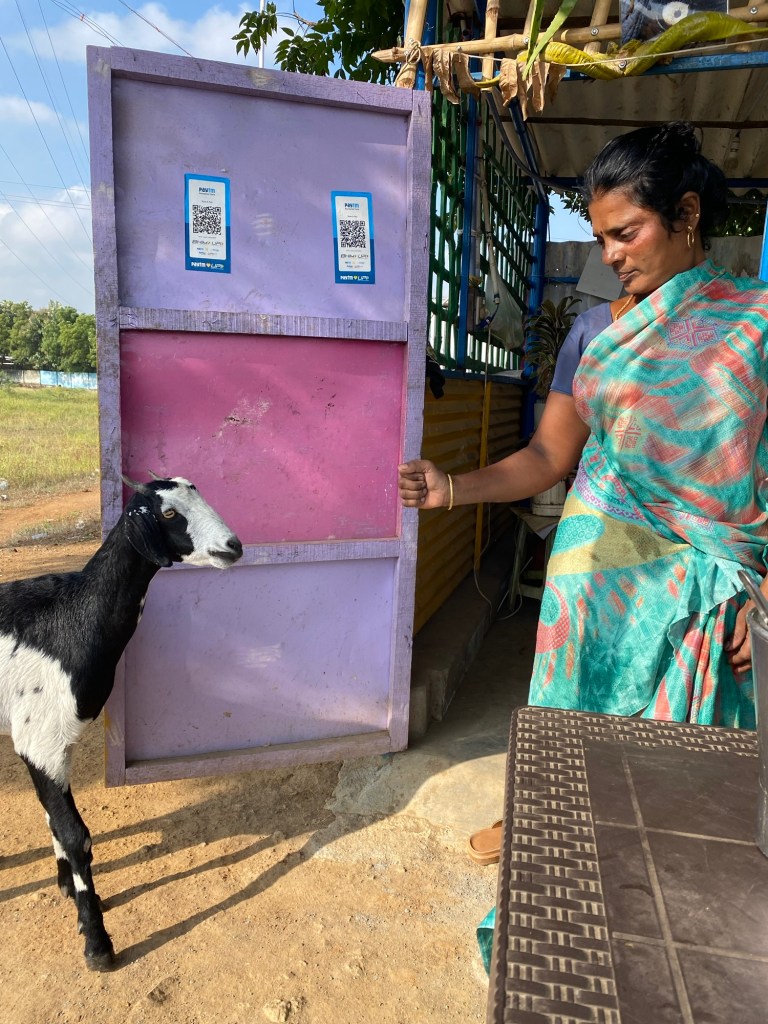
We left early, before hotel breakfast was served. There aren’t restaurants in rural Tamil Nadu, but you can find excellent food to eat at the roadside stalls once the countryside awakens.
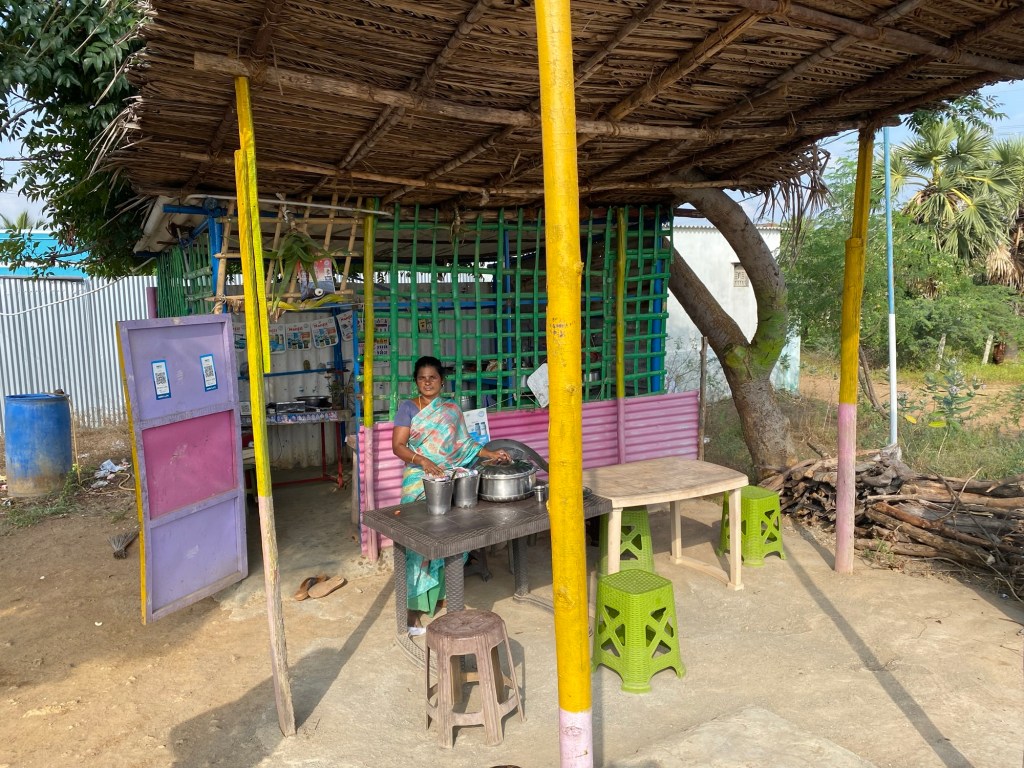
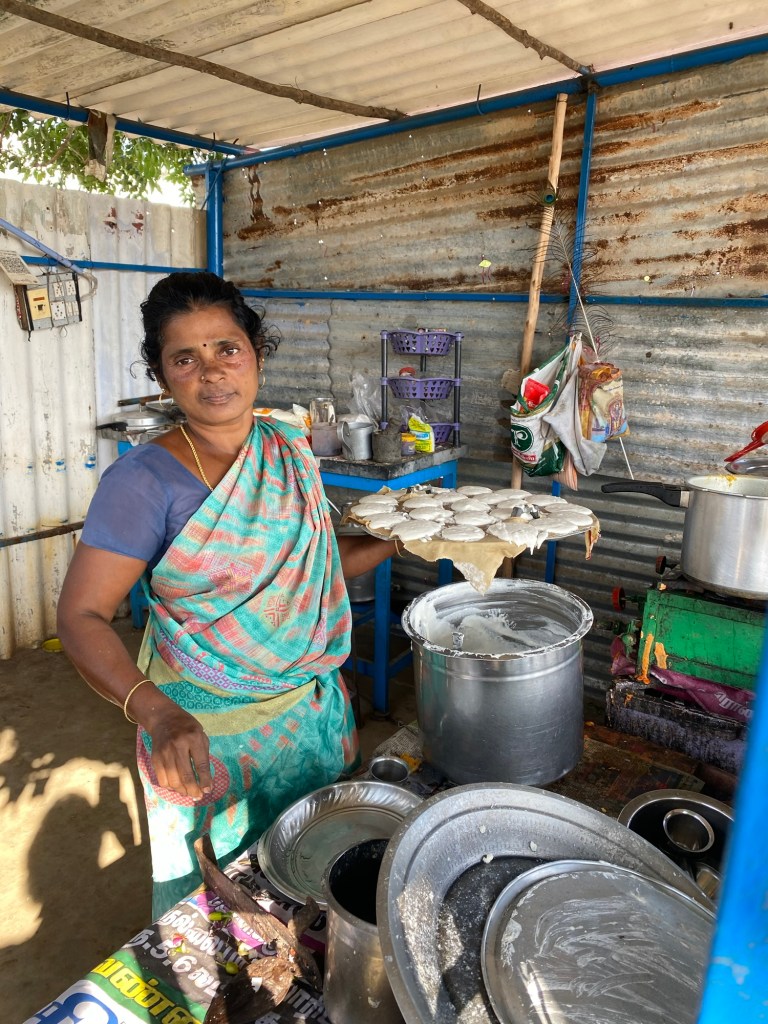
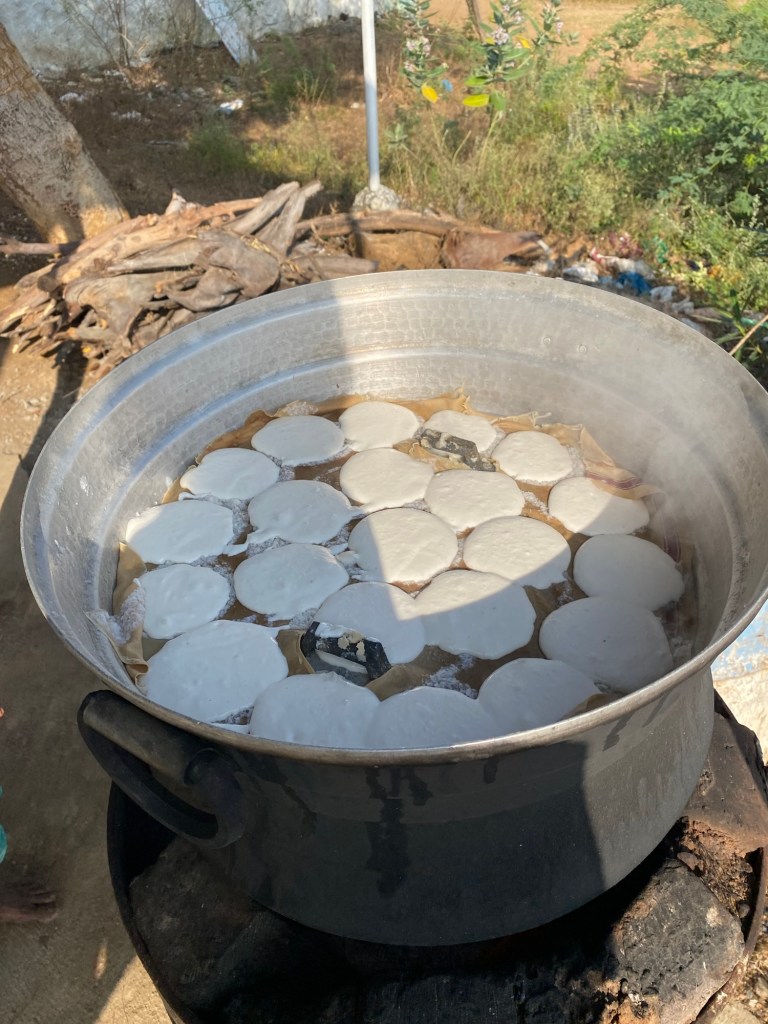
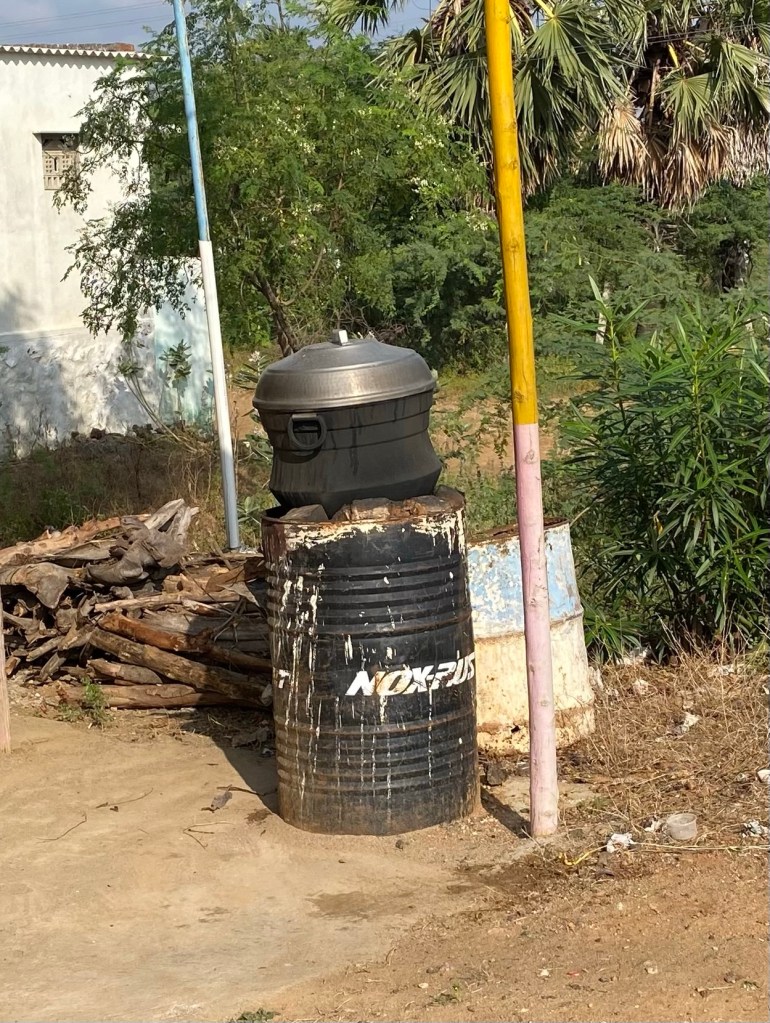
This woman made an extra batch of idly, just so that I could see it being made. Idly are steamed, made from an overnight fermented dough of about 2/3 ground rice and 1/3 peeled ground lentils. The taste is blank, like cream of wheat, and I’m sure it is every kid’s favorite. You smush it together with sambar (very soupy vegetable/lentil mix) and a chutney or two, which are not at all tangy like our fruit chutneys.
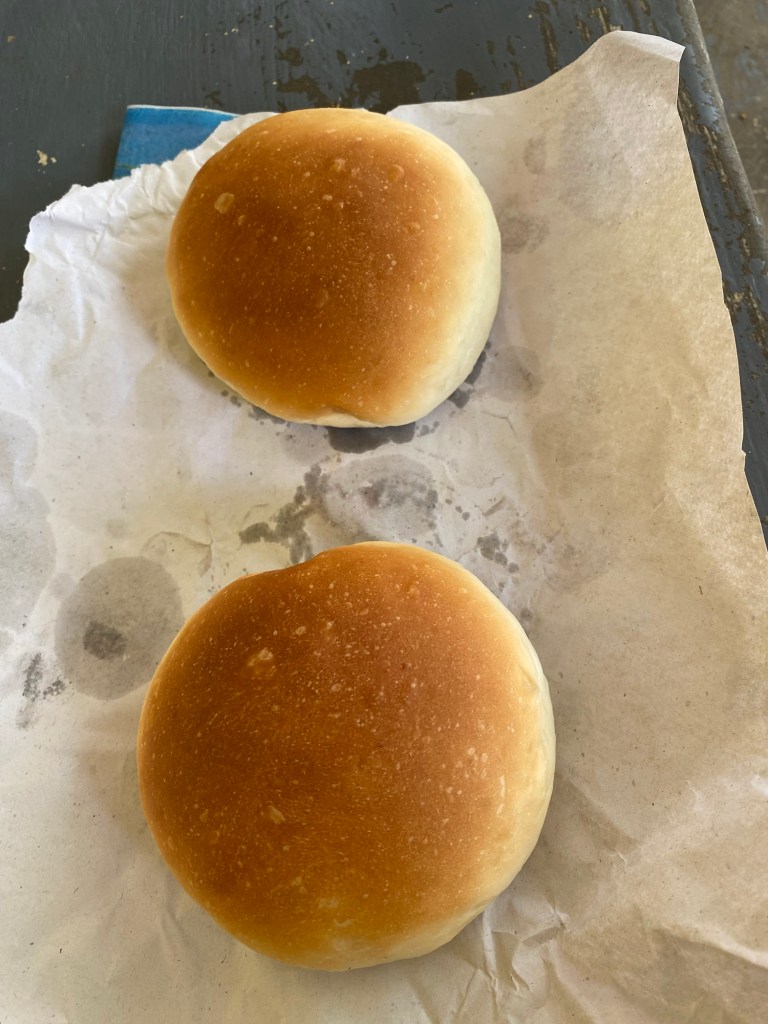
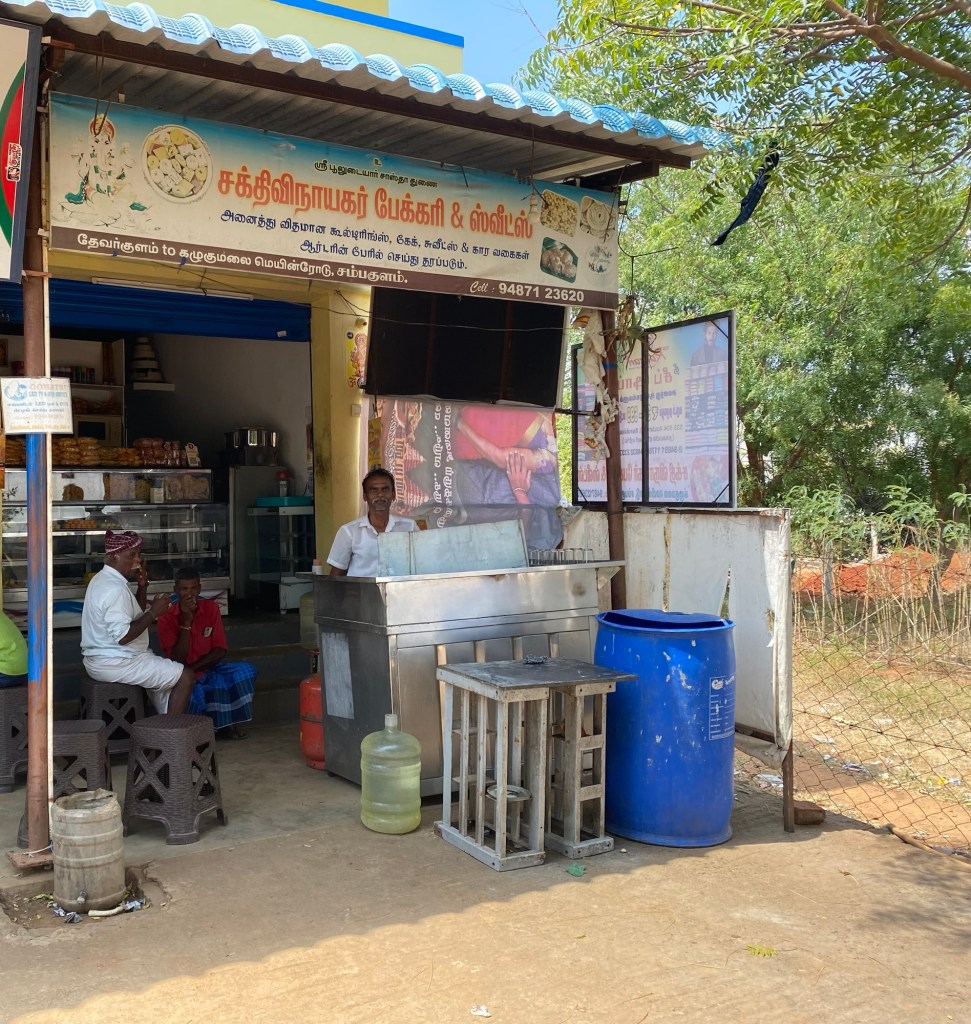
Around 2pm, I really needed some lunch. At a tiny rural chai/bakery shop, the owner wouldn’t let us order. Instead, he put two buns in the oven, just for us. So kind. We were given fresh warm, delicious, white puffy cardamom(?) buns we never would have tried otherwise.
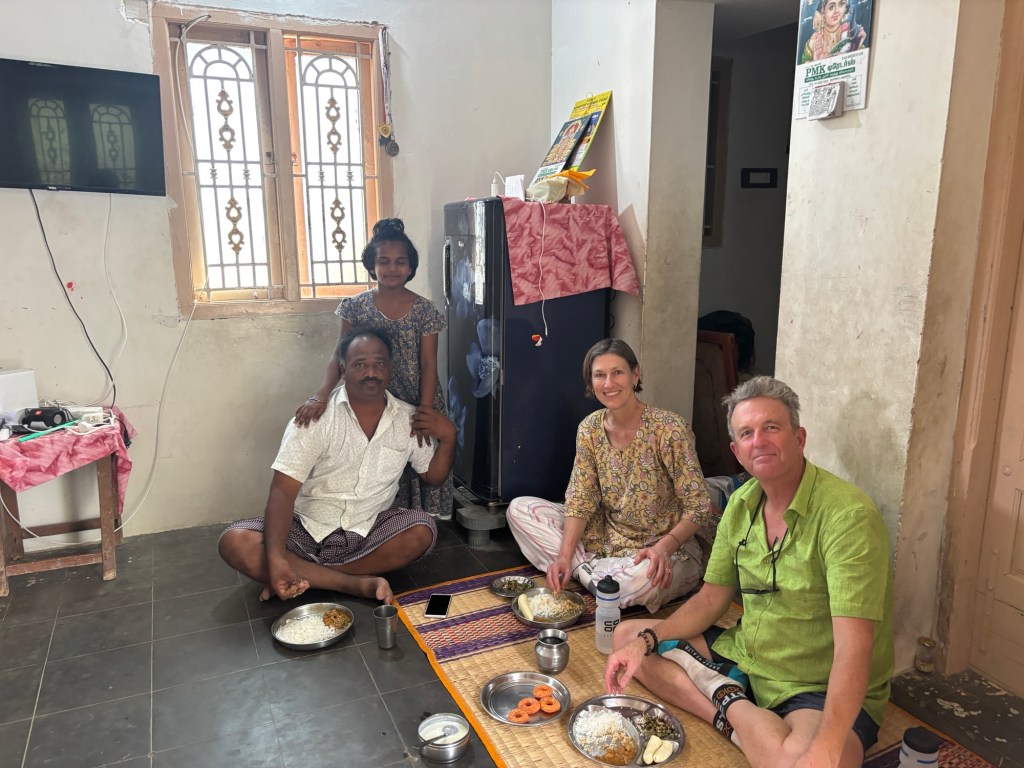
A bit further down the road, a motorcycle with a father and son pulled up. Do you like ice lime? Sounded good to us, and all of a sudden we had to come to his house and rest for an hour. In the meantime, his wife made us our second, much more nutritious lunch of the day in a kitchen with one small counter piled up high with stainless steel pots and dishes. We’re not sure what happened to the ice lime, but that wasn’t our first misunderstanding in India.
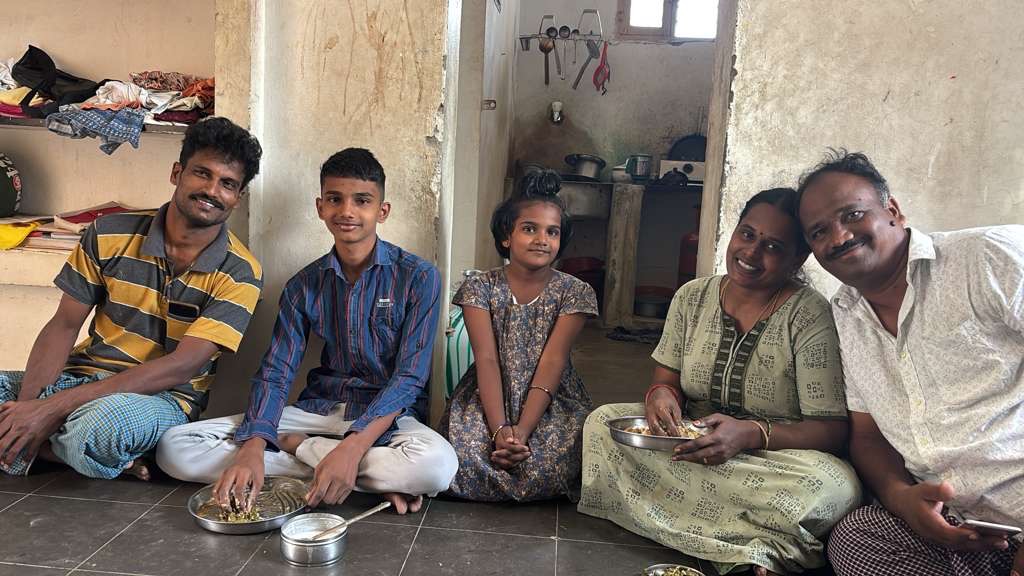
We were able to ask and answer lots of questions, which from his side mostly revolved around the cost of our bicycles, what we did, and our salaries (typical questions).
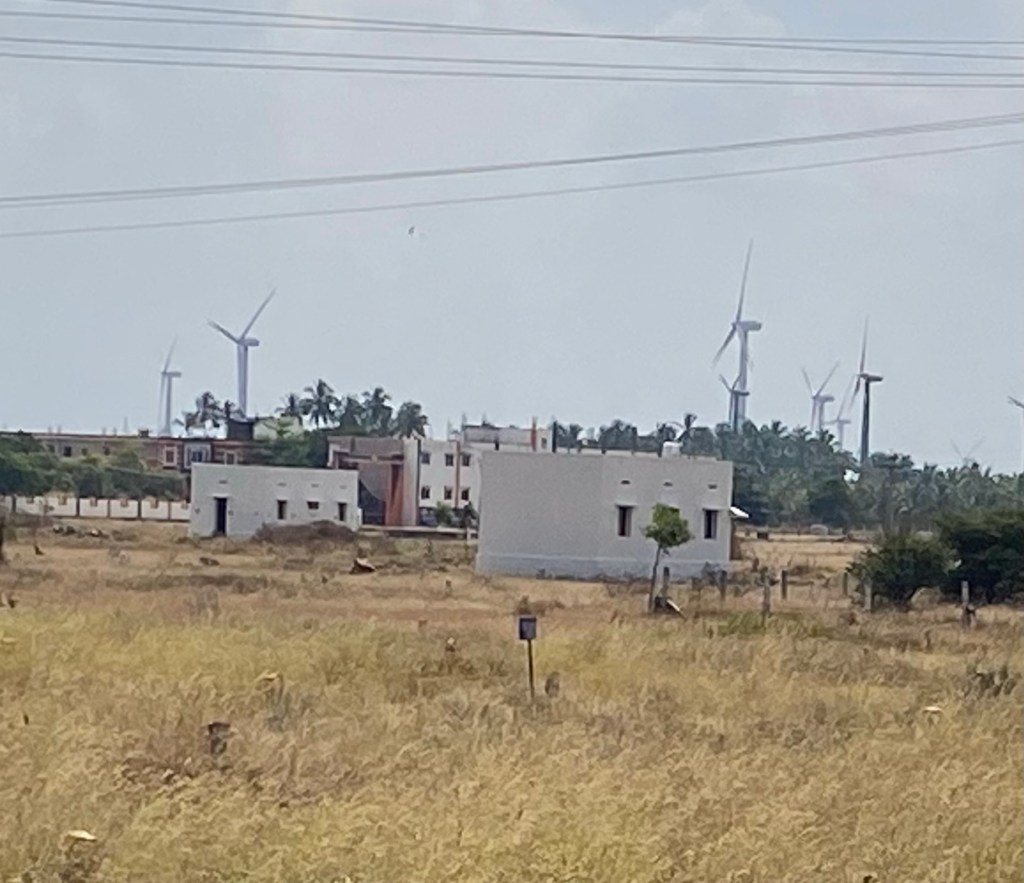
Vigneshwaran is in his mid-forties with a wife, a 14 yo son, and a 9 yo daughter. He’s a farmer, growing corn for export for animal and bird feed. He’s getting his electrical engineering degree so that he can work in the wind energy industry.
Akira, his wife, is a love match. She is a high school math teacher (upper level math for their examinations), but is currently at home on leave after having had her gallbladder removed. She’ll be fine in six months and will go back to work then.
They own their own house (four small rooms, which were more sparse than I expected) and also 10 acres of farmland in three spread-out parcels. The government subsidized housing construction 50%, so he used savings to pay for their half. We saw very similar looking houses everywhere.
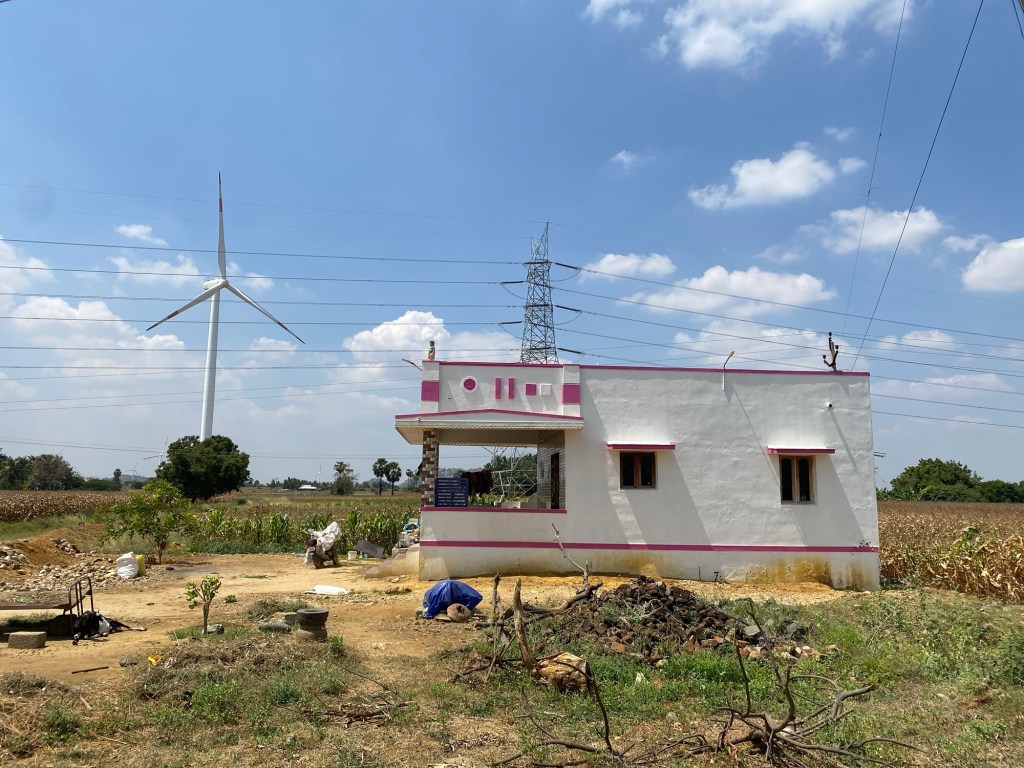
They farm with rain water, and it was a pretty good year. They can’t afford to farm with aquifer water, if they ever did. But their residential water comes from a well, 200m deep when he was a child, it’s now 400m deep (we think this is more likely feet not meters). Whether feet or meters, the aquifer has dropped that much in 25 years! Sounds similar to what’s happening with our aquifers at home.
He’s the one that told us about the afterbirth being tied to the banyan tree to ensure the calf has a long life like that of the banyan tree. “It is a matter of culture.”
The kids were shy, but the son helped with translation. They all joined us for lunch. We were served first, he joined us, then she and the kids, and then her brother. He has a farm next door and is unmarried.
I don’t know how universal it is, but we’ve met several men who went to the Gulf or Singapore to work. They aren’t marrying until they are about 35 years old, once they are back, at which point their parents are dying and they step in to “take care of the family”. Two children seems fairly standard too.
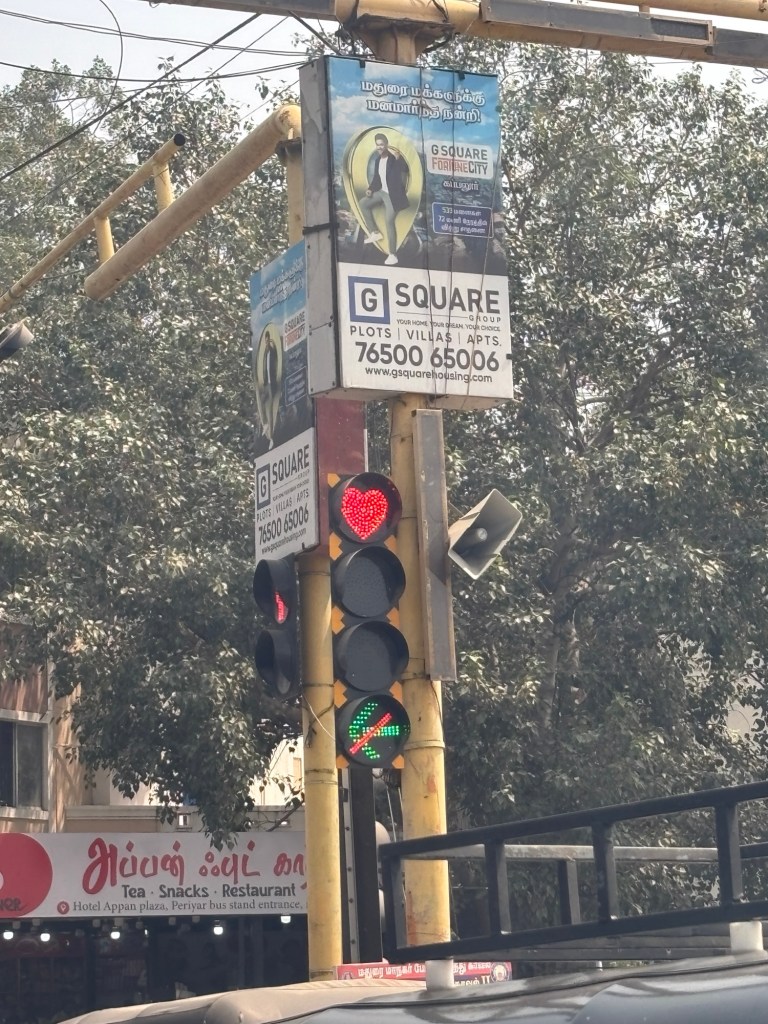
We ended the day at “Hotel Sparkle Inn”, which had a giant Valentine’s Day sign at the entranced. We noticed, after an excellent dinner, that all the guests were taking selfies in front of it, palm up, pretending to hold the heart.

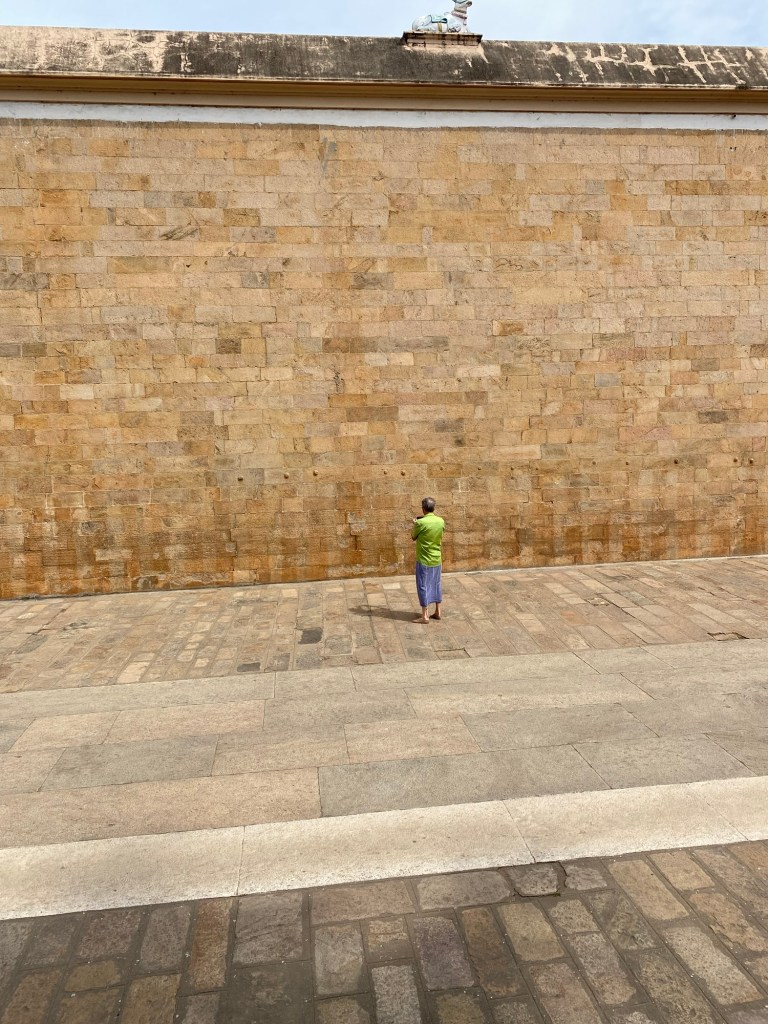
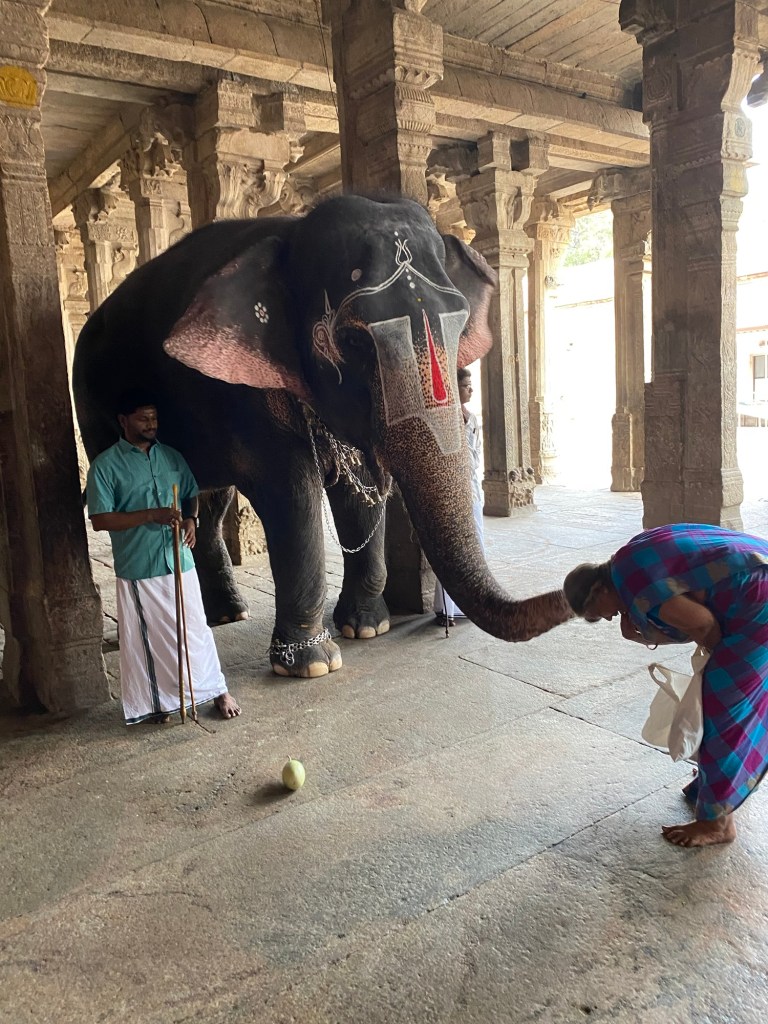
Today Feb. 21 we are on our way to Puducherry, by car, with the bikes on the roof. We spent the last two days looking at temples and there are many more we want to see before we head to Bangalore on Monday. Each one impresses.
My departure is a few days away on Feb. 25, and there’s not time to bike more. I’m really not ready to go home yet.


 Bike Touring India
Leave a reply to Ann Speckman Cancel reply