It was such a thrill to reach the southernmost tip of India, the accomplishment evident in Danielle’s expression of pure joy.
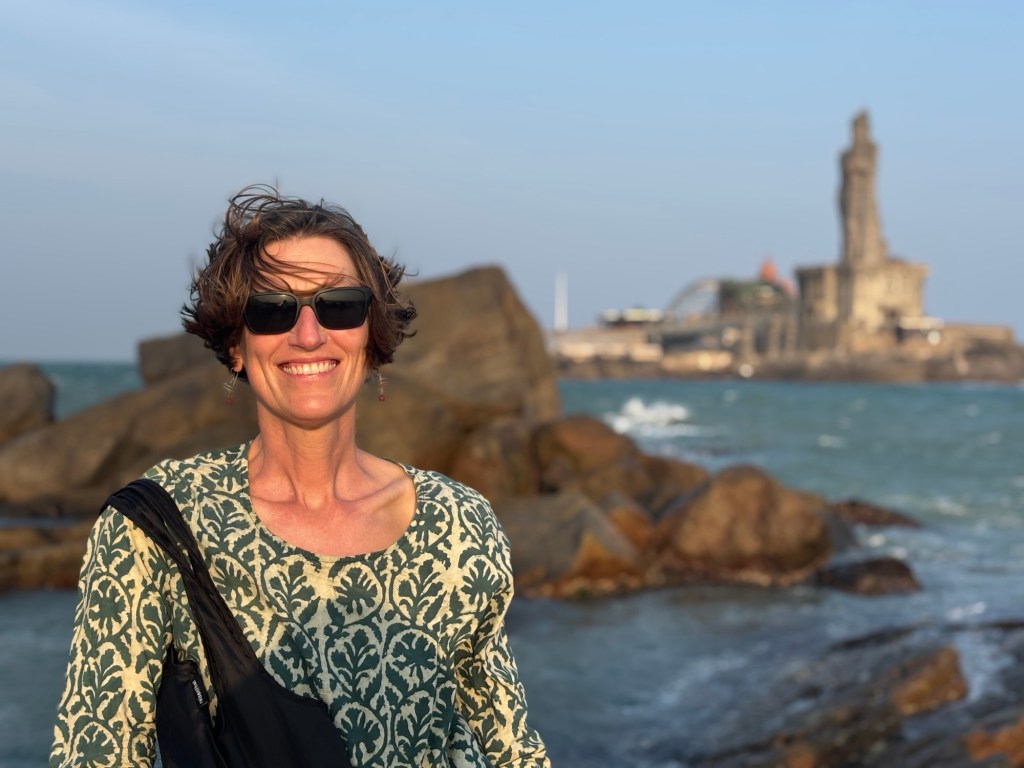
We realized we are both blessed to have stood at the southern tips several of the continents. Danielle and I both have reached the tip of Africa, south of Capetown, and Melbourne, and now India. And she has also reached Ushuaia in southernmost Argentina.
Our transition into Tamil Nadu brought many new challenges.
Long gone is the tourist infrastructure of Kerala. The State’s sparse countryside accommodation has demanded extremely long days of biking to reach any place to stay. However, once we arrived, the accommodation has been mostly excellent. We stayed two nights in Madurai at a YMCA International Guesthouse. It was spare and tired, but comfortable in its own way, and centrally located.
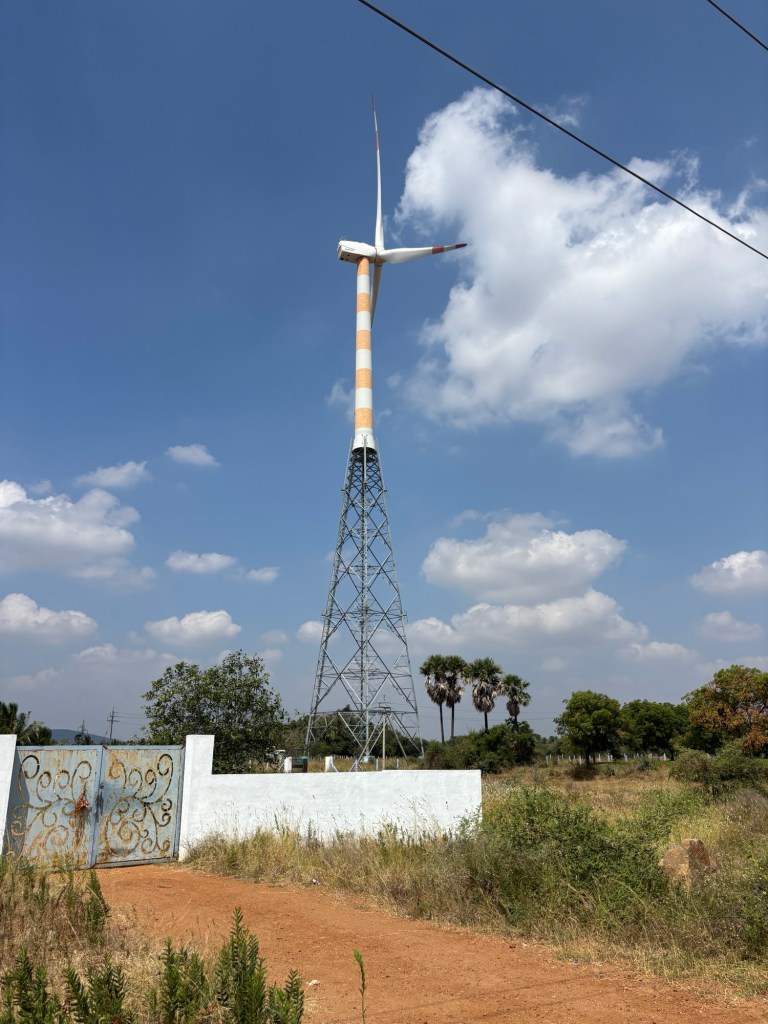
But the second, and equally dramatic factor affecting our visit has been the wind—hence my sailing metaphor…who knew the prevailing winds of Tamil Nadu blew south, down from the Bengal Sea, hitting the Eastern Ghats, funneling this blast southward. The two hundred miles of windfarms, the first I’ve encountered anywhere in India, testify to this conclusion. Our first day heading north, the wind blew 15-20 mph straight on, and this went on and on for 68 miles. Add the normal navigation confusion and getting lost, and you have the making of an eleven-hour day. That turns out to be an exceptionally long time in the saddle, especially on degraded road surfaces, likely 40% of our Tamil experience. Do this a couple of days in a row, add chafing and heat rash, and the fun quotient can start to decline exponentially.
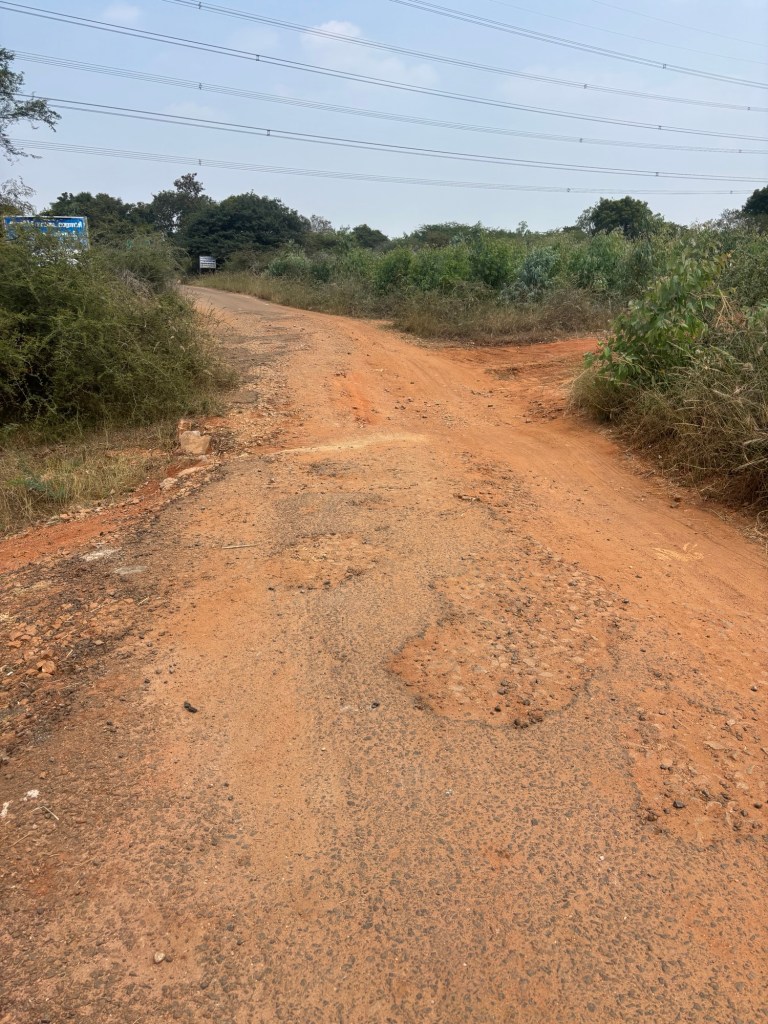
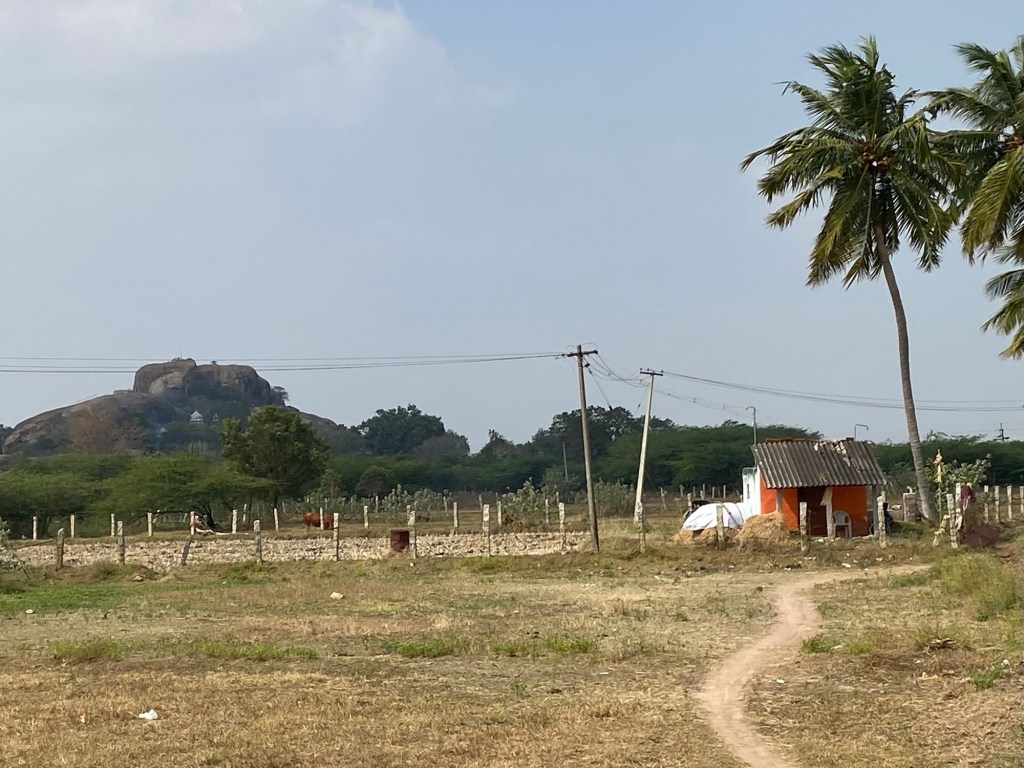
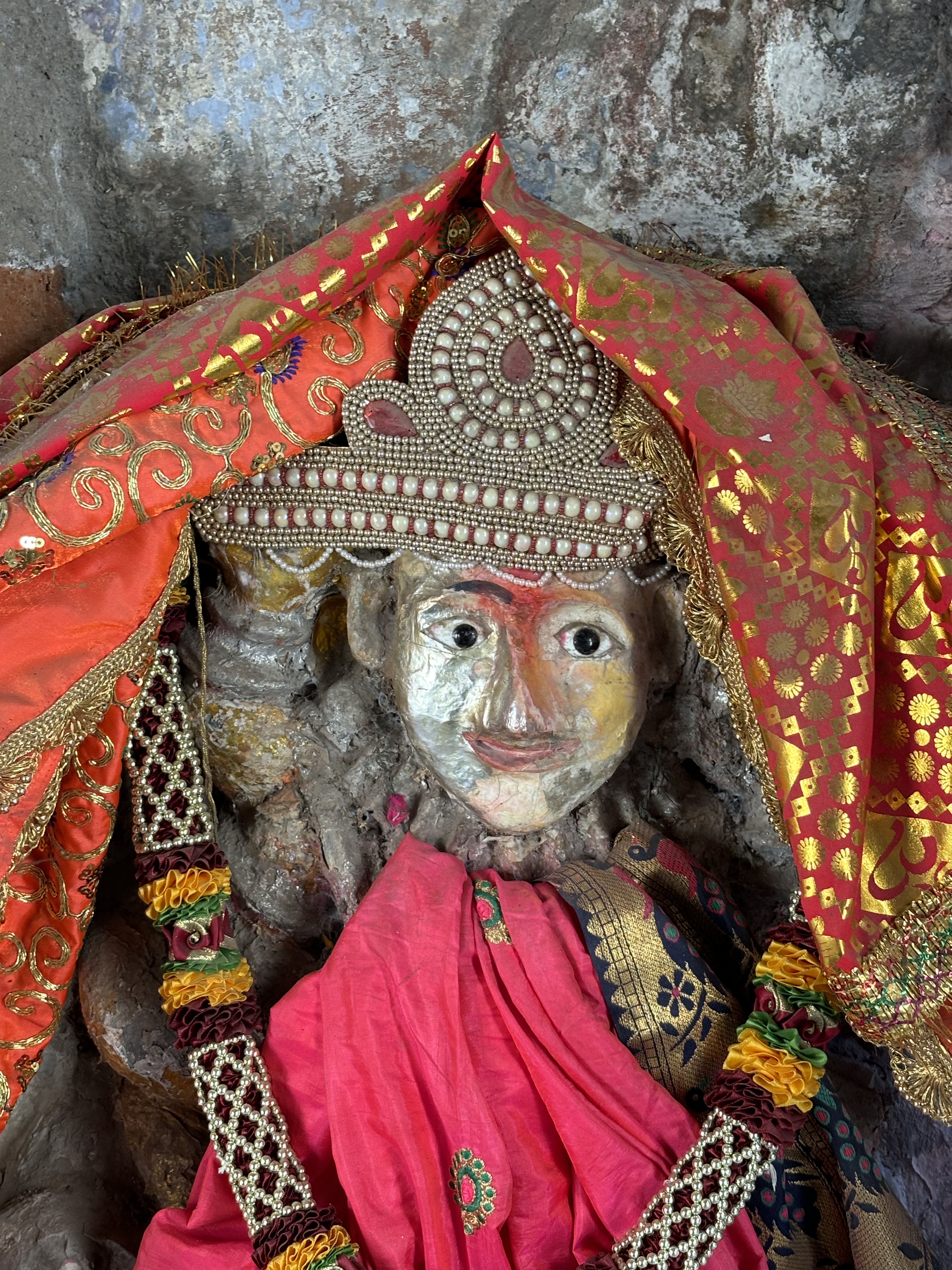
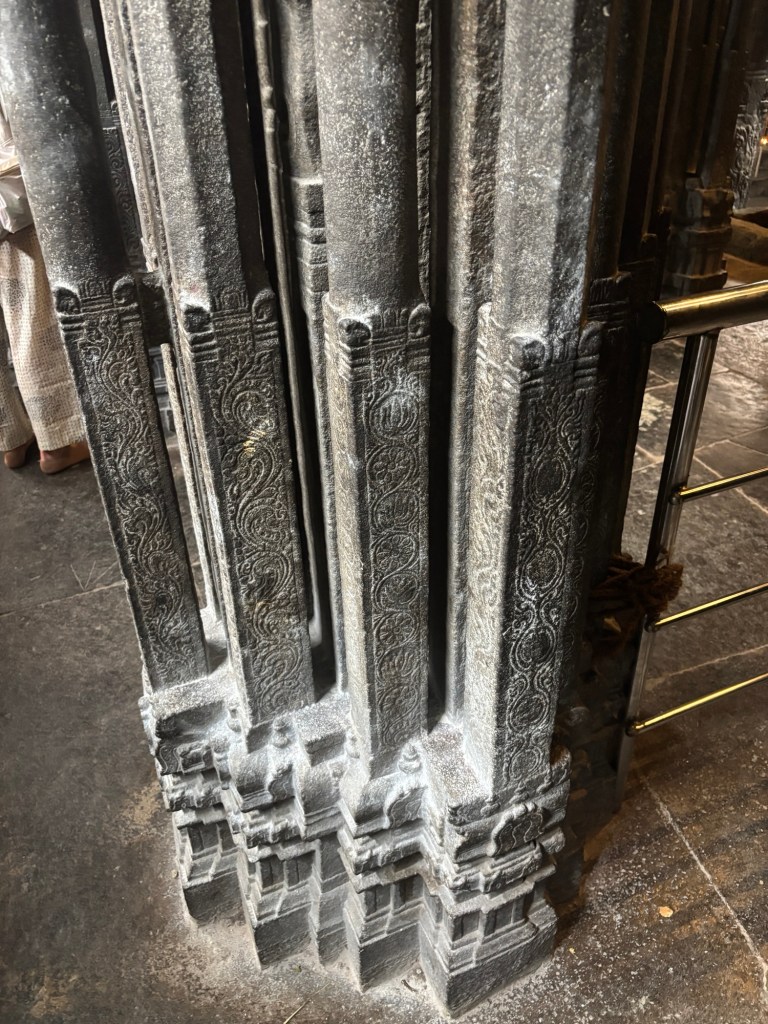
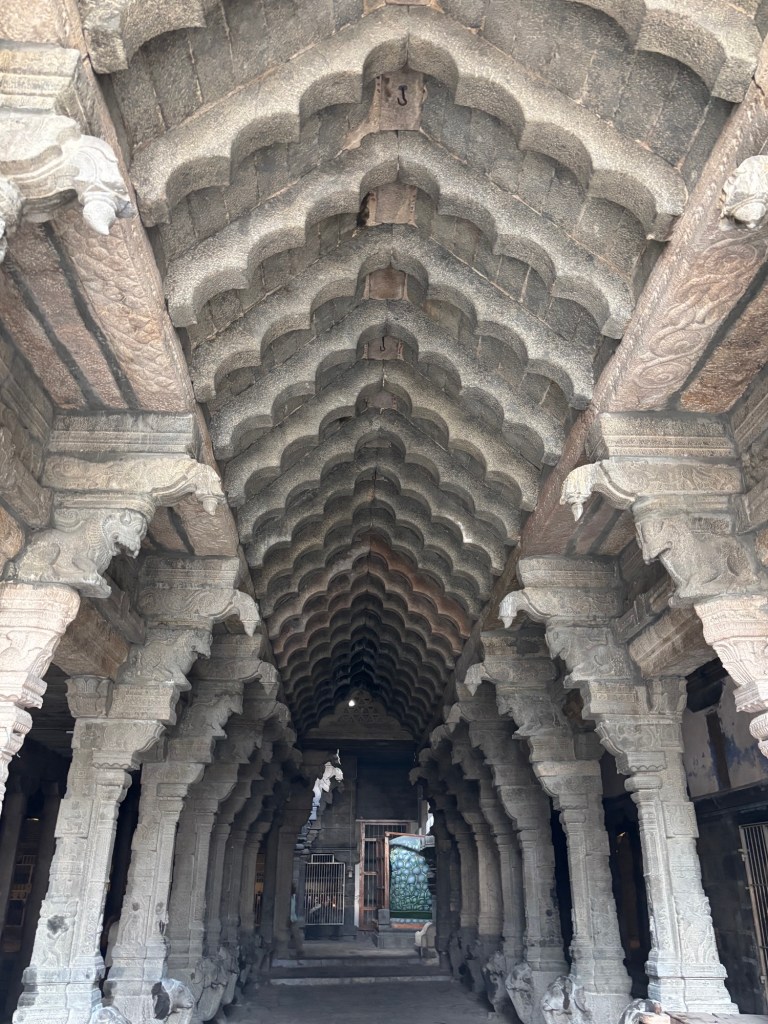
We took our first rest day in Tirunelveli, after that blast of headwind and six days of riding. There is a well-presented archeological museum there and a major Hindu site called Nellaiappar Temple, dating from the seventh century CE. It was here that I encountered the so-called “musical columns,” so named because under their extreme loading, the compact stone structure rings when tapped or struck lightly. Imagine a single stone block, the center containing the supporting column structure, and then surrounding this main support are a whole series of small “columnettes”. Some columns had as many as 48 of these smaller columns forming a forest around the central support. The columnettes are so tightly clustered, it is not obvious how they were carved. Because the mass contains so many smaller components, it had to be carved in situ.
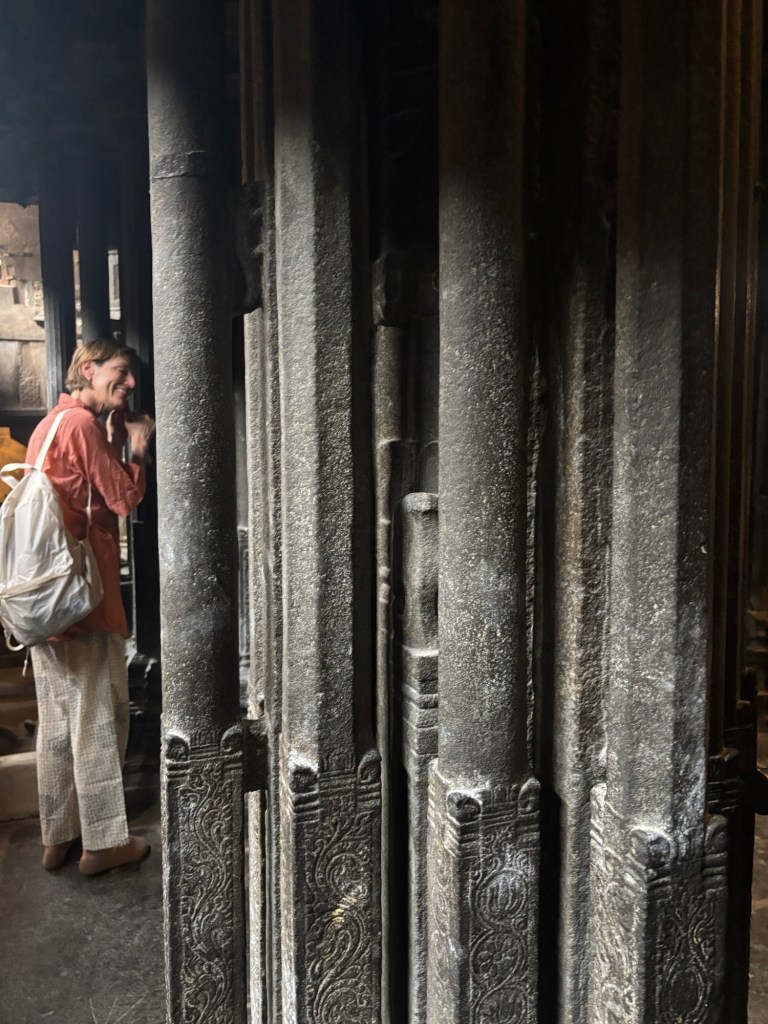
Impressively, the smaller columnettes are perfectly round projections, and so close together as to inhibit the action of the chisel to carve them. I estimate that it might take a master carver as long as ten years to accomplish a single column cluster. If you wanted to create that today, I’m not sure it could be done. It is likely far outside my own skill set. One is prohibited from taking photos in the temple, but I managed to take these two images. The images don’t really convey the impressive mastery the column clusters represent.
After our much needed rest day, we expected to make brisk progress on the next stretch heading north. The wind had dropped significantly to 10 mph with some sections protected by trees. Yet, even starting at 6:00 AM in the dark, with the imperfect navigation that defines cycling in India, we became worried about making it to the hotel before dark. We ended up deciding to ride the last 27 miles on the National highway to make up time. This was a good decision but let’s just say it is not a peak cycling experience.
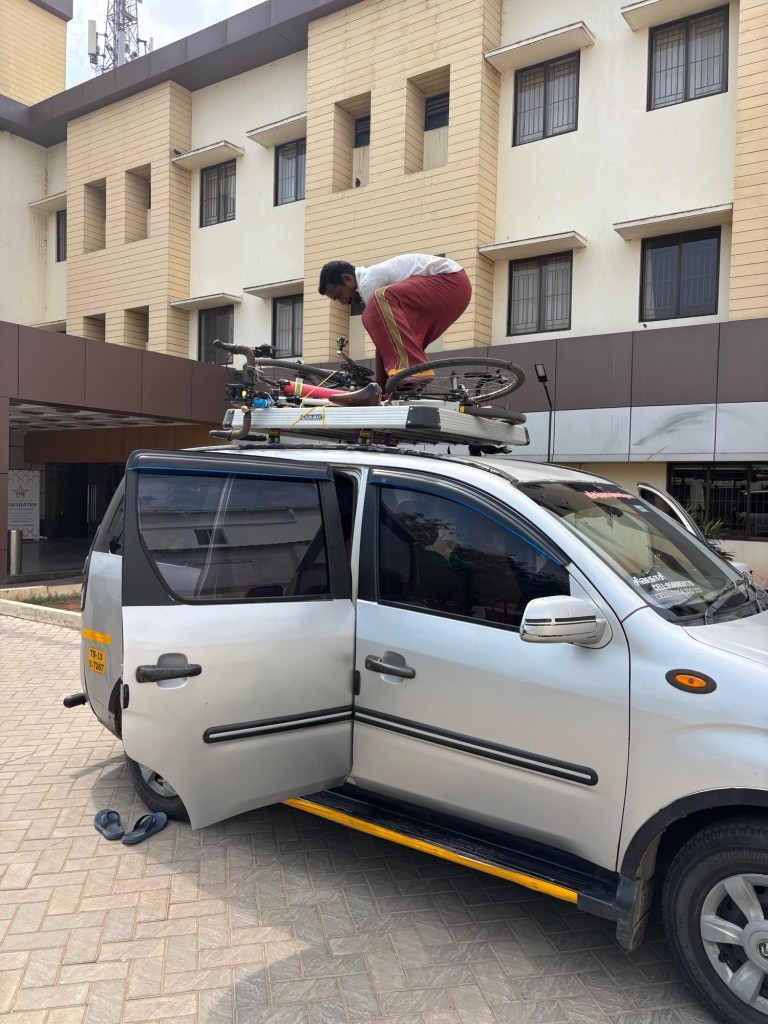
Still fatigued from the wind and long days, we hired a taxi, put the bikes on the roof, and skipped biking the last 65 miles to Madurai.
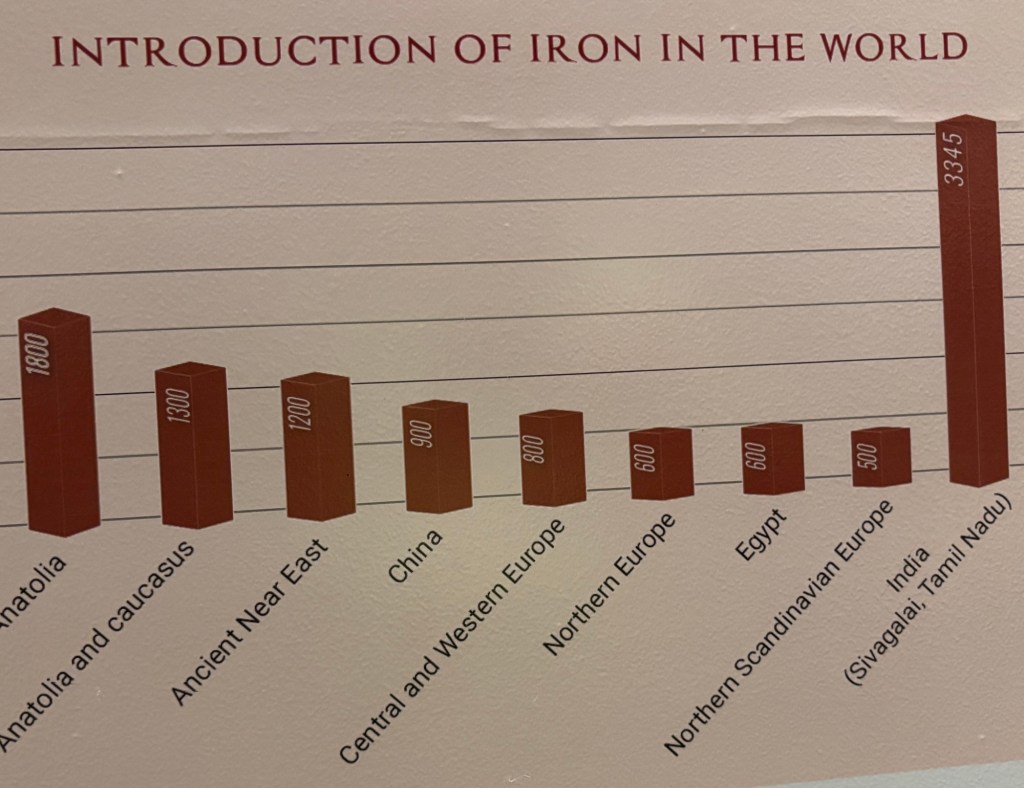
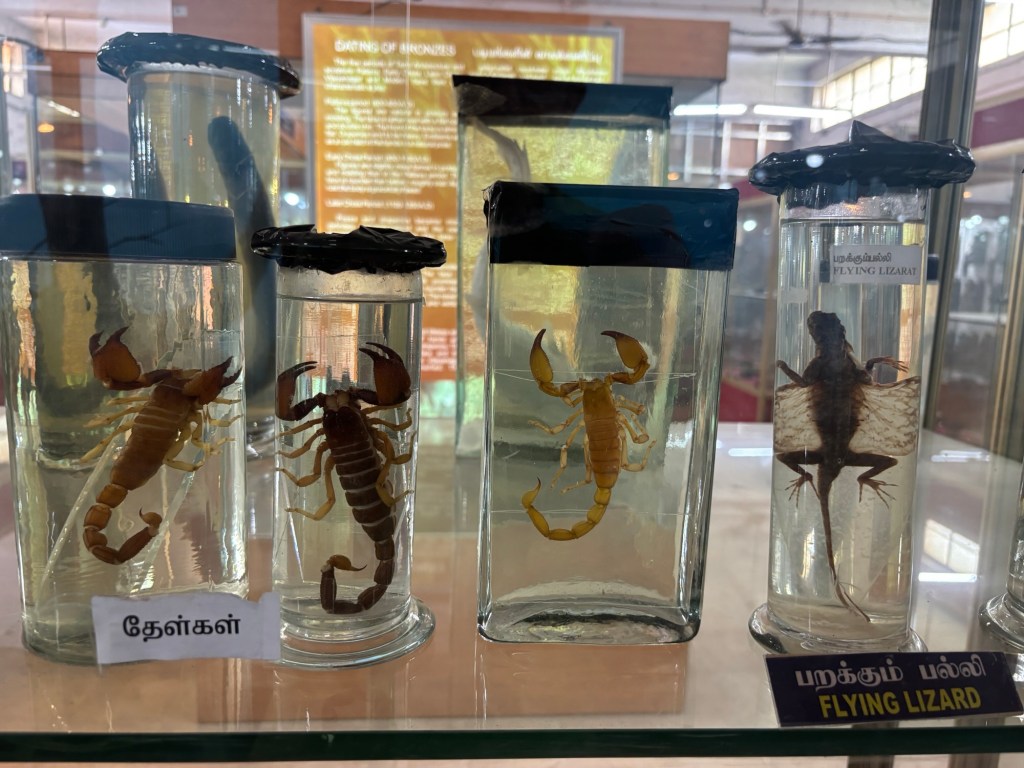
Madurai had an excellent archeological museum that is some distance out of town. The museum summarizes the major finds in the Tamil State, which turn out to be extraordinary. The major rivers of this land, running east out of the Eastern Ghats and into the sea about every two hundred kilometers, have been continuously populated for 40,000 years. There are hundreds of archaeological sites and the trove of items recovered is well-documented and rich. But most shocking to me was to discover the mastery of both iron production and glass manufacturing thousands of years before other cultures had any idea of their existence. These earliest Iron Age sites have now been definitively dated to 3345 BC, almost 2400 years before iron shows up in Egypt. And glass production? We have only a small amount from the ruins of Rome, 3200 years later. I’ve spent a fair amount of time researching this subject as it relates to my knowledge of tooling and the changes evolving technology have made in stone’s expression. This discovery, now only three years old, will radically re-write our understanding of how these critical cultural milestones spread throughout our world.
Alas, all the towers of the Hindu temple called the Meenakshi Amman Temple were shrouded in scaffolding for restoration. Luckily for me, I didn’t feel it a huge loss. The 33,000 brightly painted gods depicted, although meticulously crafted in brick, mortar, and plaster, are not in a style that I can relate to. This is the Disneyland of Hindustan, and it’s expression, much like the gothic cathedrals of Europe, was designed for a pre-literate public as a graphic novel. They are “read” by the viewer and the stories are thus received.
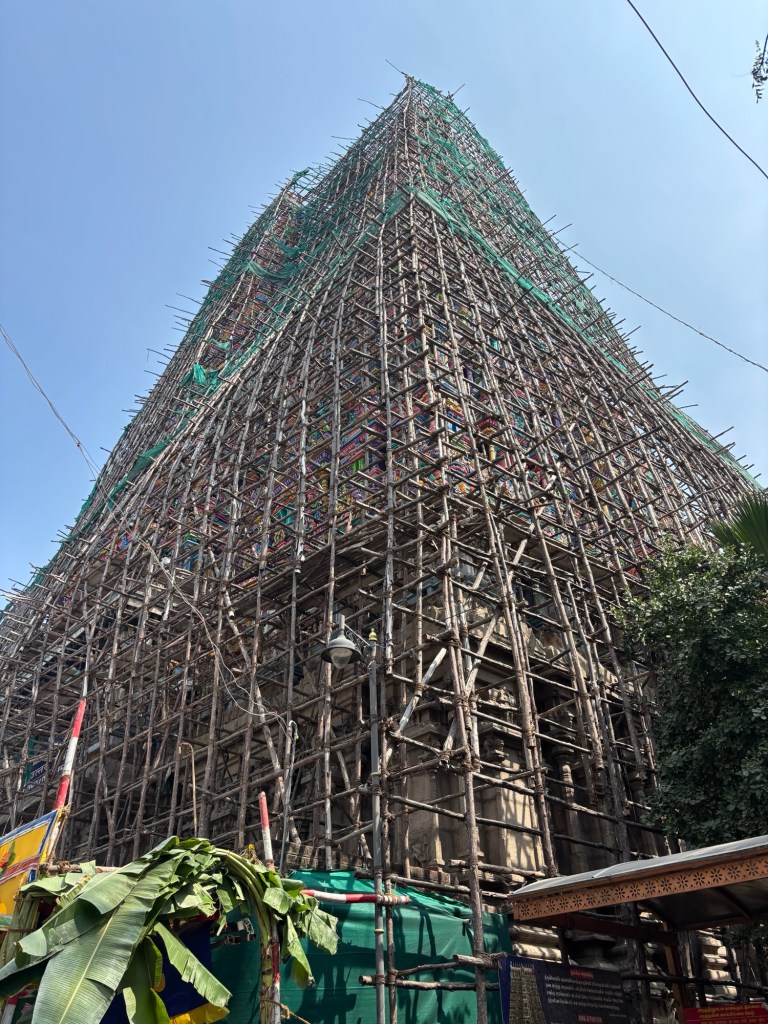
The temple itself is a living monument, crowded with worshipers whose earnest devotion is obvious. Assembled and reassembled over the last 2500 years, it’s a jumble of wrought granite rooms. As a first time visitor, it is hard to get your bearings in this huge complex. The pure scale of many of the stones moved me. The quarrying, transport, erection, and then carving in situ are a testament to humanity’s inspired endeavors and the skills developed and nurtured in this community. The famed Pillar Hall has almost a thousand of these large carved stones, standing sentinel, and bearing the heavy granite roof beams. Some of them have moved out of alignment, making me question the stability of the earth in this site and when exactly it last moved. It’s not a place one would like to be visiting in an earthquake.
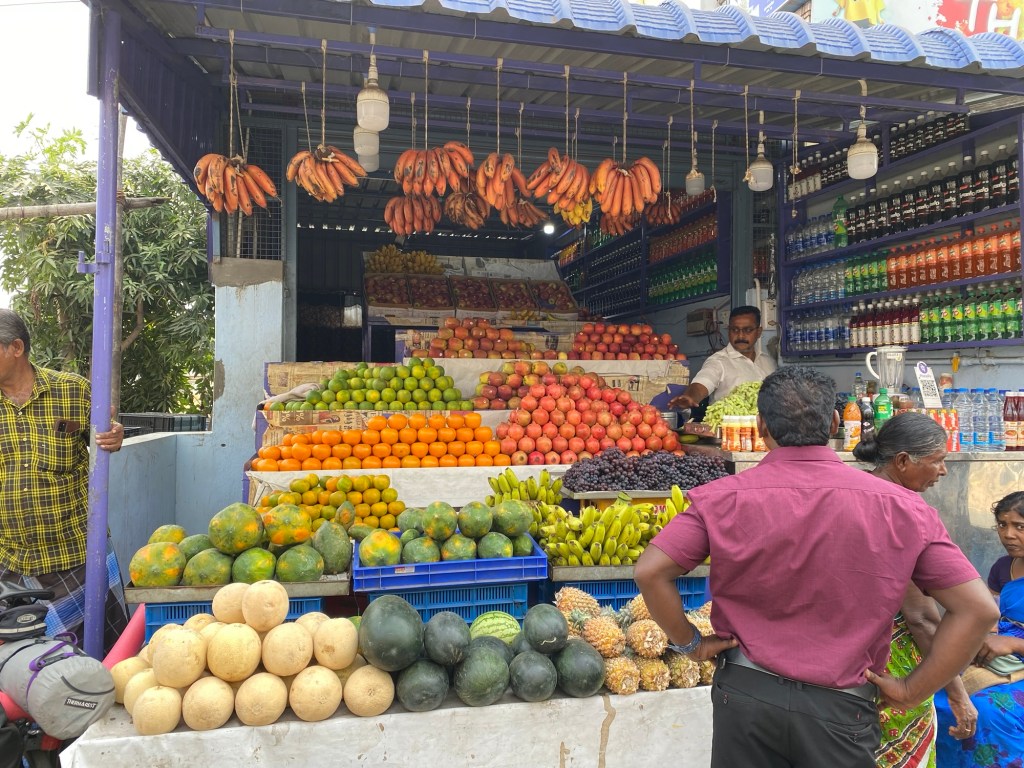
One boon of our ride here has been the hearty, full-throated greetings from all genders and ages. And not just addressing the disarming presence of Danielle. Old men and old women, both extremely unlikely cheerleaders in other Indian states, have called out with enthusiasm. Even older men have tried to wave us down to take selfies with us. And after the first question to assess what galaxy we hail from, we get “how do you like India?” When we respond with enthusiasm, they beam proud smiles that stretch from ear to ear. The warmth and true human connection of these exchanges will long outlive my memory of the long days and sore lower parts of my anatomy.
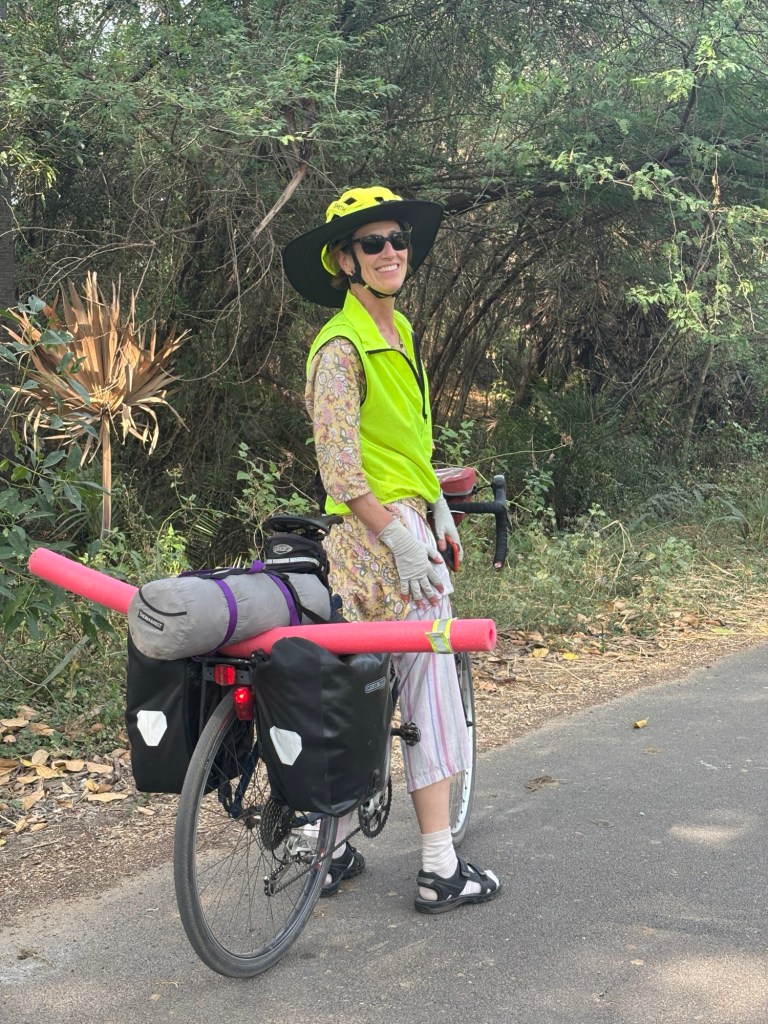
Finally, no assessment of Tamil Nadu cycling would be complete without addressing the problem of dogs. Far more than anywhere else I have visited in India, the dogs of the countryside were far less friendly than I would have hoped. We were confronted several times a day. Danielle, a dog whisperer, would mostly stamp her foot down off the pedal, beaming love to them while saying “no!” My approach was less sophisticated; leaning on my airhorn affixed to my handlebars and growling ferociously as if I intended to bite them first. Both strategies worked, but mine cost me a lot of adrenaline and stress. Once again, I am forced to confront that I am not Buddha. Compassion for dogs has a much smaller foothold in my heart.
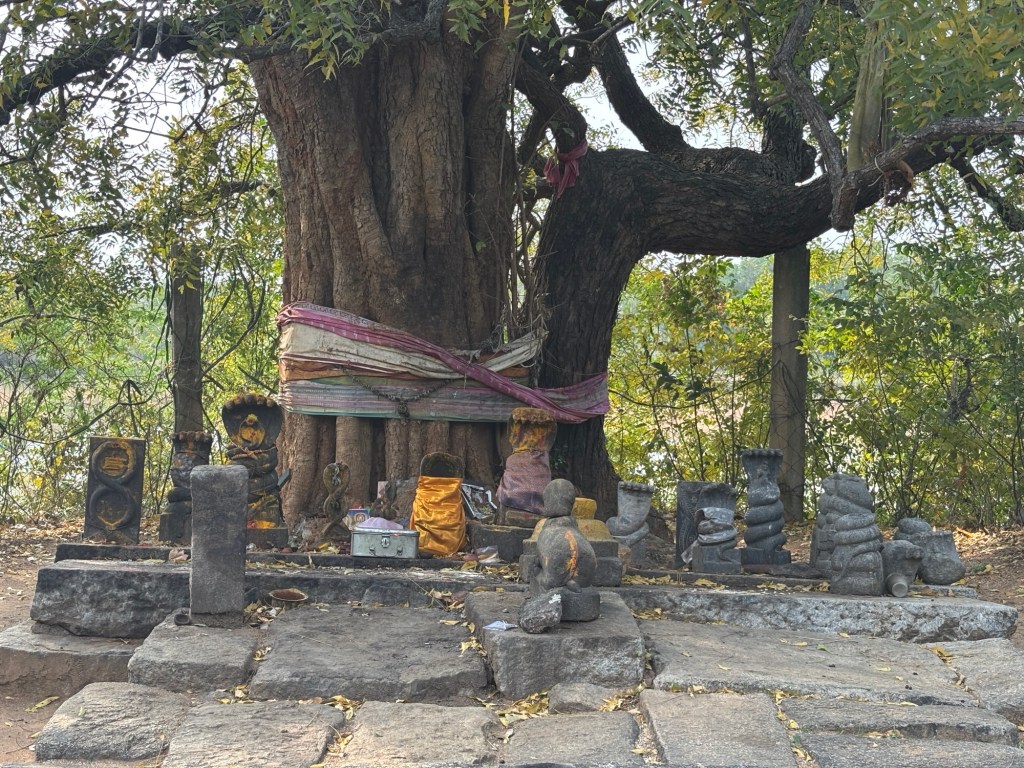
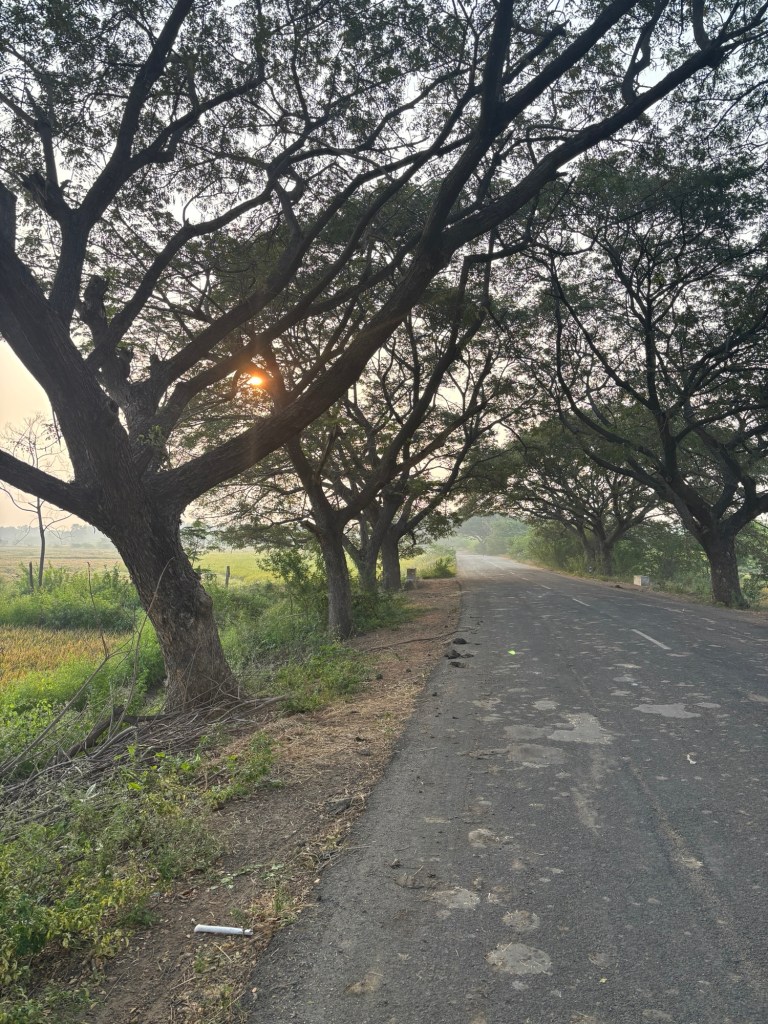
In closing, Tamil Nadu is the real India I know and love; full of impossible contradictions, noise, chaos, and indelible beauty, it remains impossible to categorize.


 India Bike Tour
Leave a reply to peteraevans Cancel reply