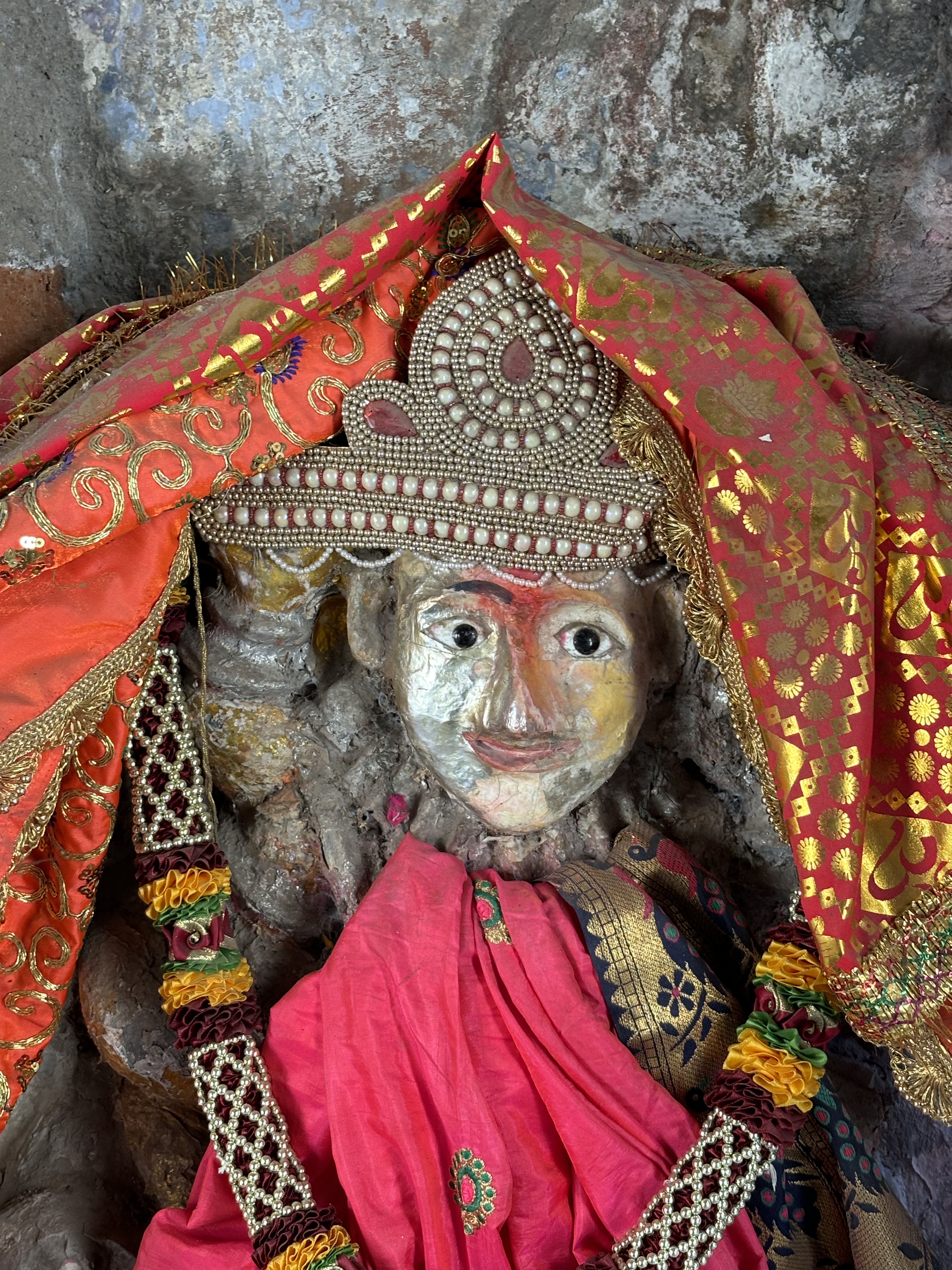
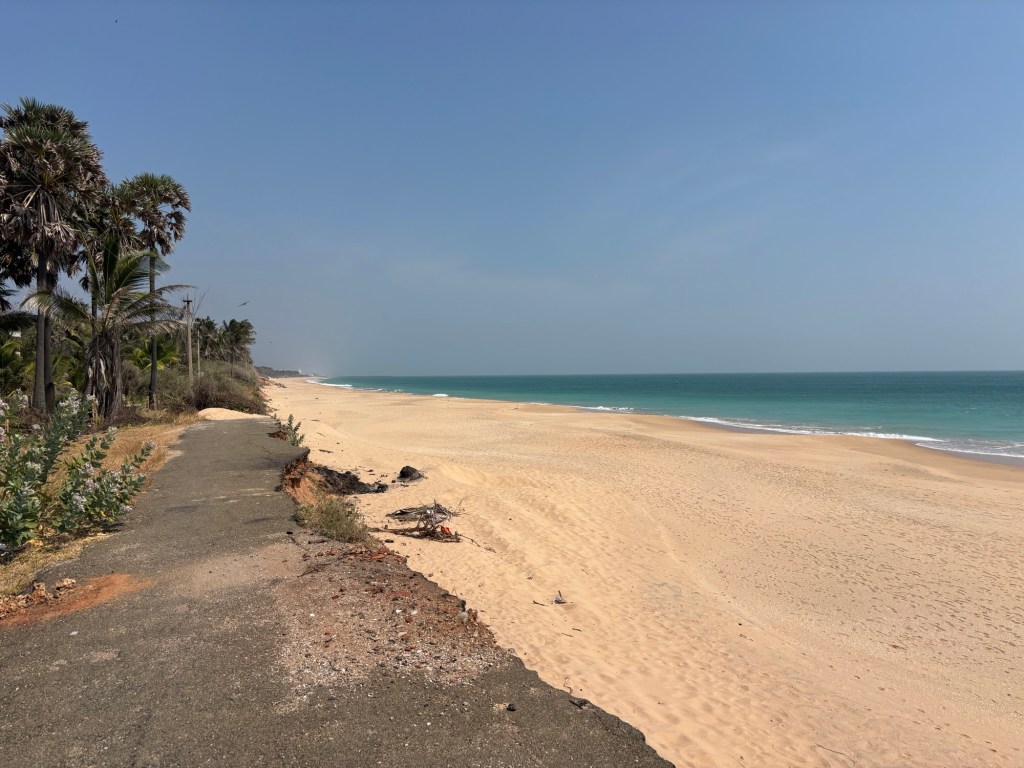
To use a sports metaphor from skiing, if my 2024 west-to-east crossing of India was the “double black diamond” of extreme bike touring, our experience in the state of Kerala in 2026 has been a mostly blue intermediate run, punctuated by moments of inexplicably high intensity. It has been hard to understand how the day can transform so quickly from Edenic beauty, incorporating blooming lotus flowers, palm trees, and softly rolling surf, to sudden congestion, choking diesel pollution, and ear-splitting honking. “What just happened?” is the only rational response.
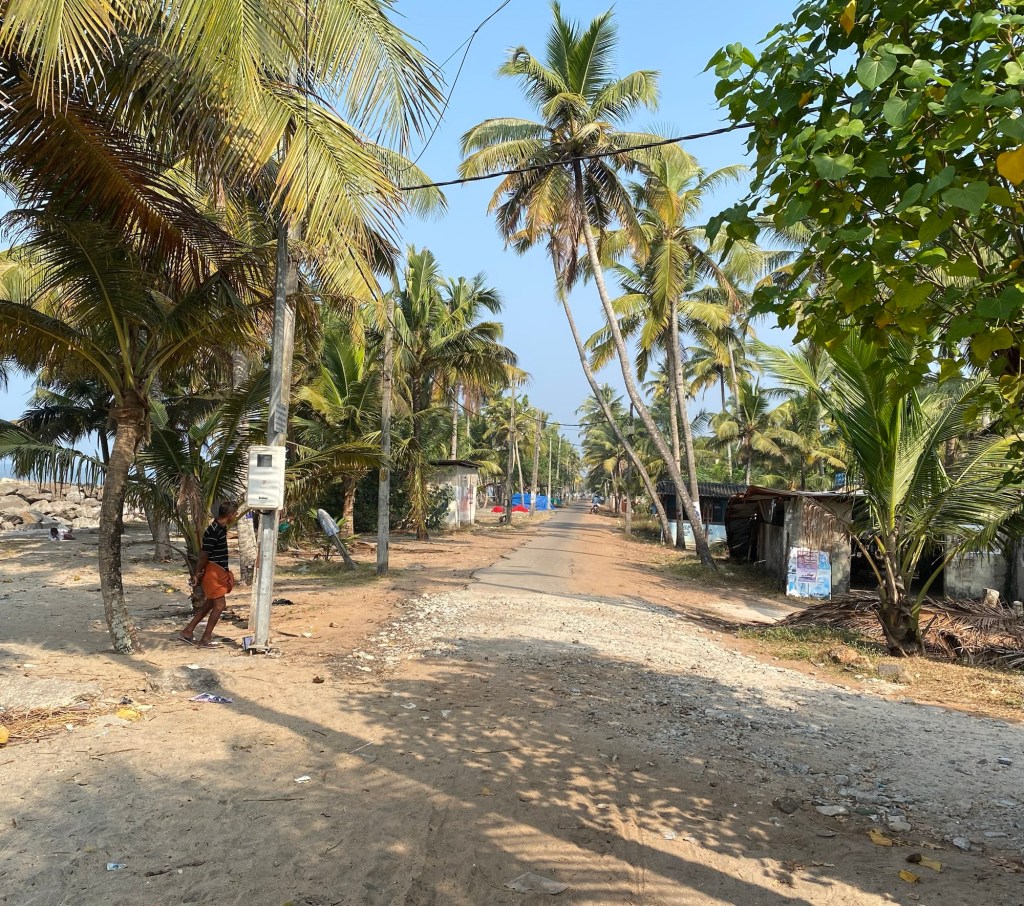
The differences between my northern route and this section of our current ride are significant. I posit that both the base of tourist infrastructure and the laid-back vibe of Kerala are central to this changed experience.
I’ve often noticed the relaxed pace in seaside communities where high heat and humidity combine to insist on a slower, less frenetic pace. To my northern (Yankee) sensibility, this can look like lethargy. In my community of Seattle, frenetically checking your phone at a stop sign is common and even accepted behavior. I’m not suggesting that’s a good thing, but it might serve as a potent indicator of our obsessive focus. Kerala, on the other hand, does it differently, and the slower pace shows up in interesting ways. Most relevant to cycling is the slow shuffle to across the busy street. No matter the impending danger, the locals are unlikely to pick up the pace or move decisively toward safety. It’s just not done. This vibe is also reflected more broadly in the drivers’ methodical, and mostly more predictable, driving behavior. This is not to suggest the swarm of horns and vehicular jostling, which seem to appear feverishly and without warning, is absent. It is here for certain, and never fails to fire the adrenals. Rather the frequency of the onslaught has been more manageable than when riding in the north.
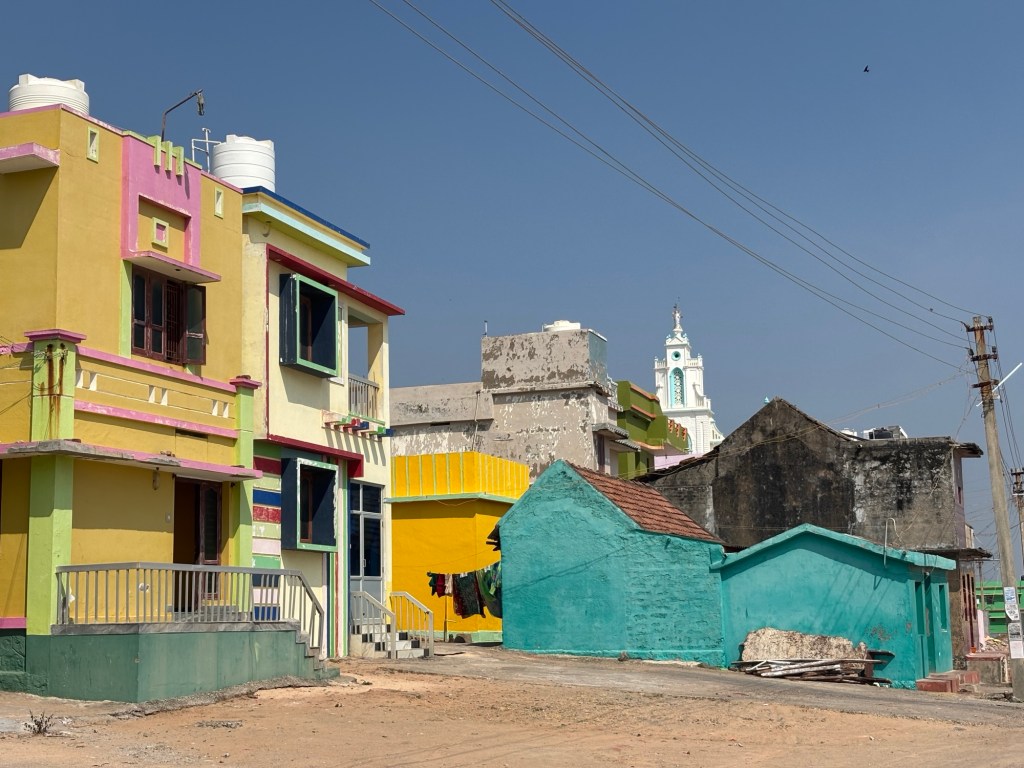
So what exactly is lowering the intensity of our India tour? Likely the baseline of tourist infrastructure that the state of Kerala has developed in the last 25 years plays an important part. One’s patience is bolstered by more comfortable accommodations. The “homestay” mattresses and real showers at the end of the previous day have made a world of difference. Although we are both carrying inflatable camping pads, we have yet to use them. Only one of our mattresses was hard enough to warrant their inflation, but we were so tired when we arrived, we couldn’t be bothered and still slept mostly soundly.
So why here? And if it’s happening here, why does it remain absent in other, arguably more culturally important areas?
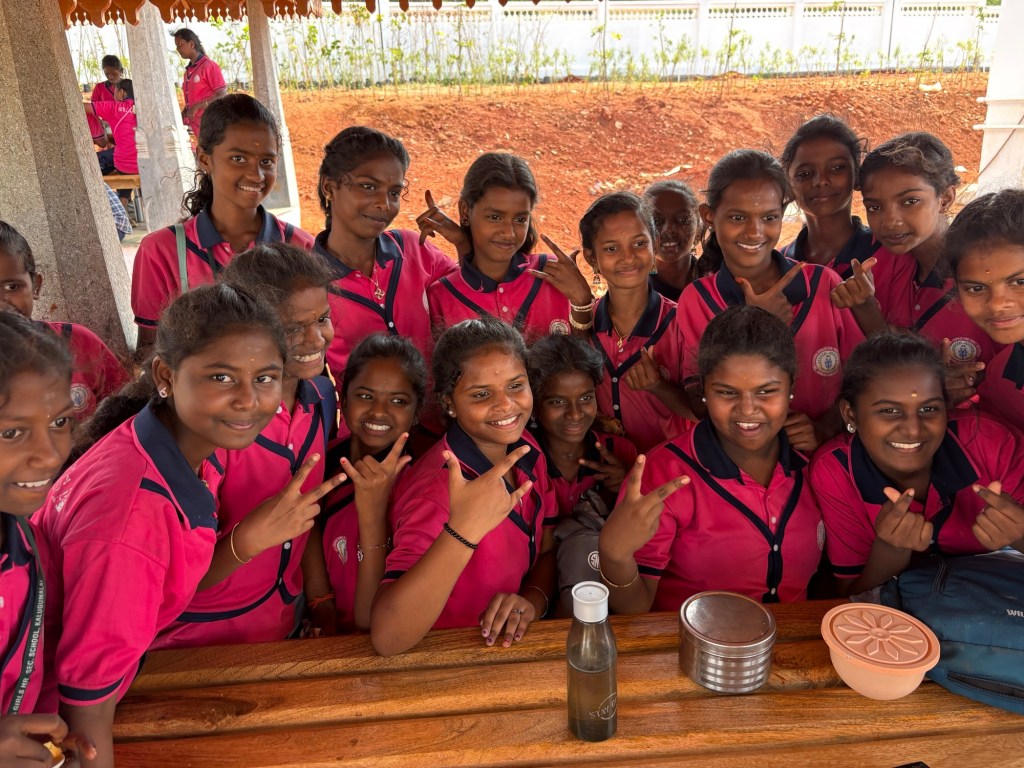
Kerala’s road to success seems to have begun with the Temple Entry Proclamation of 1936 which abolished the caste discrimination that kept the lowest caste from entering the temples (Gandhi had a strong hand in this effort). This started a tradition of egalitarian treatment (and eventually secular tolerance) that has allowed Kerala to invest in its human capital. Today, Kerala has the highest literacy rate in India (94% per 2011 census).
Strikingly, Kerala was one of the poorest states in India until the early 1980’s. One indication of this poverty showed up a couple of times in the reflexive instinct of the local women when we passed. Recognizing us as “rich tourists” they involuntarily thrusted out their hands to beg. Then catching themselves, they retreated and offered us a more normal greeting. This affect was only seen in the 55+ age group, but it happened several times as we passed, enough so that we discussed it together. It did not happen in the other demographics.
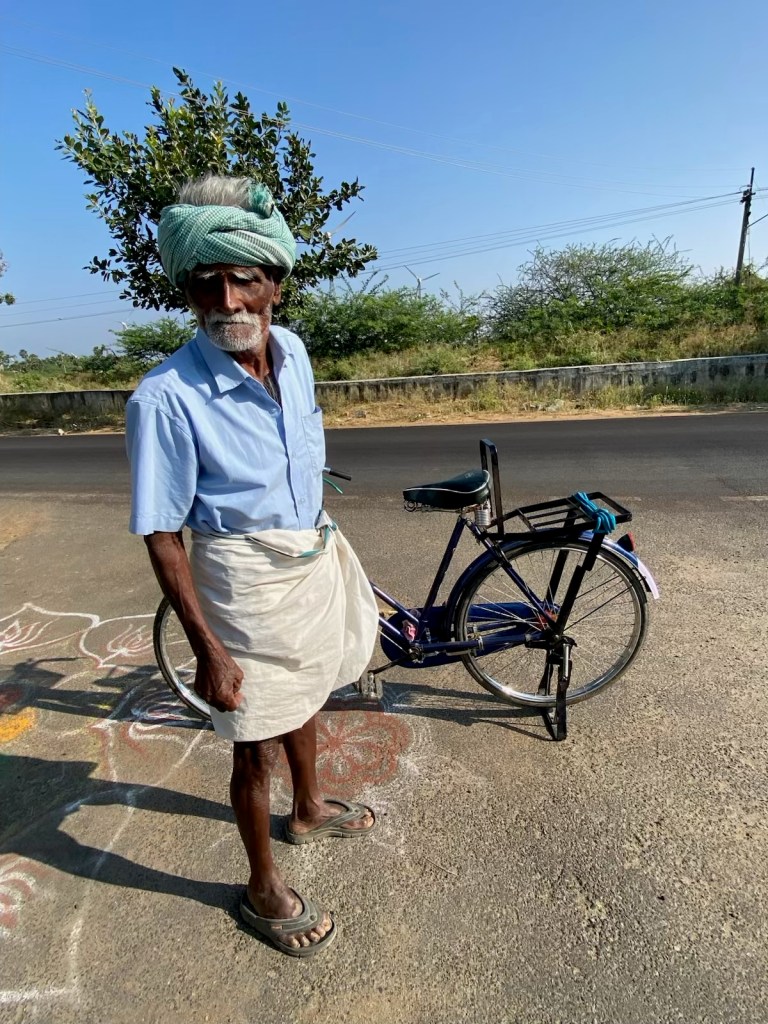
Kerala is much more prosperous today, and the absence of the Indian beggar is marked. There is still real poverty here, but people aren’t starving. In fact, Kerala incomes are 155% greater than the national average.
Economists credit remittances from Kerala workers, who rushed to the Gulf states in the 1980’s, as the driving force behind this structural change (currently making up 30% of the state’s GDP). More than a million Kerala workers reportedly migrated in the early 1980’s and 90’s. When combined with the state’s investment in literacy and healthcare, the money remitted from this exodus was invested locally and put to good use.
With a more literate population, many of which have lived and worked abroad, the utter strangeness of our enterprise is less shocking. We’re not the space aliens that Matt and I were in the north. Other cyclists have ridden here. And although we have only met one cyclist on this tour, we heard of a group of English riders traveling in a pack of six that came through in the last month. I also know of two Seattle riders that recently approximated our route. Although there is often surprise on the faces we pass (we are still “from the moon,” after all), shock at our appearance is not common. We just get occasional laughter at our strange and unexpected spectacle.
The Finnish cyclist we met mid-week had been touring for three months, covering 1600 miles / 2600 km (he started in Mumbai and appears to be moving at roughly half our daily pace). Recently retired, his strategy was striking in its simplicity. Arriving in India with only a tooth brush and some cash, he bought an Indian bike for $100 US and simply headed out with a backpack tied to the bike’s rack. He liked that they could fix an Indian bike, although his had performed perfectly and required no repairs. He mentioned he had even yet to change a puncture. This was reportedly the sixth Finland winter he had spent cycling in India. He mentioned that his longest journey totaled 3700 miles /6000 km (almost the same distance as crossing the USA on the Southern Tier Route). He also reported somewhat wistfully, that we were the first cyclists he had encountered this tour. It was his rest day and we were passing through, or we would have shared a meal with him and learned more.
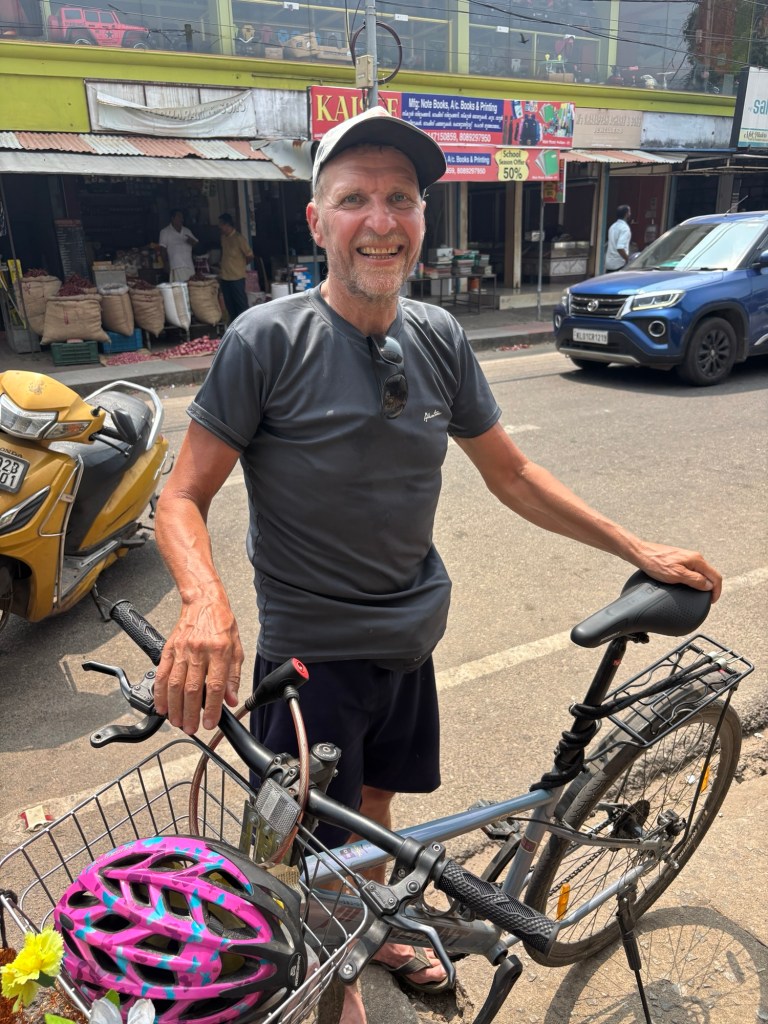
Such an encounter is a great reminder of how easy it is to let our expectations of what we “must have” define our ability to launch ourselves into the big world. “I need disc brakes on my bike to ride in the rain,” or “I need an RV to go camping.” All of this begs a larger question. What barriers and limitations have we erected to insulate ourselves from “perceived” risk, inadvertently reducing the potential for a richer life? Reflecting on this question as I rode these last days, I noticed it seemed arranged to inhibit a self-defined idea of failure. Yet, the received wisdom is that failure is our greatest teacher, is it not?
As I relate this question to my own experience, I’m forced to acknowledge that 65% of what I’m carrying is strictly to limit the worst-case scenario; four-pounds of tools and spare parts, a first aid kit that could deliver a baby, a bivouac sack and ultra-light sleeping bag, mosquito net and sleeping pad in case wild camping is required, water filtration and purification methods, and backup to the back up…you get the idea. I feel like I am prepared to continue riding all year. I’ve covered all the bases. And in fact, I’ve already dipped into these reserve supplies. I broke the frame of my daily prescription glasses on day three, but am able to continue because I carried a back-up pair. I learned this the hard way when, riding in the north with Matt in 2024, my riding glasses bounced out of my bag and were lost. I rode 34 days in bright sunlight without glasses and it was truly terrible. Even simple UV protection replacement sunglasses were nowhere to be found.
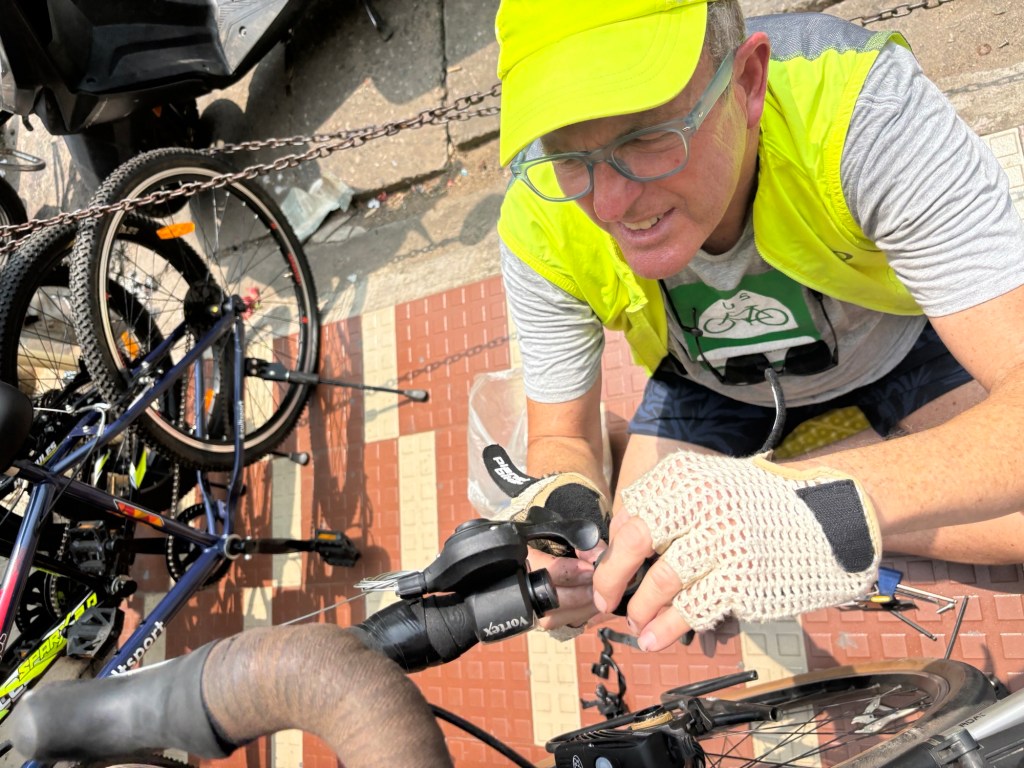
I also dug hard into the spare parts bag this trip when my right shifter, a top-shelf Shimano 105, failed inexplicably, leaving me with a single gear instead of my standard complement of twenty-two. Now no one carries a new shifter (the failure is too rare), but having the extra cables and tools allowed me to install and route a primitive, locally sourced shifter and continue riding. I’m now riding with seven rear gears. Far from perfect, but not the trip ending catastrophe it first appeared.
There are just so many ways to go about moving through this big world. It seems everyone must find their own way that works for them. I am reminded of the poem by Antonio Machado titled Caminante, no hay camino (Traveler, there is no road), which much like a Zen Koan, reminds us that we make our path by walking, one step forward at a time. In terms of cycle touring, I’ve seen riders carry much more, and now I’ve met an accomplished cyclist carrying next to nothing. Using the Finnish cyclist as an example, I muse over where he has drawn the line and ask myself, “what’s the worst thing that might happen if he doesn’t have every contingency covered?” He can always abandon the tour, take the train to the nearest airport, and fly home.
I’m not entirely sure where I’m going with this question, but will continue to turn it over in the miles ahead. It’s a question that has grabbed me, got its teeth into my own private obsession with finding the perfect piece of gear. Cycling touring can be technical like that. But as usual, what matters most is the simple bicycle itself, how it allows freedom, out in the world at a pace slow enough to experience it deeply and thoroughly.
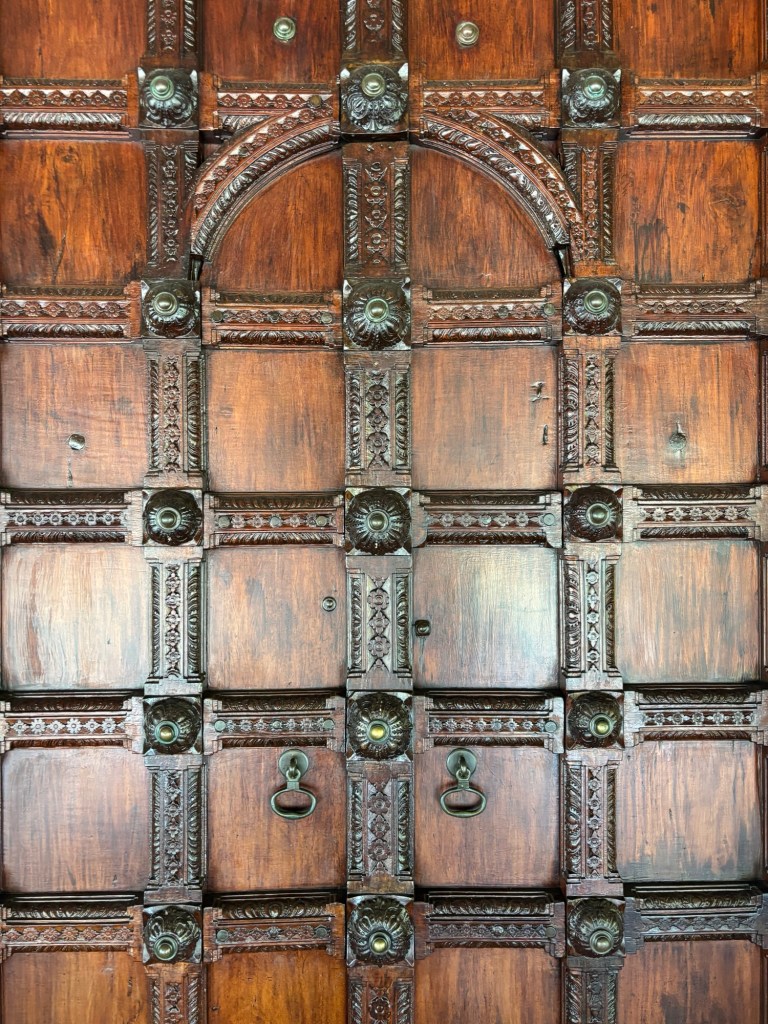
The cultural depth of Kerala is much thinner than most other parts of India. And although there are a sprinkling of megalithic sites, there are only a few hundred dolmens of relatively small stature in the entire State. The tribes were here, dating back 40,000 years, but the lack of stone in the area meant that their architectural record failed to remain. Similarly, the temples are small and infrequent with extremely limited stone carving and sculpture. There are some primitive walls of laterite, an earthen brick that will cure into a hard building material (most of Ankar Wat is constructed of laterite). But the best examples were plastered to protect them, (a structural stucco that is or called a “render”), thus hiding the building blocks and their structural patterns.
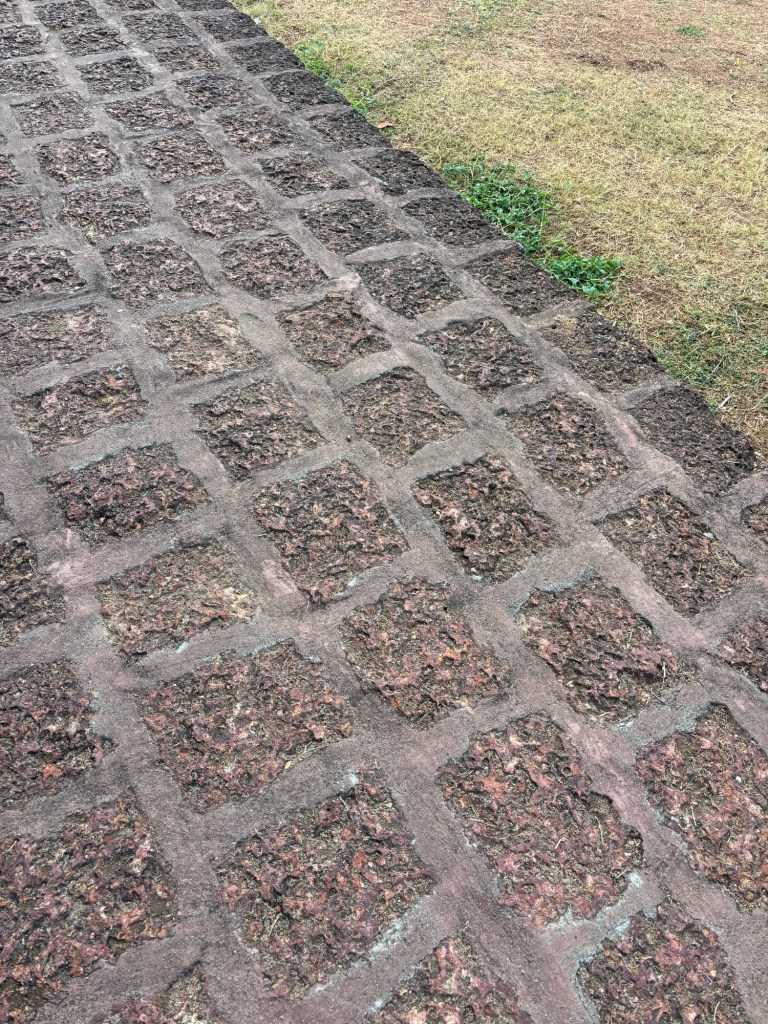
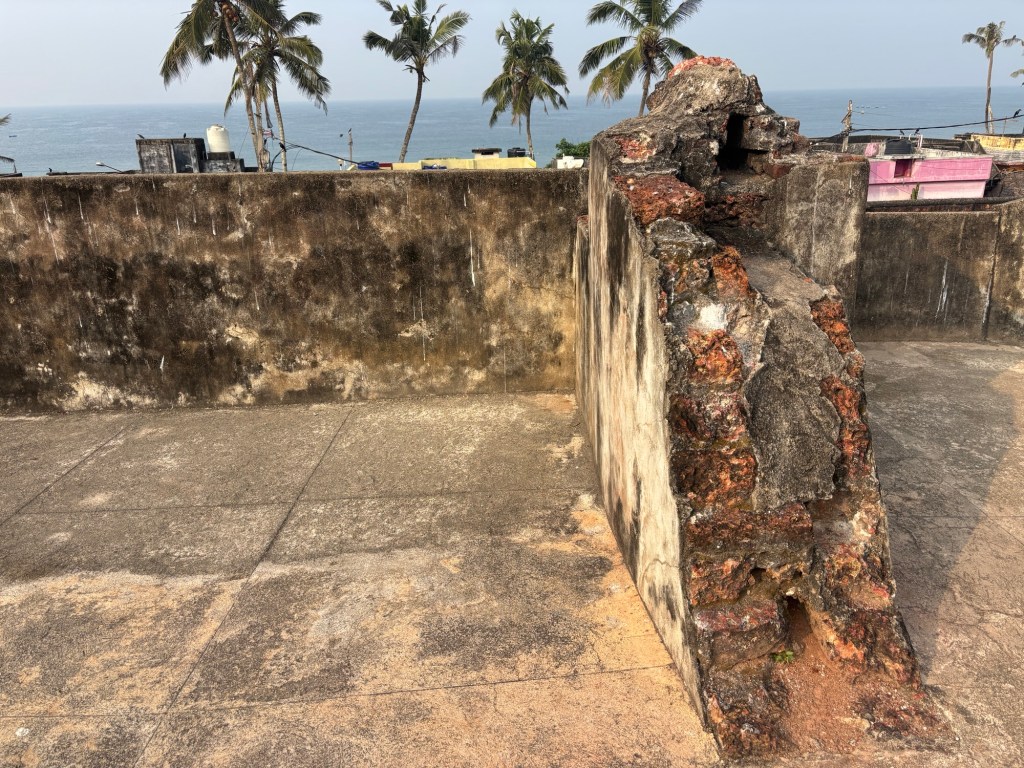
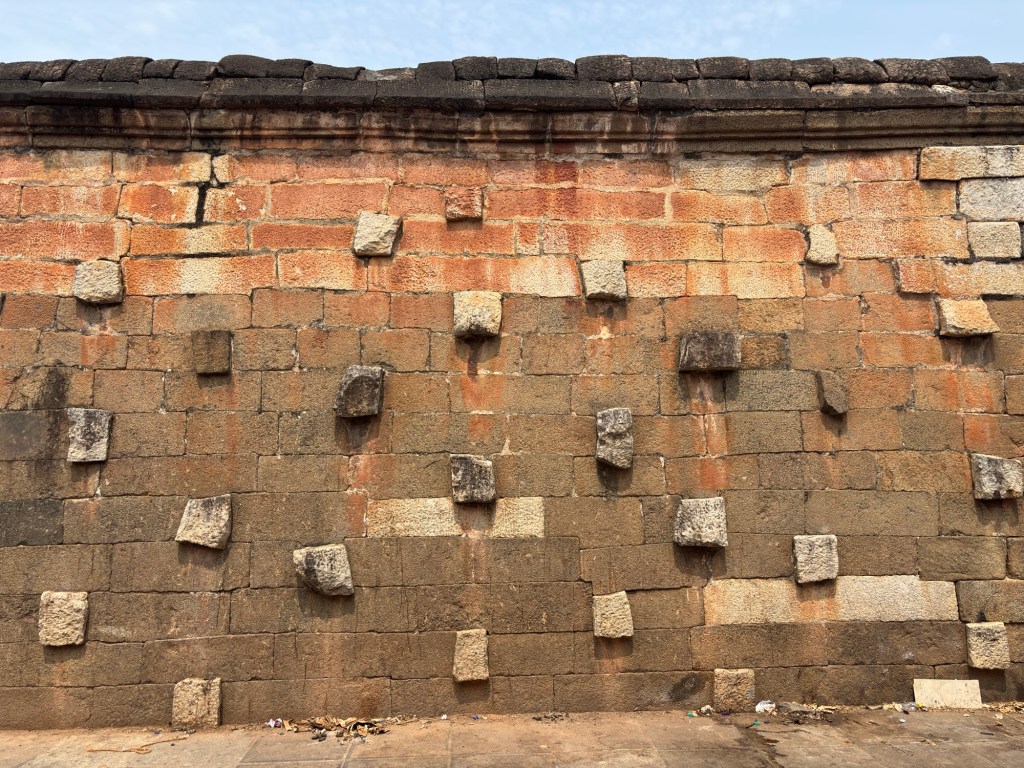
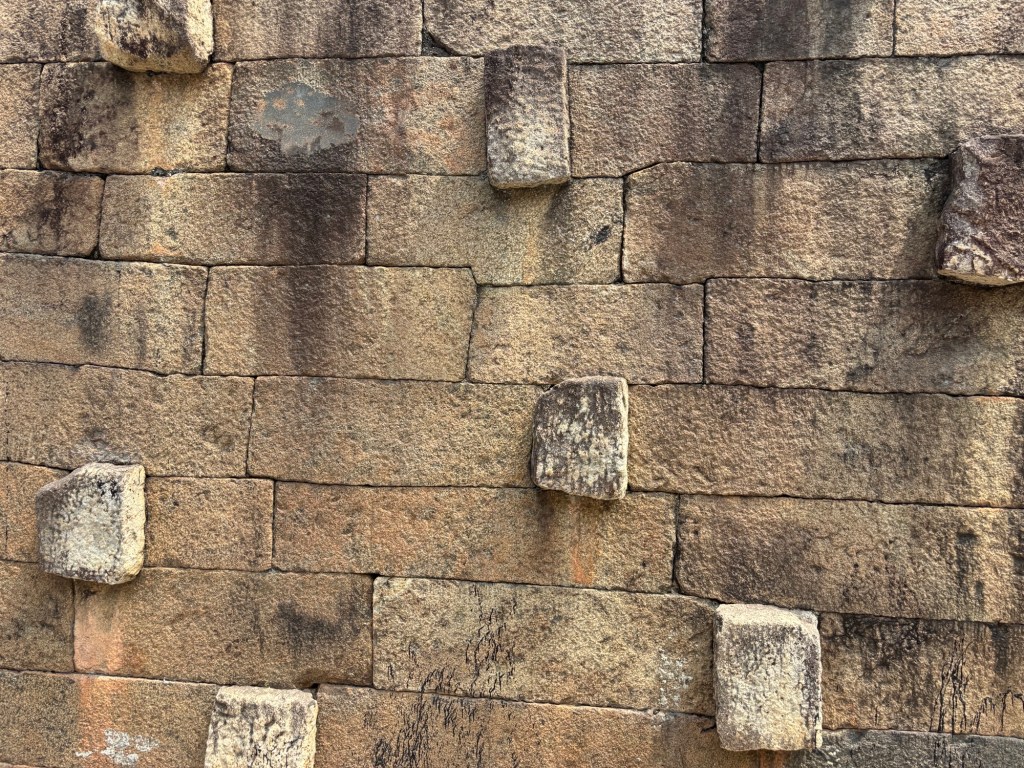
The most impressive site we visited was the Sri Padmanabha Swamy Temple, although as non-Hindus, we were denied entry to the complex. Still, the 18’ wall around the temple was truly outstanding. I found it beautifully illustrated several of the key “Rules of Bondwork” as explained in my book (Princeton Architectural Press, 2025). Still, compared to the rest of India, the built environment is thin indeed. A reminder that one comes to Kerala for the beaches and the lush tropical landscape, not the architecture, museums, or temples.
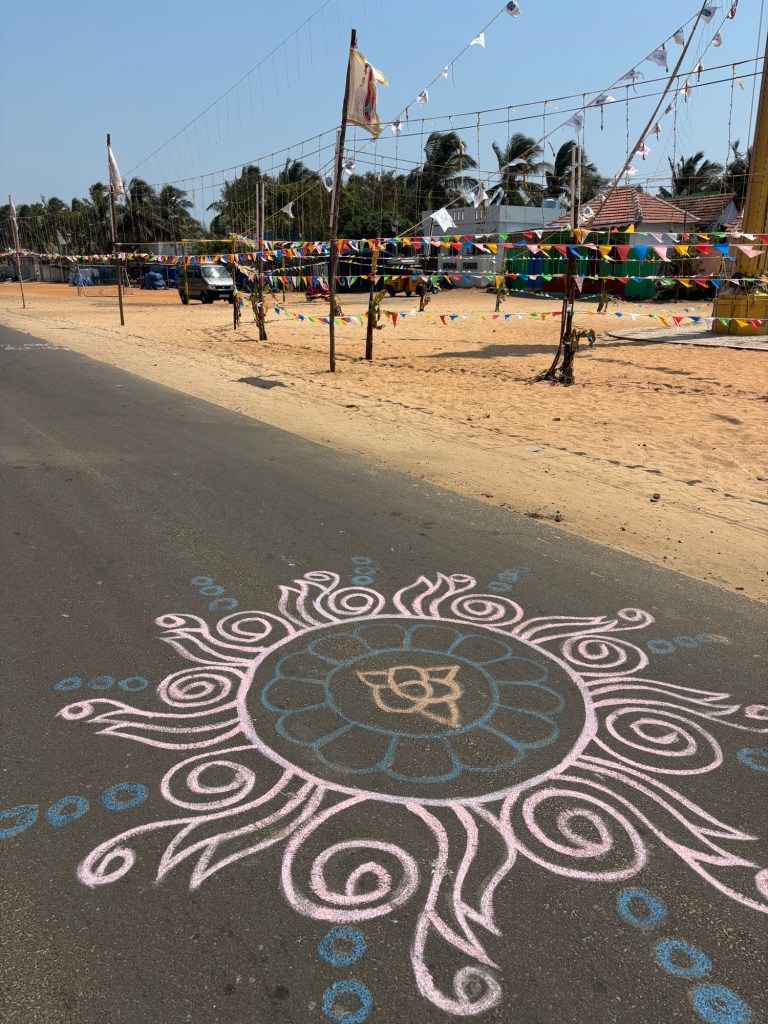
As we crossed into the state of Tamil Nadu on the fifth day of our ride, we offered our thanks. Kerala was a perfect “soft landing,” graciously extending an eased transition into India. 🙏


 Bike Touring India
Leave a reply to peteraevans Cancel reply