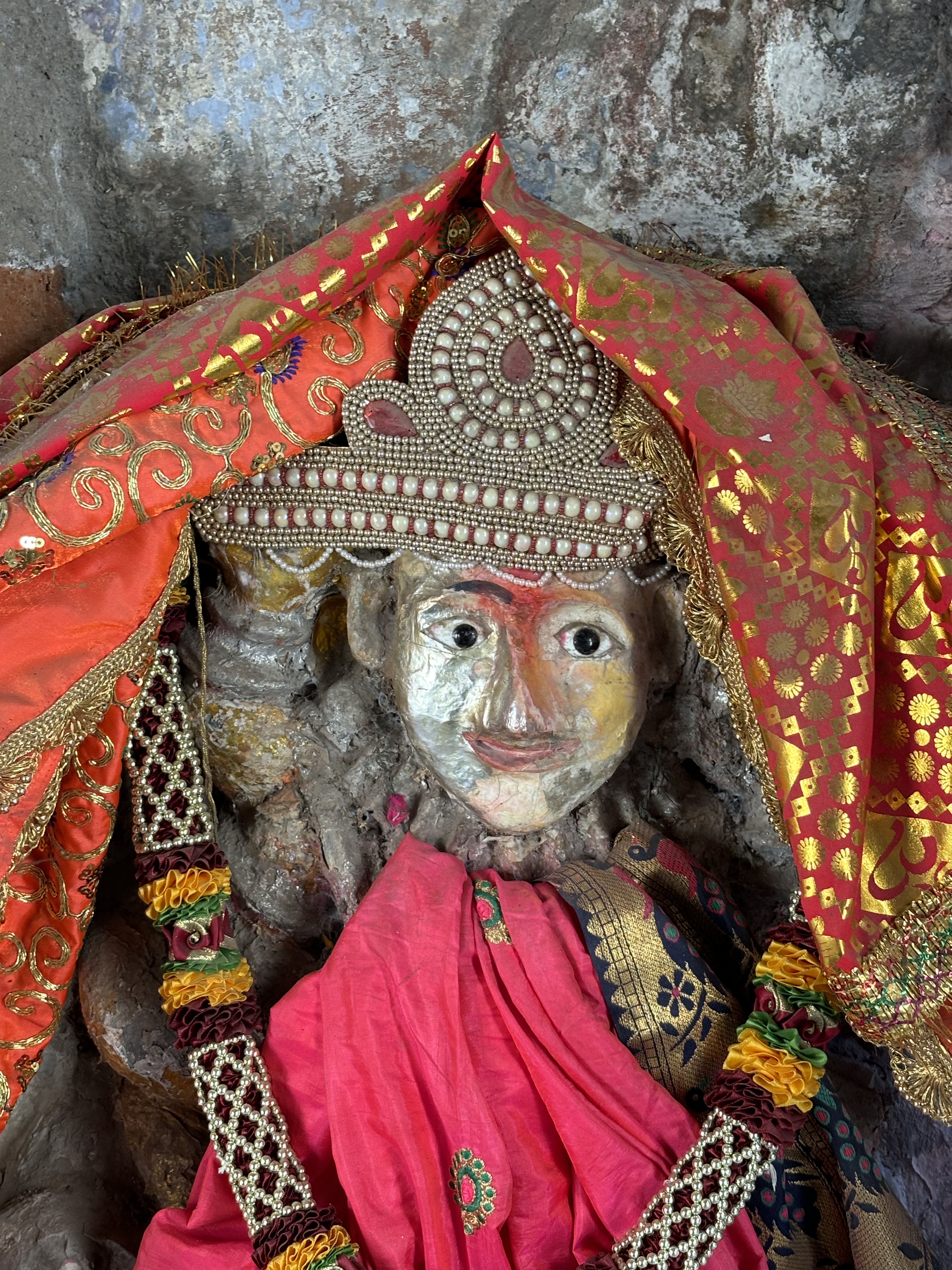
When my friend David Gedye suggested I keep a blog during my upcoming bike tour of India, I was dubious. “I’ve never been sure of the point of a blog. Who has time to read about someone else’s trip?” I also felt keenly aware that whatever I would write, would be from the perspective of a white, American heterosexual male with a mostly classical European education. It seemed a perspective we have all heard before.
But David pressed on, explaining that he had kept a blog on his walk across Western Washington and found it a useful document of his unique experience. He also mentioned that my trip was unusual enough, far outside the experience of most of our peer group, that I was likely underestimating the blog’s wider appeal. David’s view of “outside experience” resonated within me and I started to have a sense that two professional artists, traveling to explore specific temples and sculpture, might offer a vista through a window seldom unsealed.
I have never written a blog, nor read any that weren’t directly related to a route or country I planned to bike. This “novice status” became an advantage. New to blogging, my ideas were not fixed. I experimented entry to entry, feeling my way forward, considering the “why” and “how” of the form with fresh eyes. Little did I imagine my blog would run 35,000 words, gather 700 page views a week at its peak, and garner an average viewing time of sixty-minutes per visit.
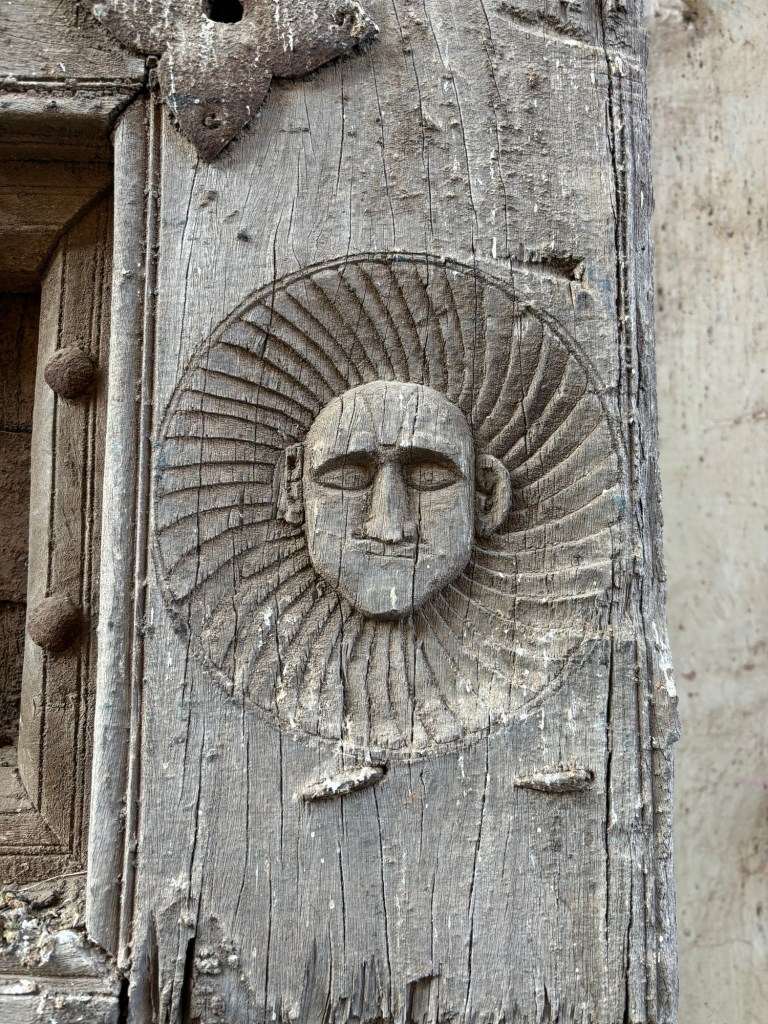
On the flight to India, I made some brief notes about what my blog might be. I knew what I didn’t want. It would not be a recording of standard bike data– daily milage and number of punctures repaired. Even my eyes glaze when I encounter this type of retelling, and I’m a dedicated cycle tourist! Nor would it be a travel log in its most basic sense; no list of towns visited, rivers crossed, UNESCO Heritage sites checked off. Since we had no fixed route and were essentially navigating by compass, the specifics of our path were largely immaterial. This is much different than riding the standard bike routes: the Northern Tier of the United States, or Route 1 along the coastline of Europe. Since so many have made those crossings, keying your advancement to specific mountain passes or national landmarks can give your readers comfort and help them place you in specifics of your journey’s progress.
My stylistic references were Alexis de Tocqueville (Democracy in America) and Samuel Pepys (Pepys Diary), both of whom held me in fascination for decades after first encountering them at university. Alas, de Tocqueville is a hard act to follow since, as an accomplished linguist, he was able to engage fluently with most everyone he met. My experience was wildly different. Unable to speak Hindi or any of the local dialects, I could only guess at the deeper meaning my hosts were trying to communicate, with or without their smattering of English proficiency. This was a major shortcoming of my observation and tour. Still, I worked to inhabit de Tocqueville’s perspective as the detached social scientist and weigh in where I could.
My efforts to emulate the writing and tone of Samuel Pepys was more successful, likely most noticeable in following Pepys frankness when writing of his own weaknesses. Many, including my wife Danielle, were surprised by my personal transparency. This was Pepys’ influence at his best, shining through. Pepys also uses plain, frank language. There’s a soulful simplicity found in it. I determined to speak directly about emotions and situations, hoping to allow myself to be both transparent and visible. Both of these authors taught me that finding words that express our feelings and experiences is an achievement of high order.
Keeping a journal–or writing a blog–forces us to sit quietly with our experience, keenly observing until we see the deeper layers. The soul’s intelligence arises out of such rumination. Thomas Moore terms this “the lived experience subjected to wonder.”
Blog writing was full of surprises. It showed me which parts of my experience I could digest quickly and make sense of, and which needed incubation. That might explain why I am continuing to add new postings, despite being home two and half weeks. I survived a traumatic night-time bike ride from the train station through Ahmedabad that I am only now feeling ready to explore. We also viewed an incomparable modern building by Corbusier that left me speechless. I certainly could have mentioned it earlier but nothing I wrote would have touched the delicate core of the experience. I am just now ready to unpack it.
Another surprise to me was the “likes!” Who knew just how insidious these could be? Having never experimented with social media in any dimension, I had no idea how these silly expressions of approval can cause the Ego to stand at attention, ready to charge in any direction to get more! After my first three postings reaped so much attention, I was absolutely devastated when my heartfelt essay titled, “The Sacred Feminine” received none. To my mind, this was one of my most important contributions, yet the topic was likely too far afield to earn the coveted “like.” My first instinct was to do an about face and chase those “likes” to the end of the earth. If car accidents and stories of traveler’s diarrhea are what they want, then give them that! Get those likes!
What? What happened to me? How did my blog get hijacked by a simple emoji? Am I writing this for me, to help me make sense of this giant experience that is India? Or am I writing to entertain my friends and reaffirm their prejudices, reaffirming what they already know, mainly that they would never want to brave the conditions that an up-close India tour demands.
Of course this is old news. Everyone but me seems to understand “likes” are how social media gets you hooked. This is how the race to the bottom was won; how the insatiable craving of our desire to please and be liked has been weaponized against us and the “considered life” itself. One doesn’t take the time or do the heavy lifting required by writing–or reading!–essays like “The Sacred Feminine,” “Eternal Flame,” “Decoding Step-well Architecture,” or “The Erotic and the Transgressive,” if you are chasing “likes.” But to ignore the “like” emoji takes way more effort and discipline than I ever imagined. I used to joke about our “swiping and liking” culture. No more. This is serious business and I feel embarrassed now that I was one of the very last to know.
I also can see my experience differently in retrospect. It’s easy to “like” an entry on diarrhea as a way to offer support. One isn’t asking for more essays like that, but rather expressing empathy for a common malady that all of us experience at one time or another. Similarly, an essay like “The Sacred Feminine” is far outside most of our expertise. That can be uncomfortable. We may not even be sure we like that feeling, let alone the string of words that put us in that feeling place. The lesson I leave with is that sometimes the soul wants something not quite as strong as praise (a “like”), but more an expression of shared interest. This experience changed my understanding. I used to always read the web anonymously. But going forward, I will never read another’s heartfelt essay or blog without finding a way to offer a comment in support of the time and effort it took to formulate it.
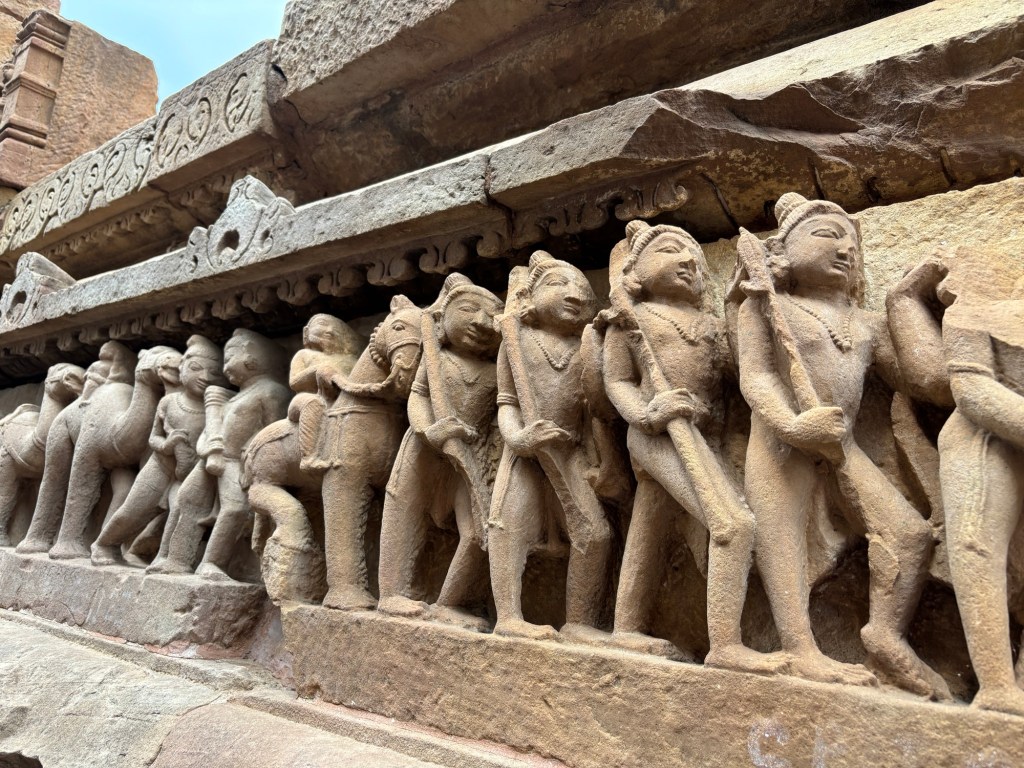
Another simple realization about blogging concerned photography. I wasn’t posting my most compelling photos, rather the images that told the story I was unfolding. This got me thinking about the photos I typically take, vs. the photos that I required to add color and texture to my words. It pushed me to expand the range of images I collected and, in that way, helped me to notice things other than sculpture and architecture, my usual focus. I aspire to make a post focusing on my favorite photos of the trip-not worrying that there isn’t textual explanation-to share some of the profound beauty I witnessed.
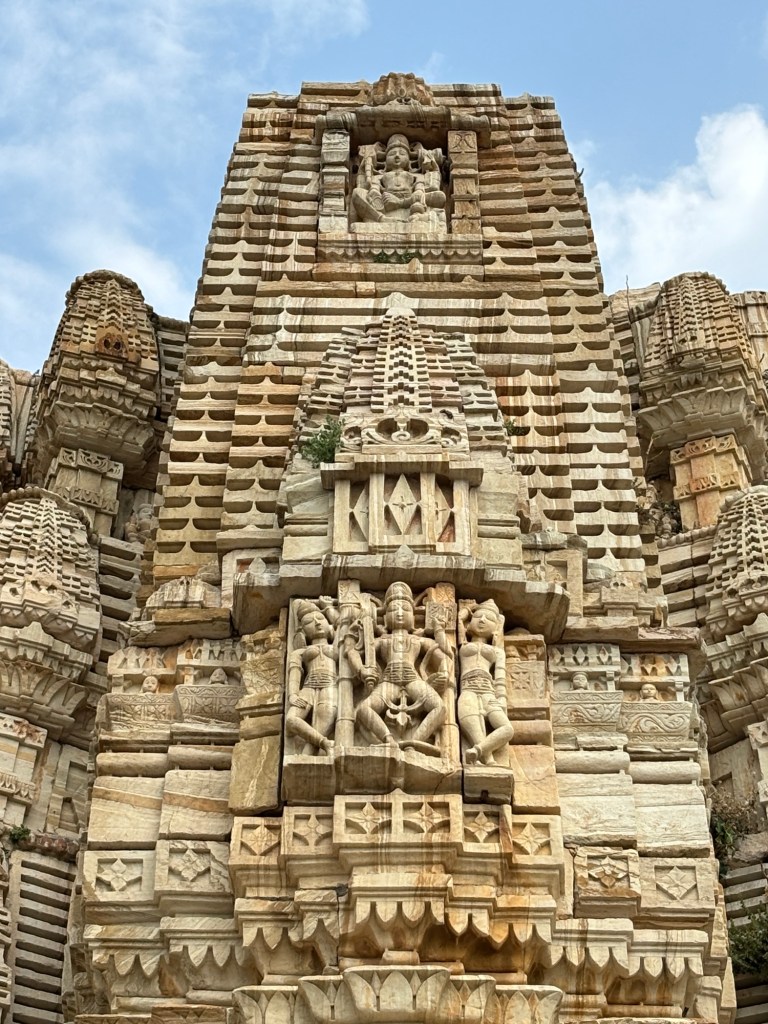
It was interesting to me who followed the progress of the trip and who did not. Many of those I imagined would be most interested did not, while others I might not have imaged would be interested followed it closely. Prior to going, I assumed many of my friends who cycle tour would be the primary audience. In fact, they seemed to follow it least. Perhaps they are too busy riding and not spending time in front of the screen. Hard to know. Friends who are interested in writing, in storytelling, and those interested in exotic travel followed it closely. That seems more obvious in retrospect, but I may not have known that about their personalities in advance.
The informal tone of blogging can be a comfort, but the reality of typing 35K words into your phone without the benefit of your research library, spelling and grammar check, or a larger screen to contemplate the shape of an essay, takes some getting used to. Mostly, I felt constrained by the lack of footnotes. I have a great distrust of what I read online and without footnotes to point to specific quotes or data, I constantly felt I was adding to the messy noise of our world rather than contributing solid steps of knowledge and discovery that others might build on with confidence going forward. I tried to cite specific authors when I could remember them, but the feeling that I was veering into “Male Answer Syndrome” haunted me constantly.
Finally, blogging takes time. If that time is taking you away from face-to-face interaction, then a balance must be sought. Luckily, my travel partner Matt, was also busy journaling, reading, and doing yoga, and my writing did not impinge on our ability to converse or spend meaningful time. However, it did mean that I did much less sketching than I expected. I still filled half a book with drawings over the five-week tour, but had I not been blogging, I certainly would have drawn even more. That’s not good or bad, it is just a fact and something I noticed.
On the whole, blogging deepened my experience, and I am glad I attempted it. It helped me to recognize the meaningfulness that arrises out of direct experience as I tried to capture it. I found it supported my general practice of “relatedness;” trying to stay present to life, even when it becomes complicated, or when meaning and clarity are illusive. Writing about an experience shares similarities with teaching a subject. You don’t know what you don’t know until you try to explain it to someone else. All this rumination and observation ultimately serves to establish intimacy with oneself. By noticing how an experience feels–trying to explain those impressions–we deepen our understanding and our own soul. I can register the profound shift the trip has had on me. I am the same person, and yet I am not. The world hasn’t changed and yet feels different.
Can there be a better reason to travel?


 Bike Touring India
Leave a reply to mpaluta Cancel reply