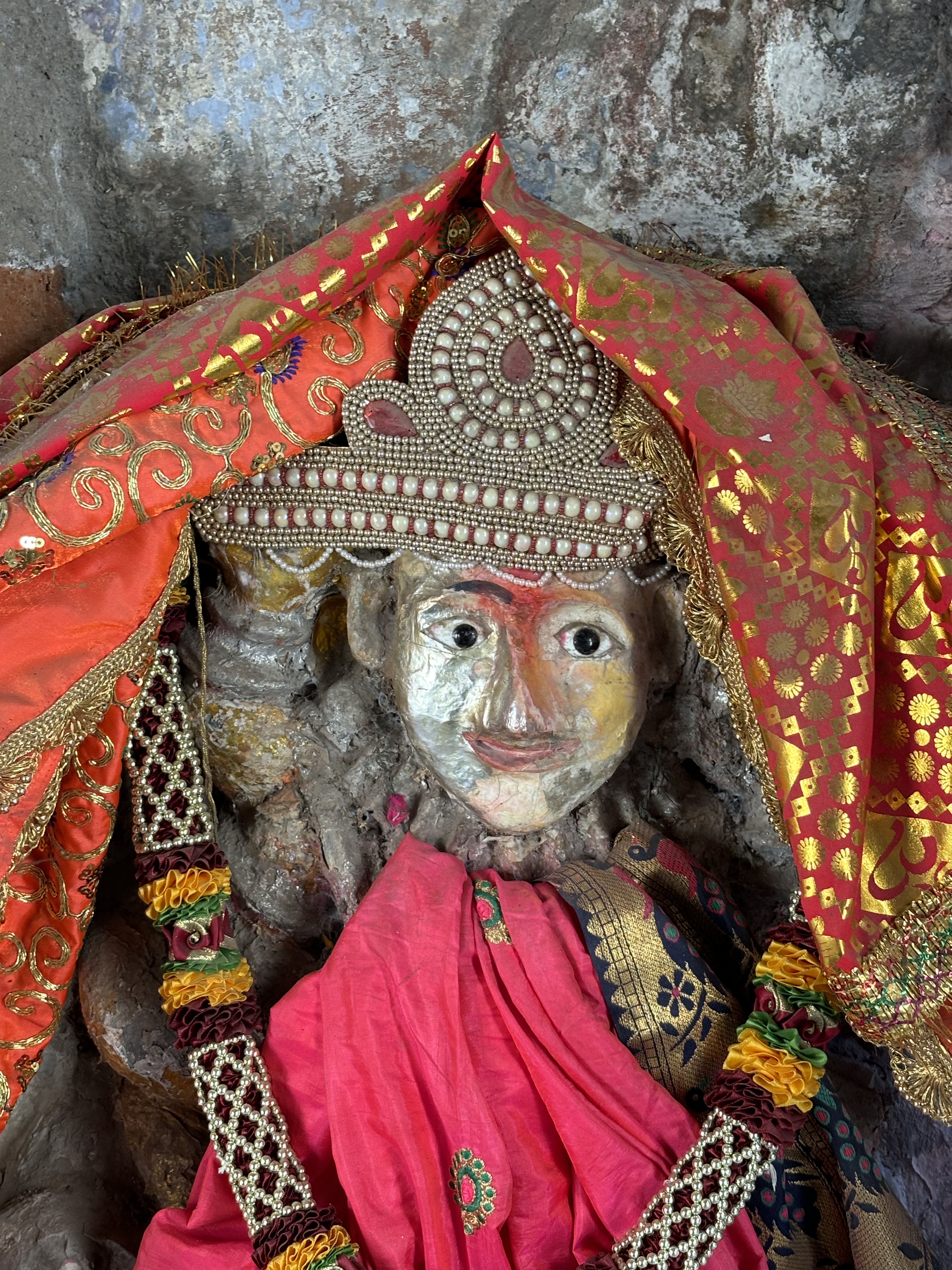
In five weeks of travel by bike in India, there was only one place where I felt unsafe and unwelcome. Satna, in Madhya Pradesh, is a fetid little city of 375k souls smashed into 12 square miles/ 34 sq km. The tone of the place felt “off,” and I couldn’t quite place it. One hotel after another refused to give me a room. I had ridden on my own in the heat and the 68 miles had taken it out of me. I was done and needed a rinse, some shade, and some time off the saddle.

After crossing town in rush hour traffic, I was at the end of my rope. When the third desk clerk said no, I pointed to my phone saying that online, there were still rooms available. “Book on line then.” He growled in broken English. As I stood there making the booking, he continued to glared at me. “WTF?” I thought to myself. “I’ve done nothing wrong and I’m the customer!” Booking accomplished, he had no choice but hand over the keys. “What an asshole.” I thought, for the first time on the trip.
Venturing out that night to find food, I found a sharp-elbowed crowd. My smile and effort to greet those in my path were returned with stony silence. “What in the world is going on here?” I asked out loud to no one in particular.
I found a stall that sold beer and hard spirits. But this time the “store” was inside a big metal cage with two 6” circles to hand through the bottles, like something you’d see in Detroit in the bad old days. There was a crush of men pushing against this cage and shoving money at the two employees locked inside trying to fulfill the various demands. Reluctant to elbow my way into the thrum, I held back and watched the mayhem, hoping for an opening. None came. I finally pushed on in and yelled for my bottle of Kingfisher Strong, the local beer. The guy in the cage seemed confused that I only wanted one beer since I was waving a 500 Rs. note and clearly had the money to drink more…The others were ordering small bottles of cheap grain alcohol. There was an unmistakable urgency driving their acquisition.
Extracting myself, I walked ten long blocks through the broken and cluttered streets, packed with people, looking for a restaurant to sit down in. There were none. Not a single place. Again, what is going on here? Finally I resorted to ordering from the street stalls, asking them to pack it to go, and retreated to my tiny room, locking the door. The beer and the food were delicious—hunger is always the best sauce—and I fell into bed.
I escaped Satna the next morning at dawn, slipping out of the city before its cranky inhabitants awoke. I was convinced my fatigue had exaggerated my perceptions. Surely, this place can’t be that different from the warmth and generosity I experienced earlier in my trip.
But then my morning “Namaste!” went repeatedly unreturned. There was only stone-faced silence, over and over again. Even the kids would not respond to my greeting. Then, the strangest thing happened. The street dogs started to growl at me and for the first time a couple gave chase. I was forced to jump off my bike and hold it between me and the threat while I screamed and growled at them to go away. That mostly worked but I had to throw rocks to them to get them retreat far enough that I could get on my bike again and get away. This happened two more times in the next thirty miles and I soon learned to fill the pockets of my hi-vis vest with rocks to have ammo ready at hand.
I’m afraid of dogs, and it’s plagued me my whole life. I also heard a bad story from the trekking guide I hired while waiting for Matt to recover. His next clients had called to cancel their booking. The woman of the couple had been bitten by a street dog and, “Did Mt. Abu have a good hospital?” My worst nightmare. I could barely bring myself to share the story with Matt once he felt better.
As Satna receded, people I encountered became more friendly and by ten in the morning I was back to the India I know and love.

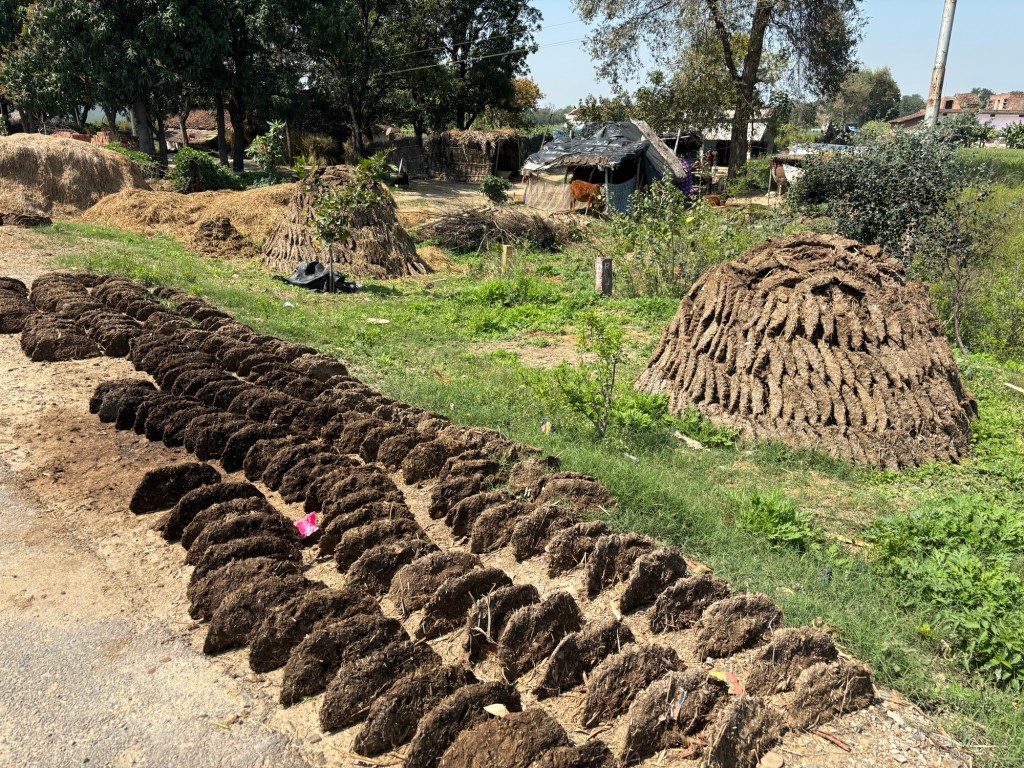

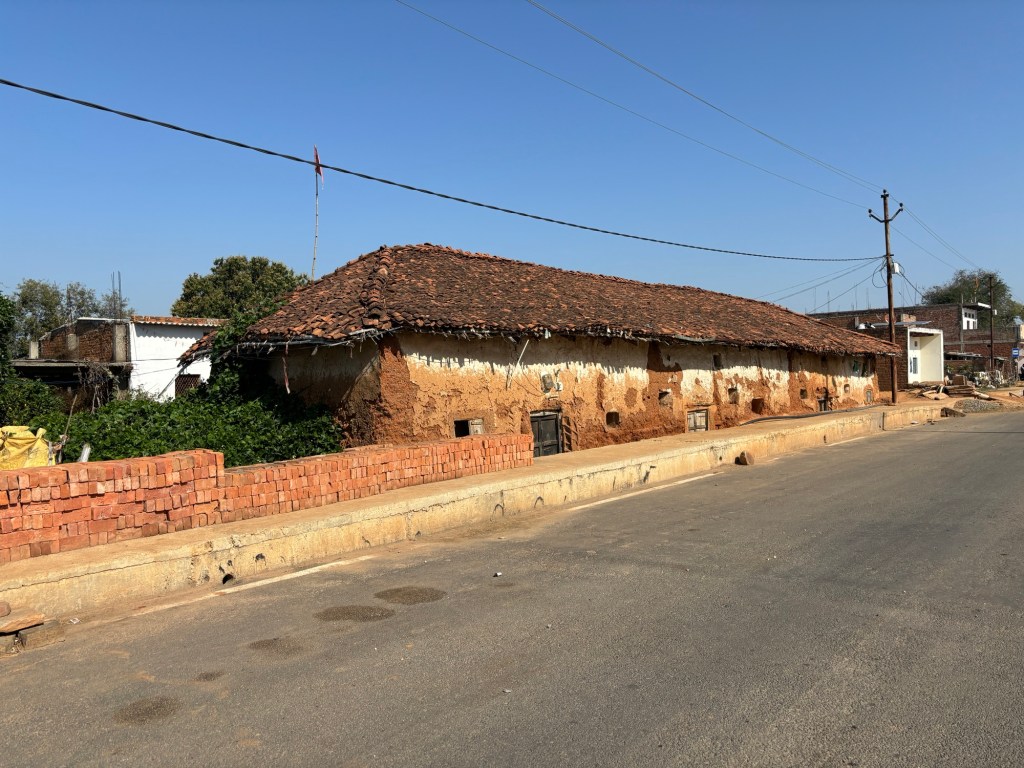
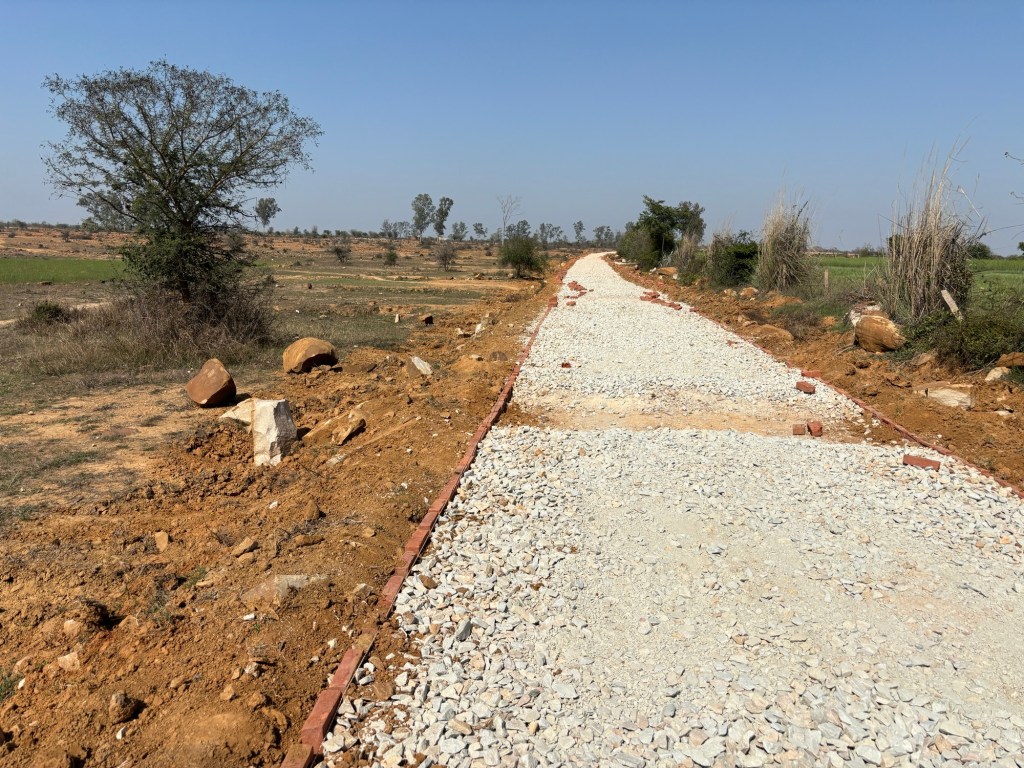
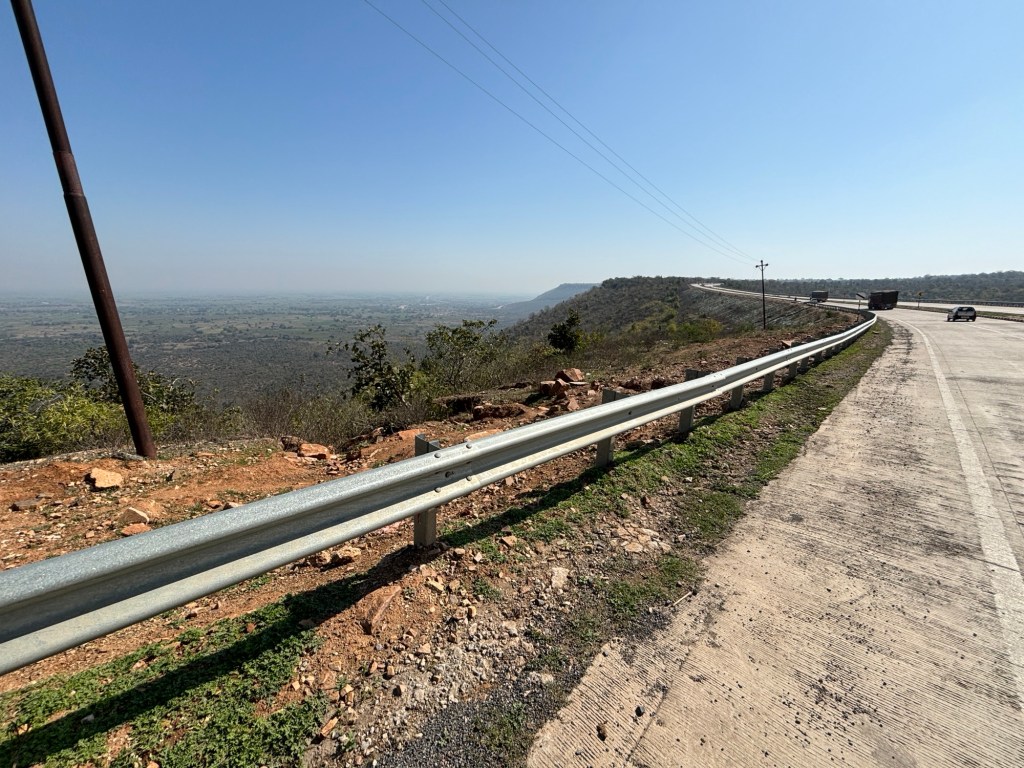
Turning this over in my mind in the days that followed, it became clear to me that something is broken epigenetically in Satna that has never been healed. Unlike Rajasthan, which was never really controlled by the colonialists the way other provinces were—the British made agreements and treaties with the Rajasthani’s—Madhya Pradesh was much more formally occupied and clearly suffered under their hundreds of years of occupation. I have not had a chance to research if there was some specific rebellion or mass-execution, but my guess is that rough handling and exploitation by the British in the area of Satna poisoned the well; foreign visitors cannot be seen for who they are, but can only be experienced through the unresolved trauma that has been handed down generationally. This projection on the “Other” is all working unconsciously, continuing to playing itself out. And that’s where the dogs pick up their cue. The “Other” mean danger, they must be chased off! The dogs are operating on the same energy, picking it up from the locals and doing their part as Man’s Best Friend.
This set me thinking about how nasty the dogs often are in the US, especially to cyclists. In rural areas, it can be quite dangerous. It seems clear now, the dogs are just amplifying our unconscious fears, following our unconscious commands. And what if our fears in the United States also have an epigenetic basis? What if our fear of strangers and the unknown is residual guilt at having stolen the land unfairly by not honoring our own treaties and agreements? Or, what if much of our financial and social success has been built unfairly from the exploitation of slaves and illegal (or even legal) immigrants? Even if it was not us, specifically, that committed these crimes, if it remains and continues to fester in the unconscious generation after generation, we continue to pay the price. Imagine just how many places there are like Satna in the United States. I can think of many.
I’m no expert, but this starts to beg the question of some type of restitution being required to make it right, some flushing out of the truth and a chance to come clean; to ourselves and the people we have wronged. A “Truth and Reconciliation” hearing would be an obvious start. It would likely be along process, perhaps a decade minimum. A major update of the textbooks in American schools would need to follow, making sure to include the acts of savage genocide we’ve committed in our nation under the cri de coeur, “God and Country.”

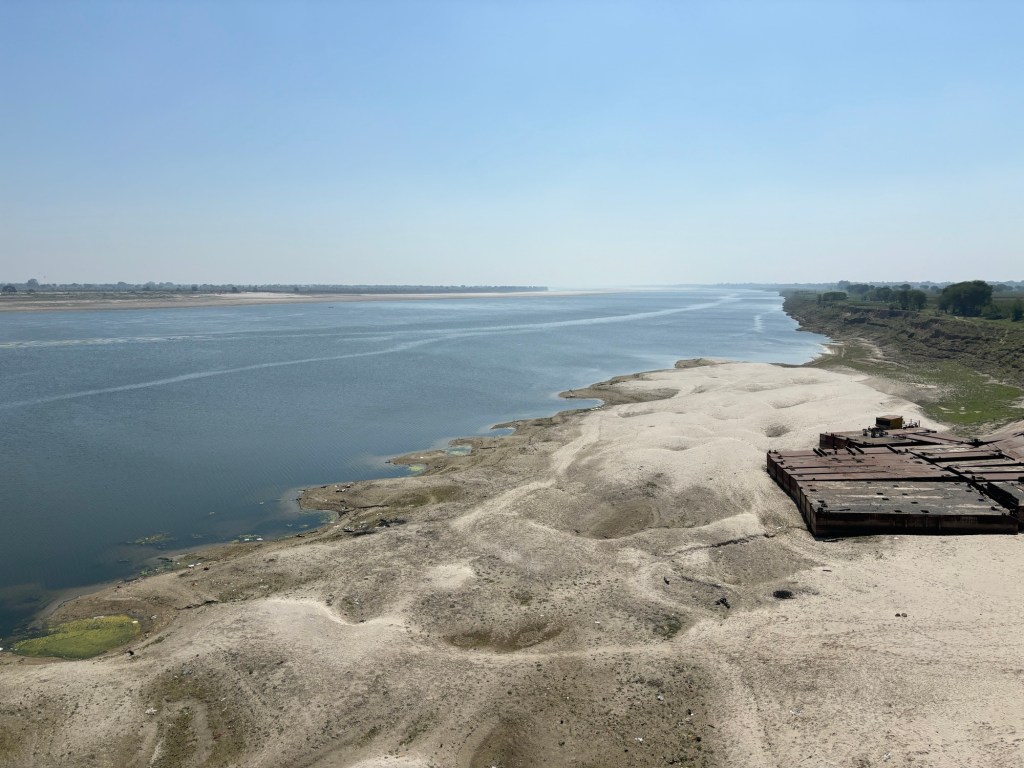
In closing, clearly not everyone from the area is unfriendly. Two days later I met a remarkable man, a professional classical Indian singer named Vicki Jacob, who helped to take my photo as I saw and crossed the Ganges for the first time. Turns out he was raised in the next major town, Mirzapur. I’m trying to upload some video of his singing but am having trouble. Check back and perhaps I’ll have solved it. In the meantime, here are some Spotify links to some top classical Indian music he respects and recommends:


 Bike Touring India
Leave a reply to Patty Burkart Cancel reply