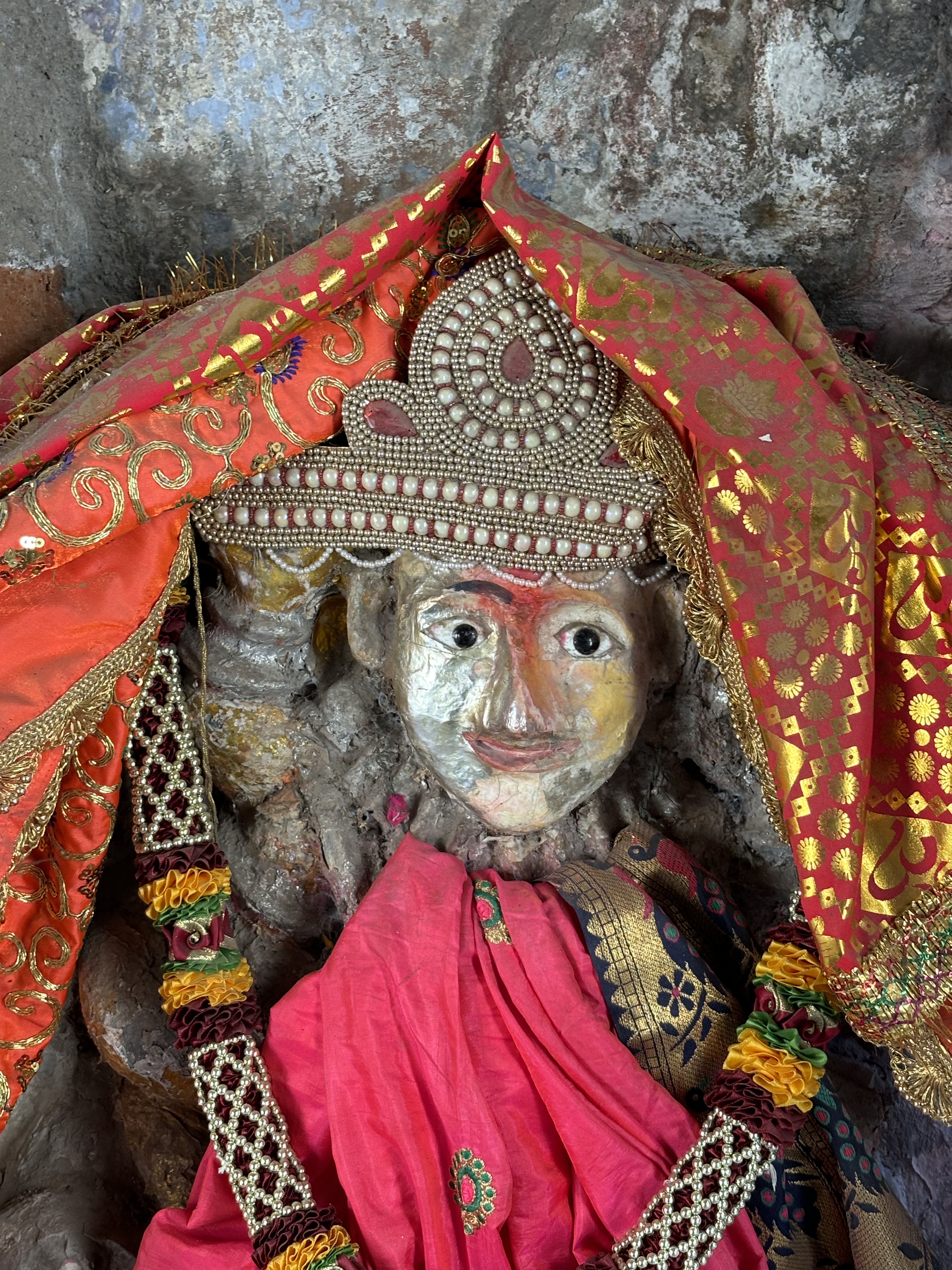
There are many moments during our Indian biking adventure when I thought I’d slipped through the vail and was now at Burning Man: half-finished exotic constructions of indeterminate program, shacks of plastic and rope flapping in the dust, house music (or its Asian cousin) thumping nonsensically at 5:00 AM to no one in particular, Mad Max vehicles—oddly assembled and decorated—tearing unexpectedly through the landscape, costumes and creative face paint beyond description. Now in Varanasi, the face and body paint includes the ashes of the dead. You can’t make this up.
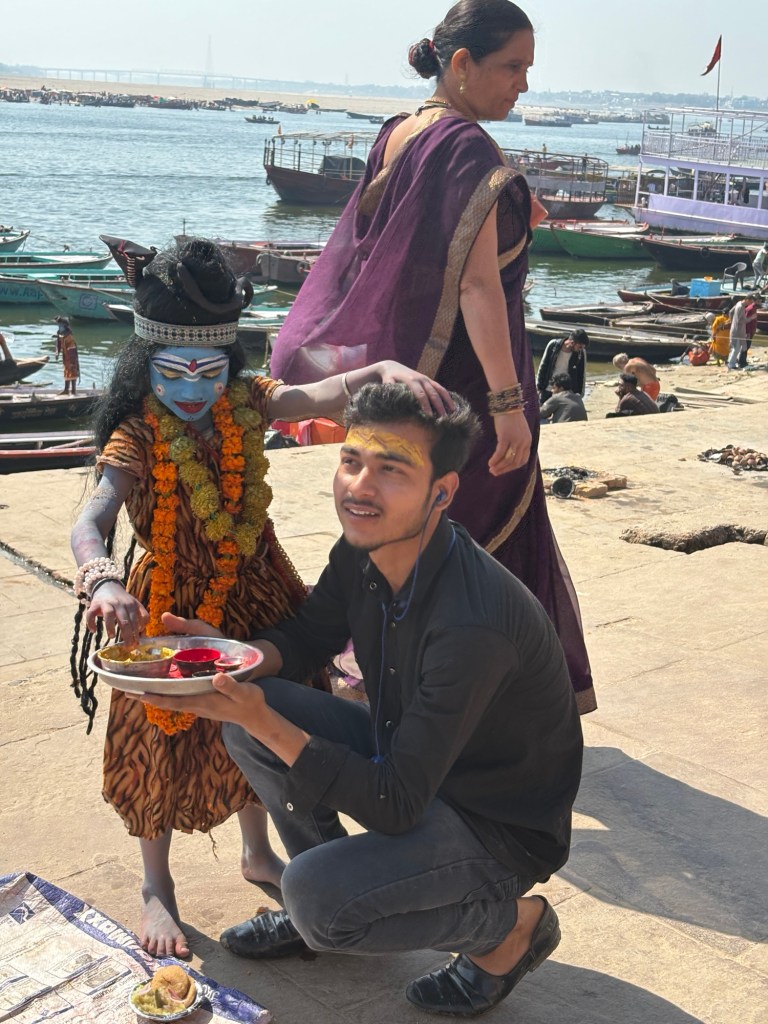
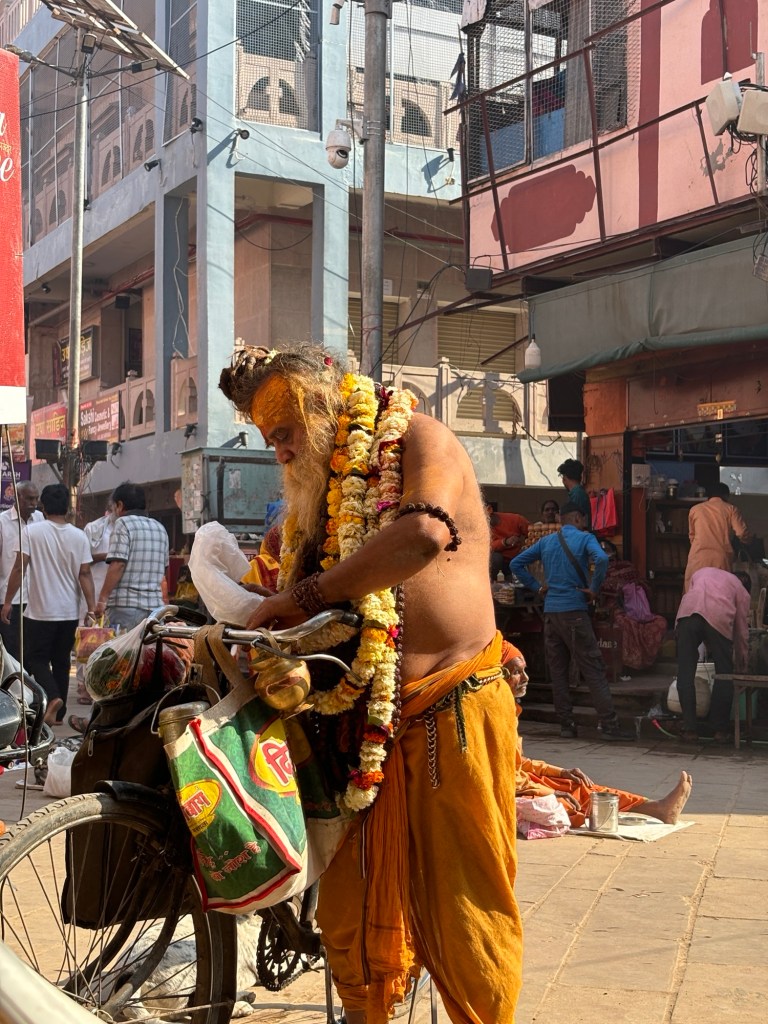
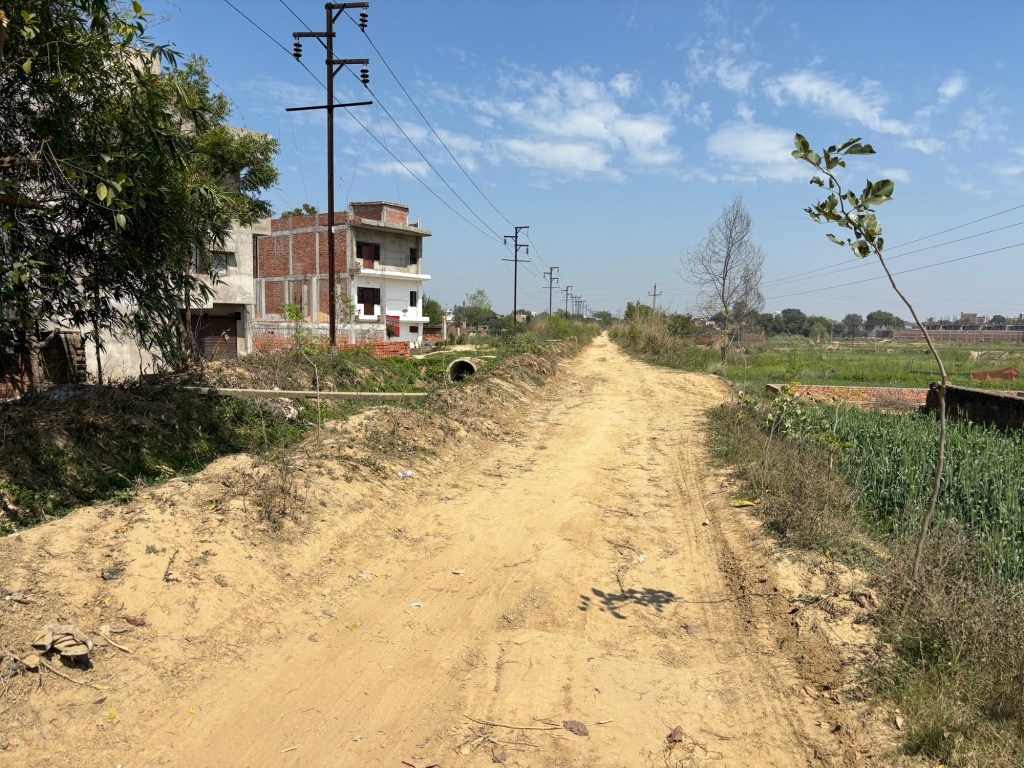
Today is Lord Shiva’s wedding day and the “music” outside my hotel window started rattling the panes at 4:30 AM. Luckily, I was already up, preparing to meet my boatman on the Ganges for the sunrise.
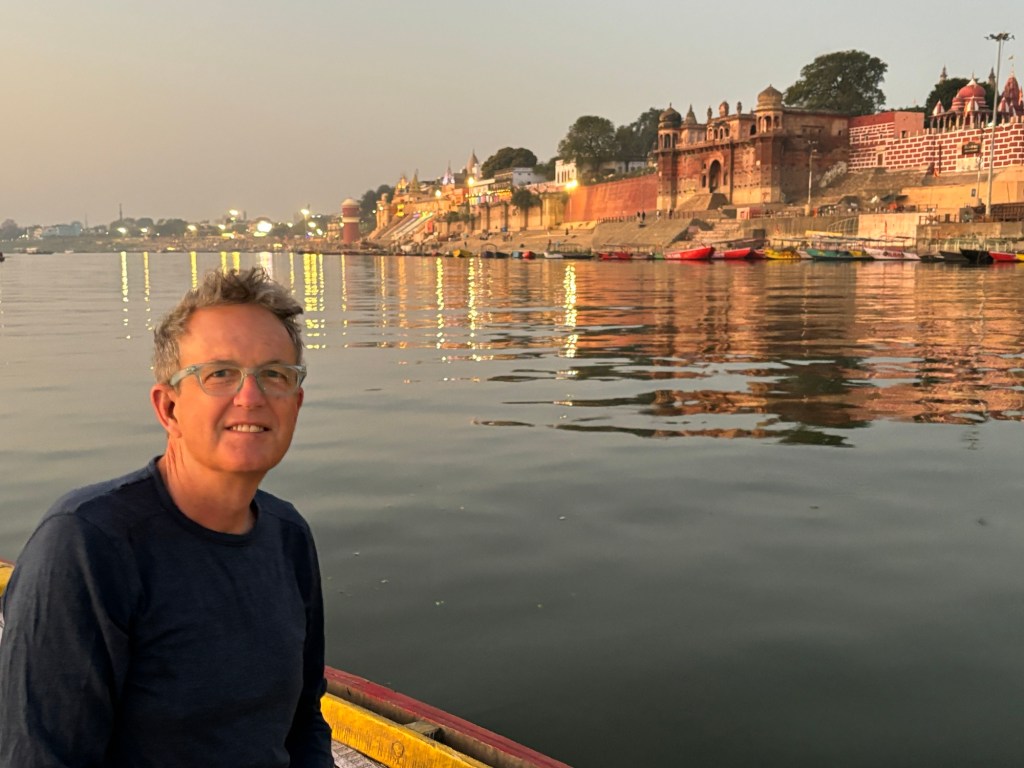
Reportedly, the entire province will show up here today to mark the festival. I heard the number “millions will come,” an amount I would immediately dismiss as Trumpian fake news if I was not in India.
My friend and colleague, the architect Rob Valenti, has been following our tour’s progress on Google Earth, feeding me facts on the places I’ve cycled through. Accessing the Uttar Pradesh State website, Rob reports that Mirzapur, the town I stayed in before concluding the tour in Varanasi and only 36 miles upstream on the Ganges, boasts a population of around 2.5 million in 11 square kilometers. 227 k / sq km. The Portland, Oregon metro area has about that population in 1000 square kilometers. 2.5 k / sq km. Mirzapur is 91 times as dense as Portland. Varanasi is obviously much denser still.
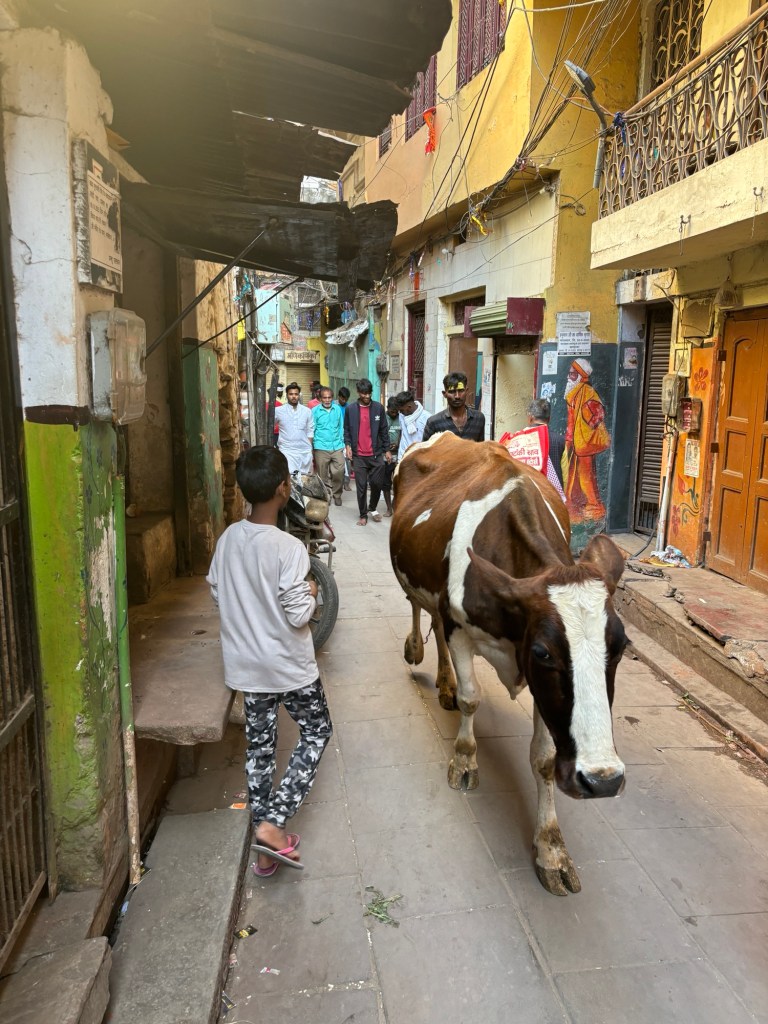
Varanasi—known almost exclusively in India as “Benaras”—is reportedly one of the world’s oldest continuously inhabited cities, founded more than 2500 years ago. It’s a magical place, although arriving into the narrow lanes in the heat of the day—most less than a meter in width and paved with ancient cobbles—tested my “bikemanship” to the maximum. Luckily, it was not my first rodeo. In true confession, I walked some of these narrow passages since they were shared by pedestrians and the sacred cow alike. I also carried my bike up and down the ghat stairs, many, many stairs. I was a sight to behold. I felt no shame arriving this way. It was pleasure enough to have arrived at all.

Riding solo the last few days has brought the challenges and joys of bike touring into sharp relief. The experience of exploring alone is remarkably different from tackling a challenge together. Most notably I found my first flashes of real anger as my life was repeatedly put in mortal danger. Both events resulted from a type of pincer movement to force me to a stop to procure a selfie. The first time it happened, a group of teenage boys, three to a motorbike, seemed friendly enough until they cut me off and came to a stop in front of me. I was forced to break so hard I almost went over the handlebars. Unleashing a string of invective Tom Stoppard would have marveled at, the boys quickly retreated and scooted away. Assuming this was a one-off, I shook it off and soldiered on. An hour later, it happened again, this time with a large sedan, forcing me to a stop on a steep highway overpass in a crush of oncoming traffic. “Selfie? Where are you from?” Let’s just say he didn’t get the answer he was expecting. Variations of this event happened two more times that day alone. This never happened while riding with Matt. If my rights and safety can be so easily violated as a sixty-three year old man, I can only Imagine what it must be like to travel as a single woman in this country…
These encounters led me to contemplate what I’ll call “The Hierarchy of Indian Vehicular Evil:”
◦ Teenage boys, three or four to a motorbike occupy the top spot for danger. Brimming with hormones in a culture where the opposite sex is held far out of range, they seem especially crazed. A friend who worked as a visiting nurse in the emergency hospitals of Vail and Telluride Colorado once shared the medical staff used a shorthand on the triage charts: YAMIS—young male invincibility syndrome. “This one jumped off a two hundred meter cliff with skis and no parachute.” You get the idea. Convinced at that age of our infallible reflexes and perfect judgment, it’s a wonder any of us males survived to carry on the species.
◦ Tuk tuks: the ultimate short term thinkers, these drivers are like veteran prostitutes; it’s all about turning as many tricks in the shortest time possible. They will stop on a dime, turn right or left without signal or notice, cut through spaces designed for something half as large, and eject passengers from either side of the vehicle without notice. Hanging a u-turn and heading the wrong way in traffic is normal. Scrapping their carts against parked or moving objects, normal. Horn blaring full blast, normal.
◦ The New Rich: India has a status problem, the selfie phenomenon only a symptom. Everyone wants to be the Maharajah. Private car ownership is still rare in India and in the countryside we saw very few. Those we did encounter are driving huge SUV’s and invariably barreled straight at us with the same pathetic attitude I often find in rural America. “This is my road and you mean nothing.” This type of grotesque entitlement is familiar to those who bike tour. In the USA, it’s almost always the drivers of these absurdly large cars, or those towing a three bedroom house behind for “camping” in the local RV Park. Interestingly in India, the bright blinking lights give them some pause. So do hand gestures indicating “more space required.” I guess the rest of the population just goes off the road without a fight, a graphic demonstration of what I informally call “Gross Weight Rules.” But by holding one’s ground, perhaps gesturing appropriately, we gave them momentary pause, at least long enough to get by. I wish that worked in the US.
◦ Middle Aged Male: Not unlike the US, these drivers are a crap shoot. Overweight and riding solo on their motorcycle with a backpack, they can be friendly or aggressive in equal measure. Some, will blow past—horn blowing—as if you have hindered them from an important meeting with Prime Minister Modi himself. Most are indifferent, as if these space aliens show up here all the time and I already bought the T-shirt. And many will slow to circle around you and get their courage up to ask you questions, almost never in English. This invariably leads to a selfie request. Not happening.
◦ Buses and Trucks: ironically, these are the least worry in India. Truckers especially, are in it for the “long haul.” They live the road and many offered us unfailing admiration and a thumbs up to boot. Although still daunting, they generally drive safe speeds and always left enough room when passing us. Their load-tying is an art in itself. I never saw a tarp flapping or rope dangling. Buses too are professional but live energetically on their horns and tear along at breakneck speeds. Still, they are pros.
◦ Family Motorcycles: I love these guys. Four or five souls on a motorbike, infant draped languidly over the lap of the mother in back, second infant held by an older child, Dad is saving petrol and moving the bike as predictably as possible. As a fellow traveler, I know exactly where he is going and we understand each other. Often driving barefoot, without gloves or eye protection, and of course without a helmet, these Dads are a marvel of care and efficiency. They are getting it done and it is likely everyone will live to tell the tale.



Leave a Reply