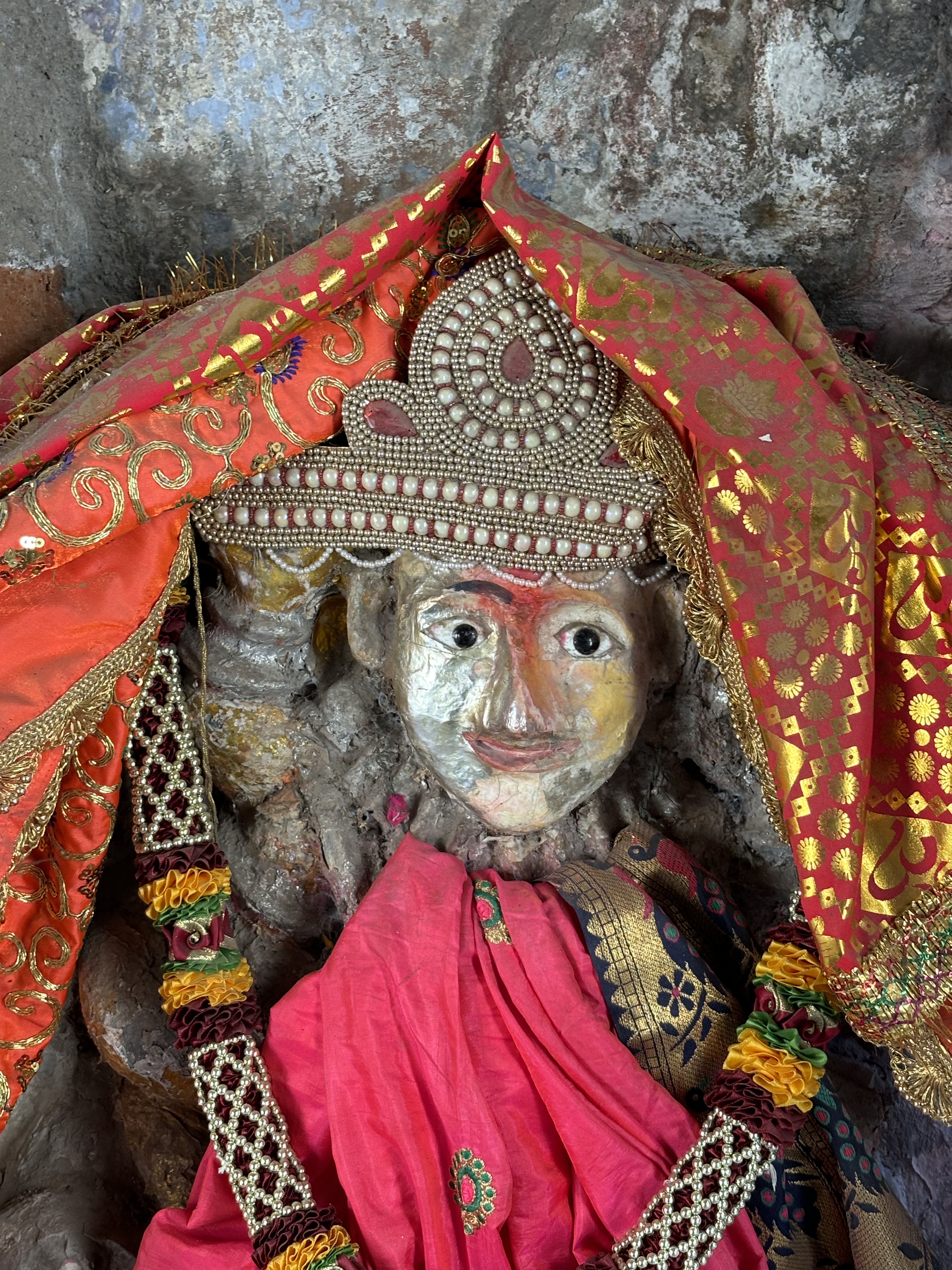
Matt took the 28-hour, second-class train back to Ahmedabad on Monday morning after our visit to Khajuraho; his dream of riding into Varanasi postponed by his stay in the sick wards of Mt. Abu. His trip window was also a full week shorter than mine. I was sad to see him go.

It was emotional for both of us to say goodbye after such an intense shared experience. We traveled well together with our different strengths and vulnerabilities. Both being sculptors, we found we responded strongly to many of the same things. The felt sense of a line, curve, or shrine would move us, touching us in some inexplicable way; these shared moments a source of fraternal communion.
Being an artist is not just about having “good hands,” as they used to say during my apprenticeship—although that is critical—but about nurturing a deep openness to the world so impressions register within one’s soul. Connecting the body’s felt sense, allowing somatic responses to register without being squashed by the “big hammer of the mind” or the “certainty” of our eyesight, is central to the task.
Even the most rational among us have a sense of when they are over-thinking an issue. But few of us are aware of when we are over-seeing; giving the eyes too much authority to define what is before us. Working to engage the human body’s entire instrument to feel and sense an object, person, or space, can bring us a deeper and more nuanced understanding. This is the work of bridging the two worlds—matter and spirit—and a method of extending our sense perception energetically beyond perceived limitations. I don’t believe only artists have this gift, rather it’s a skill artists are forced to encourage and grow over their professional lives in order to create meaningful work. In short, anyone can learn to do it.
Matt and I stood through an ear-splitting Hindu ceremony—one of two that occur every day at important shrines—to give our bodies a chance to absorb the space and potent symbolism it contained. Matangesvara Temple, one of the earliest built at Khajuraho (900-992 CE), contains the largest lingam in North India. It is written in the ancient books that this massive granite rod reportedly extends equally as deep into the ground as it stands above it. A giant diamond was buried beneath to augment its power. Since the temple is built on granite bedrock and stands significantly above grade, the recorded explanation rings as plausible.

Approximately 4’ in diameter and exposing at least 11’ of height within the temple itself, the smooth, perfectly carved shaft is a wonder of ancient craftsmanship. This was not turned on a stone lathe as some of the thousand-year-old Jain temple columns I witnessed in Karnataka in 2016, this lingham was carved by hand (and without flat spots!), raised into position, and the temple built around it. Absolutely modern in its pure reductive abstraction, its potent force points us to the heavens. Rising from a moist basin symbolizing the yoni or vulva, I can think of no more vital visual metaphor for regenerative life force of our world. To point this massive phallus toward god, or assign it to “the Great God” Shiva—“the Cosmic Dancer”— demonstrates an essential understanding of the power of the sexual act that is painfully missing from our “swiping and liking” culture in the West where sex has been reduced to a “hook-up.” Most tellingly, the lingam sculpture/ symbol remains energized today.
In the morning before dawn, Matt and I sat in absolute awe as we witnessed the heartfelt devotion the giant lingam received. An endless flow of humanity from all walks of life stopped by to pour water or milk on the stone, to caress its shaft, to smear sandalwood paste mixed with pigment, to draw the incantation “Om,” to press their forehead against the monolith in abject supplication. Some pressed leaves or small flowers against the stone. Others hummed or sung quiet incantations while performing some approximation of the same rituals. It seemed uniquely individual and without guidance.
As the devotees offered their individual rituals and quietly departed, their place at the shaft was immediately filled by the next community member; rich or poor, all granted equal access and equal claim to the stone’s symbolic vigor. In all the countless acts of worship Matt and I witnessed during our trip, our experience at the Matangesvara Temple was among the most powerful.
Photos are not allowed but noticing the local Indian tourists pulling out their phones, I managed to sneak a photo during the ceremony.

So how does this endless flow of humanity and ritual energetically charge an architectural volume? This is a question I wrestle with in the last chapter of my forthcoming book and is not easily answered. But one doesn’t need to be a “sensitive artist” to feel it. It is obvious and palpable.
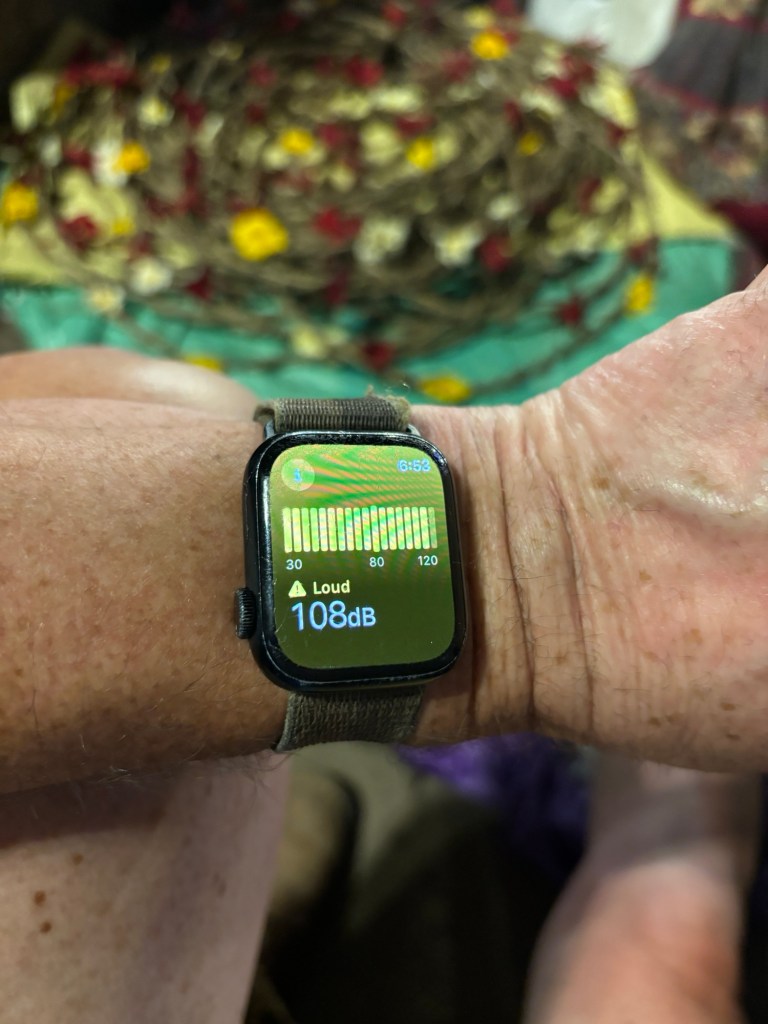
I asked a Sanyasi I met in Varanasi this question and specifically, why the Hindu’s felt it necessary to perform these rituals at an ear damaging volume; my Apple Watch recorded the hour’s service performed consistently at over 105 decibels. He chuckled at my question as if the answer was so basic and obvious. “More volume, more power!” A Sanyasi is similar to a Sadhu (holy man) but are not allowed to marry. They are very likely all deaf.


 Bike Touring India
Leave a reply to stephensmith095 Cancel reply