There are a billion four hundred million people in India now, and residents will tell you proudly that they exceeded the population of China last year. There are small children everywhere and most seem happy and cared for. Our routes are lined with kids dressed for school, hair brushed and elaborately braided, uniforms mostly pressed, except for the boys in their usual tussle of untucked shirttails . The kids faces light up as we pass. Unafraid to engage and eager to express themselves with their newly acquired English phrases, they often yell out, shocked when we understand and say hello back. You can literally see the coin drop. “This English thing works!”

The kids seem to wait on the street for quite a long time before their ride comes. Eventually, a tractor pulling a trailer or an overloaded small-engine truck with an open top will arrive to ferry them to school. It’s an extra treat for us when they pass us further down the road, squealing with delight and waiving furiously.
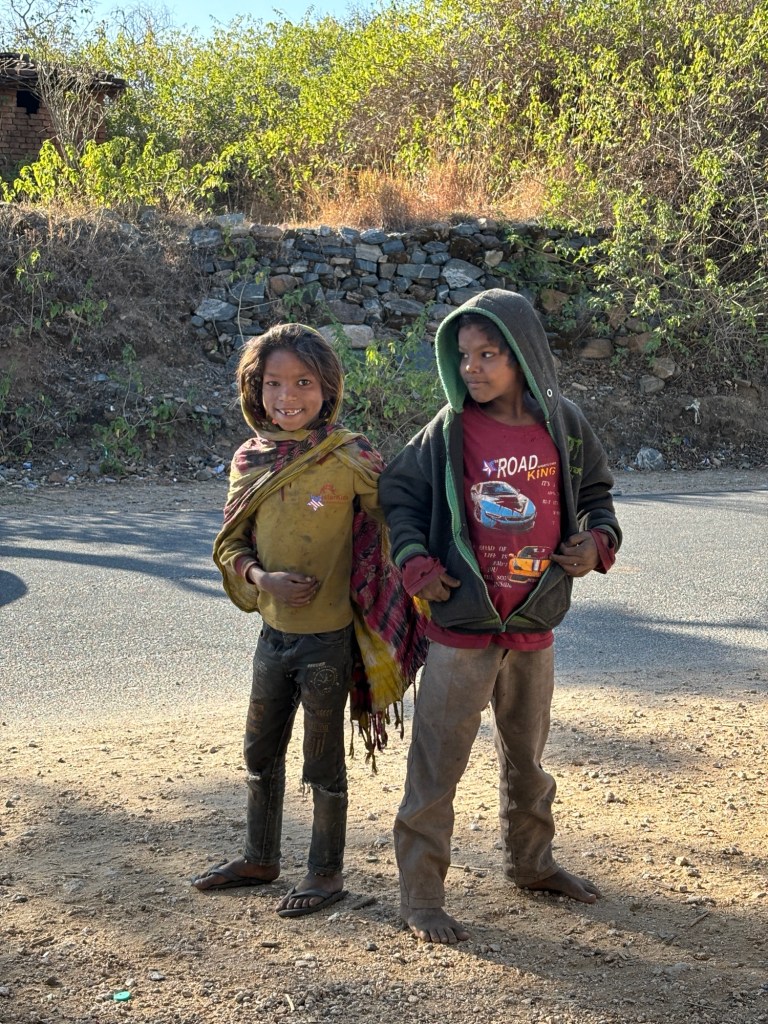
Most encouraging is how unbelievably bright-eyed these children are, as if they are in on the open secret that India is on the rise and the coming century is theirs. Several times this trip I have encountered unalloyed brilliance. These child superstars glow with a crackling intelligence, their bright eyes afire with curiosity. Such encounters leave me breathless. Of course, I encounter the grown versions of these protégées in Seattle, working at Microsoft, Amazon, or administering my anesthesia at Swedish Hospital. But to truly understand their heroic trajectory, it has been invaluable to encounter their rural homeland by bicycle and see them waiting for the tractor to take them to the local dirt schoolyard, often attending class under the shade of a giant tree.
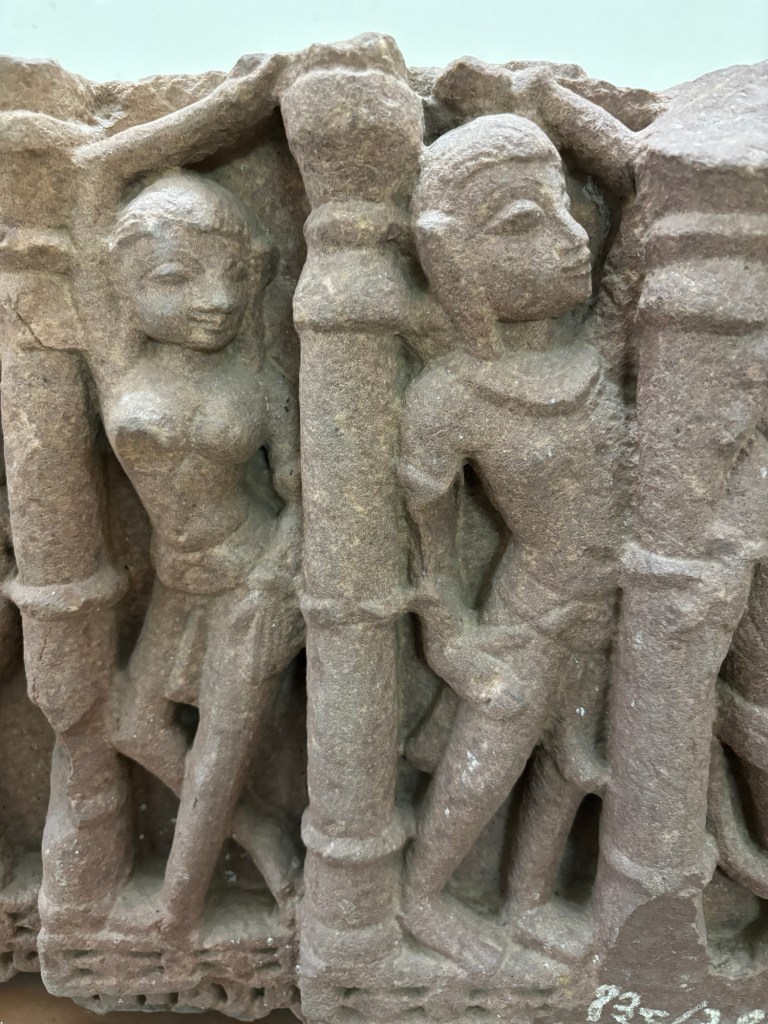
Something is driving this explosive population growth but it remains hidden to the outside eye. There is no hint of sex, absolutely nothing outside the erotic carvings on the thousand year old temples. Sex is not used in advertising and even the Bollywood videos we sometimes glimpse, the offering is beyond tame. It’s the Disney Channel. There is also virtually no alcohol, no bars, no public commingling of the sexes. This is so hard to square with reports in the west of “prostitution villages” or Mumbai reportedly having more than a half million prostitutes, the highest percentage of any city in the world. Of course, our experience is tiny compared to this giant country. That being said, it has been consistent in the three provinces we have ridden: Gujarat, Rajasthan, and now, Madhya Pradesh. It is also consistent with my previous Indian solo ride in Maharashtra in 2014.


According to Christoph Schweizer, income GDP in India has grown from $1000 to $2500 in the last fifteen years. On the ground in the villages as we are, we notice an increase in number of fields plowed mechanically, ubiquitous adoption of the 125cc motorbike almost fully replacing ox carts and camel travel, and, of course, the cell phone. Although, in Rajasthan, only the top earners had phones. As many as three quarters of the younger people we meet in the countryside still do not.
There are also a surprising number of solar panels in fields, far from power lines. These are powering irrigation pumps, not providing electricity to the nearby stone or brick hut that remains off the grid. There are zero satellite disks, almost no cars, fans, or refrigerators except in some small stalls selling potato chips and cigarettes. Cold bottled water can sometimes be found and the locals are confused when we ask for the warm bottles from the dusty stack.


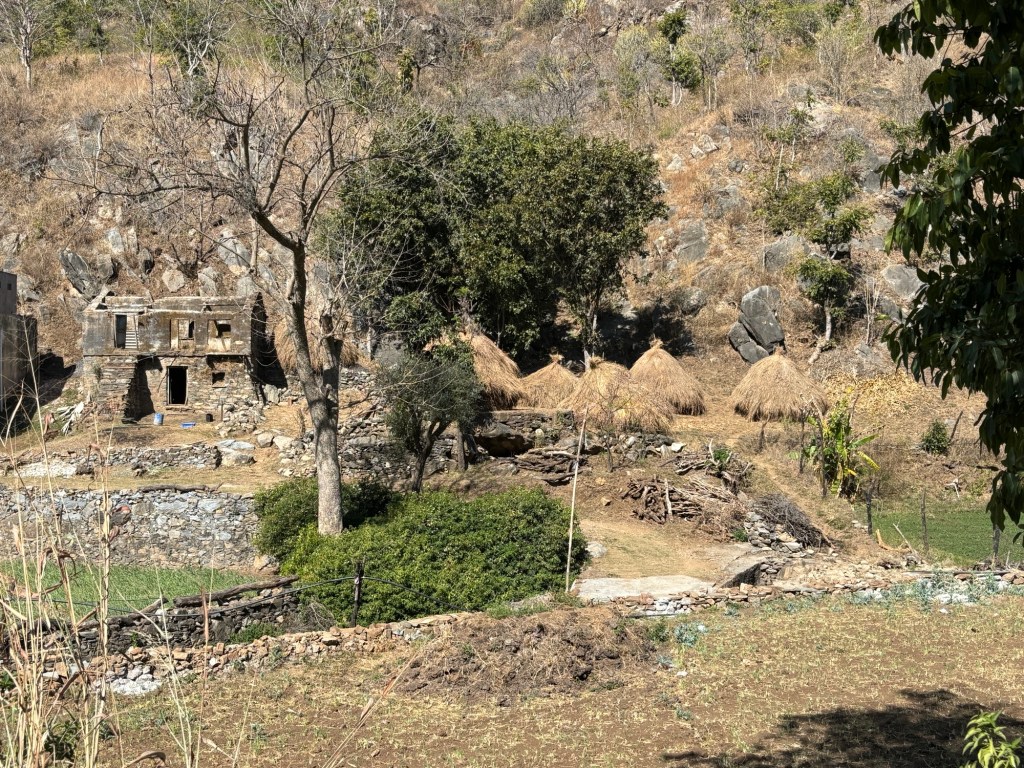
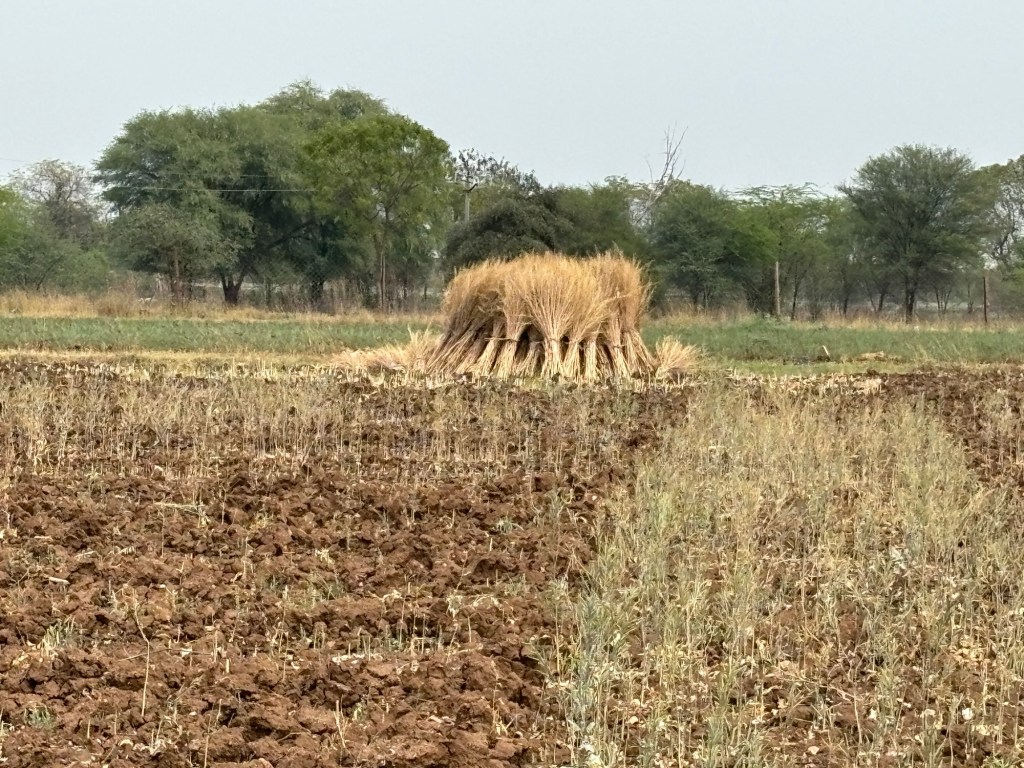

We have never encountered any crop harvesting machinery although portable towed threshers are now being used. I find it deeply moving to see a group of five, ten, or sometimes twenty women and children harvesting a huge field with hand scythes. I cut my tall grass at our cabin on Decatur Island with a large, standing scythe and let me tell you, it is a full body workout.
As in many cultures, the women seem to do the heavy lifting. Every morning we pass women in pairs or groups with impossible loads balanced on their heads. They are carrying large metal tubs filled with manure, pots of water from the hand-pumped village well, long bundles of bound sticks with grotesquely sharp and long thorns, and huge bundles of greens wrapped in old saris to feed the livestock. Women are not only in the fields, as I mentioned, but also staffing every construction site, wielding a pick in a deep hand-dug trench, or carrying metal bowls of gravel 24” in diameter. Certainly, much more than I can carry and I work in stone!

With the women’s arms raised to steady their balanced loads, their saris flowing behind them, one catches glimpses of the plates of defined muscle wrapping their torsos. So incongruous and unexpected is this sight, it first seemed “photo shopped.” Only the deeply lined leather face betrayed the truth; a body sculpted by a life of relentless back-breaking work.
Clearly, the men are working hard as well, at least the older generation. Their work is more solitary; driving the oxen plow, turning the huge field with a shovel, driving the tractor or motorbike if resources allow. Or we find them deep in the dry hill wash, with goats, water buffalo, or cows, directing the grazing. Water pumps and waterlines also occupy a huge percentage of their time. The single cylinder diesel pumps chug and smoke, creating a soundtrack to the rural countryside. The older men have legs so bowed, one marvels at their ability to still walk; their colorful high turbans making up their lost height.
But the younger men? Not so much. Lounging at intersections or stacked four to a motorbike racing to catch us, screaming at us in Hindi to stop our riding so they can take a “selfie,” these encounters are exhausting. They are also potentially dangerous as they ride closer and closer, increasing the volume of their demand, completely clueless to our obvious forward focus. We always remain polite, explain we are riding, not stopping, and offering answers to whatever questions we can manage to decipher. Yet they persist, sometimes riding along side for more than a mile, finding it incomprehensible that we don’t share their burning desire to be included on their social media platform. WTF?

Matt and I have settled into or own cycling rhythm method. We typically wake at six to be on the bikes by seven. We ride into dawn and stop at the first hint Marsala Chai, usually after 8:30. Anytime we find bananas or oranges, we fill our hi-vis vest pockets, each eating at least six or seven of each before lunch. We supplement this perfect cycling diet with our special “nut crack,” a large ziplock bag of assorted nuts seeds, dates, and the last of my chopped, dried plums I brought from our Seattle tree. We always have our eye out to supplement this bag, adding whatever we find to buy that is rich in protein and fiber.

On the best days, between 12:30 – 2:30 we usually find a samosa (or three) under the dirty tarp of a roadside stall. These can be outstanding, with light, almost flaky pastry and solid potato and lentil flour filling. Occasionally, they miss the mark and we move on, sustained by additional handfuls of our nutcrack.


By three or four in the afternoon we’re done, baked to a crisp by the sun, or dried out by the prevailing headwind. Who knew the wind blows West in India? This sense of completion seems to always fall at about mile fifty in these later weeks. The riding is not so much physically exhausting as mentally taxing. Spending much of the day in a state of mild geographic confusion, we work to resolve the route with our sense of dead reckoning. We frequently double back to try another left turn, “the other left turn.” Road surfaces can vary wildly. We had only a couple days of 20-25 mile dirt tracks, or long sections of toll road where we couldn’t divine a bypass. But even these have grown more routine as we have “road hardened” and our tolerance improved. Frankly, we’re loving it and, as seems to always happen on a good bike tour, we will be loathe to end and return home when the time comes.
About 4:00 PM the hotel search begins in earnest. Our new approach has proved much more productive than the thrashing we took in week one. Stopping outside of town, we check Google and only consider hotels that have at least 20 reviews. We want to see photos of beds, we want proof of life. Once a target has been acquired, we gird ourselves for a mad dash through the inferno of madcap traffic that comes in every town big enough to have accommodation. Once launched, we don’t stop, don’t take our eye off the road, we don’t respond to shouting or other inexplicable sounds. We just want get there and hope that it’s a real place and we can deal with the reality of whatever the “hotel” turns out to be.
In the larger, monument-rich destinations, the torn out pages from my Lonely Planet Guide have been invaluable. Our best accommodation experiences have been found this way. Sharing a room has been simple, even using a mattress added to the floor when required. Two out of ten guesthouses or hotels has functional hot water but only half of those have a shower that gives up more than a few drops at a time. Still, how nice to be able to get clean, lock the door and fall immediately to sleep.

Dinner is always our best meal, although the locals don’t eat until after eight. We have been cycling, of course, surviving on birdseed and fruit and like the Donner Party, we are ready to eat our saddles. Once settled into a room, rinsed clean—bike shorts and t-shirt drying on the balcony—we’re ready for food. On a perfect day, some young man runs out to find me a cold beer and we order fresh vegetable picorras to hold off the hunger until dinner can be served.
Normally, they will start cooking for us by seven. In this region, unless thali is available, we’ve settled on Dahl Fry, and whatever simple “curry” that is available. Matt refers to all Indian dishes as “curry,” no matter the ingredients, and all deserts as “puddings.” This confused me the first weeks together but I finally have it worked out. Our favorite “curry” is of okra (called lady fingers here). But often we find eggplant, or simple potato curry instead. Or a big vegetable mix, cooked down to perfection, almost an Indian ratatouille. Also a “curry. “ Add a rice, and whatever bread like thing they have on offer, always slathered in ghee, and we’re in heaven. The breads are always delicious and although the garlic nan remains our go-to first choice, the myriad chipati can be exquisitely crafted and equally tasty.




 Bike Touring India
Leave a reply to Mike Rhodes Cancel reply