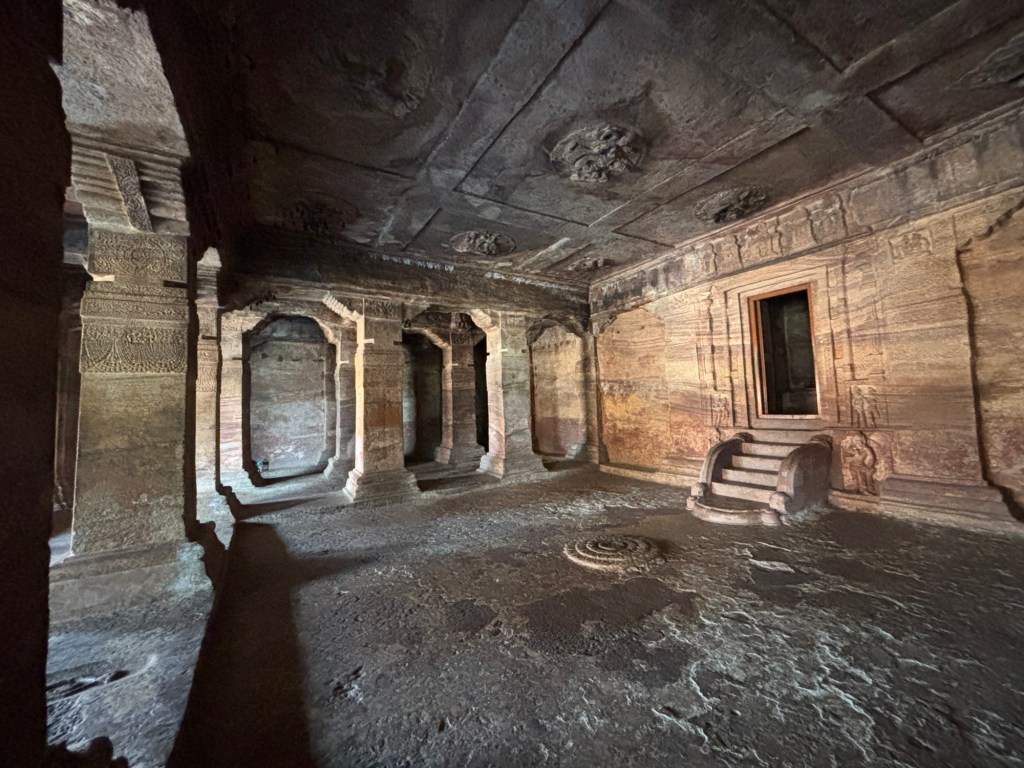
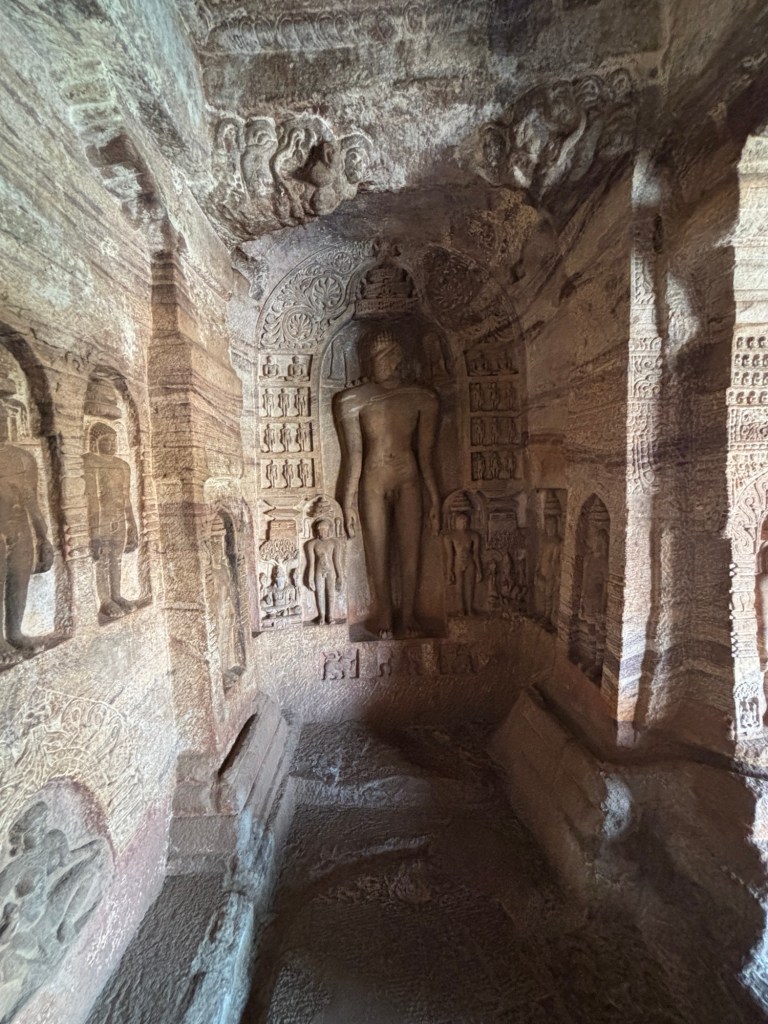
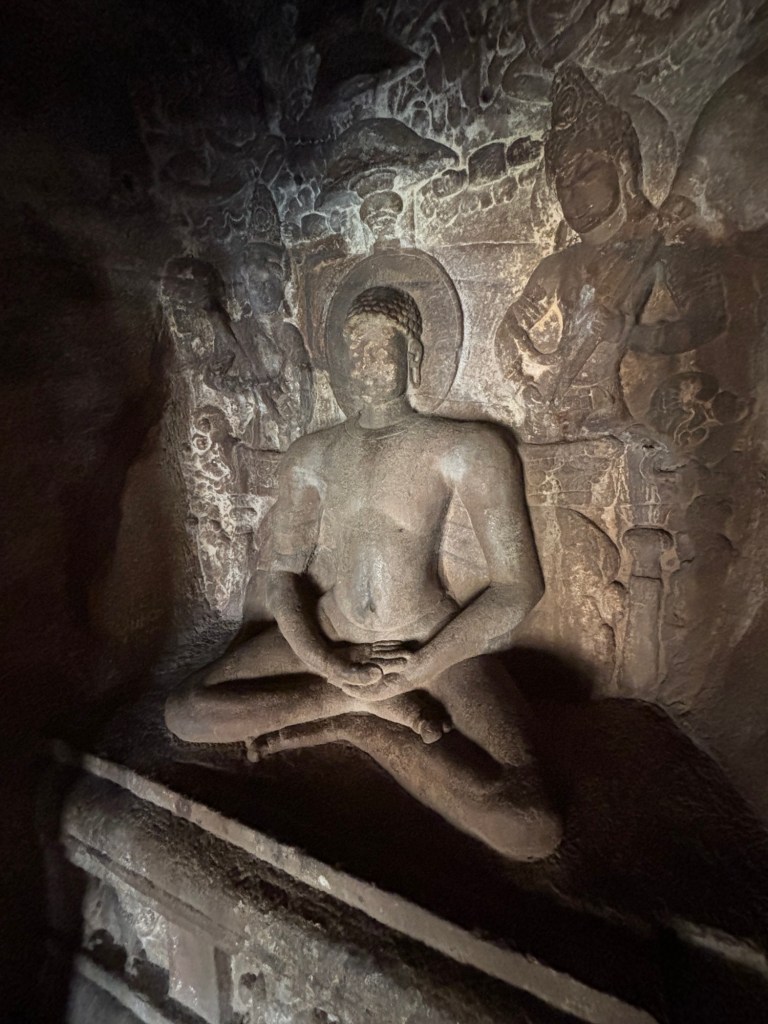
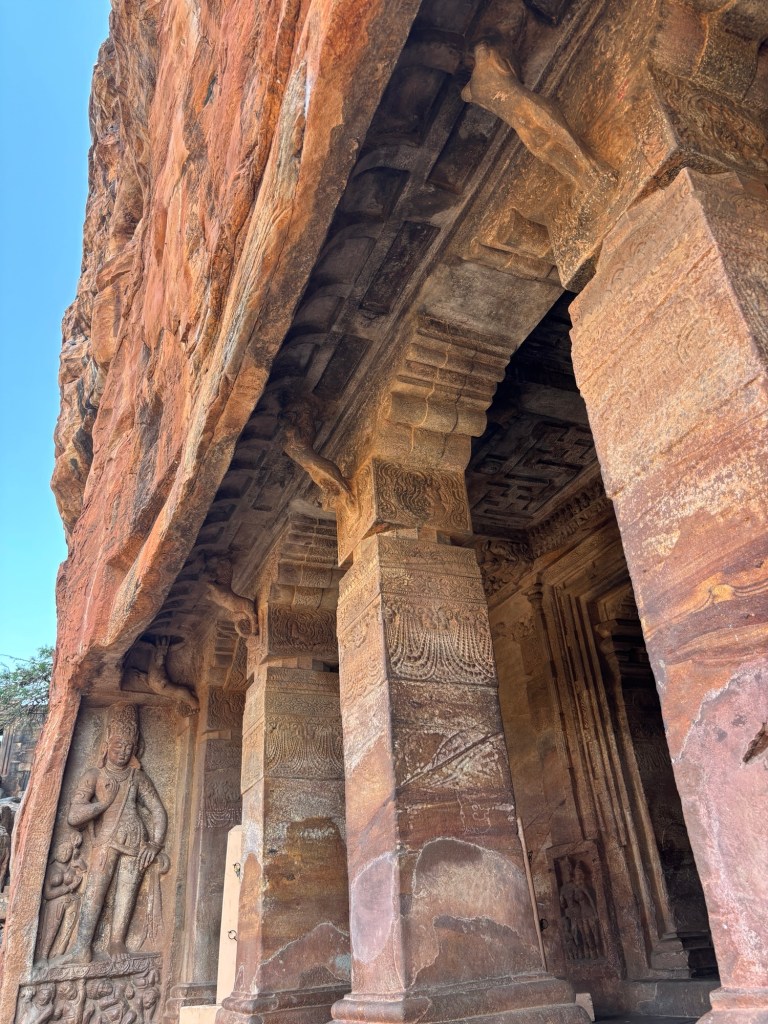
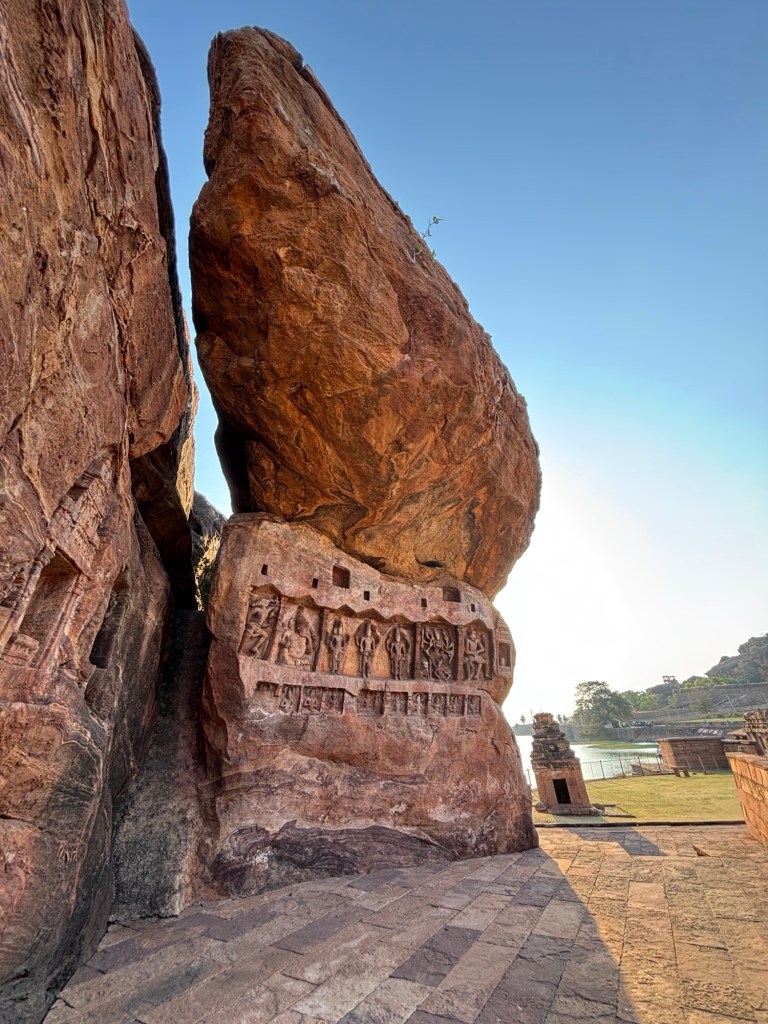
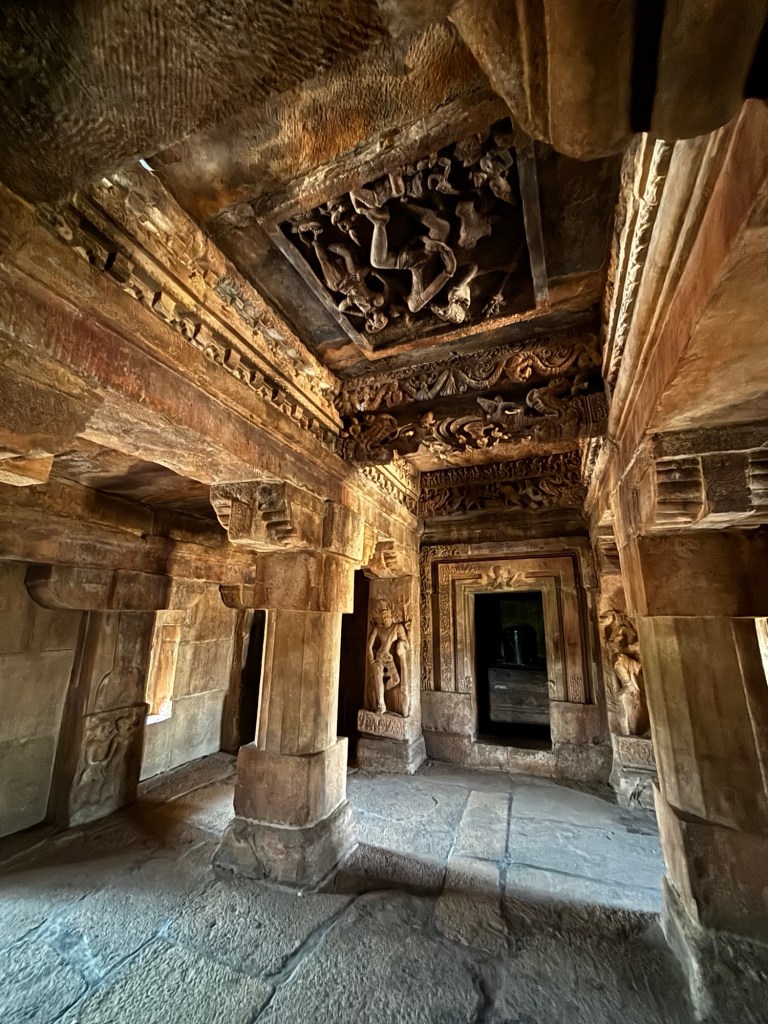
The British photographer Don McCullin describes India as “the most visually exciting place in the world.” I feel that everyday while cycling in here. Yet somehow the Rock Cut Caves, temples that have been meticulously carved into the living rock, really brings this sentiment home. These interior spaces thrill me. Partly it is the light, coming only from the caves entrance, and meticulously manipulated in subtle ways to penetrate the depths of the often cavernous spaces.
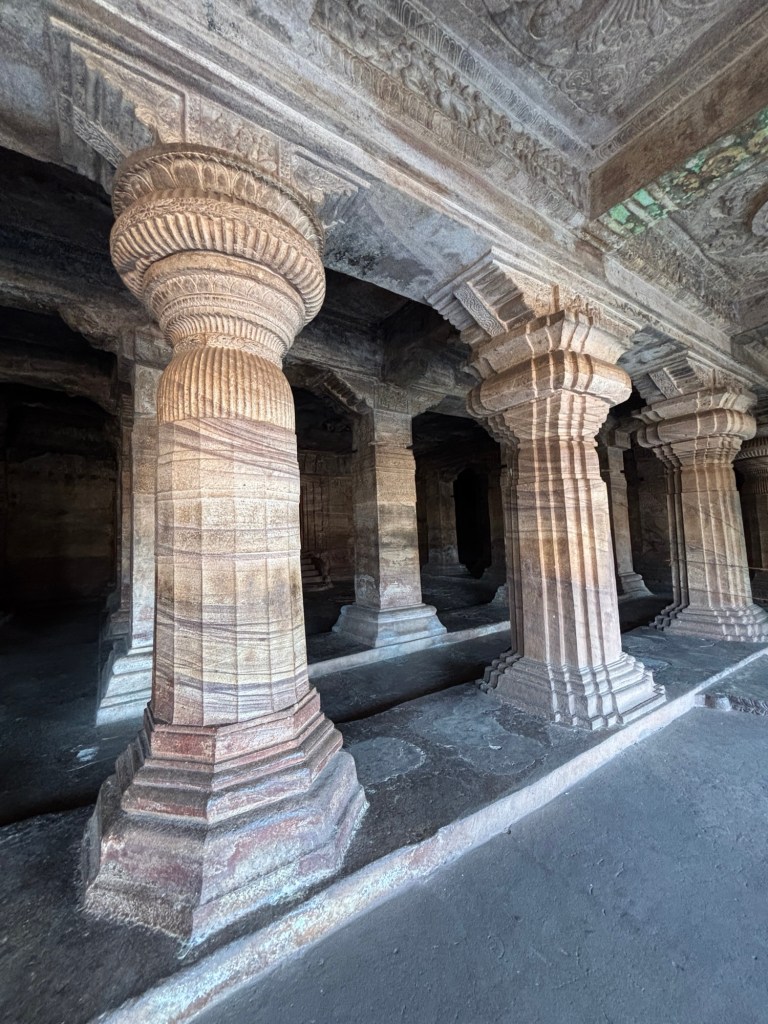
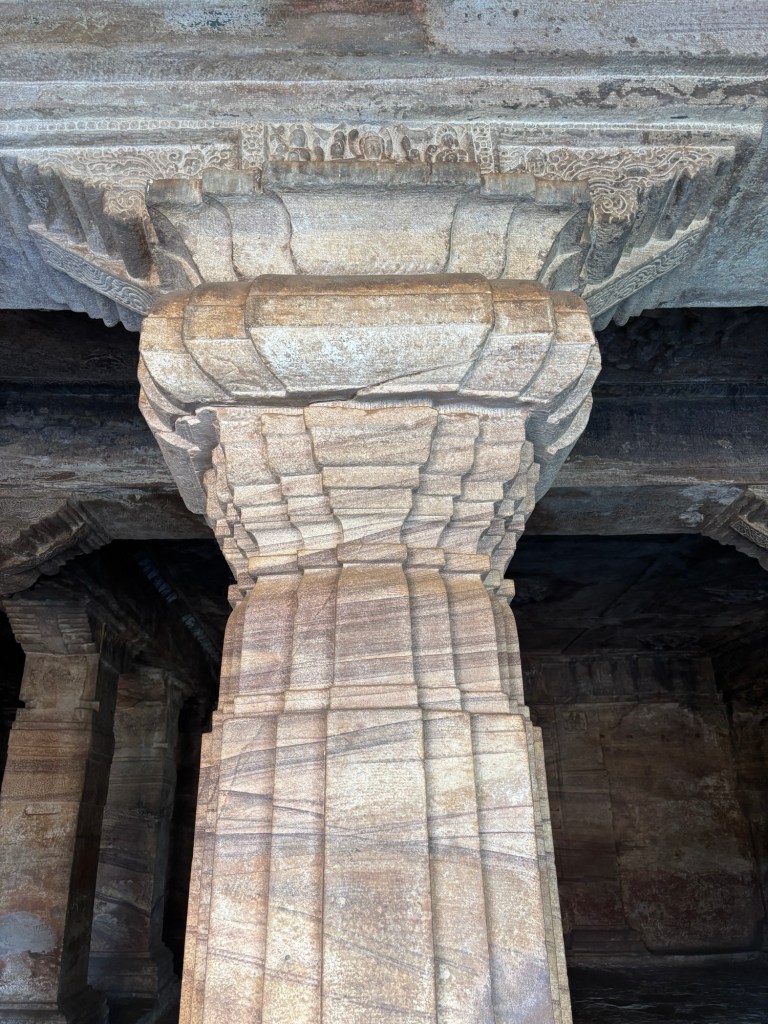
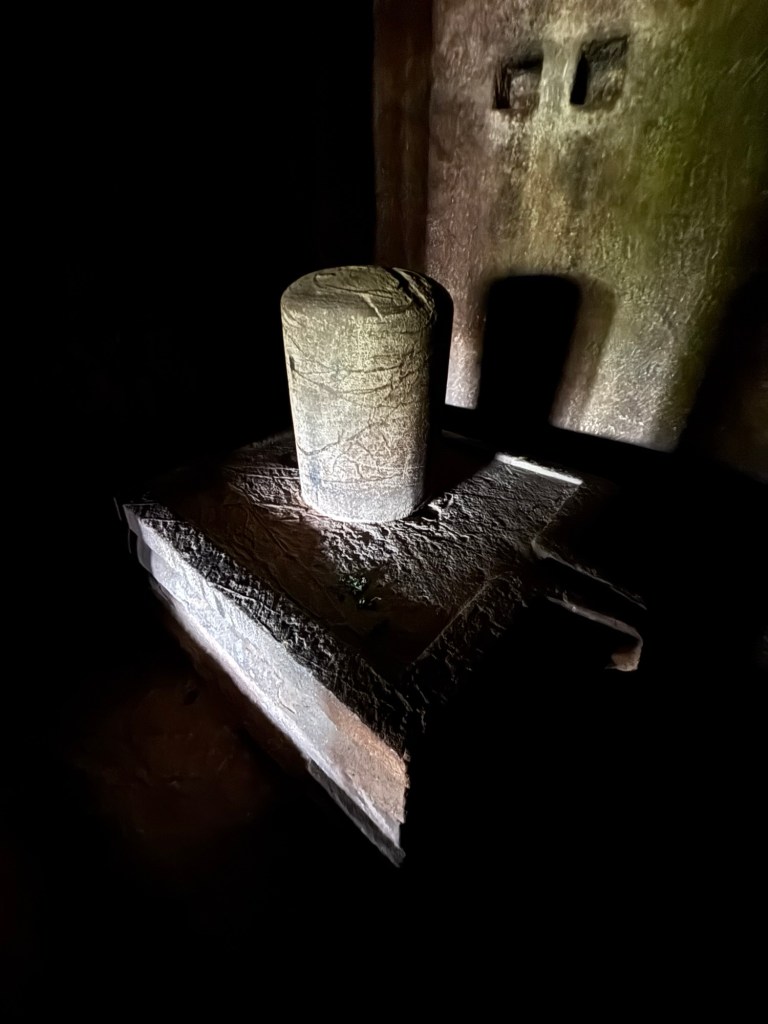
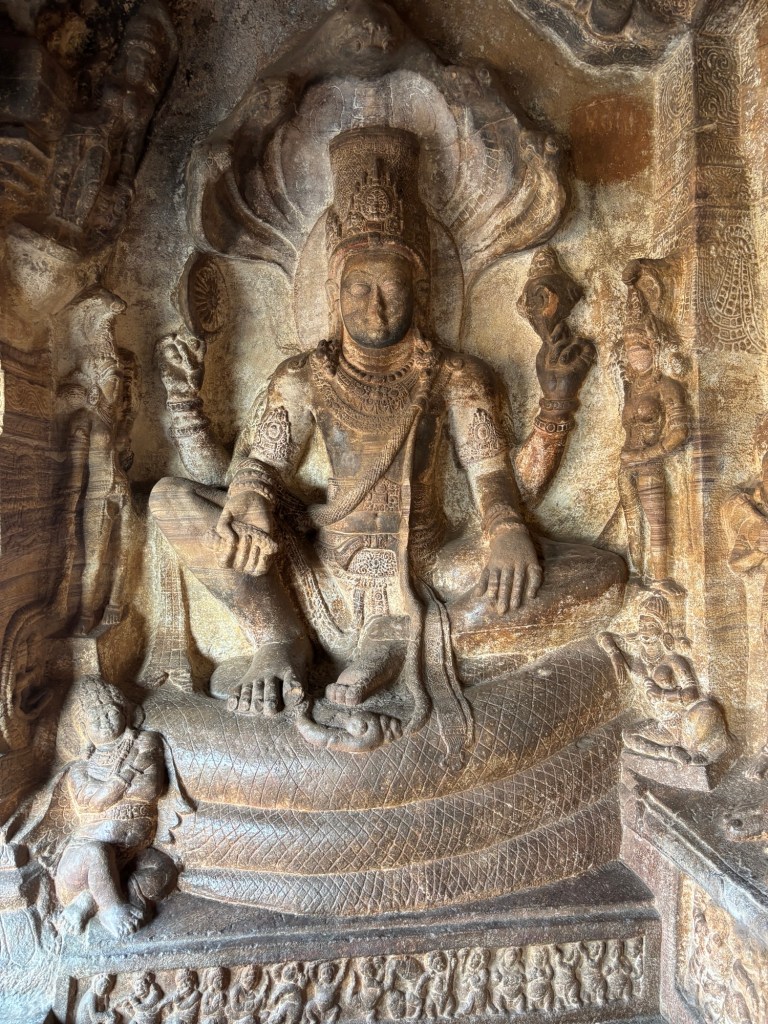
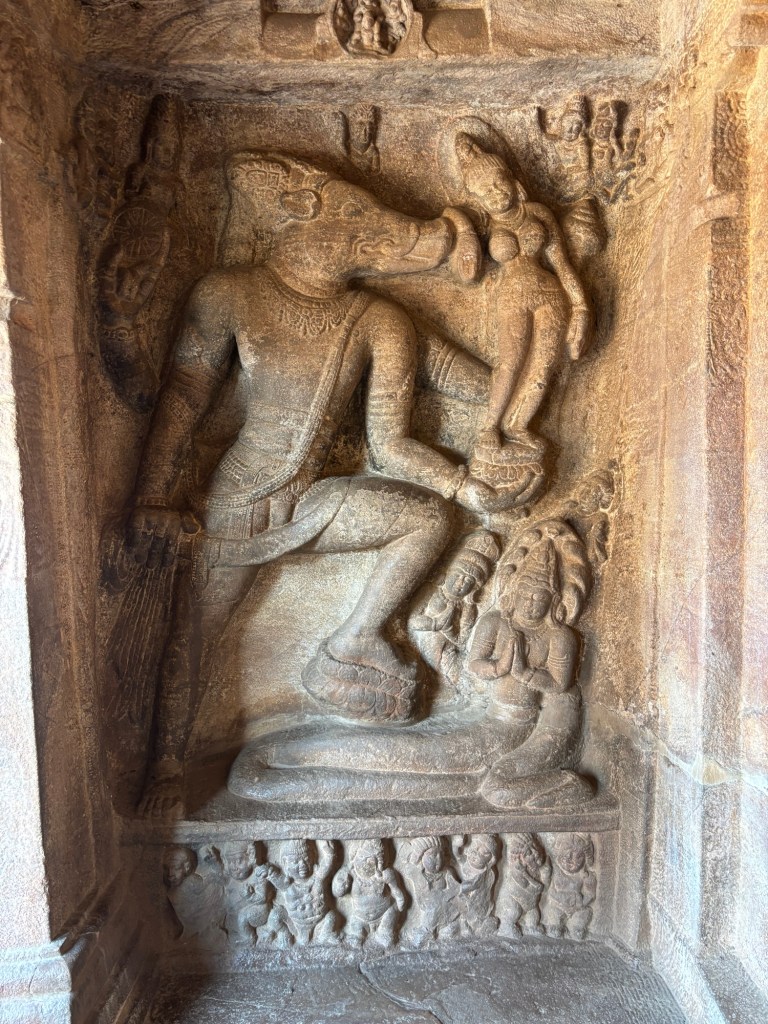
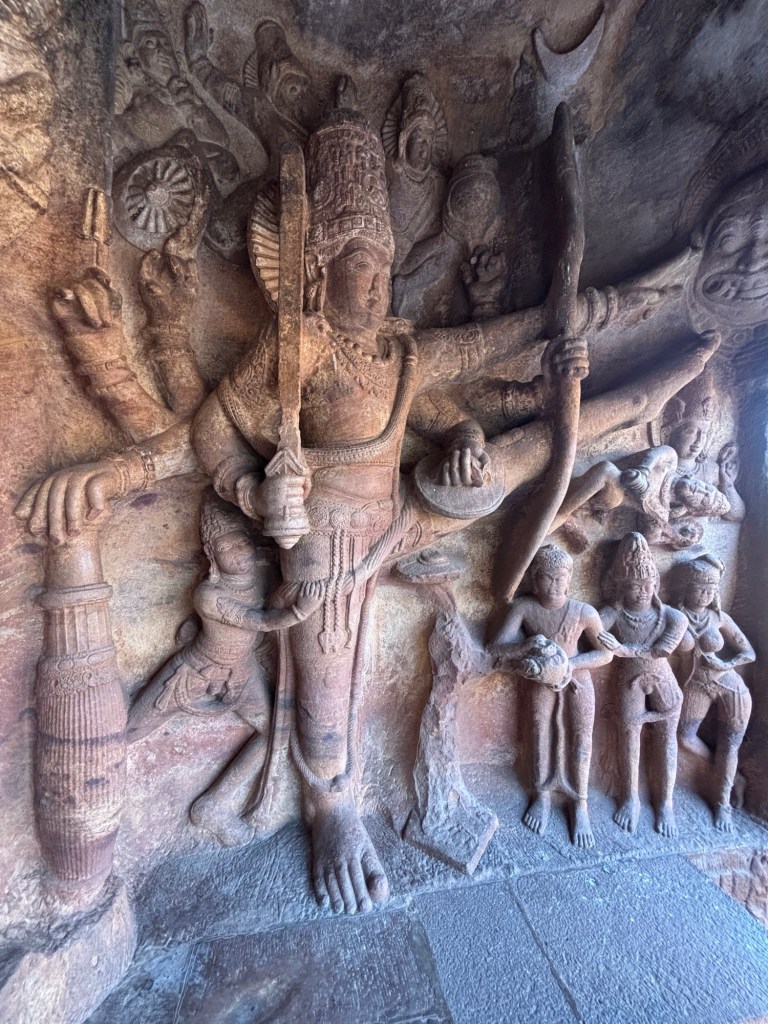
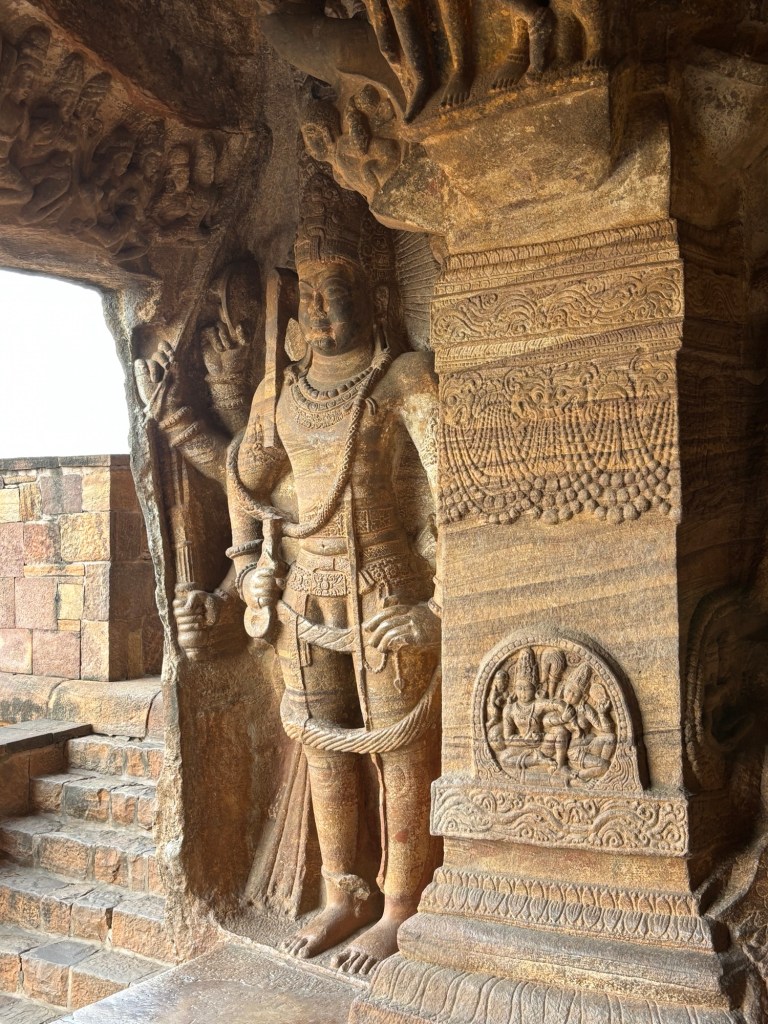
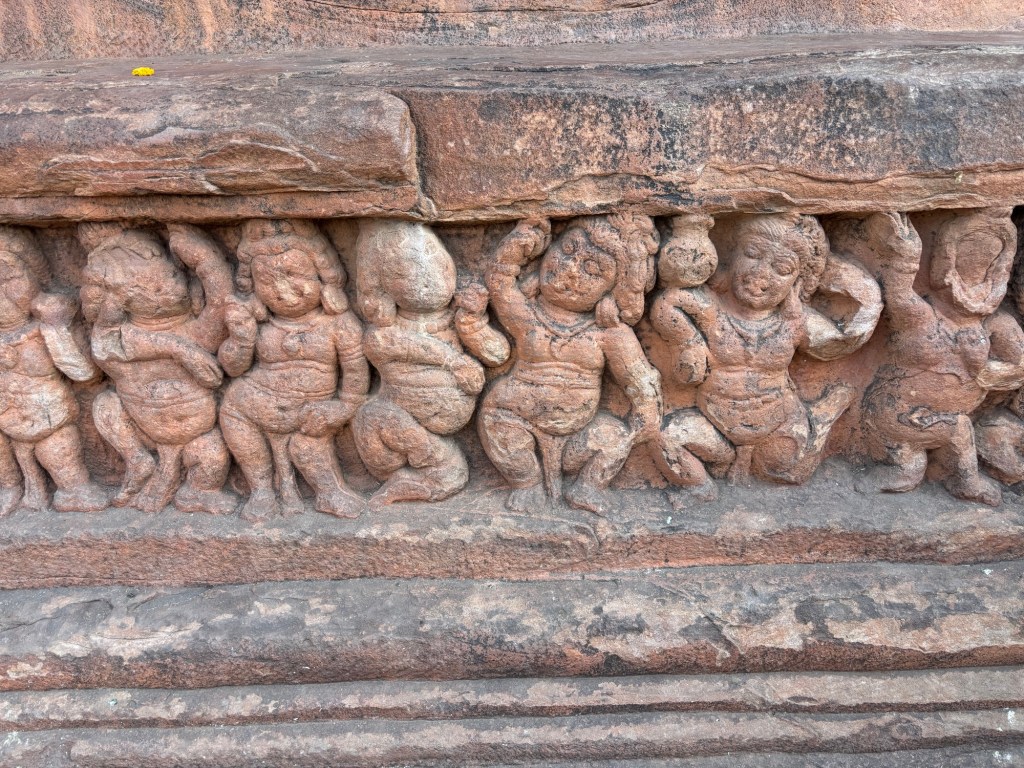
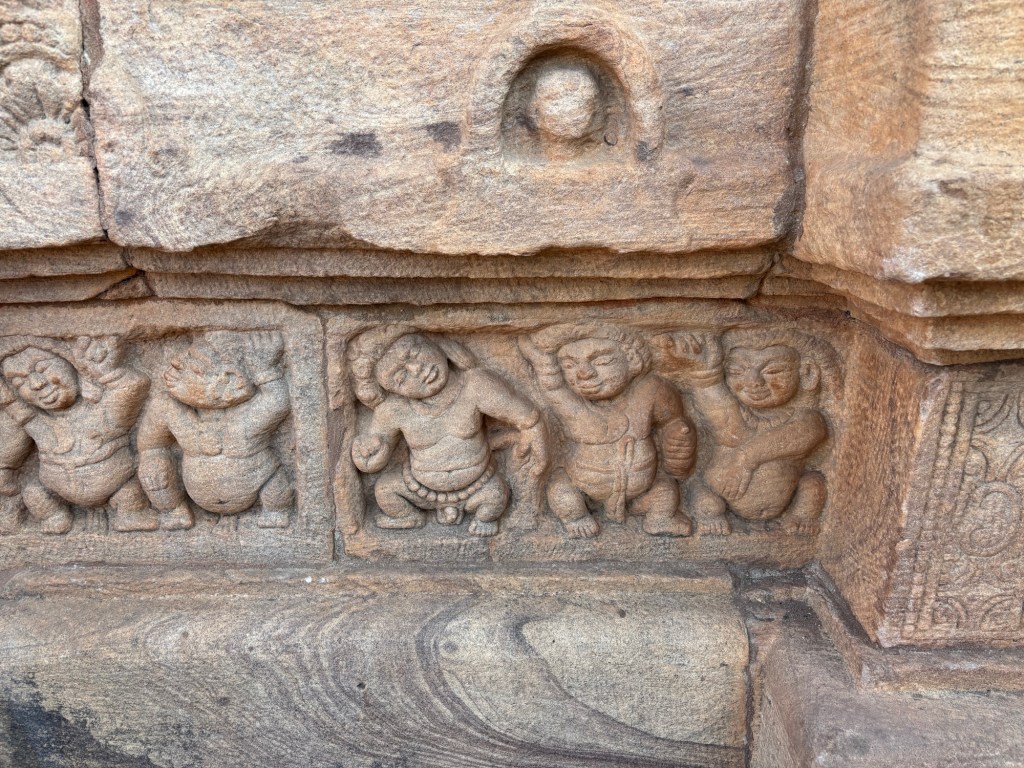
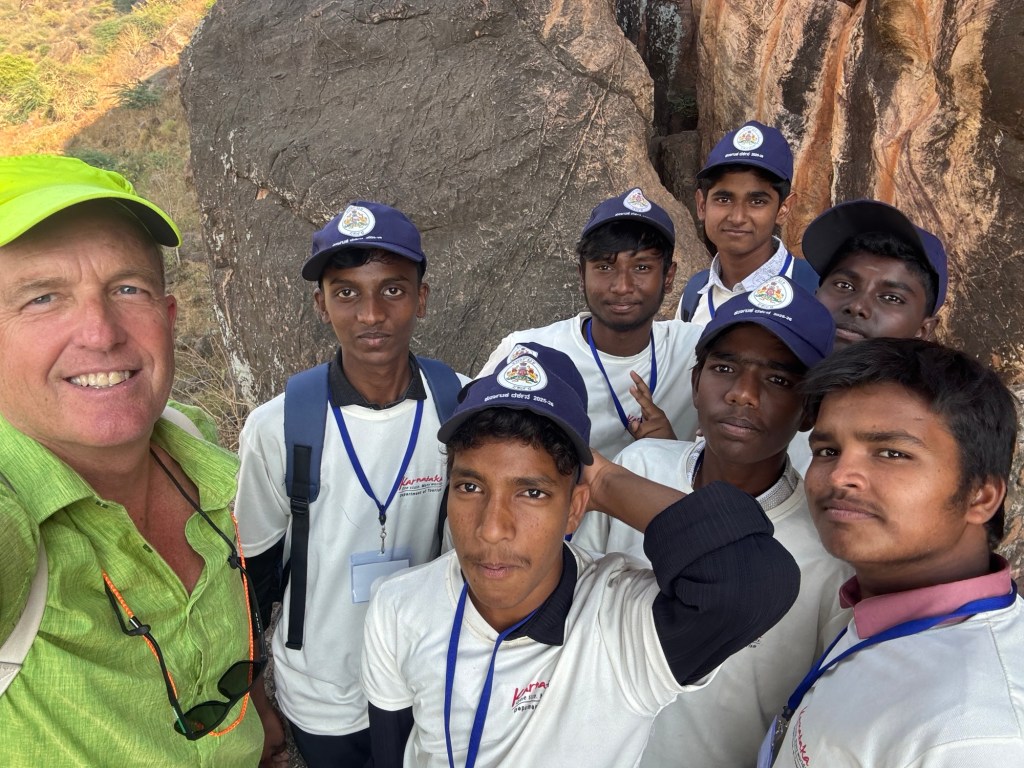
Rock cut caves dating from 550 CE at Badami in Northern Karnataka Even the columns, remaining connected to the living rock both top and bottom are exquisitely carved. The subtle mineral staining and grain of the quartzitic sandstone is further highlighted by the delicately carved column. The light in the cave is managed so that the lingam (Lord Shiva in lingam form) in the far depths of the cave remains illuminated.The stone carvers at Bedami were indeed true virtuosi. In fact, all three of of the primary rock cut caves have been signed by the master carvers who led the effort. From a Western perspective, this is very unusual and demonstrates a cultural appreciation for the artists involved. It may be of interest to learn that sculptors and stone carves in Europe did not sign their work until the 12th century. This larger than human scale, high-relief sculpture features Vishnu in his incarnation as the man-boar Varaha when he “rescued the earth.” This sculpture remains unfinished. You can clearly see how the carver was roughing out the form, and slowly adding depth. The lines are made by the tip of the carving point, a chisel that looks much like a very fat pencil with a dull tip. The softened light from the cave entrance highlights the subtlety of the high-relief stone sculptures.Playful forms carved at the entrance of the Cave/ temple. These sit below the floor elevation and appear to be helping to support the floor plane of the rock cut temple. Note the careful undercutting at the entrance roof to force the rain water to drip directly downward and not wick inward onto the cave’s interior ceiling. Visiting high school students, excited to practice their English skills and make sure I was rooting for India in the Cricket World Cup.
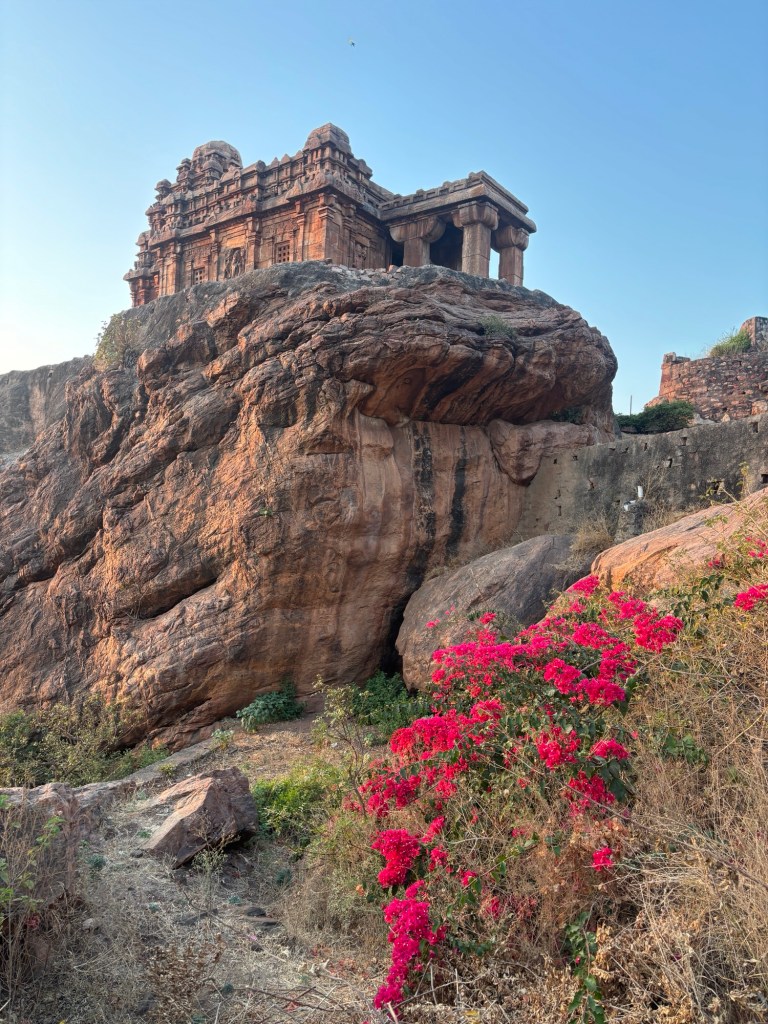
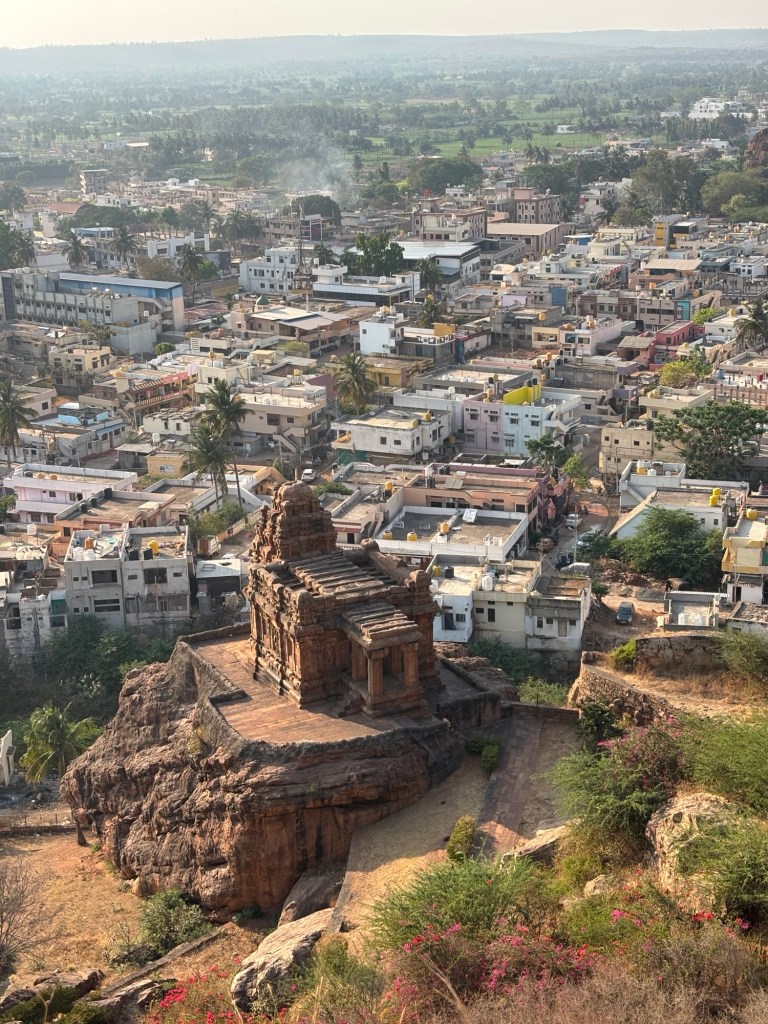
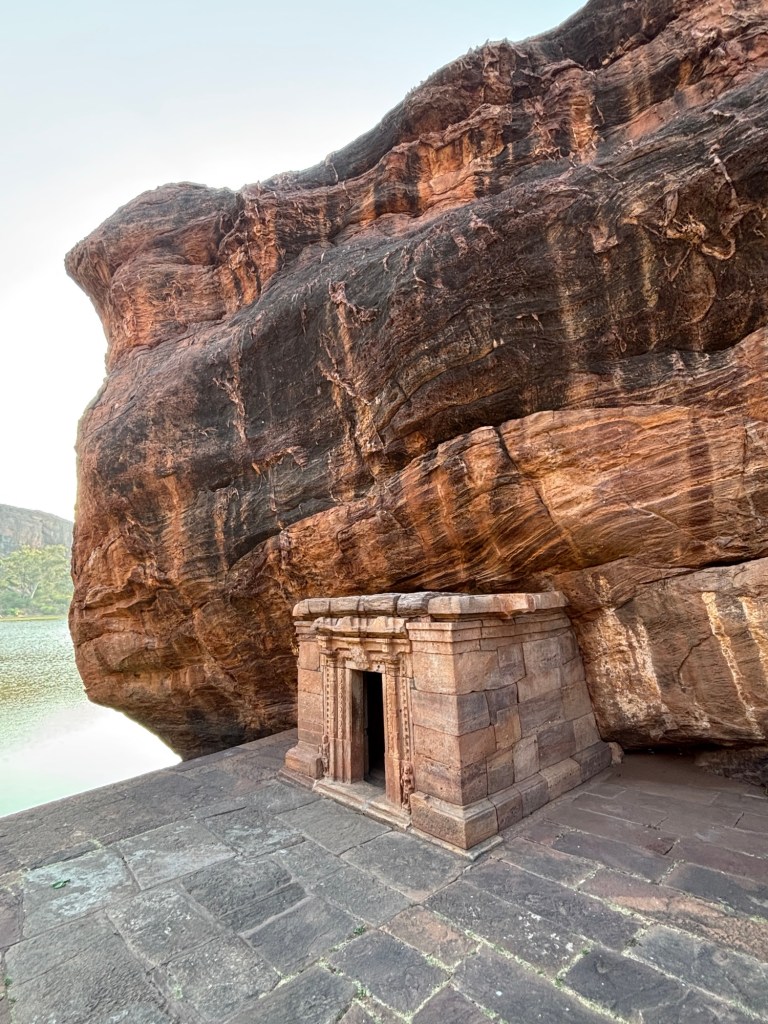
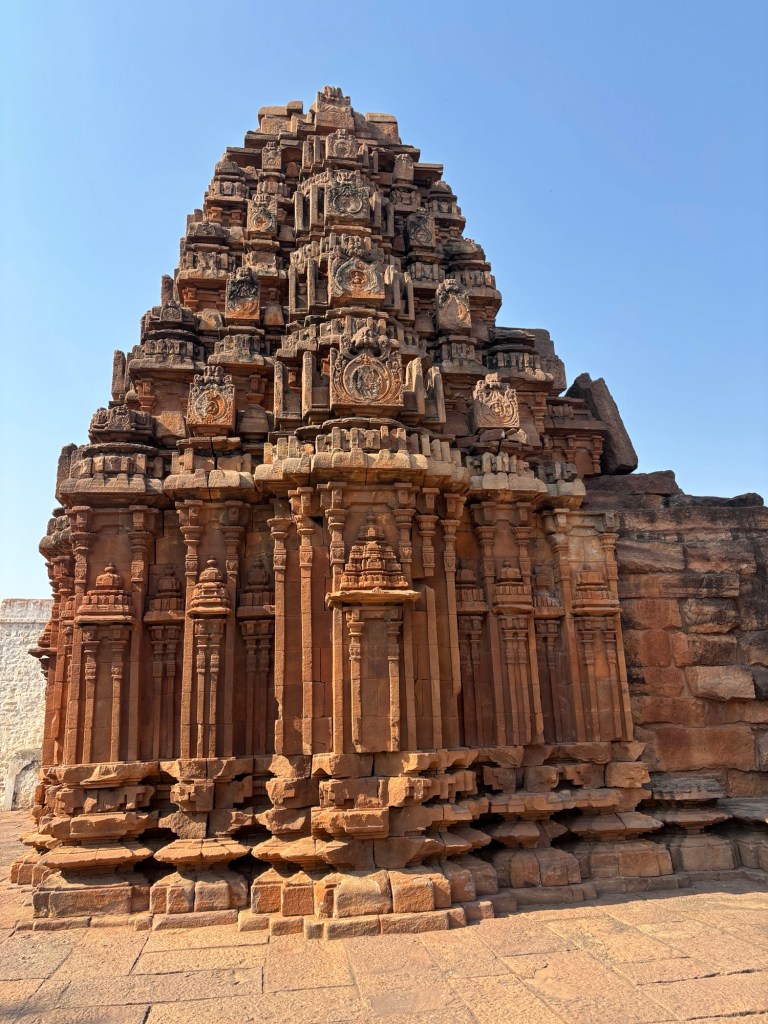
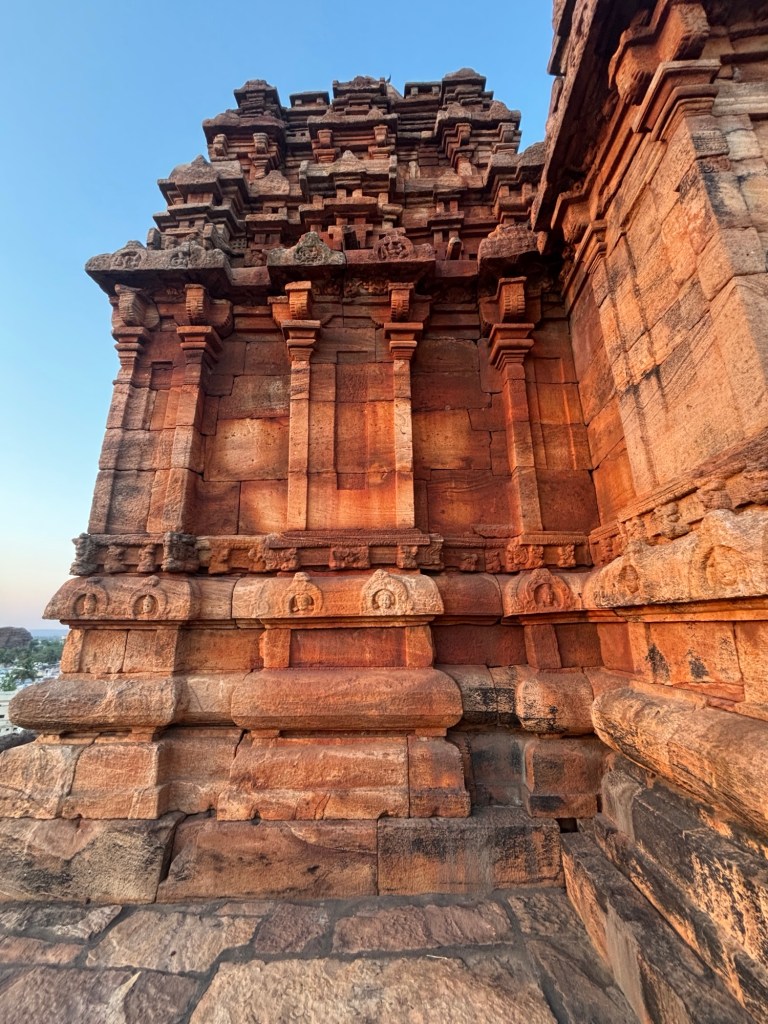
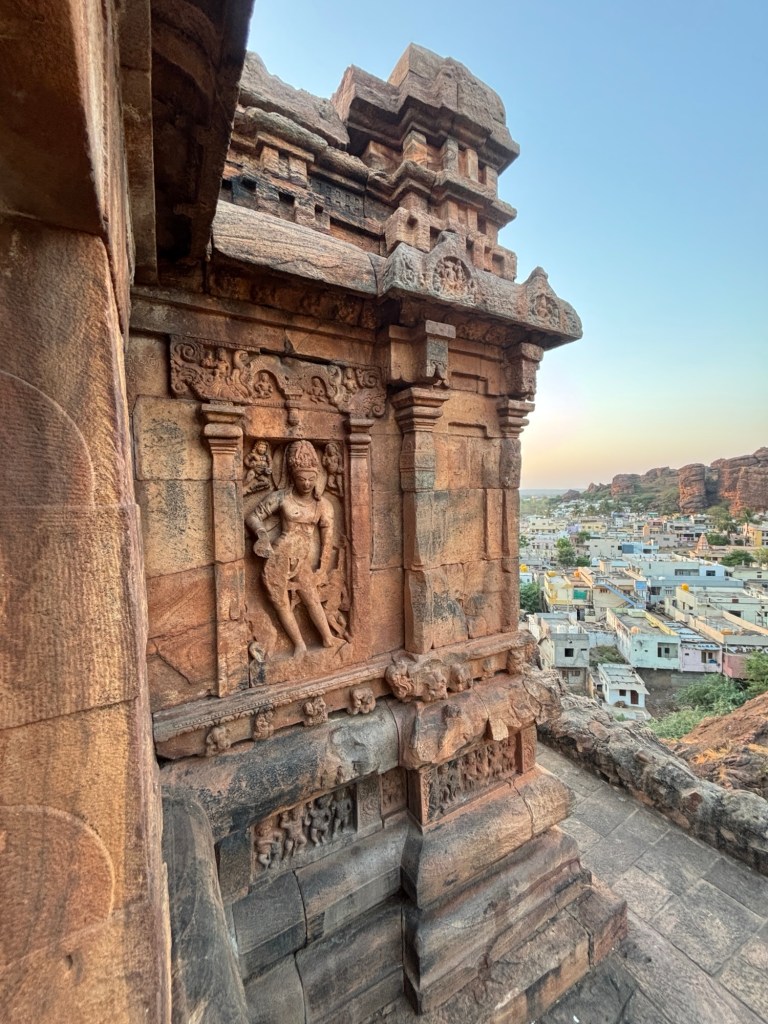
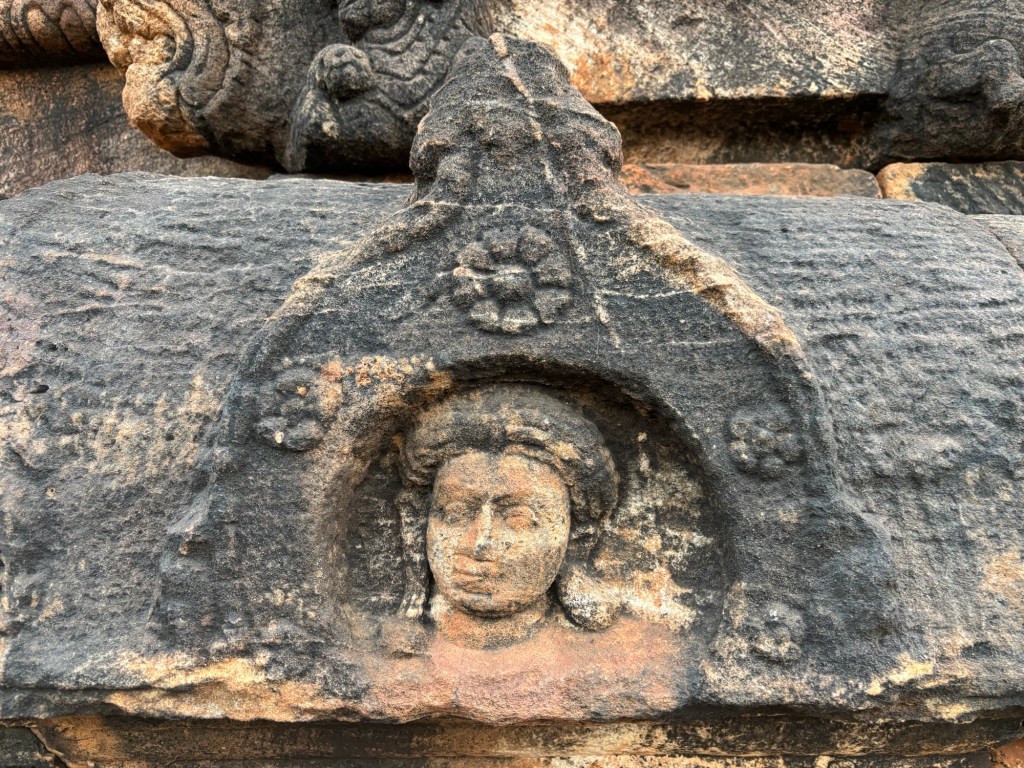
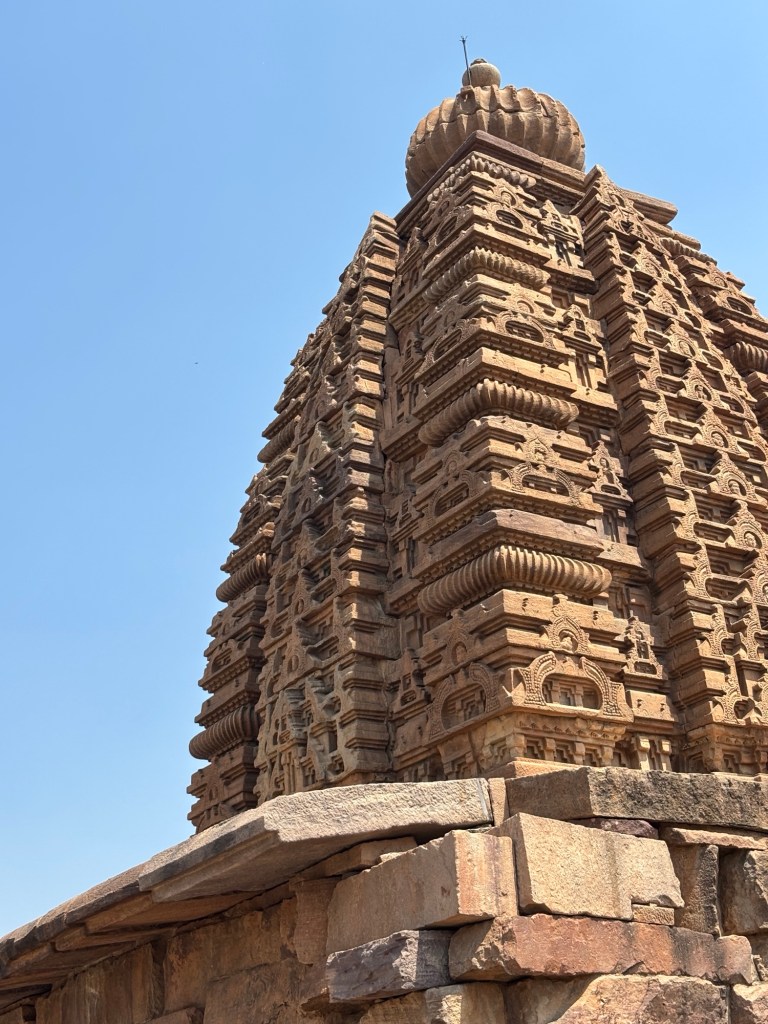
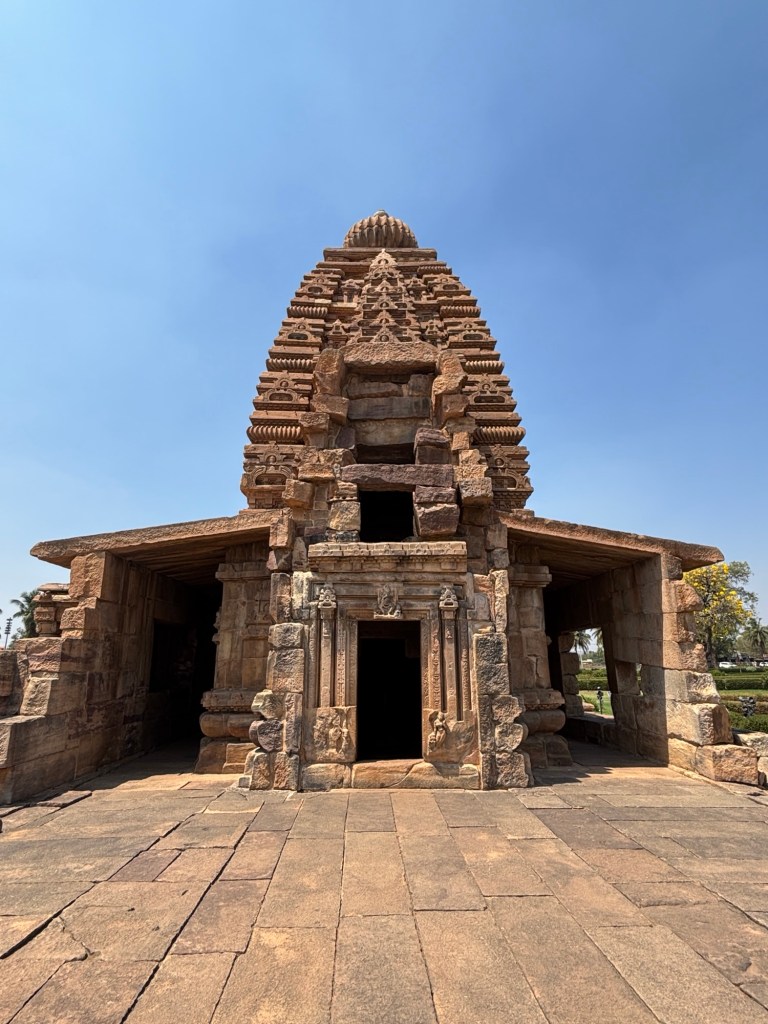
The treasures of Bedami continue outside the rock cut caves and into the temple architecture which was influenced by the Nagara style of North India.
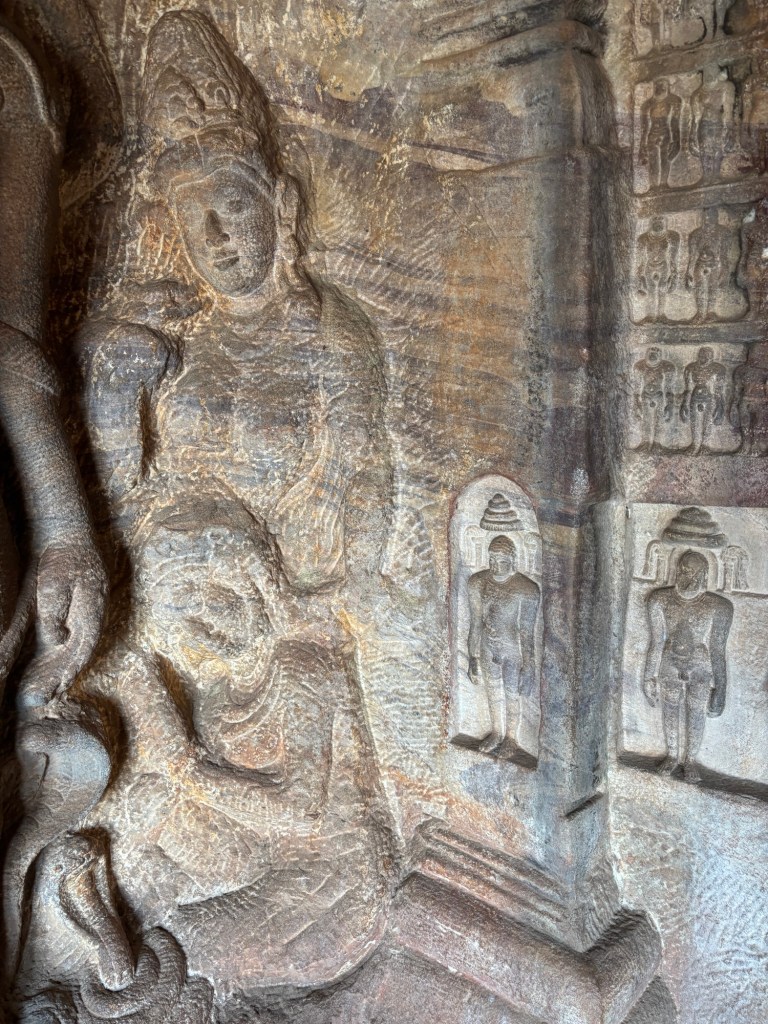
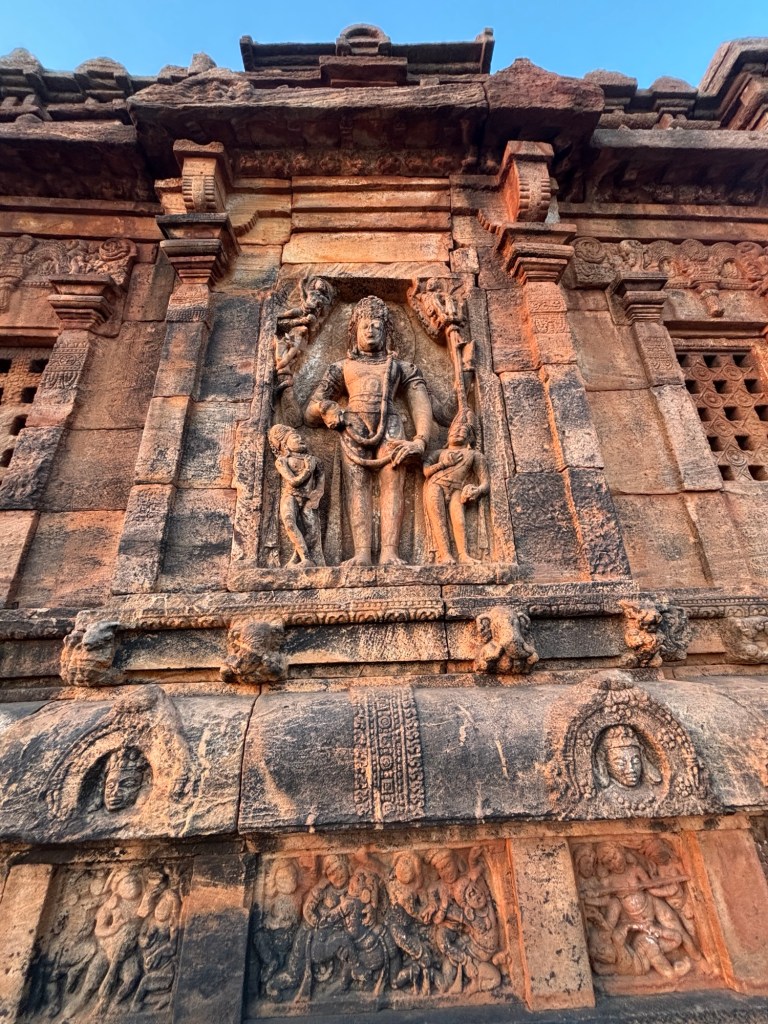
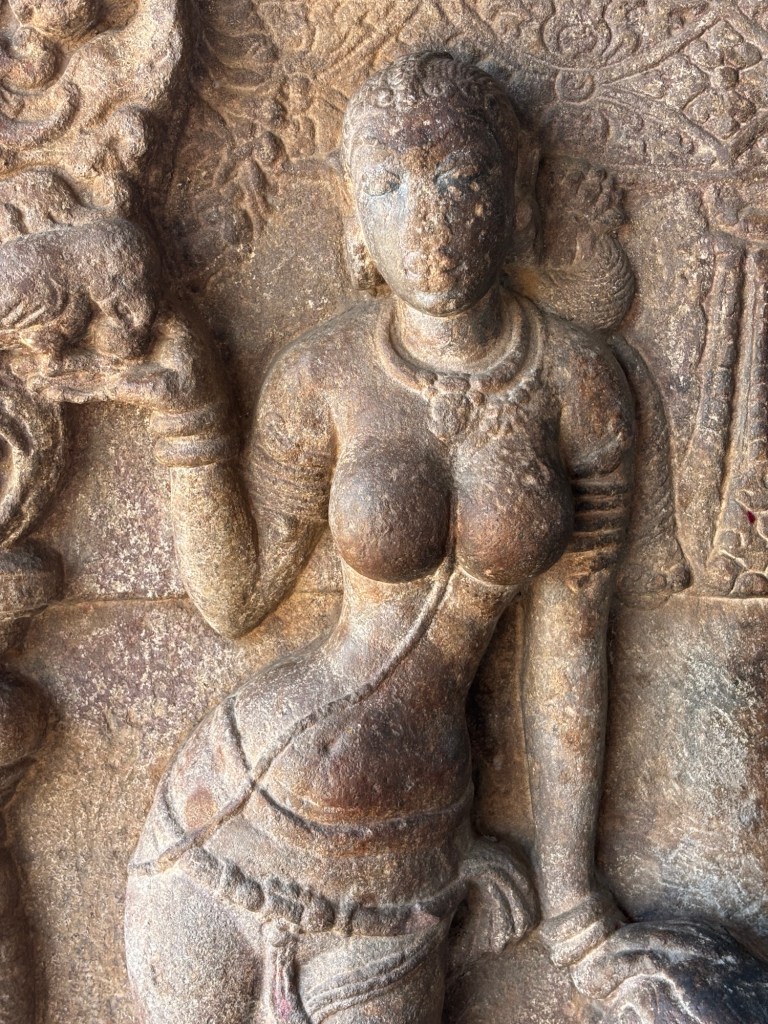
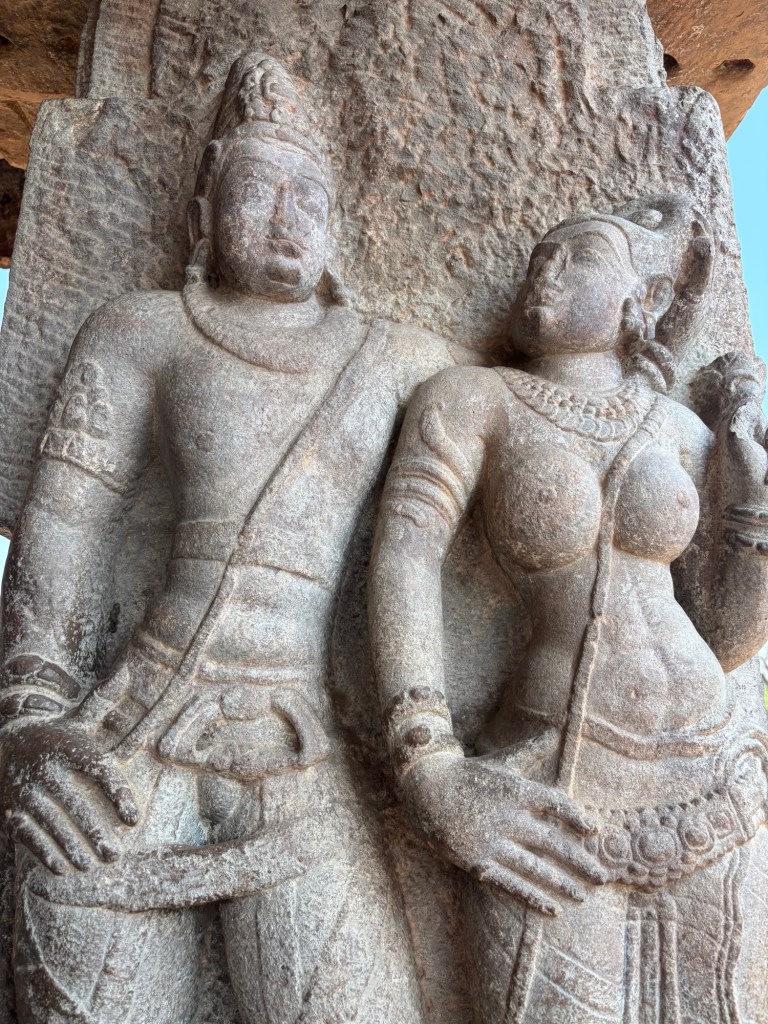
The residual traces of iron or ferrous from within the stone have slowly leached out over the millenia, creating a permanent stain, a palette of soft red hues. The carving of this delightful contrapposto nymph deploys a characteristically fluid, sinuous outline. She might also be referred to as an Aspara, or “celestial beauty (female sculpture).”
Contrapposto (where the weight of the body is shifted on to one standing leg) first appears in Greek art in the fifth century BCE. Bronze figures of South Indian Chola art are notable for the animated motion of their hips. But it is also seen extensively in stone sculpture and is found as early as Alexander the Great’s campaign in India (327-325 BCE).
By 600 CE, Indian sculptors had achieved almost complete mastery in the portrayal of the human form and were able to model it with perfect anatomical coherence under transparent clothing.
P. Thomas, in his book, Kama Kalpa: The Hindu Ritual of Love, (D. B. Taraporevala Sons & Co. Private Ltd., Bombay), 1959, writes, “Indian temple art is so incredibly pure and innocent even in its most outrageous representations. It never works on the principal of taboo or of the forbidden.” It seems to suggest that, “true peace and sainthood could nort be achieved by deniel and rejection of the physical, but by its trancenence. To transcend the purely physical, one must first fully accept and embrace it; to go beyond the world of the senses, one first has to be able to exercise them to one’s upmost capacity.”
In this way, there is often a blush of the erotic in Hindu sculpture. It represents an acceptance of physical sexuality that is absent in the West. P. Thomas continues, “Indian art is entirely unique in the world with its “total absence of ‘sin,’ of the forbidden, or the taboo. There is no catering to fetishism, specialties, or deviations. Yet everything is shown, but with a naïveté, innocence, and purity that puts to shame every thought of prurience.”
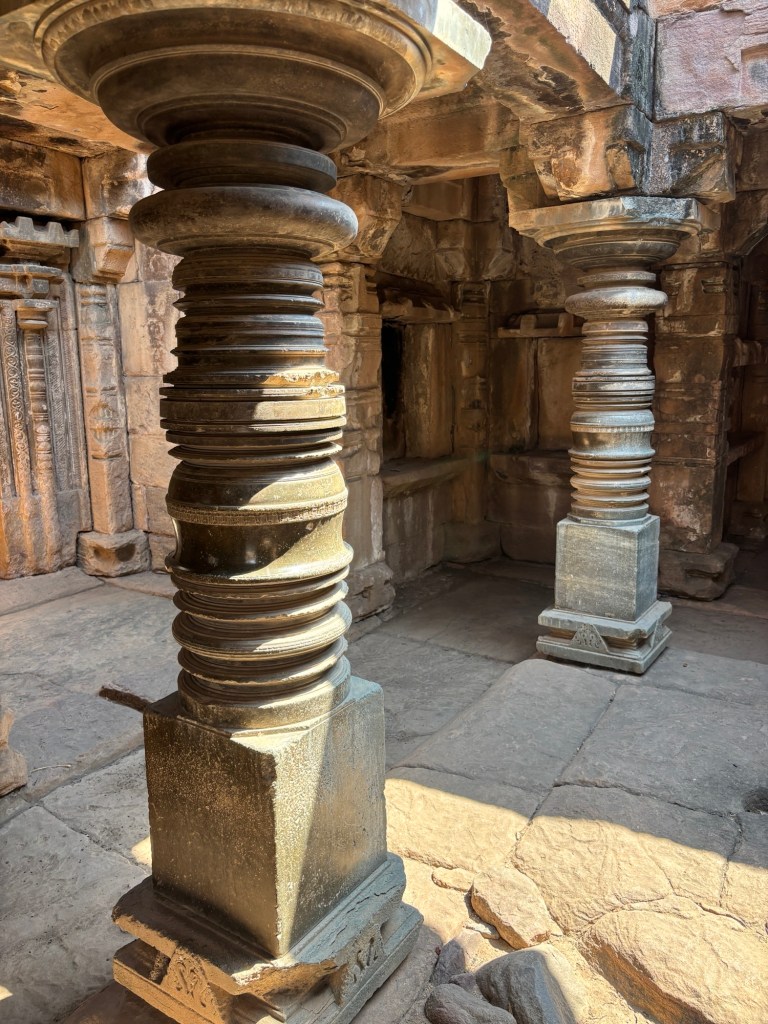
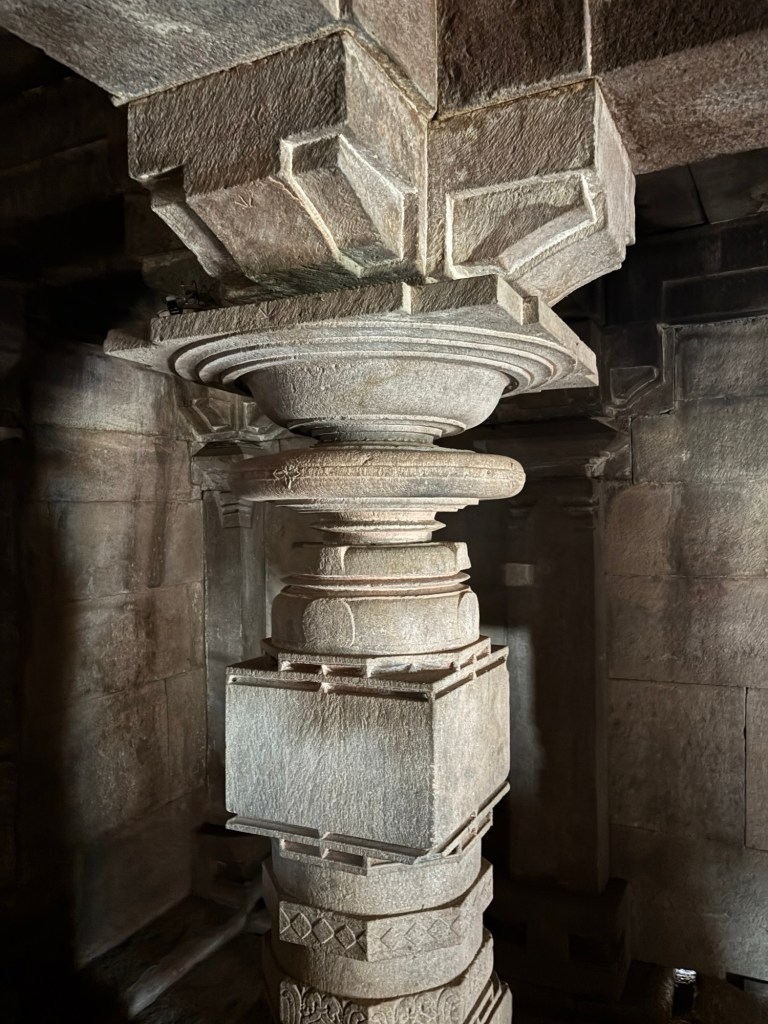
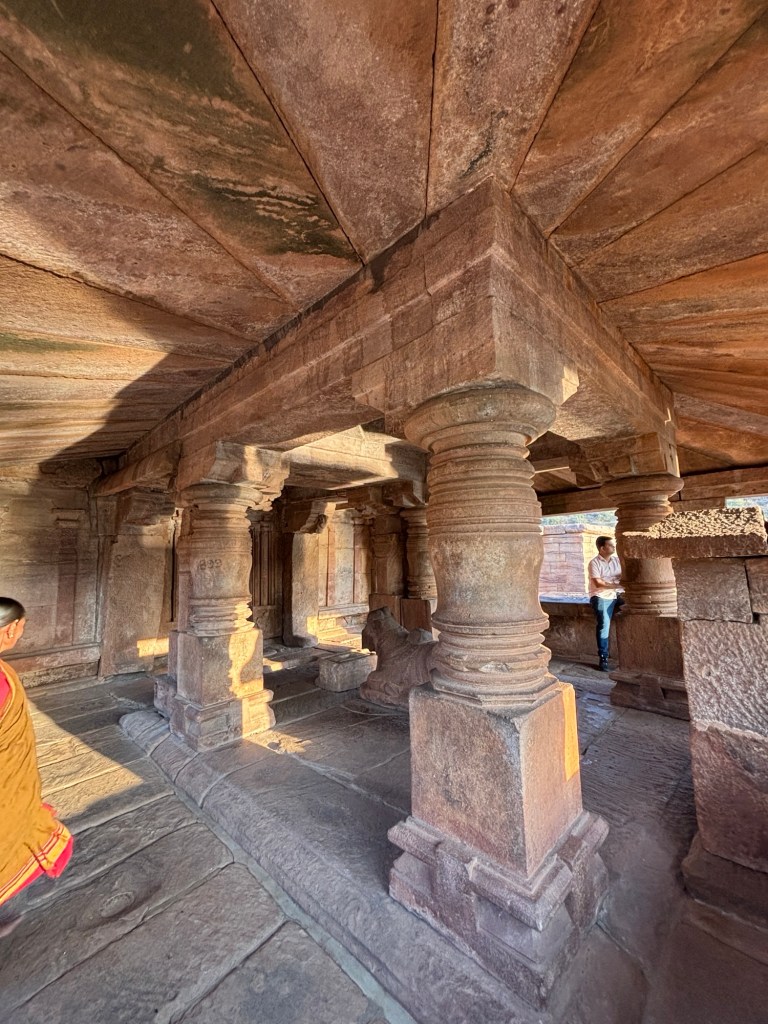
These lathe turned columns occur at Aihole (a day’s ride from Bedami) and reportedly date from the 8th century CE. Not all the lathe turned columns are visually successful.
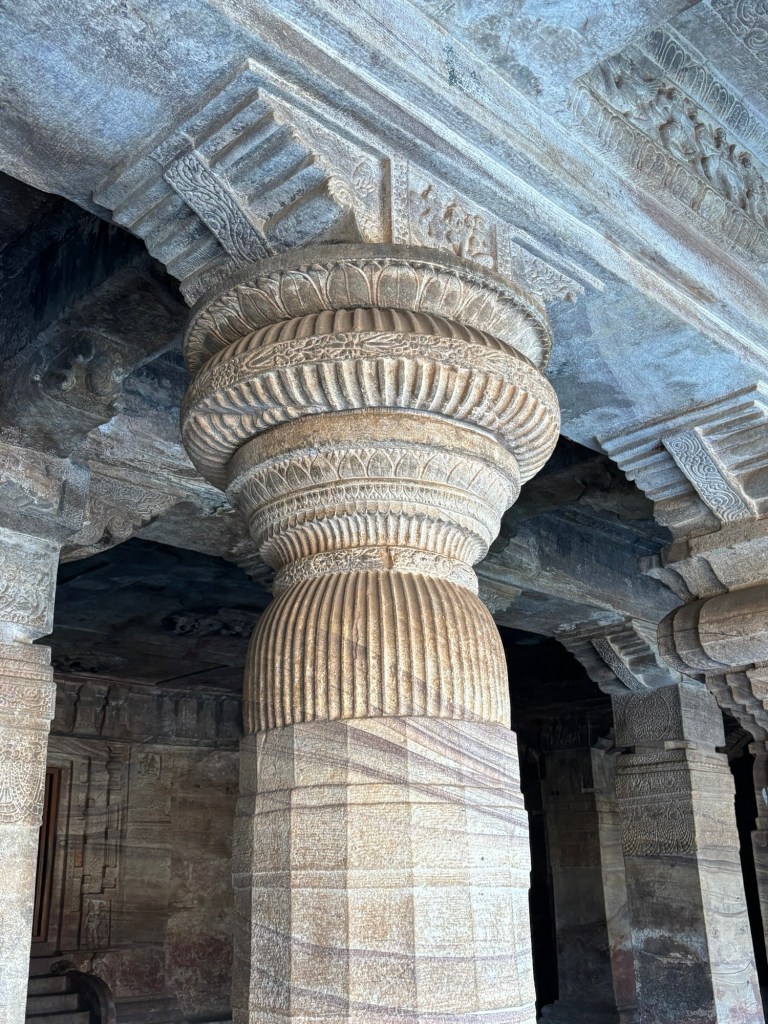
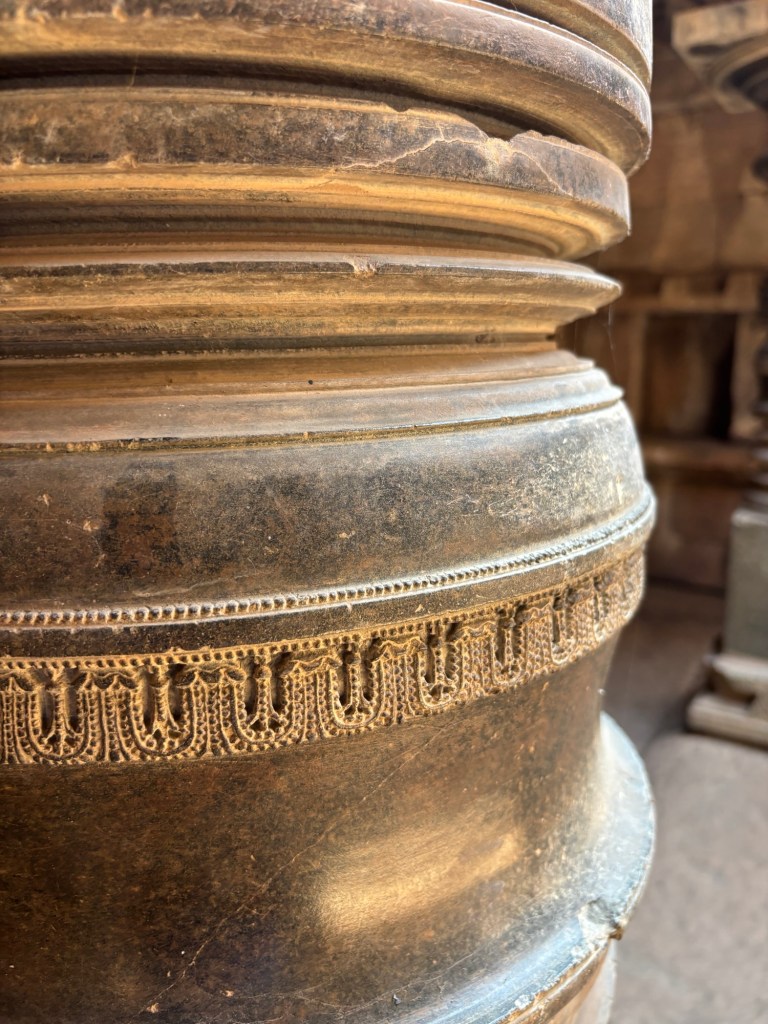
Columns worked on a lathe, a technique commonly encountered even before the year 1000 CE, resembles a child’s top or pile of plates of varying sizes, the sequence of cylindrical protuberances and undercuttings are interrupted by cubic elements. Technically, this is very difficult to achieve since the heavy stone must be supported horizontally and the cutting of the stone using soft iron chisels is not easily accomplished.
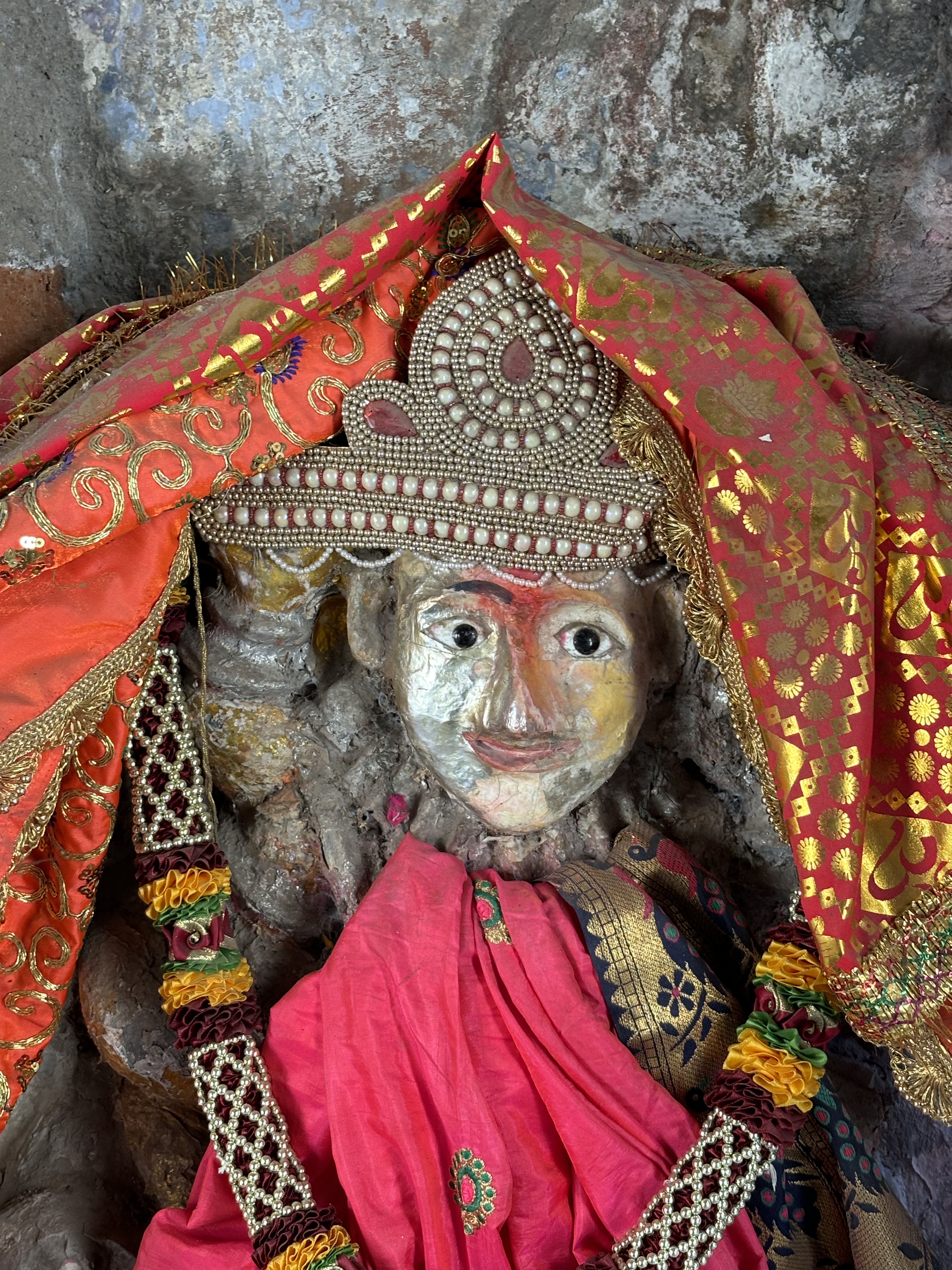
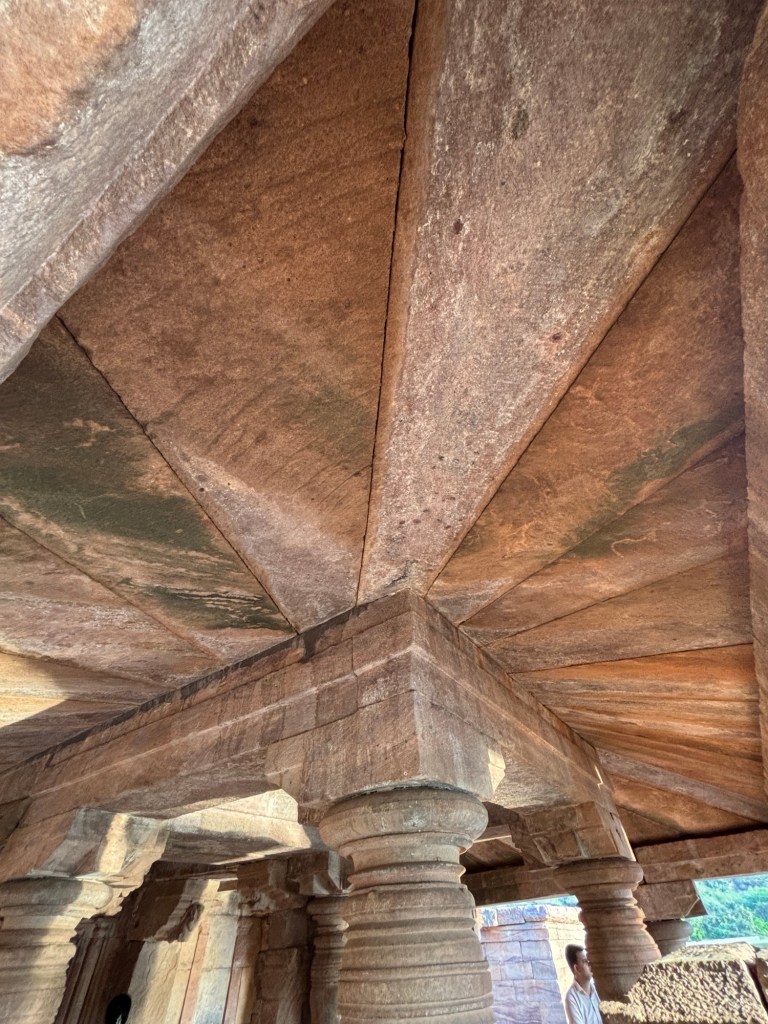
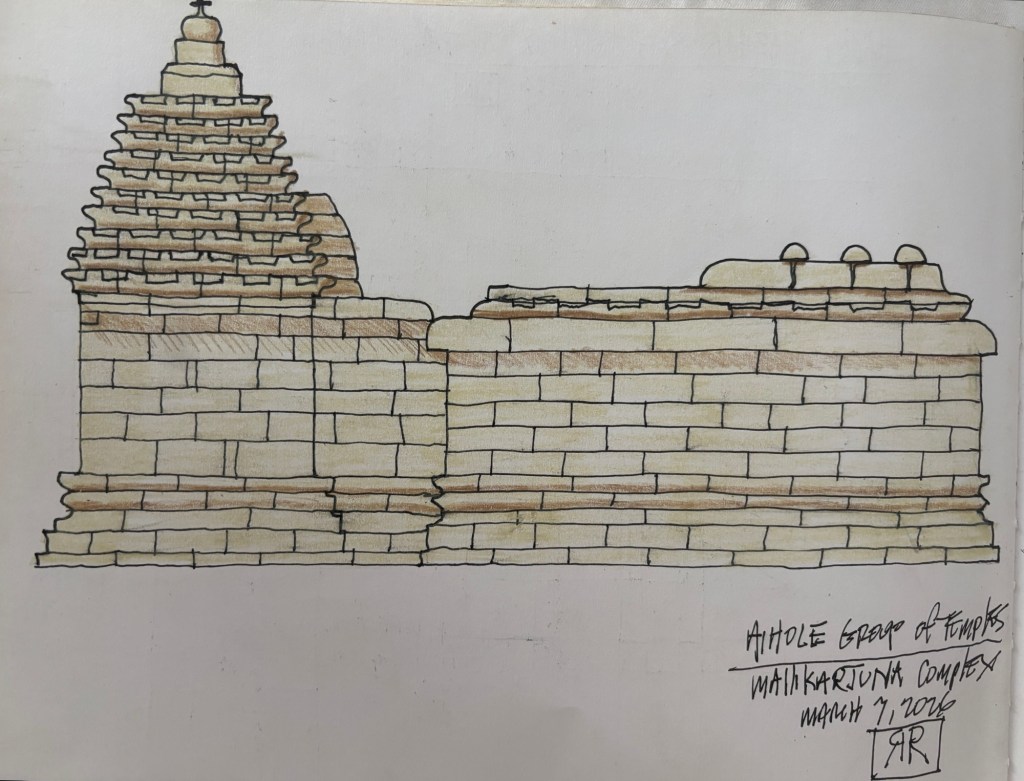
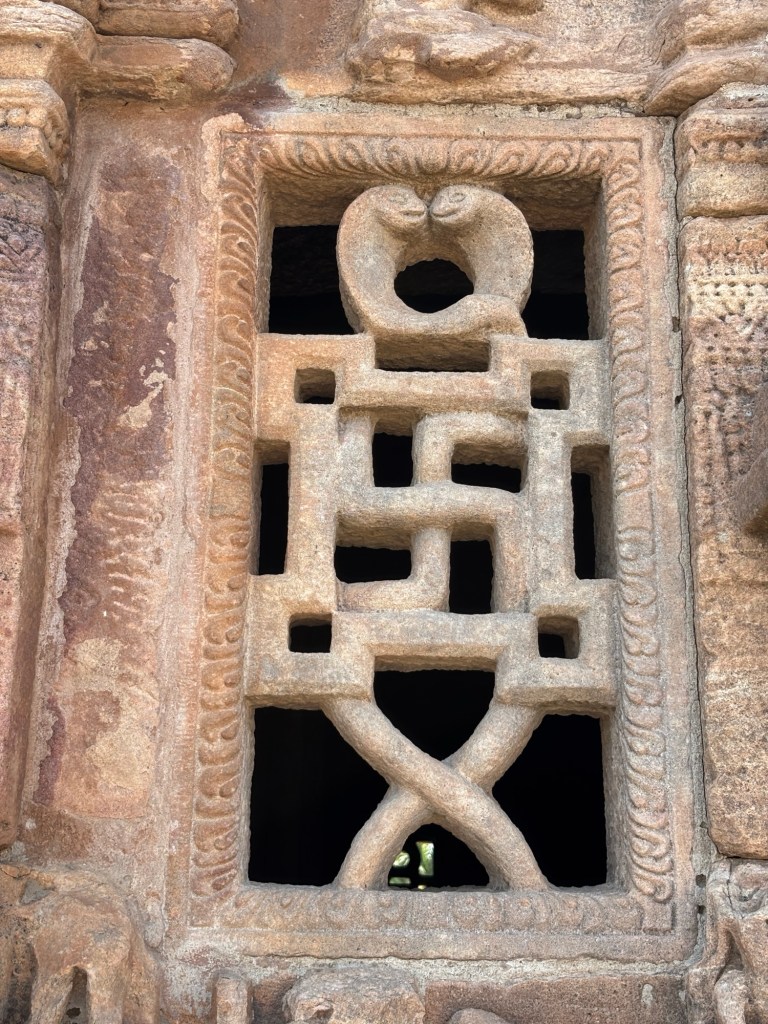
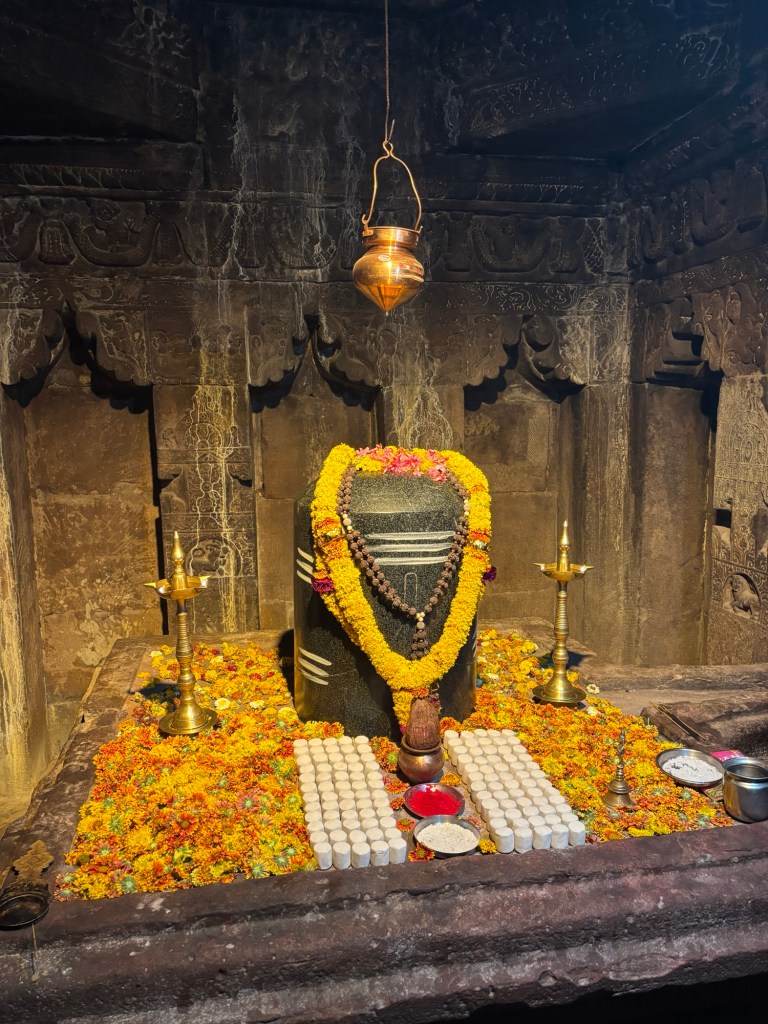
This column was turned on the lathe, and then carved in minute detail. The craftsmanship is exemplary. This form is much more pleasing, a blend of lathe turned and carved elements. Note how the spanning quartzitic sandstone “planks” have been carefully tapered to bridge from the exterior to interior columns. In the high heat (97F, 36C), I wasn’t able to sketch as much as I would have liked. But I find it enormously satisfying when I can manage it. At the nearby UNESCO site known as Pattadakal, the temple has been partially dismantled, offering a rare glimpse into the construction method. This “jalis”, or stone window screen, incorporates the rising Kundalini snakes that are the precursor to the caduceus, the traditional emblem of Hermes. Even in the UNESCO site Pattadakal, there are active temples where worship takes place. The emotional charge such spaces continue to carry is palpable. Indeed, in these charged spaces, the archetype of the divine is highly charged and the veil is very thin.
 Bike Touring India
Leave a comment