The Hindu architecture of the Deccan peninsula is based primarily on the simple post and lintel. This form arises out of Egypt almost 5000 years ago and made its way to the subcontinent, as far as I can tell, almost 2000 years go, or in the first century CE. It continued to do the heavy lifting in the Southern Deccan architecture until at least 1700 CE. The dome and the arch were unknown, with the exception of a few minor examples seen in the advanced civilization at what we now call Hampi (circa 1520 CE).
The limitation to this essential and primary Hindu form is the spanning granite beam which seems to meet its clear-span limit at 20’ (for a longer discussion on this empirical limit, see my essay titled, Tamil Nadu, a Lithic Assessment). This effectively means the largest space you can have without supporting columns is 20’. That outward limit assumes perfect stone (without contraction cracks), and perfect craftsmanship able to extract beams of this size.
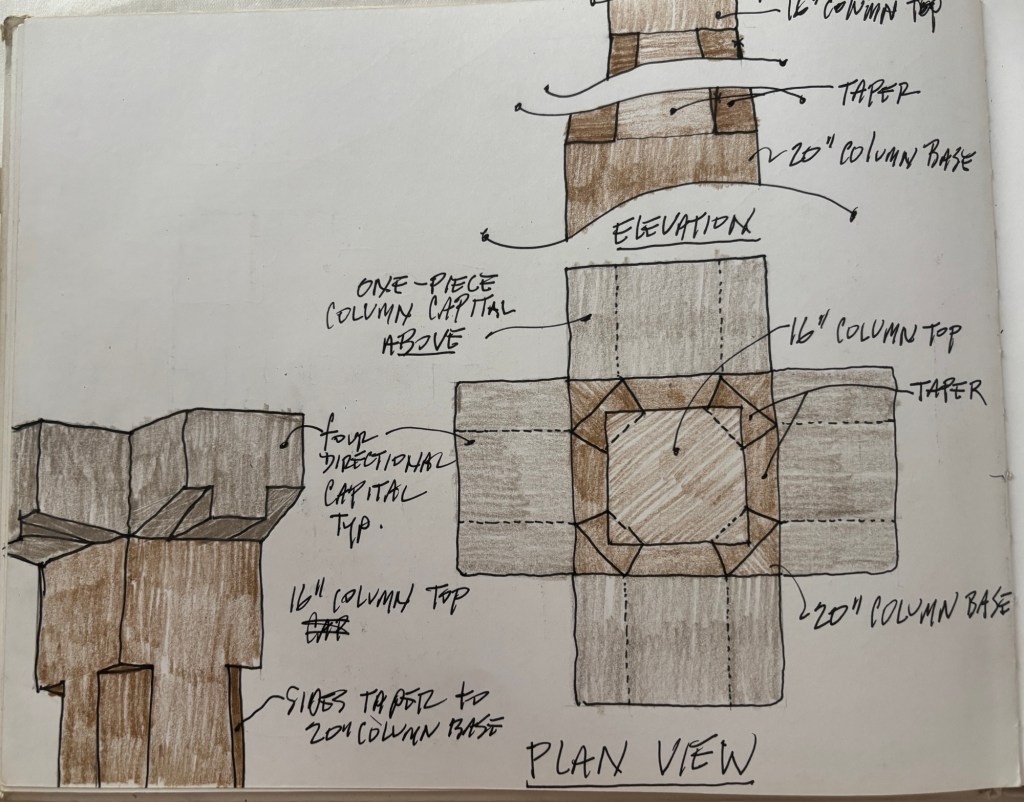
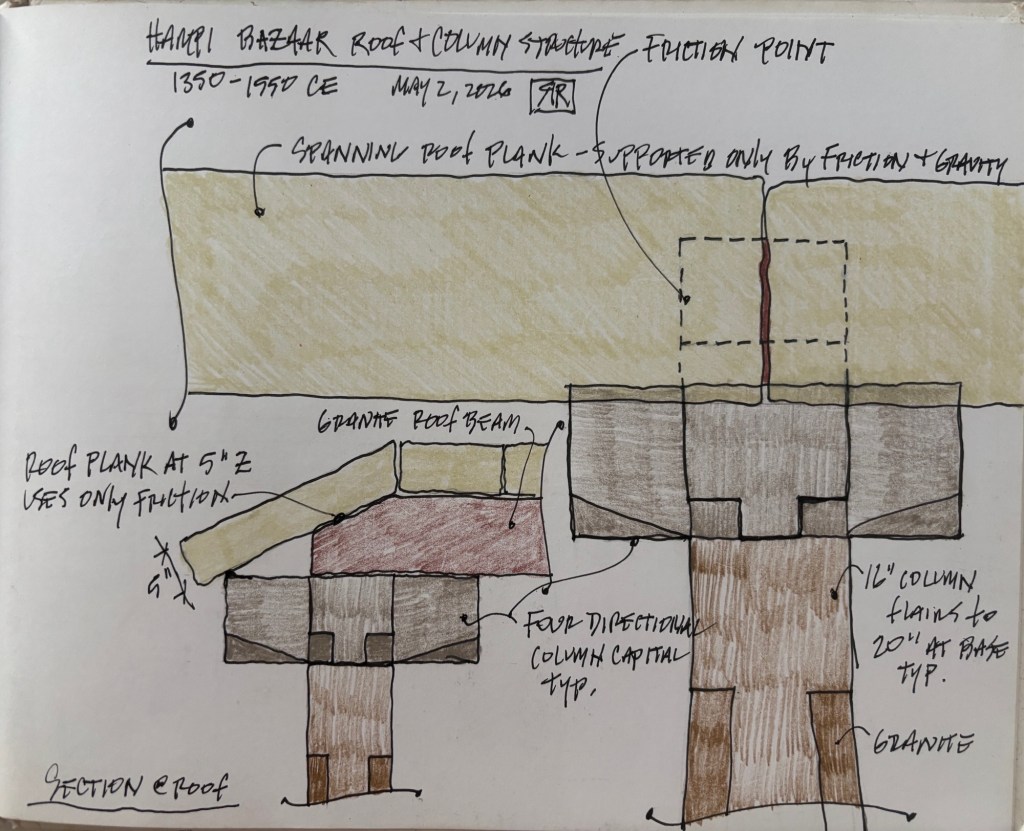
At first appearances, the form looks deceptively simple. Yet on closer inspection, we realize there is nothing simple about this. What exactly is holding this together? Where are the diagonals? What is solving for sheer? How are the columns affixed and upright? What is keeping the spanning, angled roof beams attached? How has this stood for 600 – 900 years?
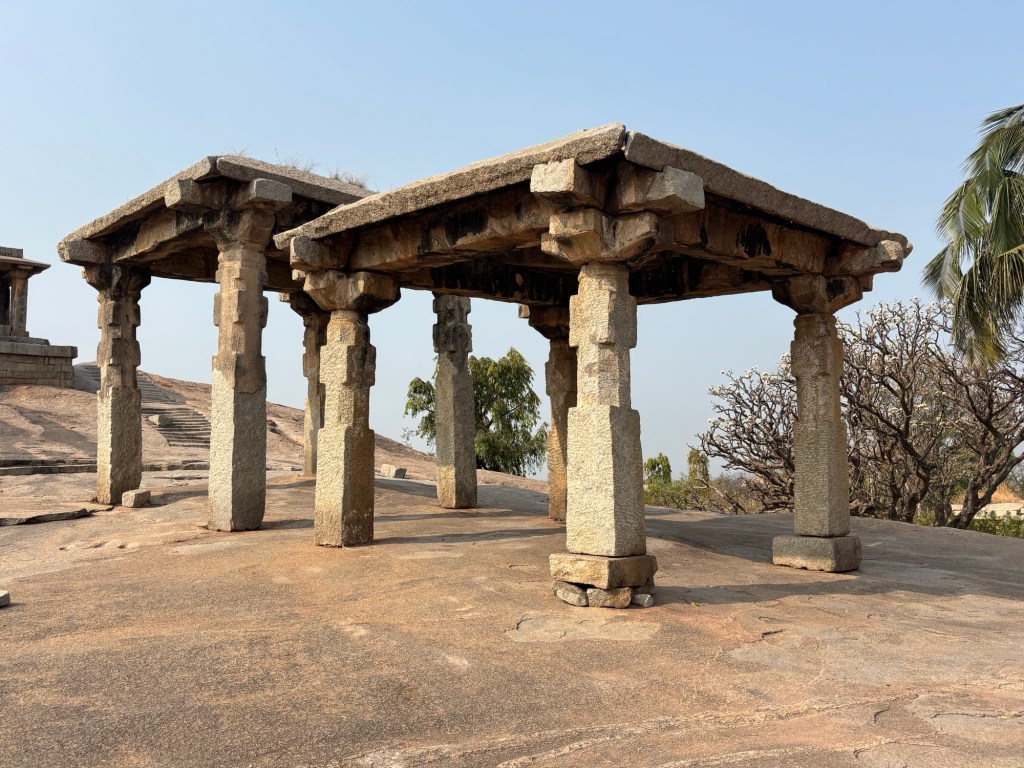
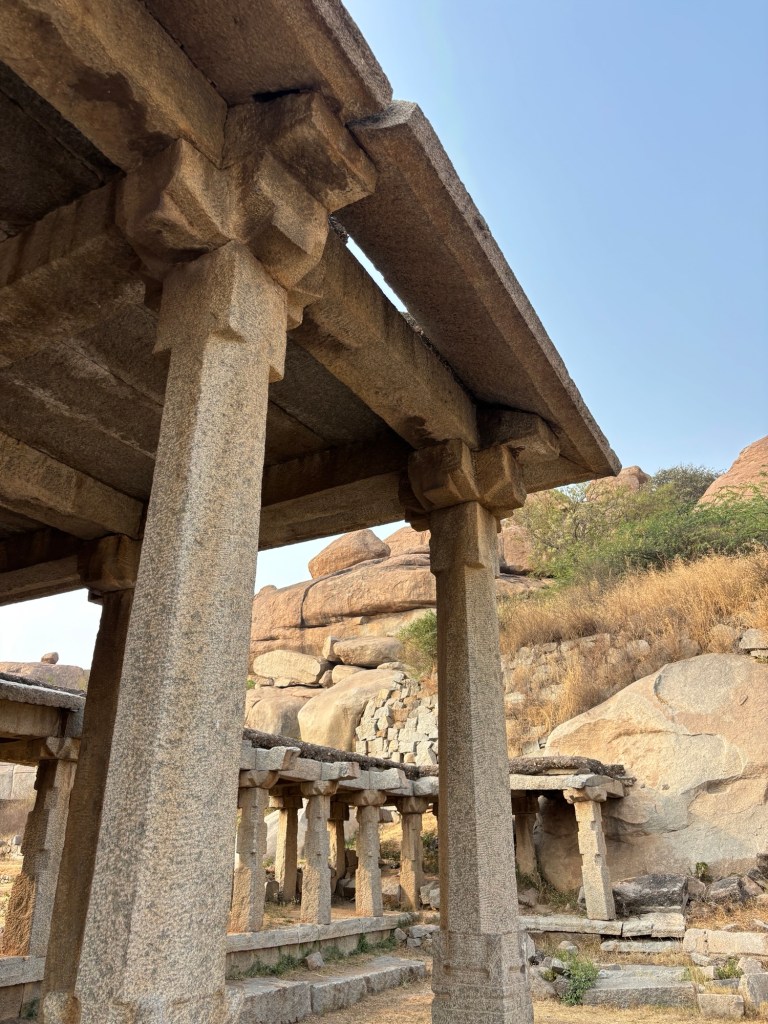
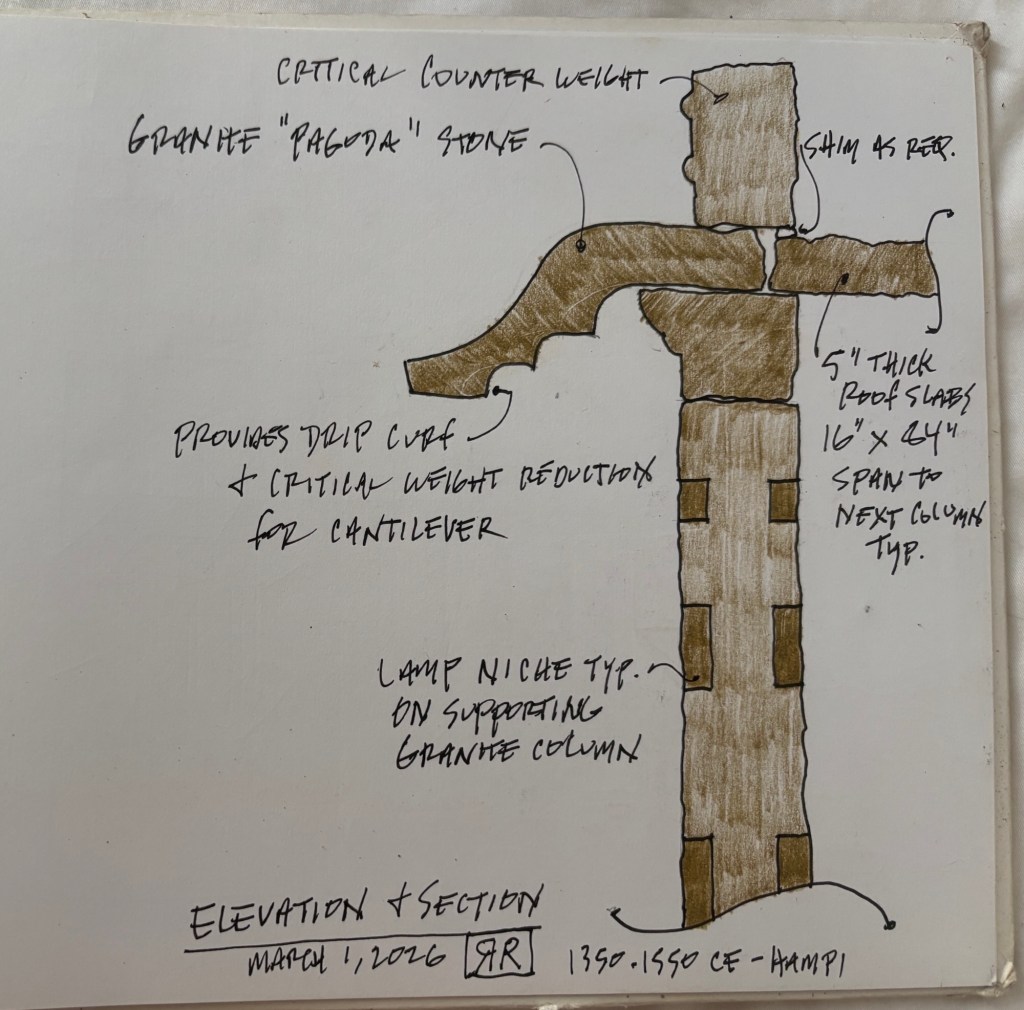
There are two variations on this sloped roof beam. I’ve drawn both. The first and most simple, uses only friction to hold the sloped roof stone in position, although there are also options (more rare) where this sloped stone is notched into the projecting stone capital. These 5” slabs span 10’ and even 12’ before they find support on the next column capital.
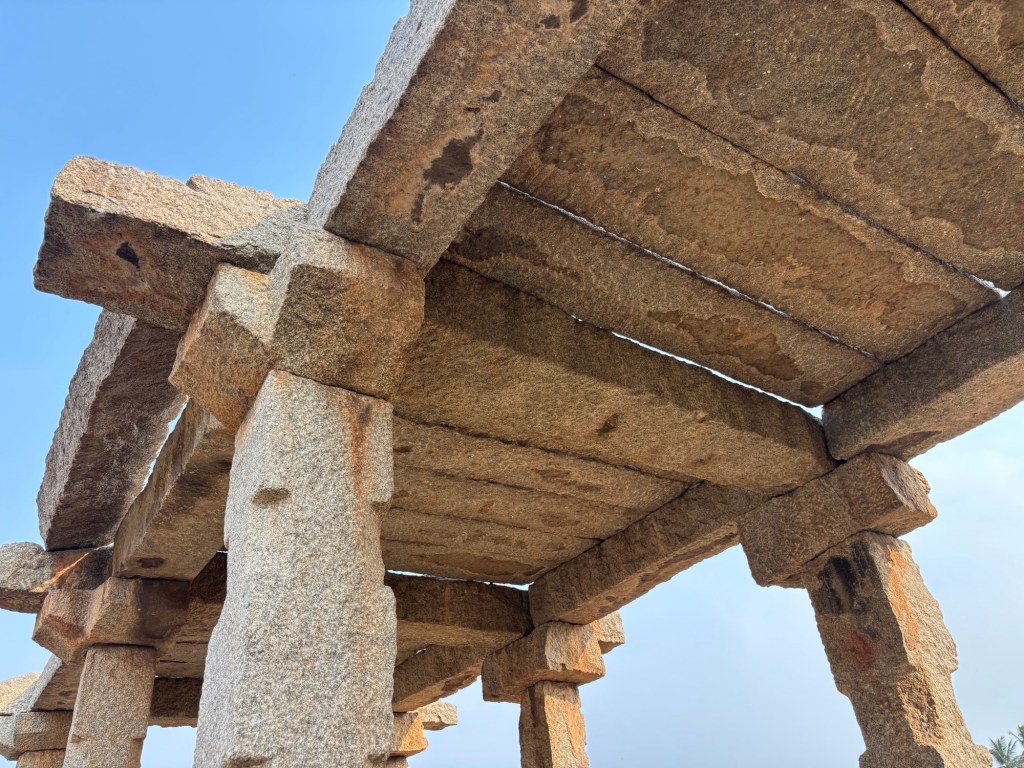
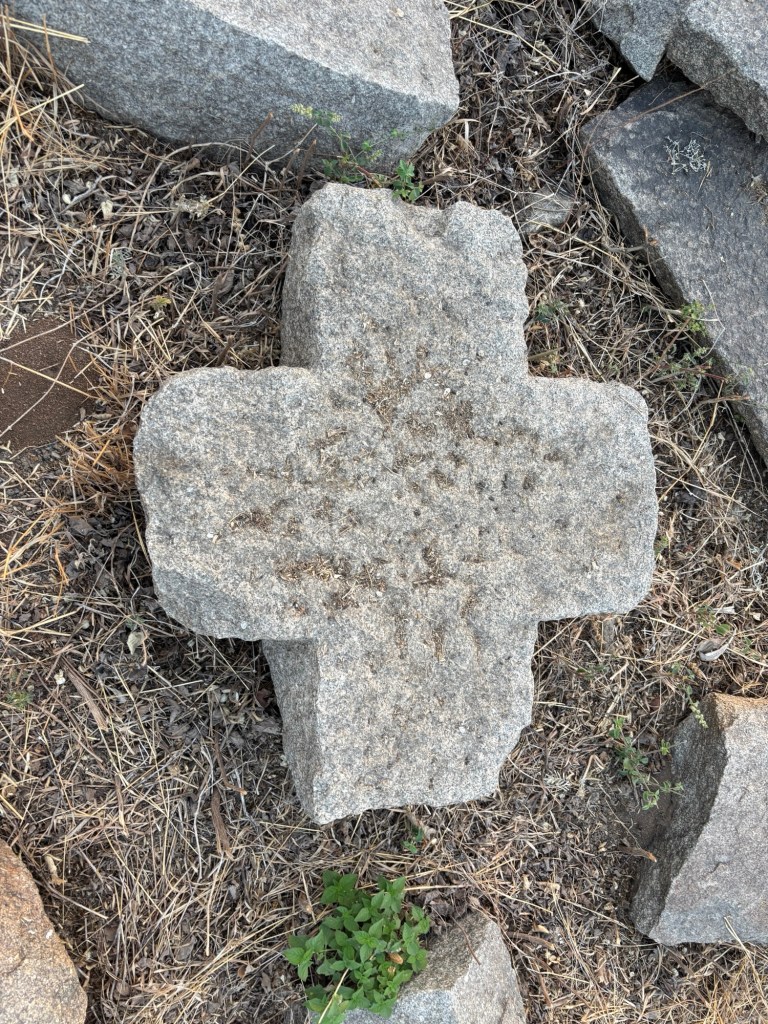
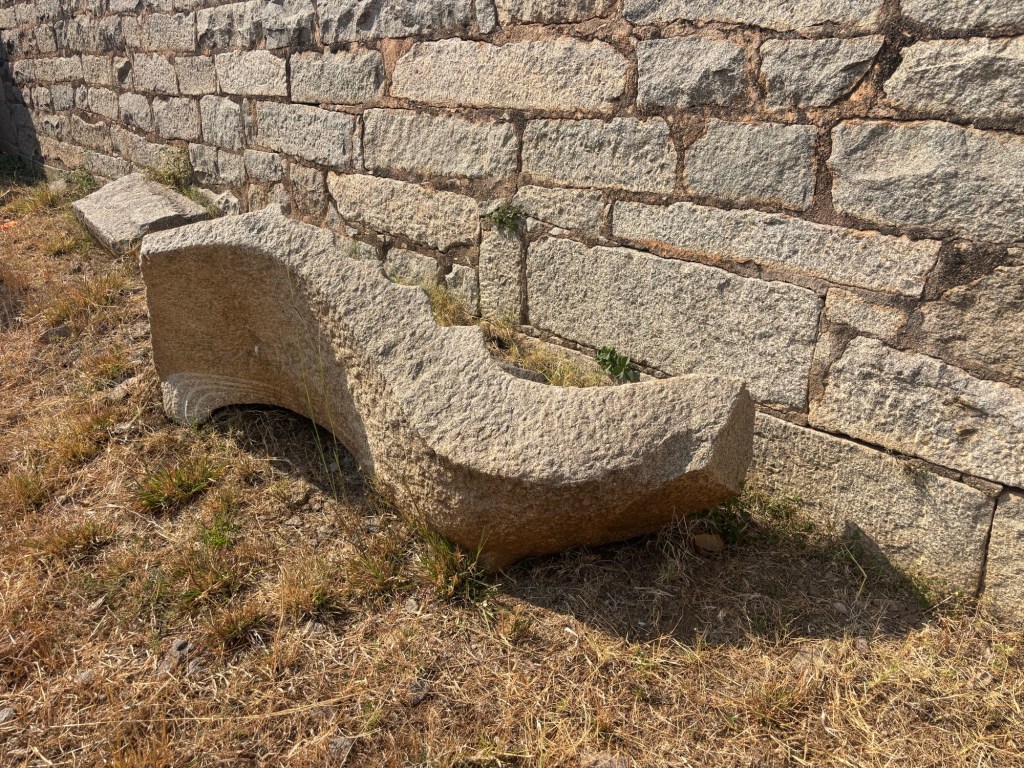
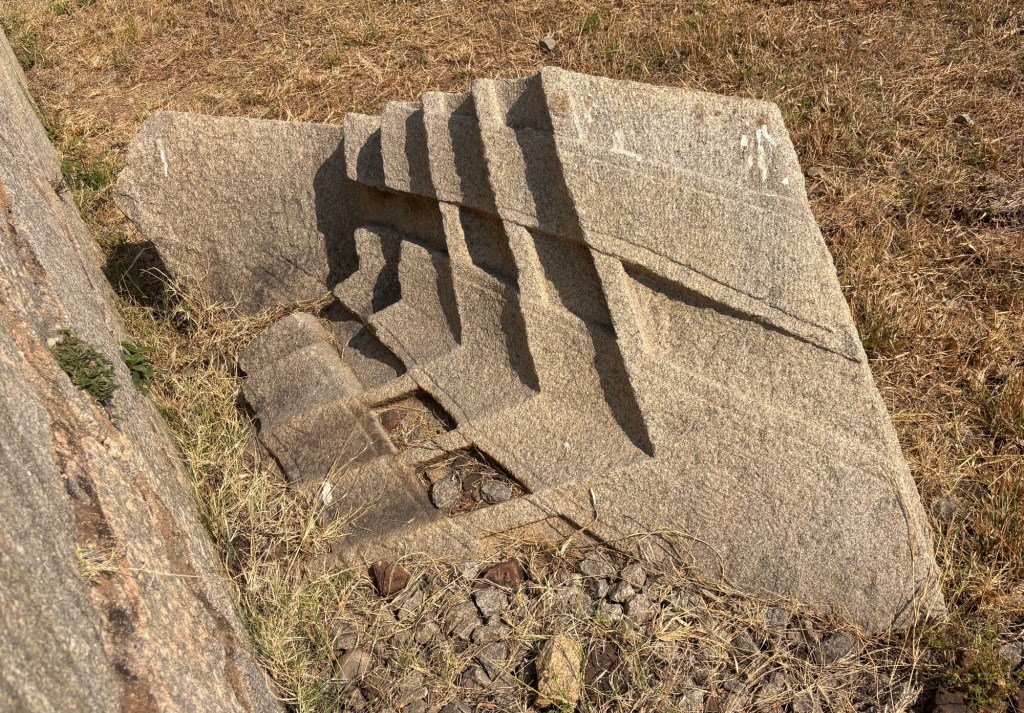
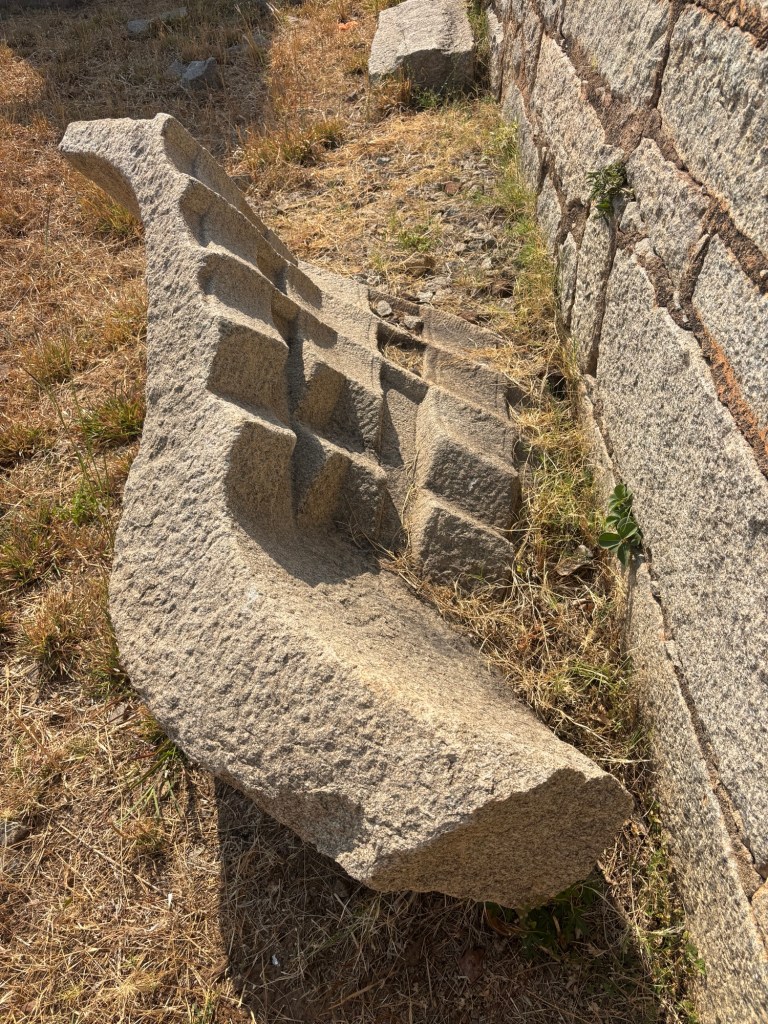
The second sloped, roof system is even more daring. What they call the “pagoda roof” employs a counterweight for its stability. Essentially a giant, projecting stone cantilever, it hangs unsupported almost a meter (39”) past the granite beam aligned with the column below. These are very large stones and expert carving would be required to successfully shape the curve so that the alignment with the next stone in series is successful. The secret to their stability (how they remain on the building without mortar, pins, or other modern methods) is the heavy counterweight that bears down from above.
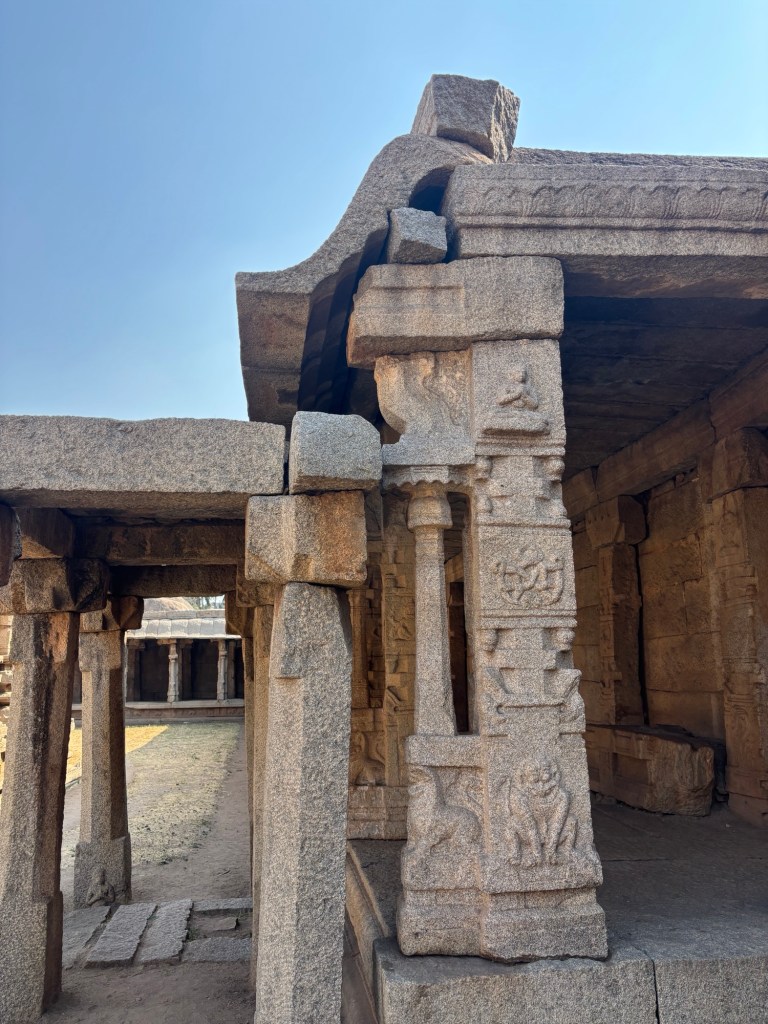
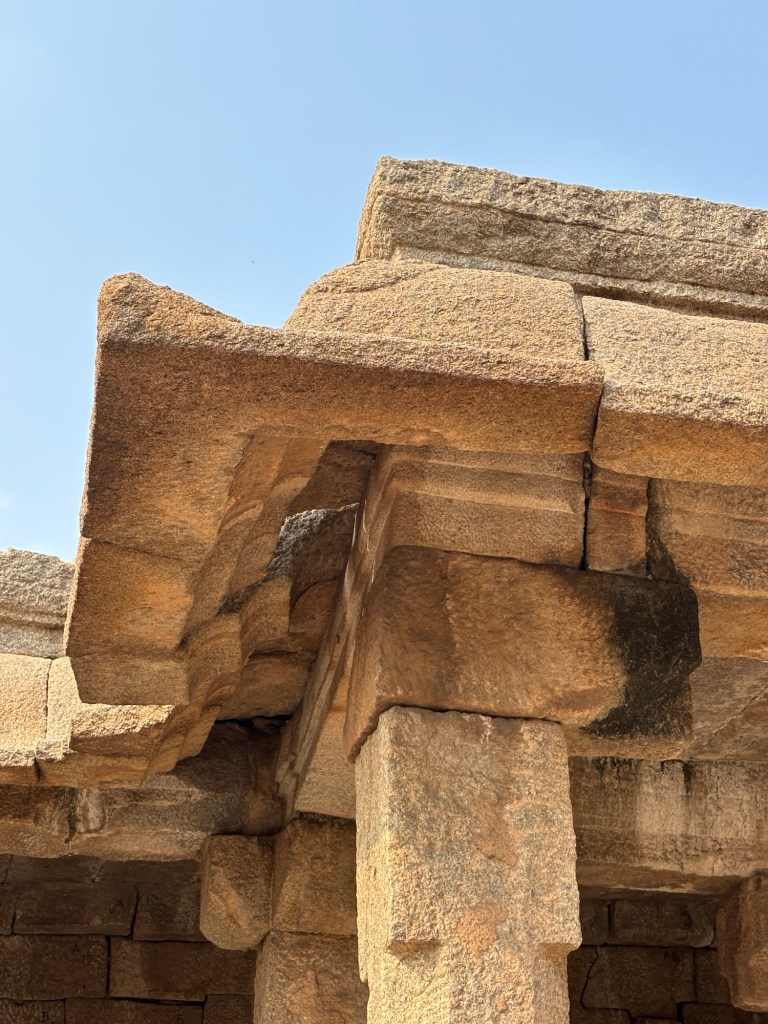
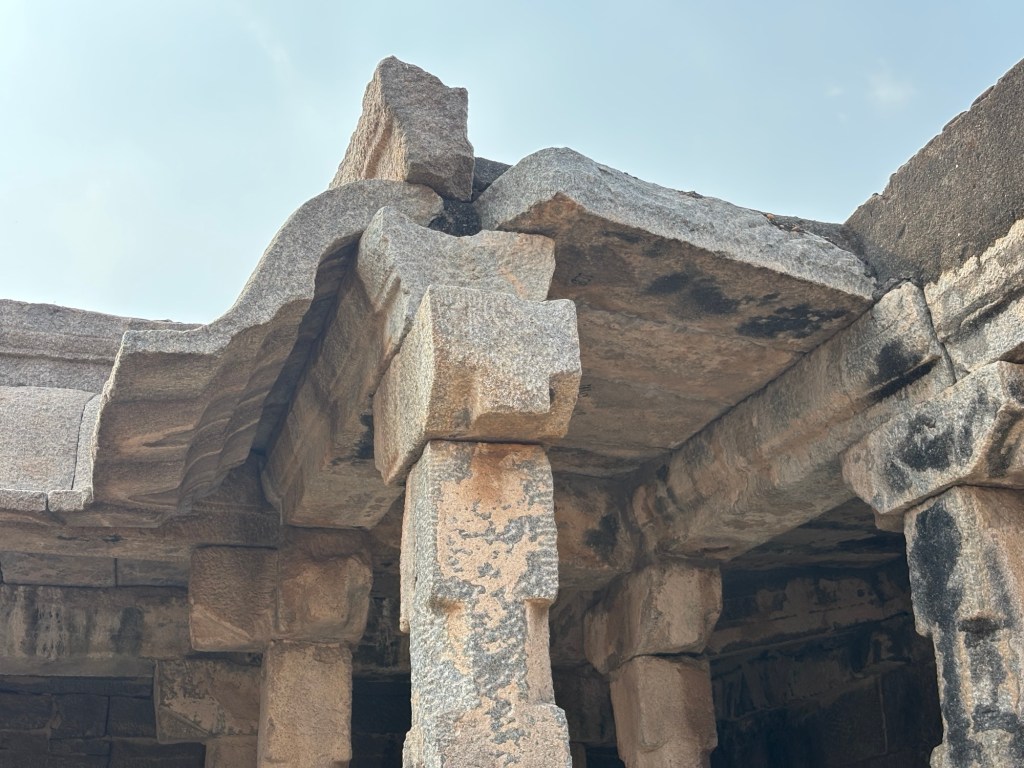
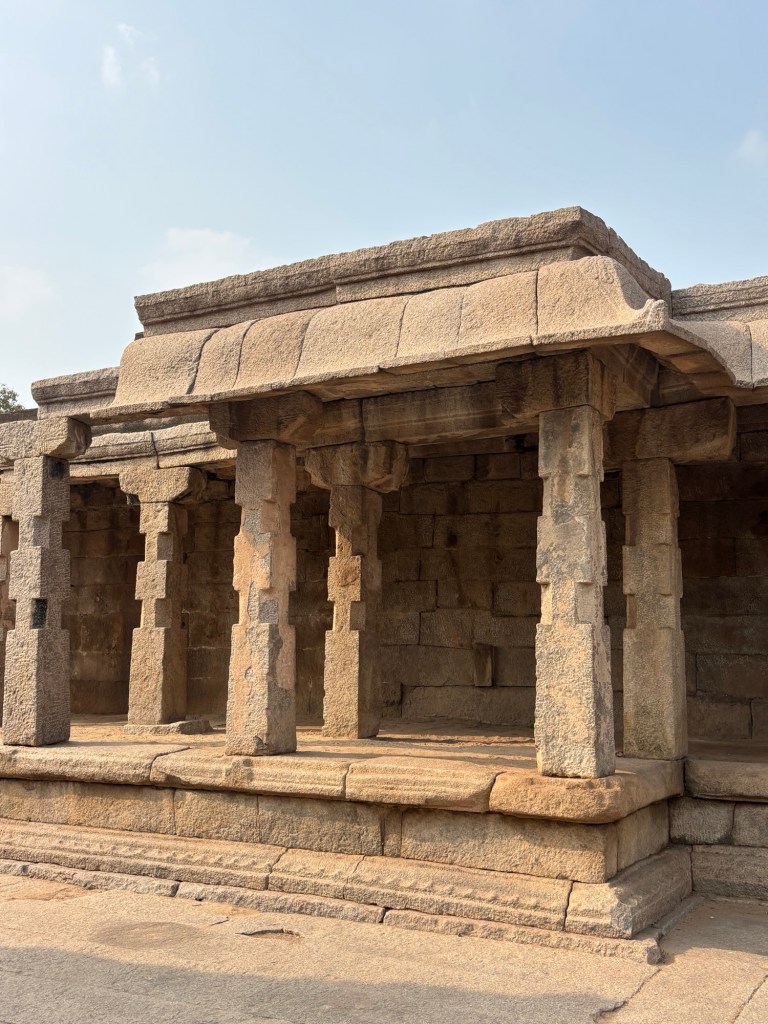
Not content to perform this basic masonry and structural wizardry, at Hampi we find two story versions. If this seems unsafe, I would say, “trust your instincts.” It reminds me of acrobats at the circus. Fifteen flaming balls in the air and they decide to do it while standing on someone’s shoulders. What could possibly go wrong?
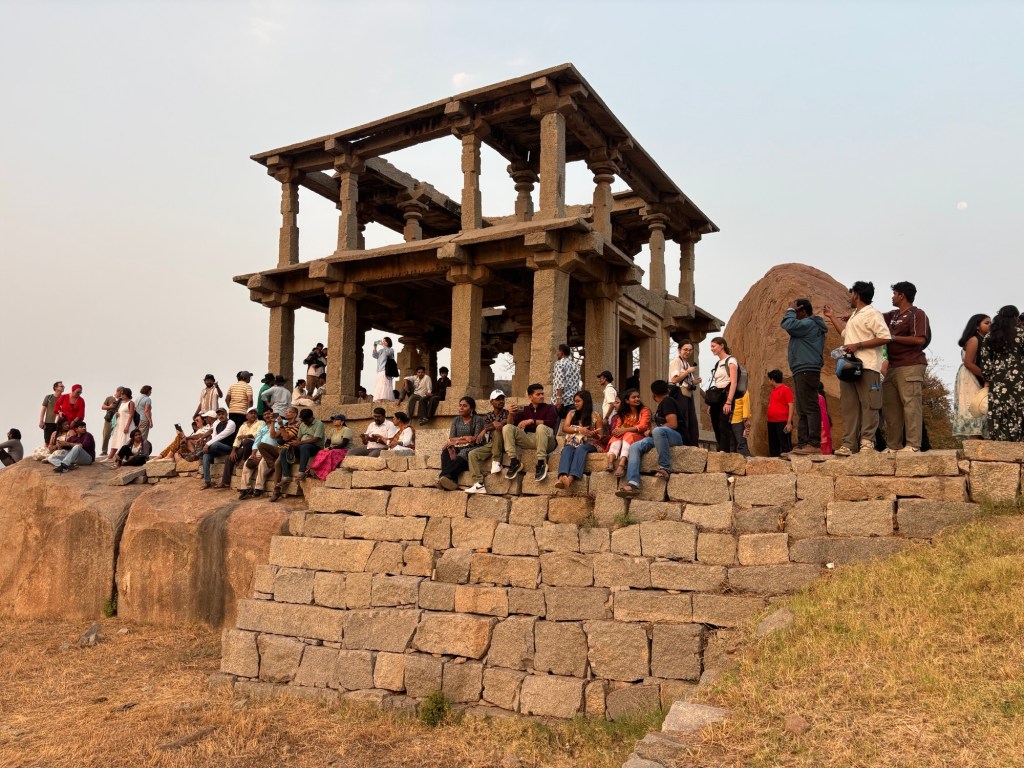
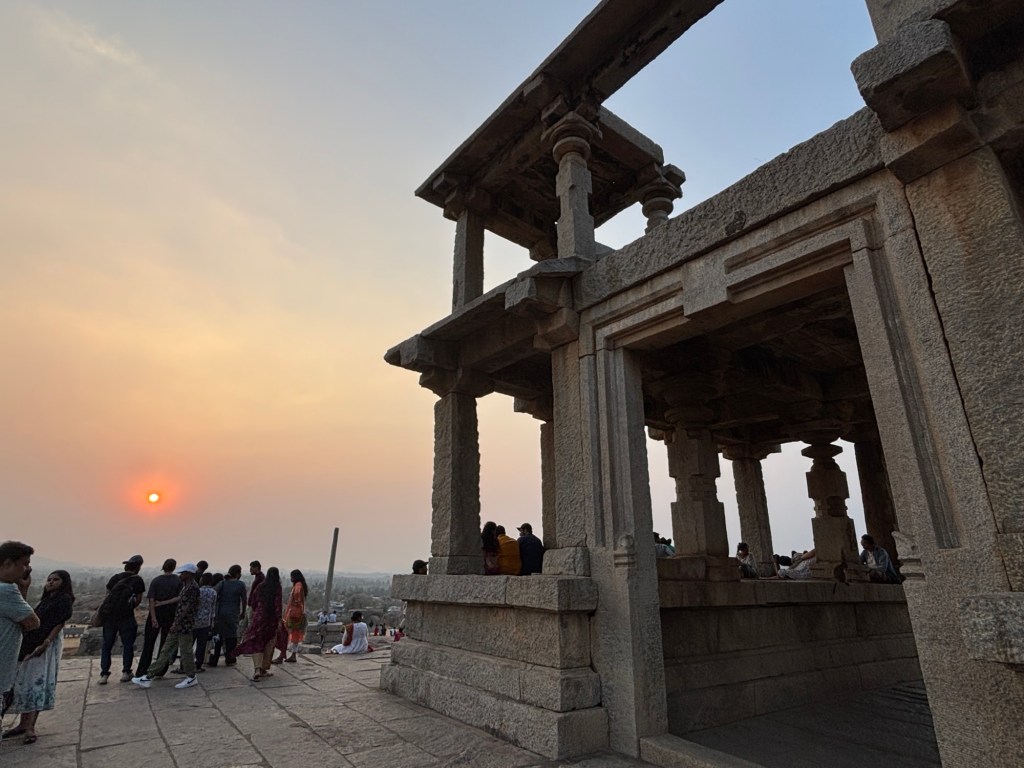
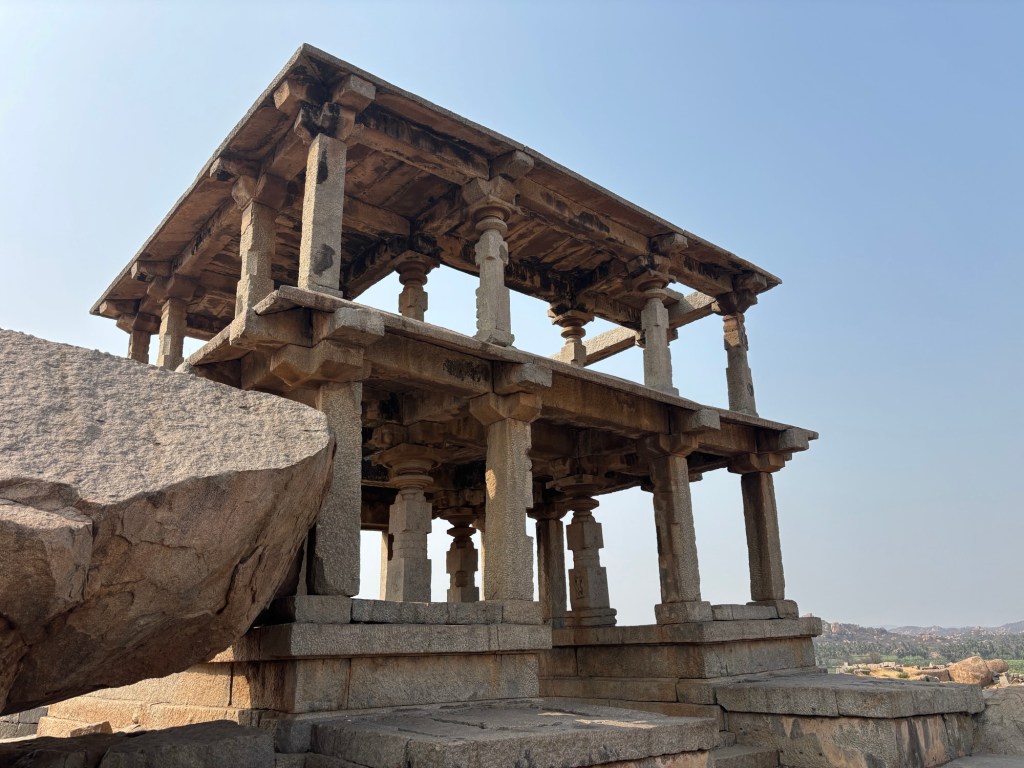
Bravo! Right? Bad asses.
 India Bike Tour
Leave a comment