If you live long enough, you begin to see radical changes in the world you thought you knew. I started working in China in 1997 when there was only one hotel in Shanghai foreigners were allowed to stay in (the Peace Hotel) and it was unheated. Across the Bumd was a rice patty called Pudong. There were no permanent structures there.
I first moved to Seattle in 1979, couple years after a guy named Howard Shultz bought a four-store coffee chain and renamed it Starbucks. About the same time kid named Bill dropped out of Harvard and started a company called Microsoft. I moved to London for grad school the following year, carrying my portable typewriter as carry-on luggage.
I first came to India in 2000, at the height of my entrepreneurship years. I spent time traveling around the NW of india buying up antique stone pavements from the Haveli’s in Rajasthan that had fallen to ruin. Most of these grand homes were abandoned, and the worn antique stone had no value in the local economy. At the time, my passion project was an effort to recreate the terrazzo tile that I had fallen in love with during my apprenticeship in Tuscany. From mid-2000 to January of 2002 I spent sourcing the original earth pigments to make these handmade tiles in Gujarat, India. The samples we produced were breathtaking and I felt certain of their commercial success. Alas, it was not to be. The factory was destroyed, and the enterprising entrepreneur I had partnered with, lost several members of his family in the earthquake that came the day after my last meeting with him. The Gujarat earthquake of 2002 killed an estimated 25,000 souls and also destroyed the hotel where I had stayed. This was only nine hours after I changed plans and departed unexpectedly for a flight and meeting in Mumbai. Sometimes it’s better to be lucky than good.
Returning to Ahmedabad 22 years later, there was no outward sign such a tragedy had ever taken place. In fact, the town has been entirely rebuilt using the same construction method; unreinforced masonry buildings virtually guaranteeing the tragedy will repeat itself the next time the earth moves violently.


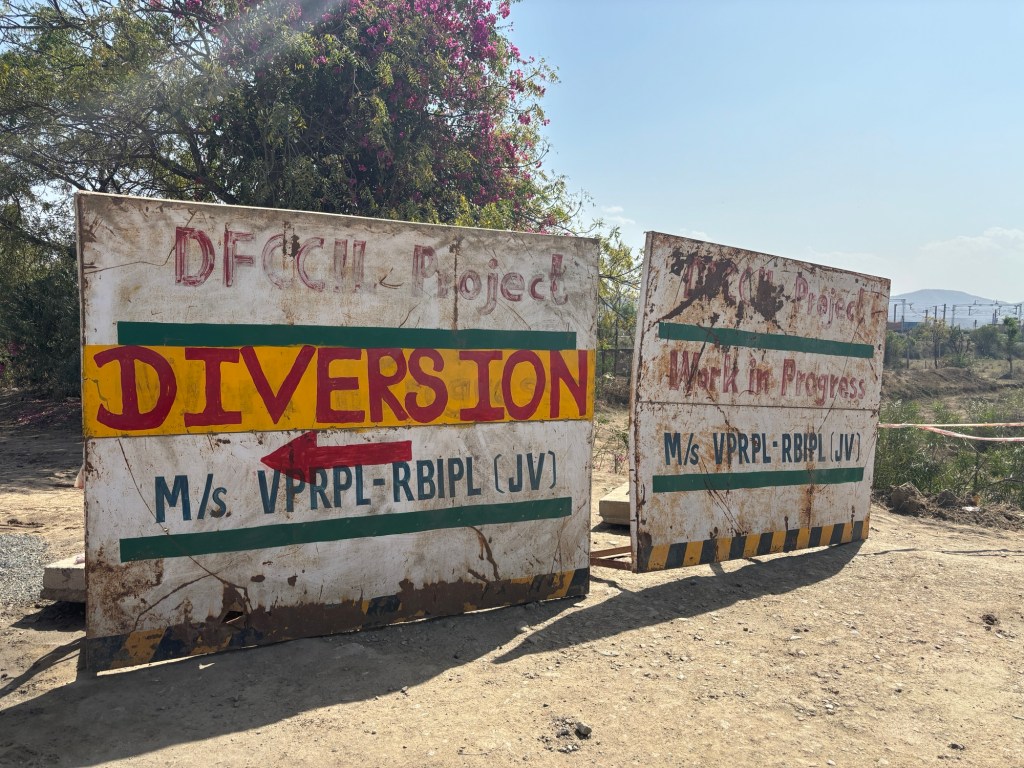
In some ways, what surprised me most this trip, was how little India has changed from my earliest visits. Certainly, the infrastructure has taken a giant leap forward and Prime Minister Modi is pushing this major initiative hard, as a cornerstone of his successful premiership. After already serving for a decade, he is posed to be re-elected by a landslide for what he claims will be his final five-year term. Perhaps like President Biden, it will prove easier to speak of giving up power than to actually do it. Only time will tell.


I remember my first drive to Ahmedabad because it was twelve hours in the car from Jaisalmer without air conditioning. The only car available at the time was the infamous Ambassador, “King of the Indian Road.” Although a four-door sedan, there was so little legroom, I was forced to sit with my spine twisted, legs at 45 degrees, the entire trip. Bumping along the old two-lane highway, we dared not stop lest darkness descend before our arrival. In those days, the Indian trucks (and some busses) did not have headlights. Rather the appearance of headlamps were painted on the metal hoods and looked like eyes. One never traveled at night since these vehicles never stopped driving; the asset too valuable not to be working 24/7, headlights or not. In the morning it was not uncommon to find several crashed and burning trucks; their victims–dead cows–carcasses littering the highways the way dogs do today.


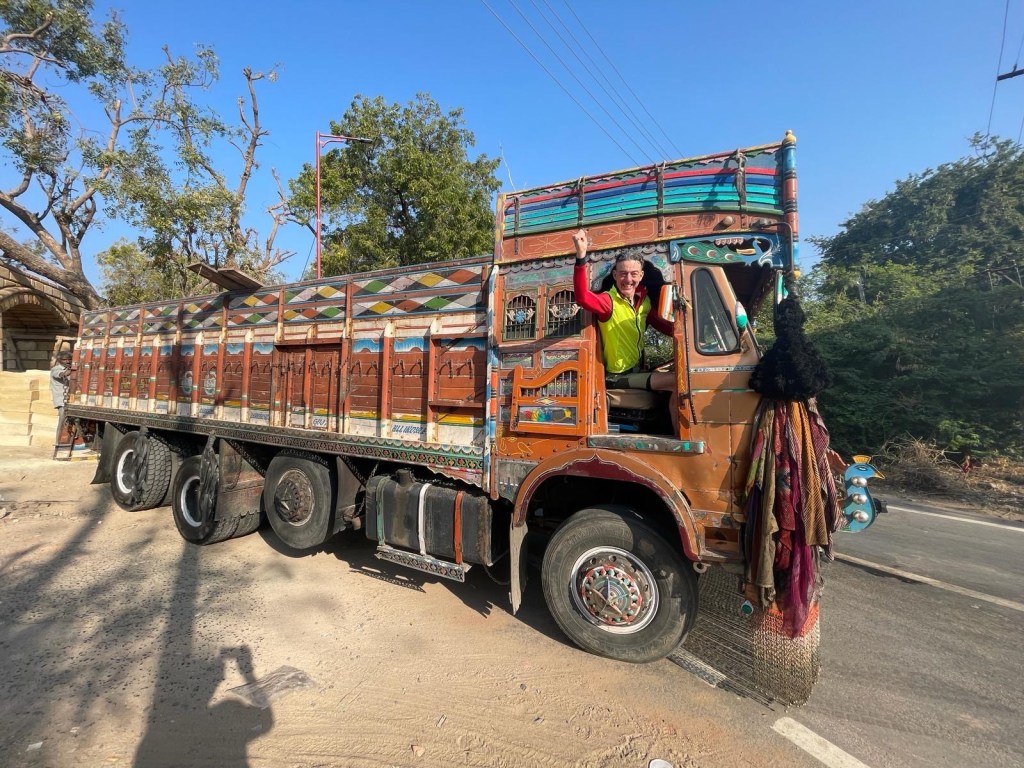
Although we did encounter a few sacred cows that had been killed in traffic this trip, I saw no burning trucks, and no truck or bus accidents whatsoever. Now, even the smallest village is connected with a lane that has at least some sections of the approach paved in high quality asphalt. Many of the open sewers are carried in concrete with about half covered for long sections. These are obviously welcome changes. The smart politician—Modi—has identified an issue that even a largely illiterate public can read. In the West we worry about Modi’s association with the Hindu Nationalists (he leads the party), the heirs of the group that assassinated Gandhi. But smart Indian friends in Mumbai suggest this fear is overblown. They point to Modi’s infrastructure initiatives as benefiting Hindu and Muslim villages alike. Matt and I witnessed this to be true.
There are other, more subtle, changes to be found as well. Gone are the cast of characters who traveled with chained wild animals, traveling from village to village, earning a few rupees for their performances. Bears, skinny lions, and other strange animals I couldn’t identify, are all gone. That type of animal cruelty is no longer allowed. Yet, those nomadic groups also contained roaming bands of minstrels–singers, instrumentalists, Rajasthani puppeteers, which would entertain day or night. Today, we only heard Indian house music blaring from large speakers mounted on tractors and small trucks, and we weren’t offered a choice. It’s somehow not the same.
The days are numbered for the oxen and camels as well. Although we still witnessed oxen pulling single-tyne plows and walking yoked circles to bring up irrigation water from the hand-dug well, they were infrequent; no longer the ubiquitous slowly moving obstacle on the roadway.
I just missed the epoch of the oxen in Italy when I lived there during my apprenticeship. I’ve always regretted it. Living in the terraced hills of Chianti in a six-hundred year old stone farmhouse, I very nearly froze to death when winter came. But the farmhouses had historically contained the family’s oxen who would have been housed on the ground floor beneath the living quarters. The body heat from this enormous mammal would have been absorbed by the three-foot-thick masonry walls of the structure. The masonry acted as a “thermal battery,” moderating the cold, making it possible to get through the frozen winter months without other means of heat. Without that nightly recharge of thermal energy from the giant oxen and whatever other animals they managed to own, the farmhouse was impossible to heat.
Camels have a very different story. In 2001 I witnessed a camel brigade of seventy-five mounted soldiers charge a group of protesters outside the Indian parliament in New Delhi. With their drawn swords raised high above their heads, the uniformed troop raced past me at 45 miles an hour. Who knew a camel could run so fast? Luckily, the guard’s scare tactic worked—the protest scattered—the soldier’s swords never made contact with the gathered crowd.
Receiving your daughter’s dowry in camels always struck me a breathtakingly exotic. With five daughters, I could have had a large brigade myself. But how would a dowry be paid today? In cell phones and gift cards for social network data? I shudder to think.
For those who don’t know me, I was raised largely in the “Valley of the Dolls” suburbs of early Silicon Valley, California. I didn’t see or ride my first camel until my early forties, while visiting a stone quarry in the Sahara Desert on the northern Algerian boarder. Even though camels spit and bite if you’re not paying attention, it was love at first sight. Moving silently across the sand with their huge long strides is similar to sailing quietly on smooth seas. I felt I had somehow cheated God to be traveling so effortlessly over such impossible terrain.

I share these stories to remind us that the world is constantly evolving, and that by glimpsing these ancient methods—even fleetingly—we connect to a deeper shared history that was once tightly tethered to domestic animals and the land. I also notice the richness these experiences have given my life. It is also a reminder that the window is closing on the ability to witness the time-honored traditions of the past. It seems inevitable that soon enough the entire planet may be receiving their “food” the way we do in the US, shrink-wrapped in plastic, uncertain of its connection to the earth or the Sun, or to how or where it was grown. This will be a terrible loss.
As slow as the changes in India have been, it is unmistakable that the progress toward modernization is set to jump exponentially forward. India feels poised to seize its place in the world. There are extremely solid entrepreneurs here with good skills and the requisite access to capital. I predict the next ten years will bring massive change; these glimpses into the old world and its ways may soon be gone.



 India Bike Tour
Leave a comment