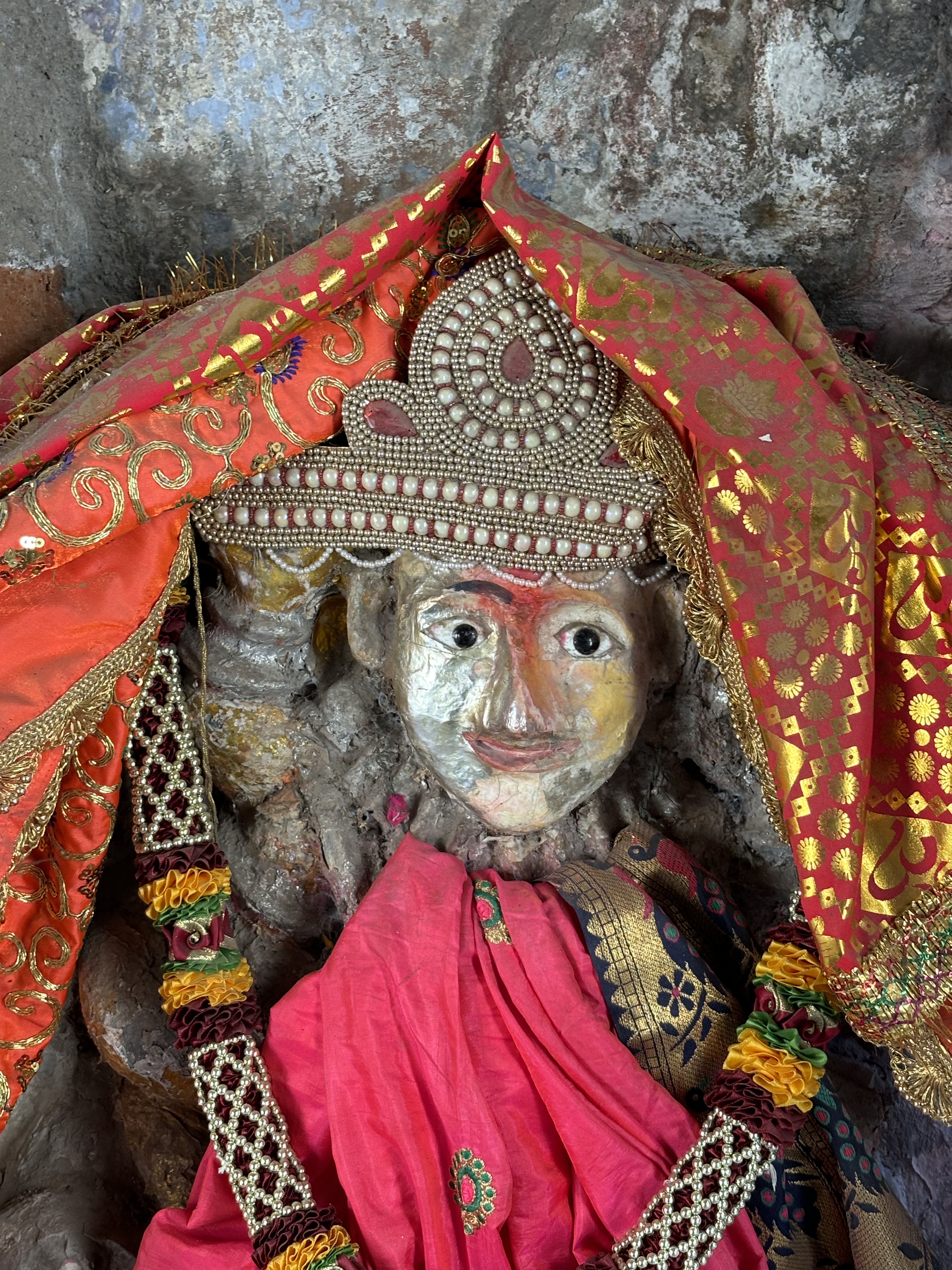
As a sculptor, I am always thinking of what I carve in the context of the symbolic freight the sculpture will carry. In the broadest context, sculpture can be viewed as an energized symbol; its relevance related directly to how strongly the image resonates in the current culture. However, culture is constantly changing, the symbol—no matter how beautifully crafted—may lose its potency. Only the most universal themes retain their gravitational pull and continue to speak to us over the distant centuries.
Jungian psychology is particularly helpful in this regard, offering a lens into life’s universal themes. The archetypes remain potent and vital, offering insight long after civilizations have failed or fallen. When a sculpture speaks to us—and by that I mean touches us in some emotionally charged way—long out of the context and society that created it, we know we are in the realm of the archetypes, resonating with unconscious themes living just beyond the knowing.
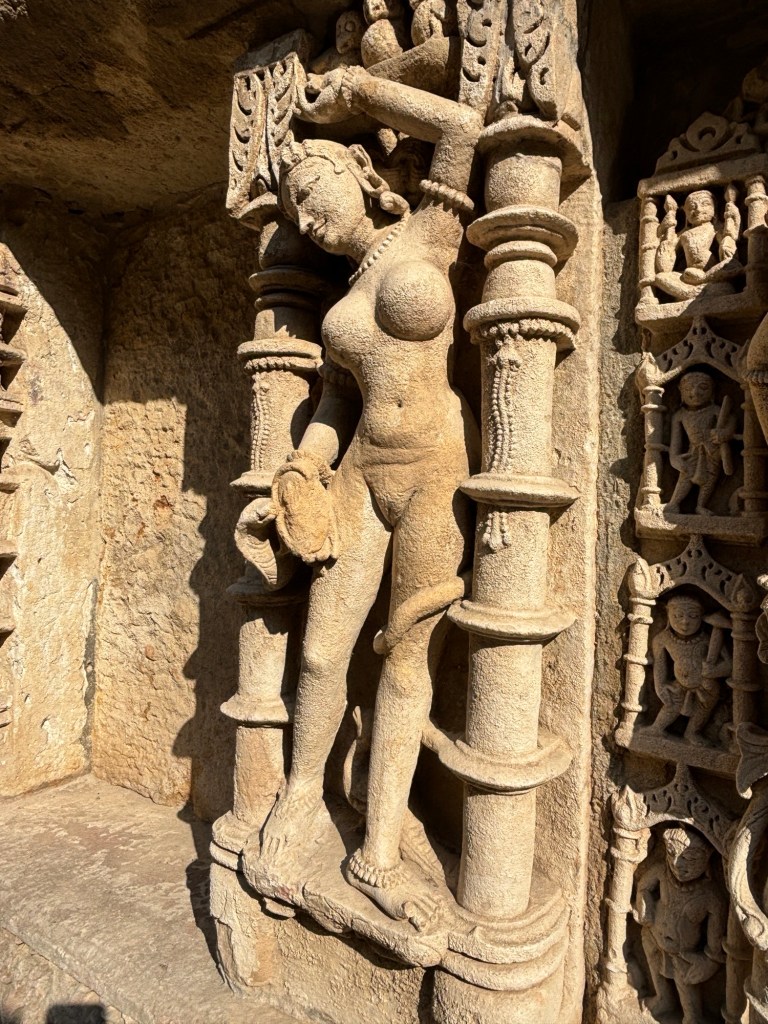
With this background, I share my thoughts on the sculptures I viewed yesterday in the Gujarati city of Patan. Known locally as Rani Ki Van, the ancient step-well was buried in mud by a flood from the River Saraswati until 1960. This twist of fate protected it through the centuries. Of the hundreds of sculptures the site contains, most remain perfectly intact despite being carved almost 1000 years ago (construction reportedly began 1026 and completed in 1063 CE).
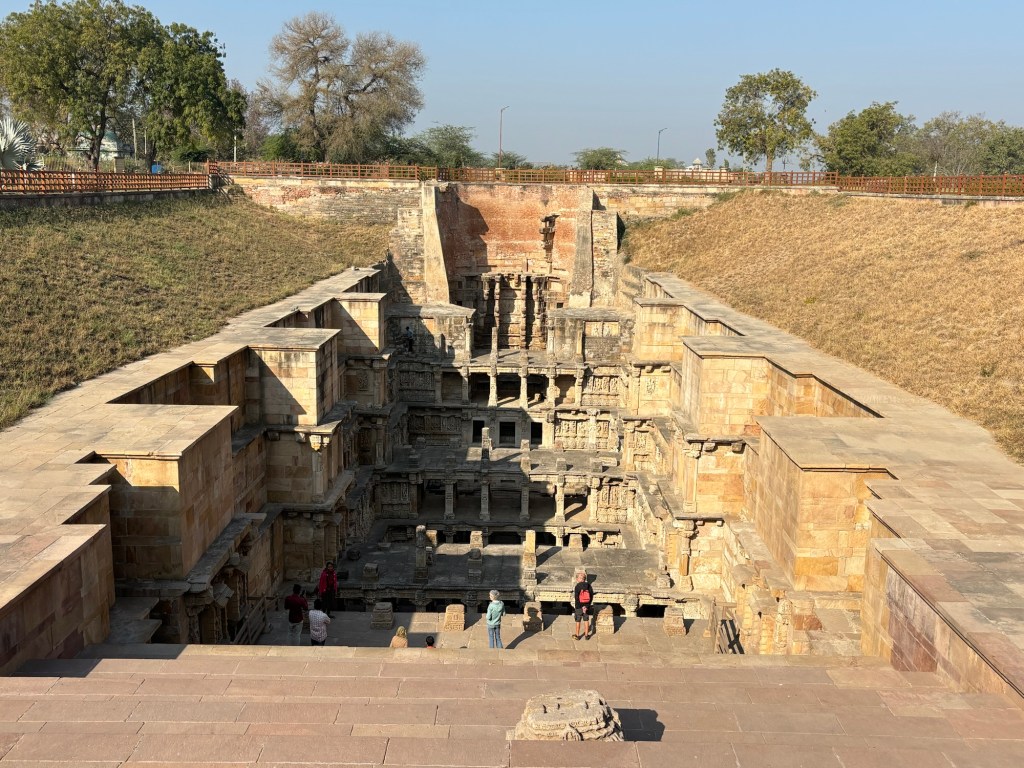
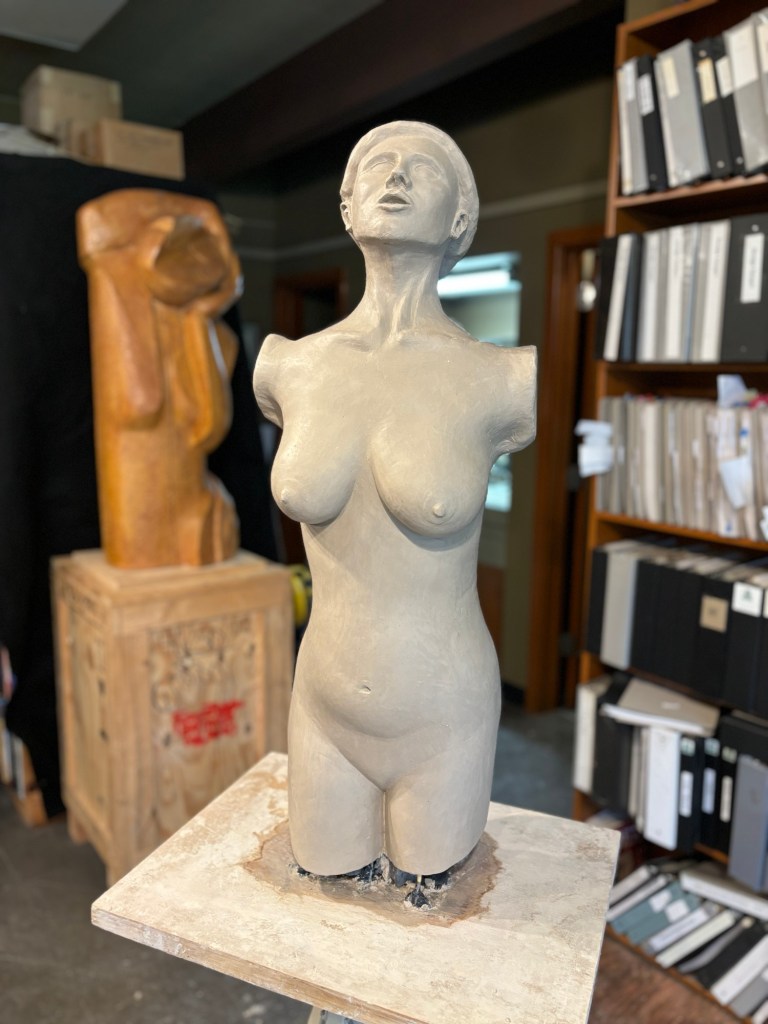
Although not qualified to parse the sculptural meaning in the context of the Sonalki Dynasty that created them, I recognize the feminine form as a symbol of the Sacred Feminine when I see it. It resonates with my own current sculptural focus on one of the primary archetypes of the West, as manifested by the Greek Goddess Aphrodite.
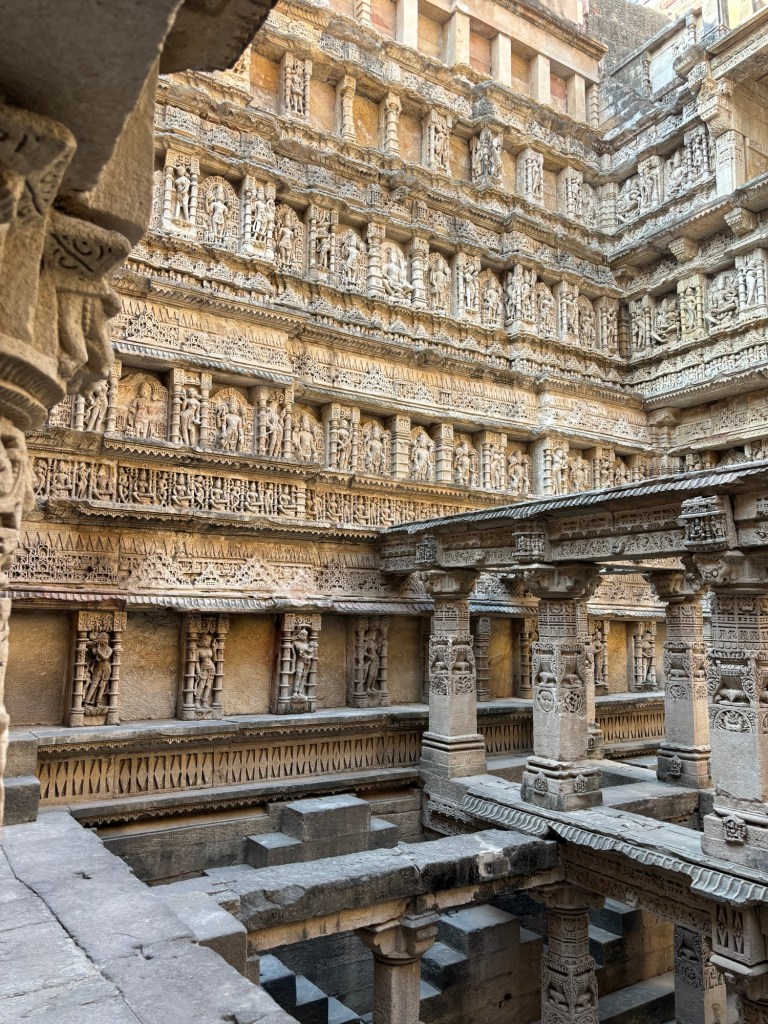
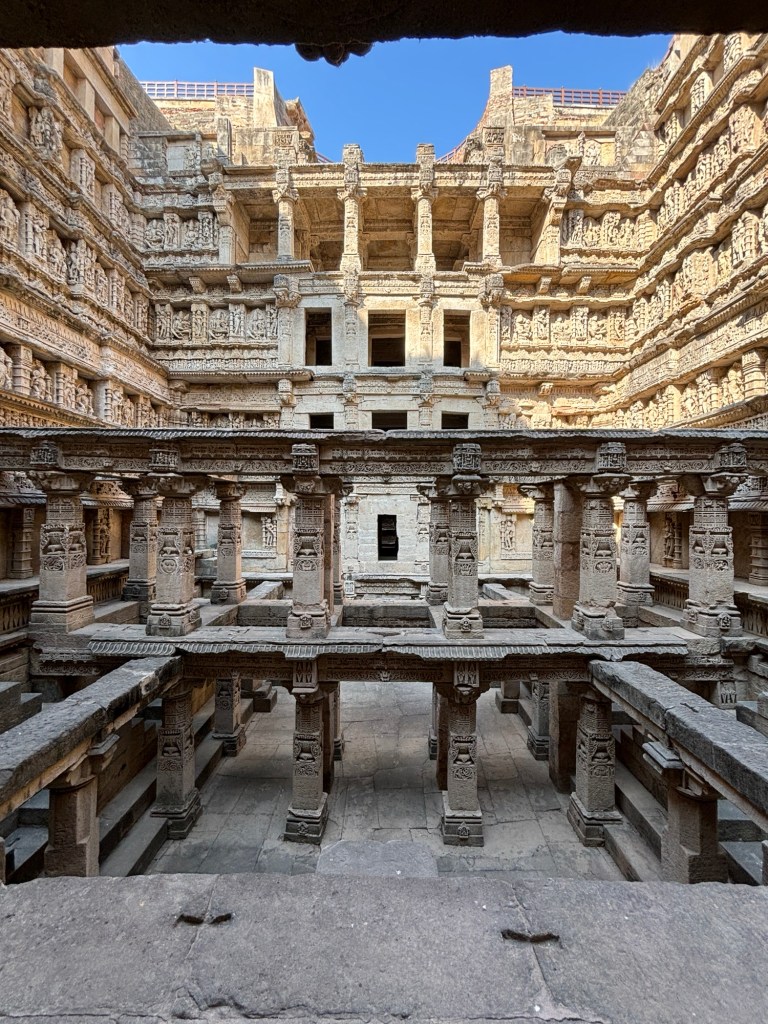
This place, and the civilizations that arose from the Indus Valley over 10,000 years and gave rise to modern India, are often viewed as the Great Mother. It is the birthplace of many of the world’s foundational religions including Buddhism, Hinduism, Sikhism, and Jainism. Its connection to the fecund earth is primary to its history and this connection remains vital today. Feminine energy is given a wider berth in India, allowed to express itself beyond the typical confines we find in the West, typically limited to Mother, Virgin, or Whore. For example, the destructive Hindi Goddess Kali incorporates the full cycle of death and destruction as preface to renewal and rebirth. We will end our trip in the city of Varanasi where Kali is venerated at the funerary pyres of the dead.
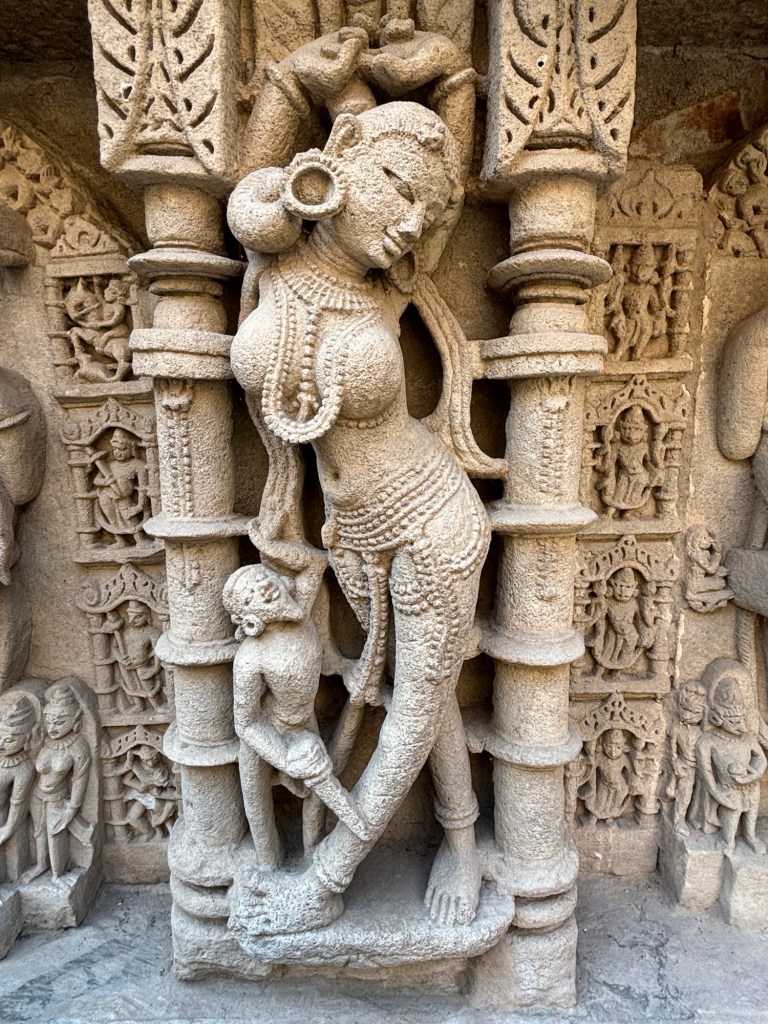
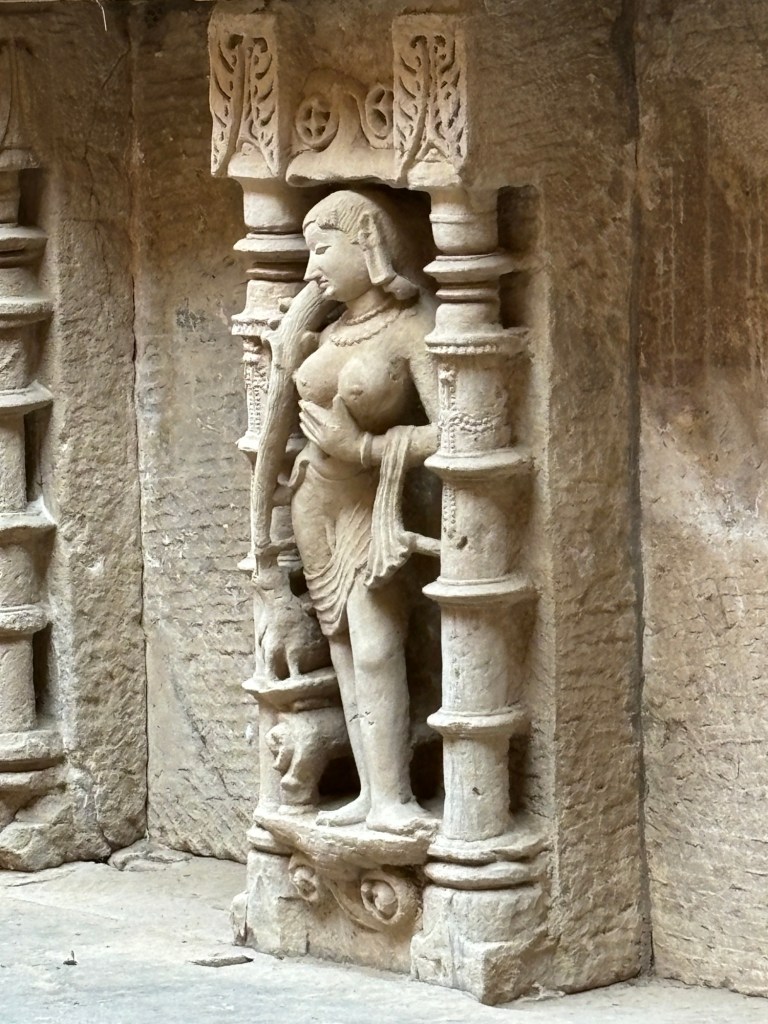
So how to consider these erotic, sensual forms? As symbols, they are clearly aspirational. Their impossibly large breasts are not the simple fantasy of stone carvers, but point us toward the archetype of the Sacred or Devine Feminine. This symbolic language shares its DNA with a common theme in poetry. It speaks of a place in the future, a “land of milk and honey.” Or to place it in the more contemporary context of Pink Floyd, a place of “blue skies, [and] green lights.” The Rani Ki Van sculptures offer us images of the nurturing breasts that could suckle an entire kingdom; never to know the want of the starving child, cyclical famine, disfiguring disease, or even death itself.
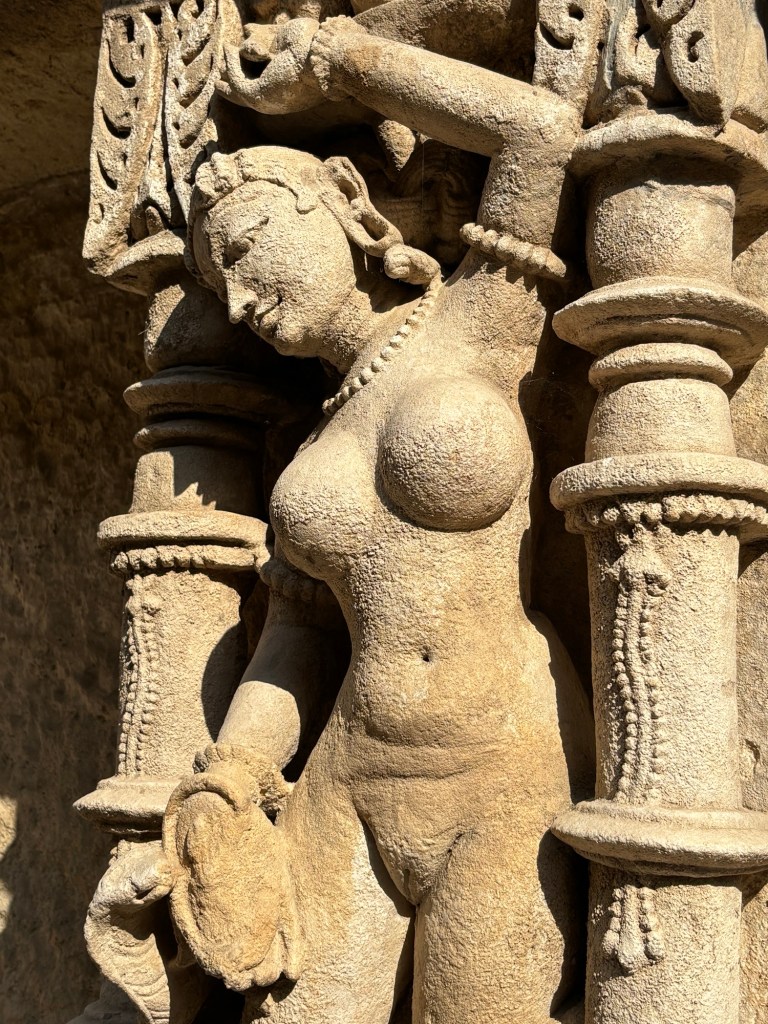
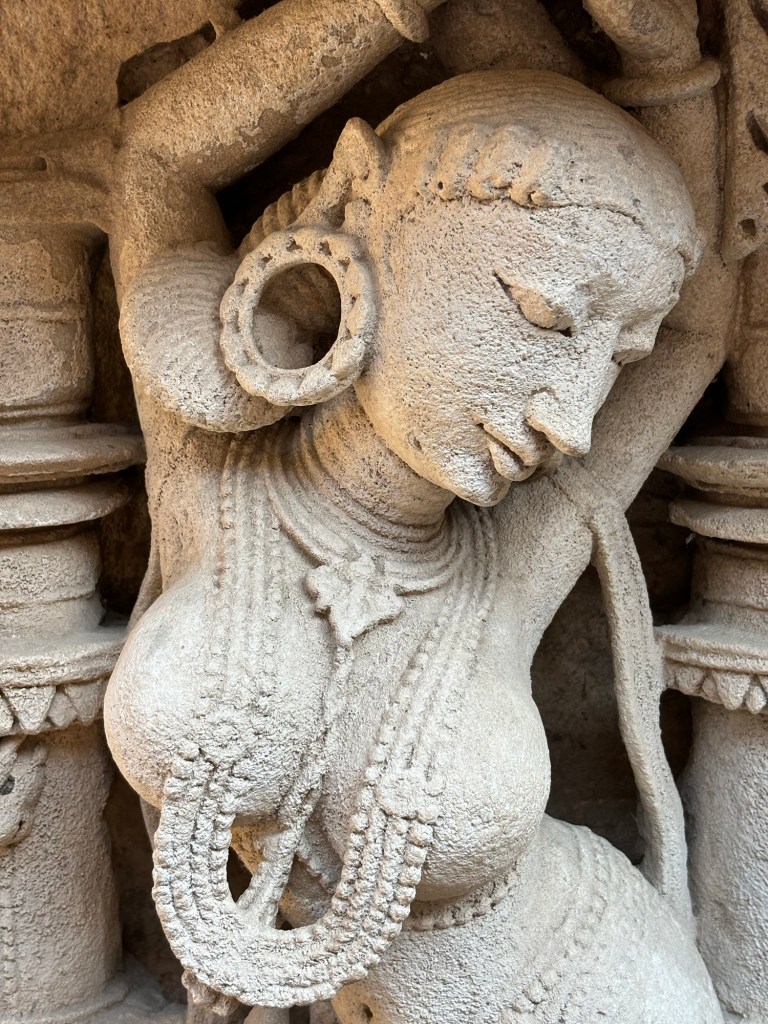
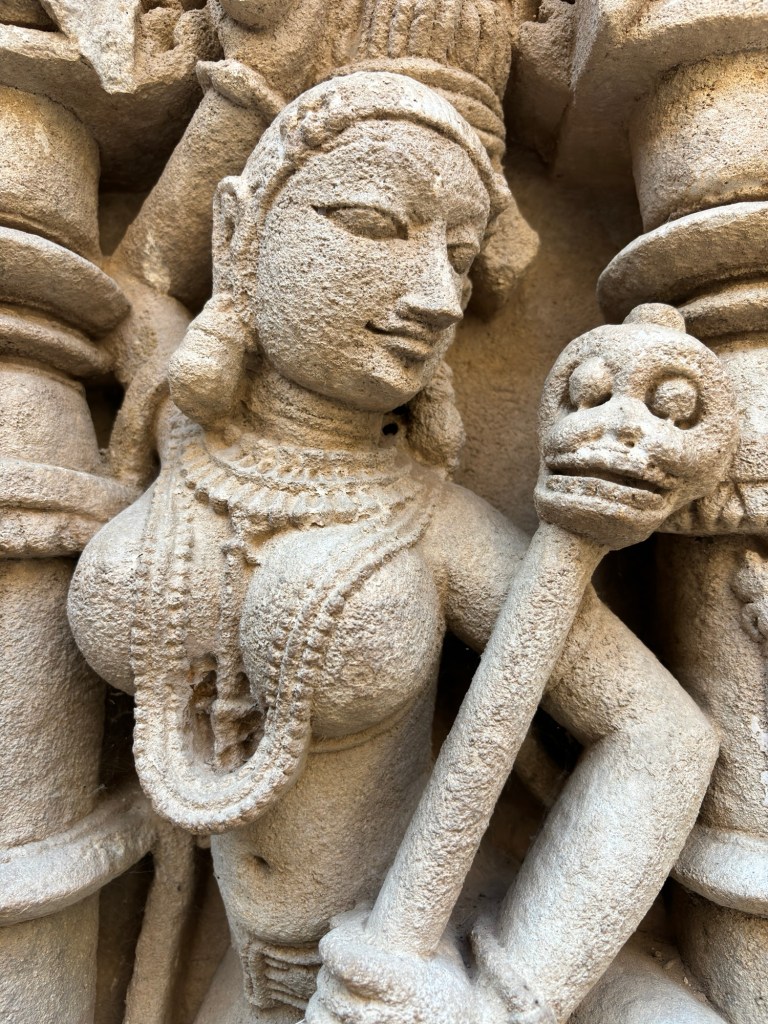
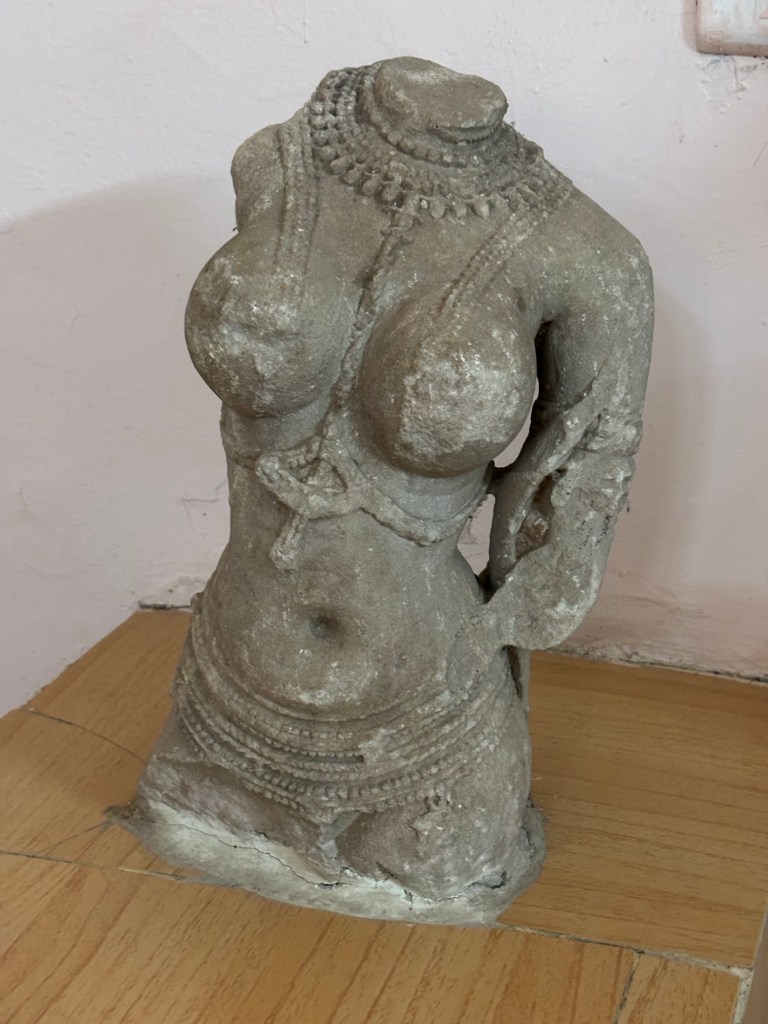
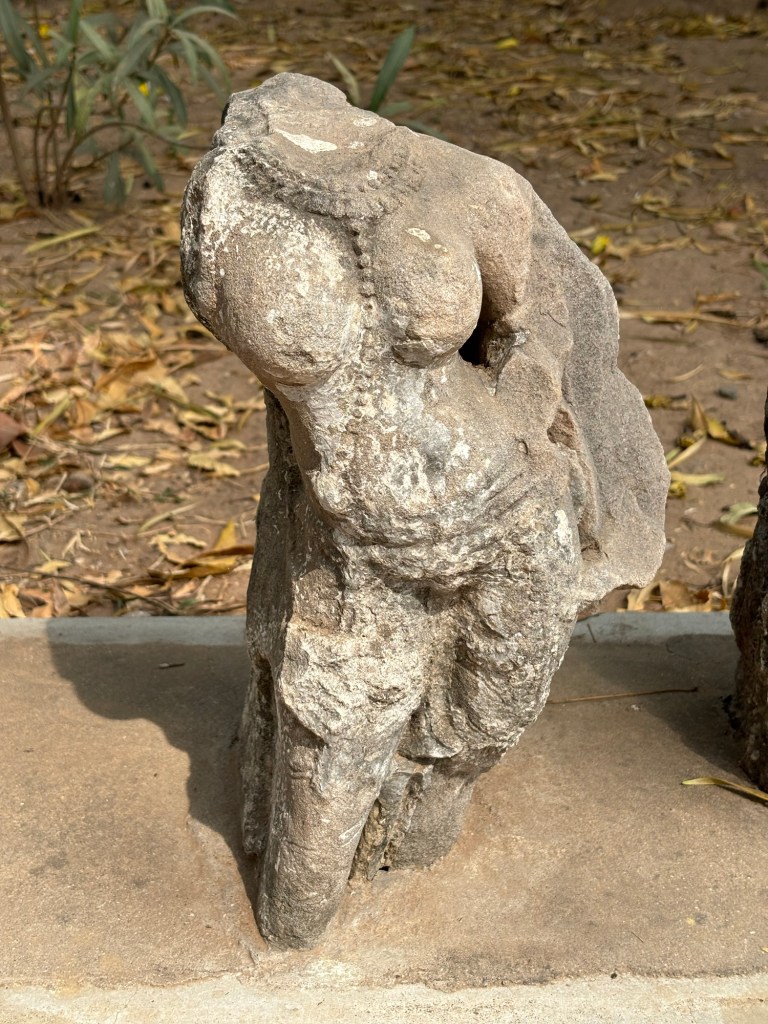
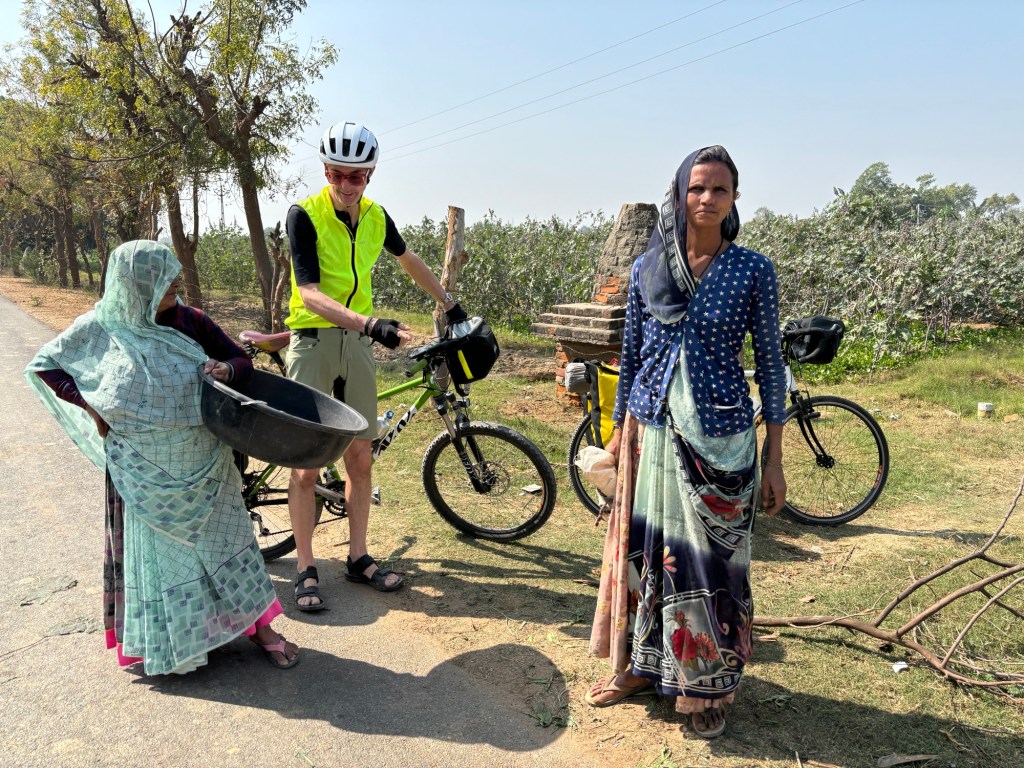
Cycling through the same landscape a thousand years after the sculptures were carved, I encounter the heirs to this ancient Kingdom, their frail female forms bearing no resemblance to their carved lithic ancestors. Yet this is key to how these sculptures remain relevant. In a land where the daily struggle to create consumable calories continues to occupy a majority of the population, the image of the nurturing feminine continues to hold and captivate our collective imagination.
Eros also plays its part. In the same way that sex is used to sell auto insurance and beer, hooking our eye by offering a hint of visual thrill is an ancient strategy, long validated by the test of time. The sculpture’s tiny waists convey fertility, highlighting the hips capable of bringing life into the world. The sinuous line of the body—an “S”—speaks of energetic flow, life force moving upwards from the earth and soul towards transcendence and spirit. These sculptures work. They continue to resonate through the centuries, touching that ancient part of us still fluent in the language of the human soul.


 India Bike Tour
Leave a comment